Why is Chirp called a cricket frog?
Grandma says:
His call sounds more like a cricket or clicking pebbles than people expect from a frog.
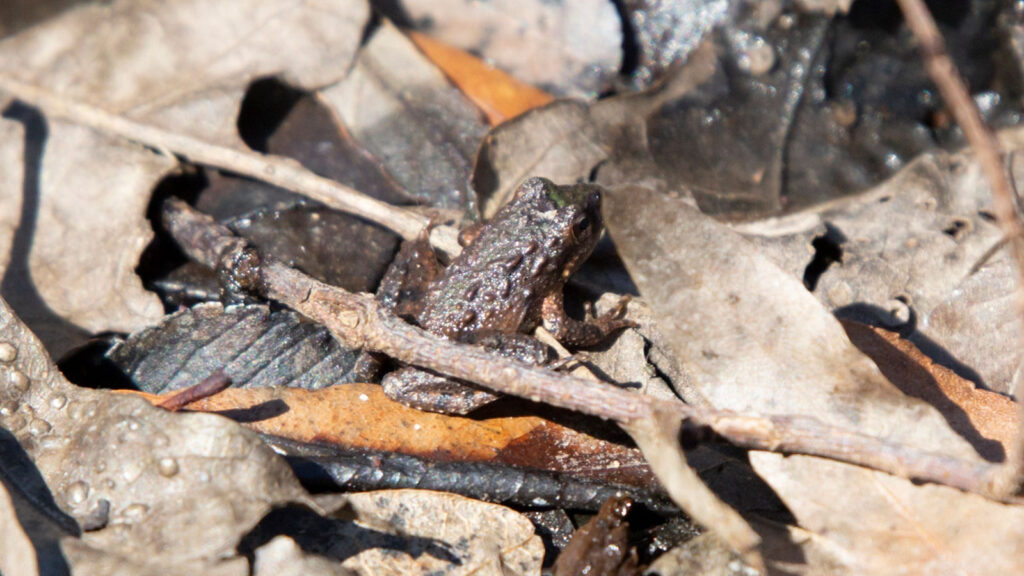
Chirp sounds like a cricket with a microphone, which would be confusing enough even if he were not a frog.
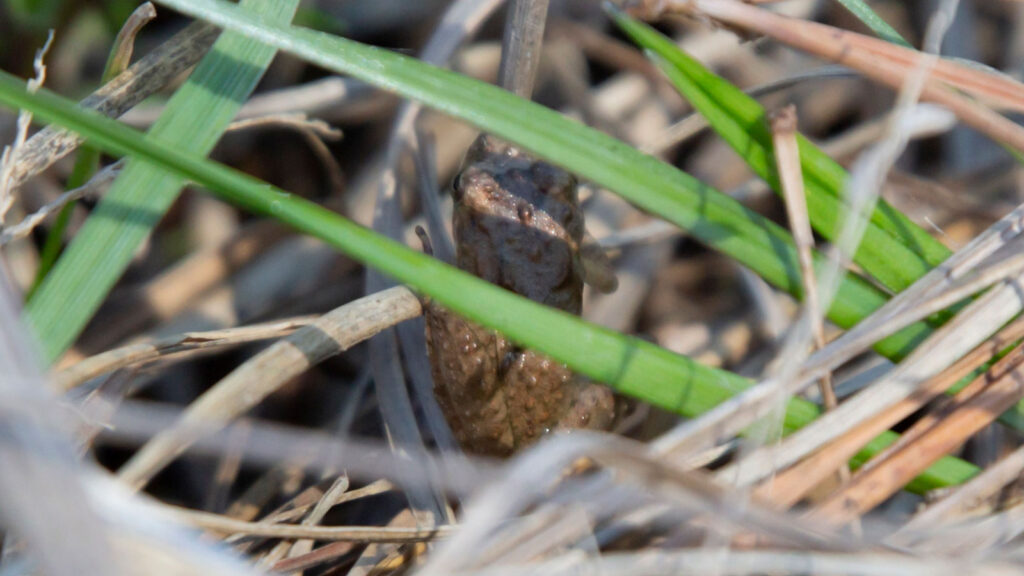
Chirp is a cricket frog. He is tiny, quick, brown and gray with little dark markings, and much easier to hear than to see. When warm weather and rain leave the low part of Grandma’s yard damp, Chirp may call from the edge of the grass, a muddy patch, or a shallow place where water has gathered.
Tootie hears him before he sees him. One rainy evening, the backyard is wet enough to shine under the porch light. Tootie stops at the back steps, lifts one droopy ear, and turns his head toward the low, damp edge of the yard.
“Cricket,” he says.
The sound comes again: a quick, sharp little call that sounds like two tiny pebbles clicking together.
Yoshi’s pointy ears twitch. “That is not a cricket.”
Tootie looks through the wet grass. “Then where is they?”
Grandma points near the water-dark soil. Chirp sits beside a clump of grass, no bigger than a small leaf, with his body tucked low and his eyes watching the whole yard.
“That,” Grandma says, “is Chirp. He is a cricket frog.”
Tootie blinks. “A frog named after the wrong animal?”
Grandma smiles. “He has been confusing people for years.”
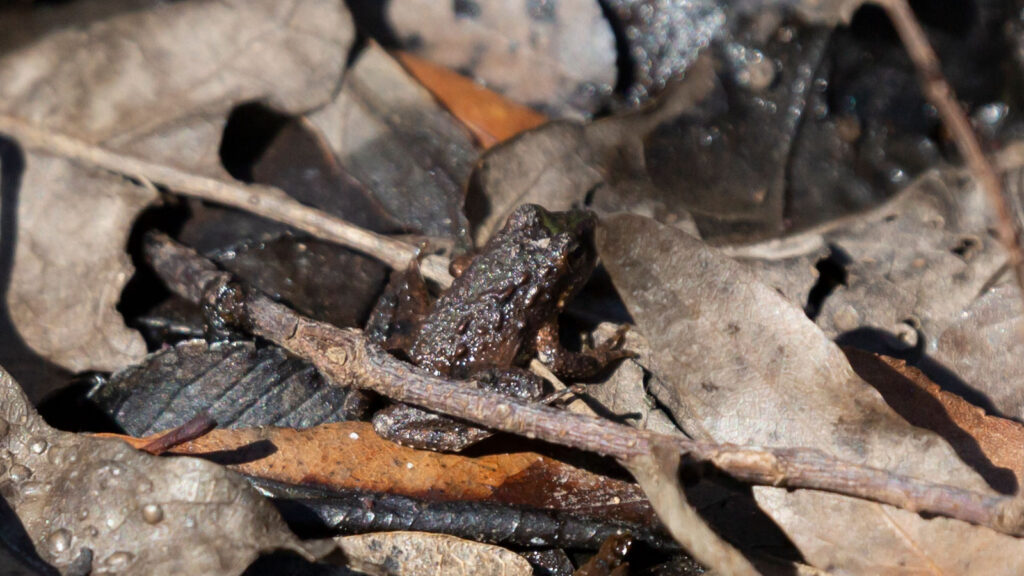
Chirp uses wet edges, shallow water, muddy spots, grass around ponds or ditches, and places that stay damp after rain. He does not need a big lake to get around, but he does need water during the part of his life when he is an egg and tadpole. Shallow pools, quiet ditches, pond edges, and rain-filled low places can give cricket frogs room to call, lay eggs, and raise young.
Grandma’s backyard has a low spot near the edge where rainwater sometimes gathers after a good storm. They do not stay full all year, but after spring and summer rain, the soil stays wet and the grass grows thick around they. Chirp likes the damp edges because he can hide among stems, find tiny insects, and slip into shallow water when something larger comes near.
Tootie thinks Chirp’s home sounds squishy. “Does he live in the mud?”
“Sometimes near they,” Grandma says. “But Chirp uses the whole wet neighborhood. He needs water, grass, cover, and bugs.”
Yoshi watches Chirp disappear beneath a bent blade of grass. “He has a very small house.”
Grandma nods. “Small animals do not need much room. They just need the right room.”
Chirp does not spend his time in the pecan trees like Biv, Wilson, or Scott. He does not make his home in the dry flower beds with Gee and Fenn. His world stays lower, wetter, and closer to the ground, where one patch of grass can feel like a forest and one muddy edge can feel like a whole lake.
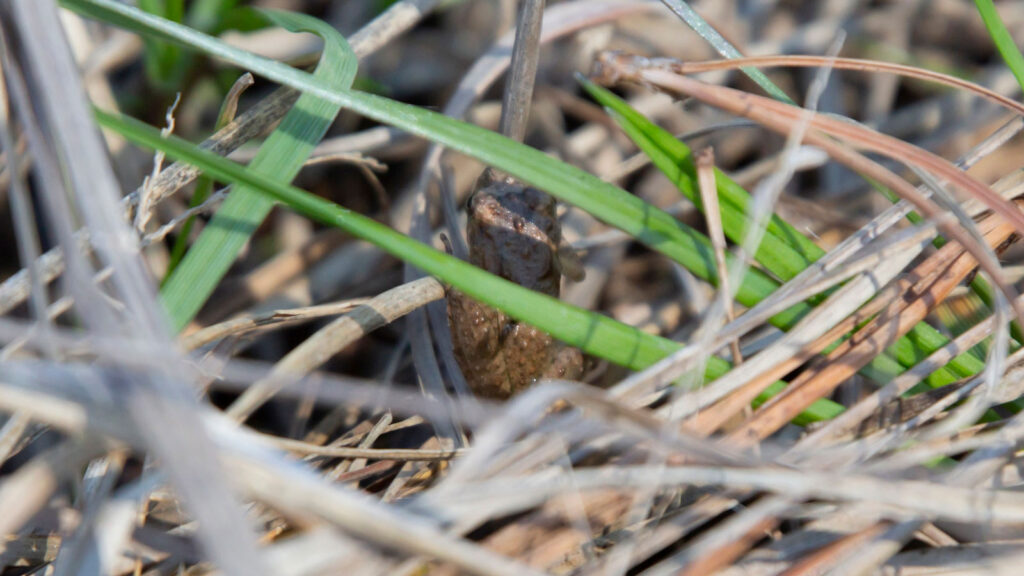
Chirp started as an egg in shallow water. His mother laid small jelly-like eggs in a quiet place where water covered plants or the muddy bottom. Frog eggs do not have hard shells like bird eggs. They need water around them while the tiny frogs grow inside.
After the eggs hatched, Chirp was a tadpole. At that point, he had a tail, no legs, and a body made for swimming. He lived in the water and ate algae, soft plant material, and tiny bits of food drifting nearby.
Tootie hears this and looks surprised. “So Chirp was a fish?”
Grandma shakes her head. “Not a fish. A tadpole. Tadpoles live in water, but they grow into frogs.”
As Chirp grew, his body changed. His back legs appeared first. Then his front legs grew. His tail slowly got smaller, and he began using lungs as well as his damp skin to take in oxygen.
When he was ready, Chirp climbed out of the water as a tiny young frog. He still stayed close to wet places, but now he could hop through the grass, sit along the muddy edge, and hunt small bugs.
Yoshi watches Chirp jump from one damp patch to another. “He had to change everything.”
“He did,” Grandma says. “First he swam with a tail. Then he hopped with legs.”
Tootie considers this carefully. “That sounds like a lot of work.”
Grandma smiles. “Growing up usually is.”
Young cricket frogs are small enough that many animals could eat them. Chirp had to learn quickly which grass was thick enough to hide in, which puddles were deep enough to escape into, and which shadows meant something bigger was nearby.
He also learned that staying still can be as useful as jumping.
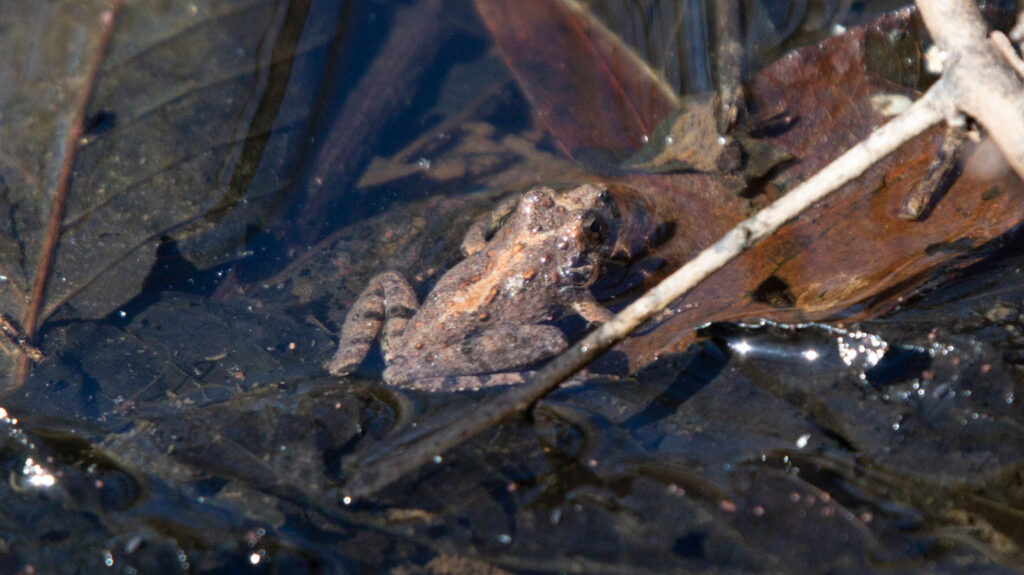
Chirp eats tiny animals that crawl, fly, or hop through the grass. Adult cricket frogs eat insects, spiders, and other small invertebrates. Mosquitoes, flies, beetles, ants, tiny moths, and little spiders can all become part of Chirp’s dinner.
He does not eat leaves, pecans, berries, or dog food. He waits near damp grass and muddy edges, watching for something small enough to catch. When a bug comes close, Chirp can snap they up with his sticky tongue before Tootie has finished saying, “Look!”
One evening, a mosquito lands near the water’s edge. Tootie sees they first and points with his nose.
“Bug,” he whispers.
Chirp is already looking.
The mosquito twitches.
Chirp jumps forward.
Then the mosquito is gone.
Tootie stares at the grass. “Where did they go?”
Grandma says, “Into Chirp.”
Yoshi watches the frog settle back into place. “He does not waste time.”
“No,” Grandma says. “Tiny animals usually cannot afford to.”
Chirp helps the yard by eating some of the small insects that gather near damp grass and standing water. He does not get rid of every mosquito, fly, or beetle, but every small meal helps.
Grandma says, “Chirp’s grocery store has wings.”
Tootie looks at the puddle. “I would not shop there.”
“That is fine,” Grandma says. “Chirp has enough competition.”
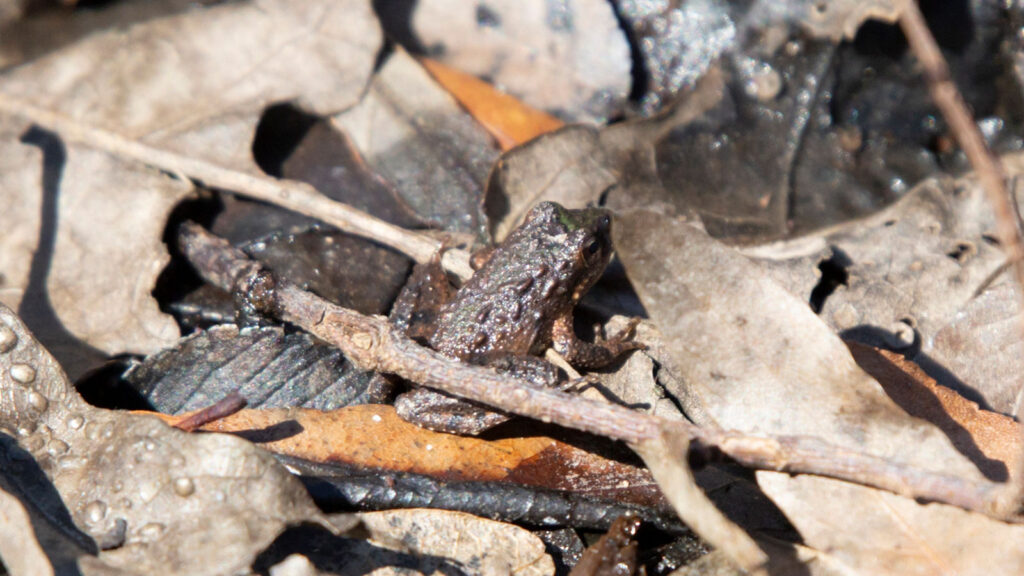
Chirp is called a cricket frog because his call sounds more like an insect than most people expect from a frog. They can sound like clicking pebbles, tapping marbles, or a tiny cricket making a very serious announcement.
Male cricket frogs call during warm weather near the water. They call to attract female frogs and let other males know they are around.
Tootie listens from the porch one evening.
“Chirp sounds too little to make that much noise.”
Grandma laughs. “That is one of Chirp’s best tricks.”
Yoshi watches the wet grass. “How can we hear him if he is so small?”
“Frogs have a throat pouch that helps them make sound,” Grandma says. “Chirp fills they with air and lets the sound carry.”
Tootie thinks about that. “So he has a tiny speaker?”
Grandma nods. “That is close enough.”
Chirp calls again from the grass.
Click-click-click.
Then Knossos answers from closer to the pond with his deeper banjo-like call.
Tootie looks between the two wet places. “They are both frogs, but they sound nothing alike.”
Grandma smiles. “That helps frogs know who is calling.”
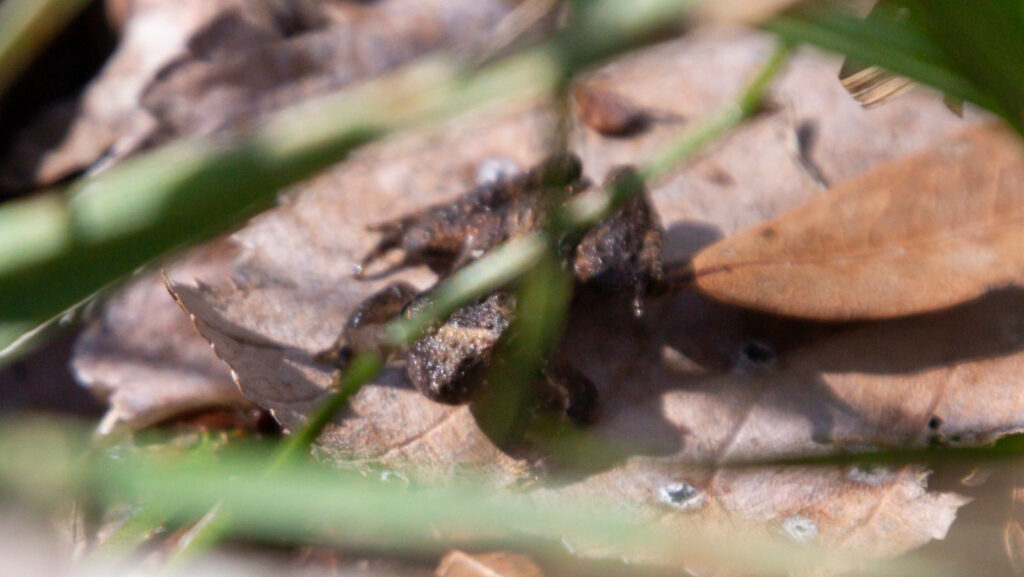
Chirp is tiny, but he can jump much farther than Tootie expects. When danger comes close, Chirp may leap through grass, over mud, or into shallow water before a larger animal has time to understand where he went.
One afternoon, Tootie gets too close to the damp edge of the yard. Chirp freezes beside a wet leaf, so still that he looks like a little lump of mud.
Tootie leans forward.
“Is that him?”
Chirp jumps.
He lands several feet away in the grass.
Tootie spins around. “He teleported.”
Yoshi watches the place where Chirp landed. “He jumped.”
Grandma says, “Cricket frogs have strong back legs. When they need to leave, they leave quickly.”
Tootie looks impressed. “I can jump.”
Grandma looks at the muddy edge. “Not there.”
Tootie thinks that is probably fair.
Chirp uses his jumps to escape birds, snakes, larger frogs, and curious dogs. He may leap into water if danger comes from land, or jump onto shore if something threatens him in the water.
Grandma says, “Chirp has a plan for both directions.”
Yoshi nods. “That is sensible.”
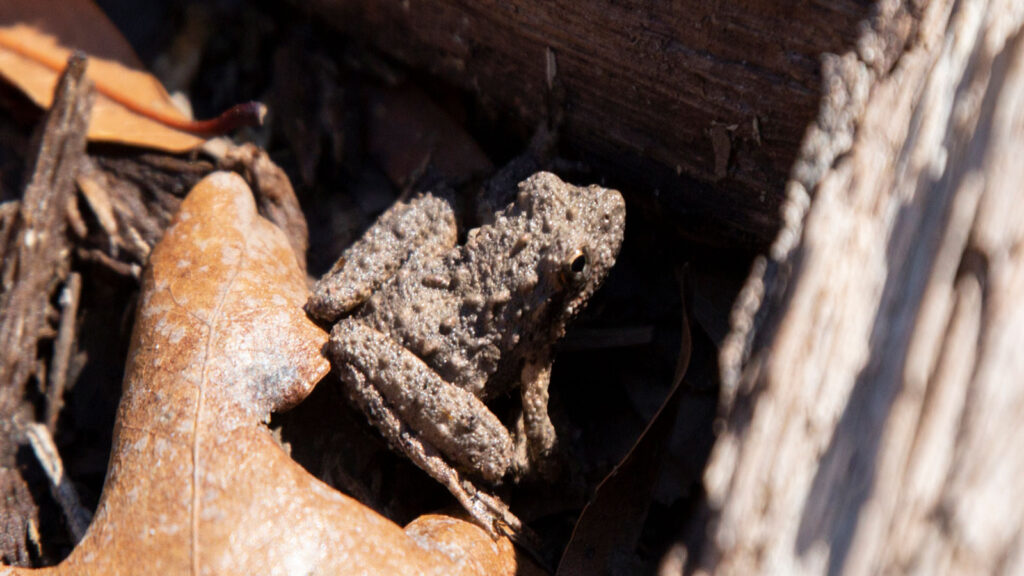
Chirp is much smaller than Knossos.
Chirp is a cricket frog. He spends time near wet grass, shallow puddles, muddy edges, and little water-filled places after rain. Knossos is a Bronze Frog, which means he is bigger, smoother-skinned, and more closely tied to the pond edge and deeper water.
Tootie watches both frogs one evening after rain. Chirp sits near a wet grass stem, tiny enough that he could disappear beneath one leaf. Knossos sits closer to the pond, broad-backed and still, with his eyes above the water.
“They are both frogs,” Tootie says. “But Chirp is little and Knossos is big.”
Grandma nods. “That is one difference.”
Yoshi watches Chirp hop away. “Chirp moves more.”
“He has to,” Grandma says. “He is smaller. Knossos can sit still longer because he looks more like the pond edge.”
Tootie listens to the two calls.
“Chirp sounds like a cricket,” he says. “Knossos sounds like a banjo.”
Grandma laughs. “Now you are starting to know your frogs.”
Chirp does not want Knossos’s favorite pond-edge spot. Knossos does not need Chirp’s little patch of wet grass. They can live near each other because they use the same wet neighborhood in different ways.
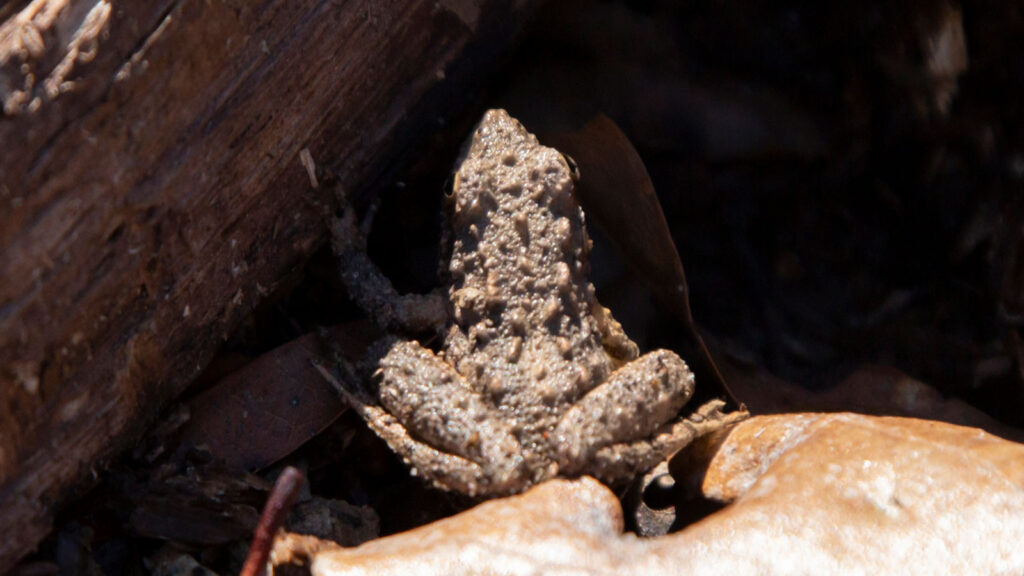
Chirp knows the backyard is full of animals much bigger than he is. He knows Tootie wants to meet everything. He knows Yoshi watches quietly from the porch. He knows Robbie may come through after dark, and Grenda may hunt near the front shrubs.
When something big comes near, Chirp does not stand around explaining himself. He freezes first. If that does not work, he jumps.
One afternoon, Scott races past the wet grass while chasing a pecan that rolled downhill. Chirp flattens himself against the mud and stays still. Scott runs right by without seeing him.
Tootie watches from the porch. “Did Scott see Chirp?”
Grandma shakes her head. “Probably not.”
Yoshi looks toward the grass. “Chirp knew when to stay still.”
Grandma nods. “That is one of his best skills.”
Tootie thinks that sounds useful.
Grandma looks at him.
Tootie sees a butterfly.
Then he runs after they.
Yoshi closes her eyes.
Grandma likes hearing Chirp after rain. She likes knowing the damp edge of the yard has frogs, grass, insects, and other little animals using they. She does not try to catch Chirp or let Tootie and Yoshi crowd him.
Frogs have delicate skin. Soap, sunscreen, lotion, oil, and other things on people’s hands can hurt them. Frogs also need their skin to stay damp, so being held can be stressful and unsafe.
Tootie watches Chirp beside the puddle. “Can I pick him up?”
Grandma says, “No.”
“Tootie,” Yoshi adds.
“I only asked.”
Grandma points toward the wet grass. “Chirp does not need a puppy hand reaching down from the sky. He needs water, cover, bugs, and enough quiet to hear what is coming.”
Tootie sits beside the porch steps instead.
Chirp stays still for one more moment, then jumps beneath the grass.
Tootie sighs. “He is gone.”
Grandma says, “No. He is hiding.”
Yoshi watches the grass move once. “That is close enough to gone.”
Chirp needs clean shallow water, damp ground, grass, leaves, and safe places to hide. Frogs do best when wet places have plants around them instead of bare mud or sprayed grass.
Keep soap, lawn chemicals, fertilizer, oil, and trash out of puddles, ditches, ponds, and wet low spots. Frogs absorb things through their skin, so dirty water can hurt them.
Keep dogs from chasing frogs near the water. Tootie and Yoshi can watch Chirp from a distance, but they should not paw, mouth, or corner him. A tiny frog can hurt themselves trying to escape.
Grandma says, “Chirp has enough trouble avoiding snakes, birds, and hungry frogs. He does not need help from a puppy.”
Tootie looks offended.
Yoshi says, “She means you.”
Tootie knows.
Chirp the Cricket Frog
These are some helpful words for talking about this wild neighbor.
Chirp the Cricket Frog
Good wildlife watchers ask good questions. Here are a few to get you started.
His call sounds more like a cricket or clicking pebbles than people expect from a frog.
Chirp eats insects, spiders, and other very small animals he can catch near wet grass and shallow water.
Yes. He began as an egg in water, hatched as a tadpole with a tail, then grew legs and changed into a young frog.
He needs wet places for breeding, growing up, hiding, and keeping his skin from drying out.
His back legs are strong. A fast jump helps him get away from danger.
No. Frogs have delicate skin and should be watched from a distance.
Chirp is a tiny cricket frog with a clicking call. Knossos is a larger Bronze Frog with a deeper banjo-like call.
Watch frogs from a distance. Do not catch or handle them unless a trained wildlife professional tells you to. Keep pets away from wet edges, and keep soap, fertilizer, oil, pesticides, and trash out of water. Frogs are sensitive to water quality because they absorb substances through their skin.
🏅 Explorer Progress