Why is Dash called a Blue Dasher?
Grandma says:
He has a powder-blue body and makes quick dashes from a perch to catch insects.
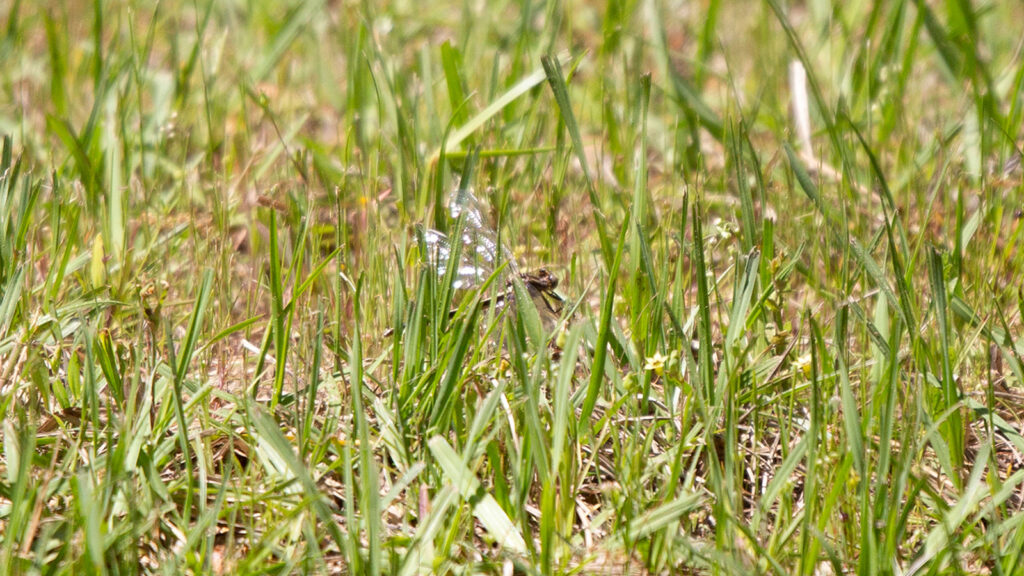
Dash has bright blue eyes, a powder-blue body, four fast wings, and absolutely no interest in waiting around for a mosquito to make a decision.
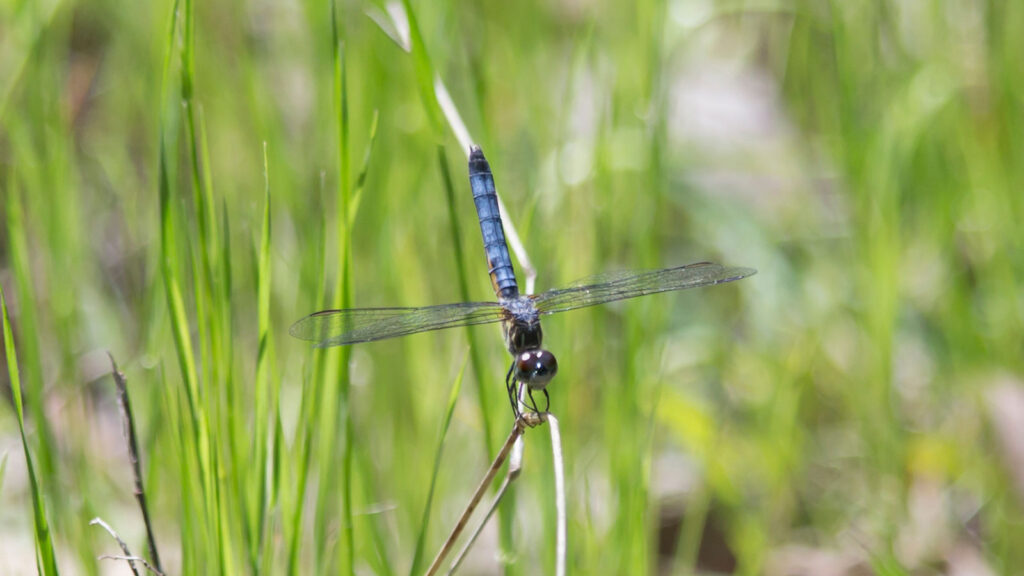
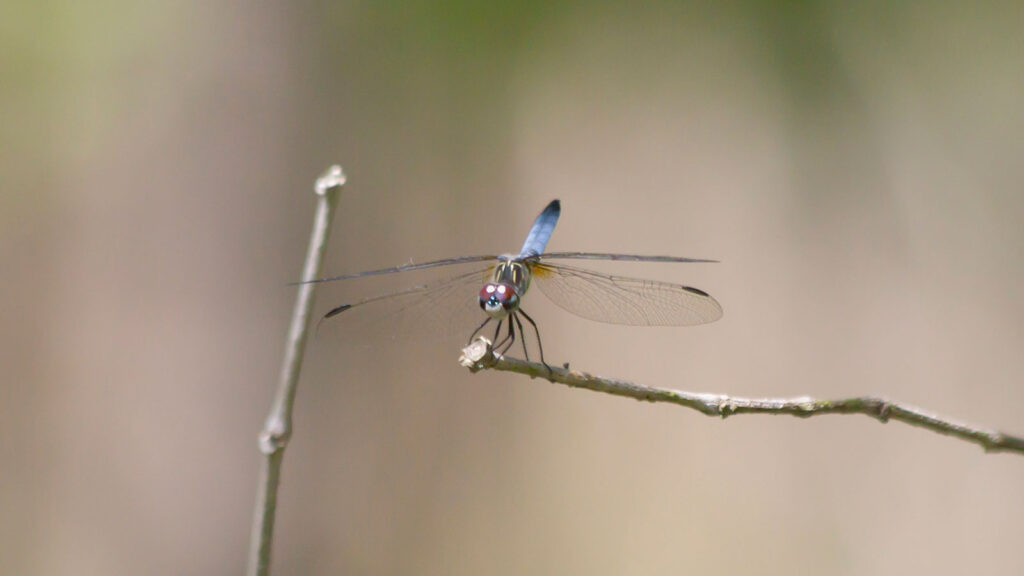
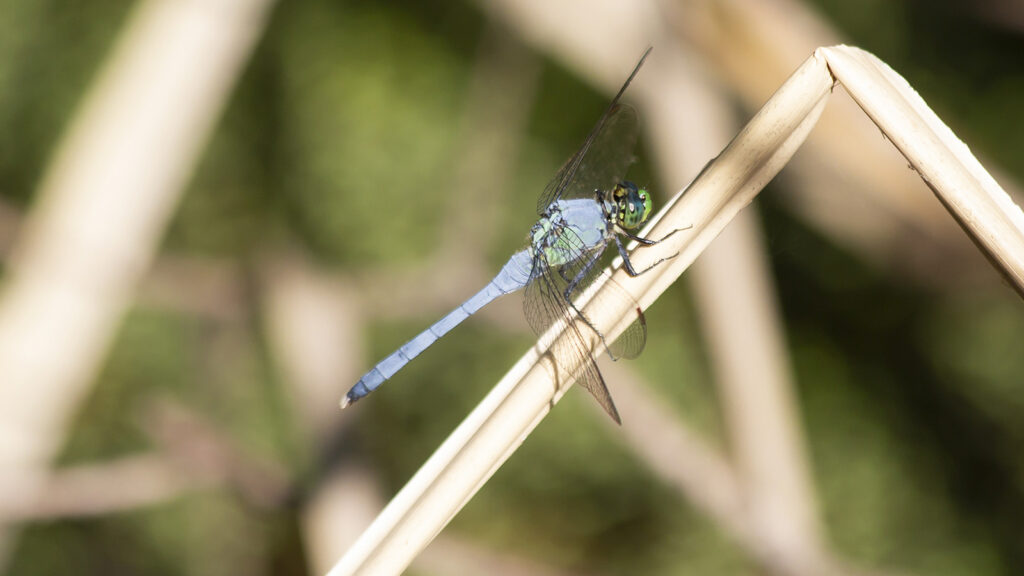
Dash is a Blue Dasher dragonfly. Dash has a white face, large green-blue eyes, a striped brown-and-yellow chest, a powder-blue abdomen, and a dark tip at the end of that long blue body. Dash is a mature male Blue Dasher, which is why the blue is so easy to see.
One hot afternoon, Tootie spots Dash perched on a twig over the slow bend of the creek behind Grandma’s house. Dash sits still for one second, launches into the air, catches something tiny, and lands on the same twig again.
Tootie’s droopy ears lift. “Dart changed colors.”
Yoshi’s pointy ears twitch. “Different dragonfly.”
Grandma looks toward the creek. “That is Dash. He is a Blue Dasher.”
Dash lifts off again, loops over the water, and settles on a reed with his blue eyes facing the sun.
Tootie watches him closely. “He looks like a tiny blue airplane.”
Grandma says, “He flies like one too.”
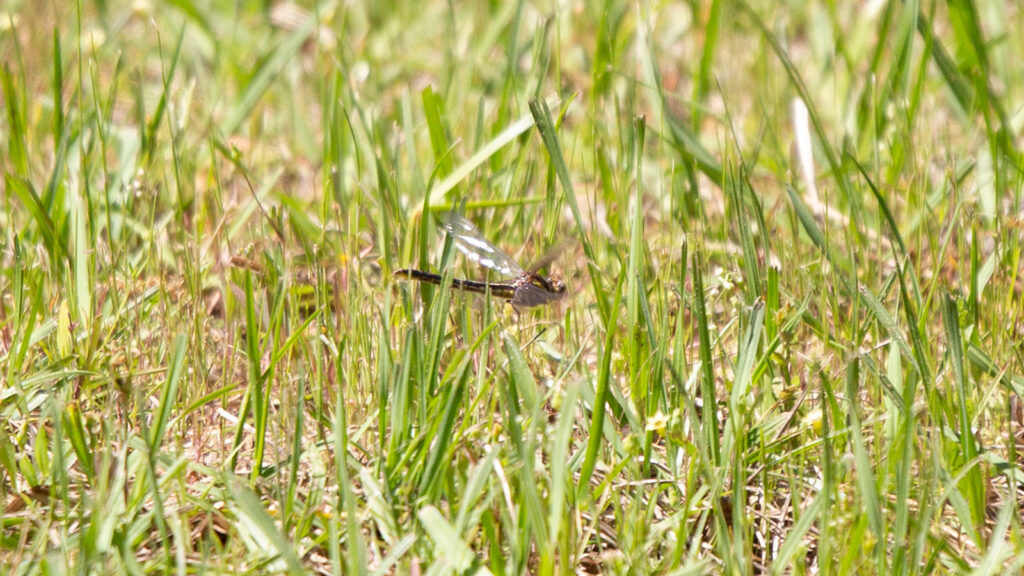
Dash uses slow water, quiet creek bends, shallow pools, wet edges, marshy places, and plant-lined areas where dragonflies can grow. The fast middle part of the creek does not give Dash’s young much shelter, but the slower bends and still pockets near the edge can.
The creek behind Grandma’s house has one slow bend where plants grow along the bank. Water moves there, but not too fast. Tiny insects live around the plants, and that makes the place useful for Dash.
Tootie looks at the slow water. “Why does he like this part better?”
Grandma says, “The water is calmer here. Young dragonflies need places where they are less likely to get swept away.”
Yoshi watches Dash land on a dry reed. “He needs water and places to sit.”
“Exactly,” Grandma says. “Dash uses the water when he is young and the plants around they when he is grown.”
Dash also needs open air above the creek so he can patrol for insects. He likes a good perch, but he needs room to launch quickly.
Dash did not begin life blue or winged. He started as an egg near the water, then hatched as a dragonfly nymph. A nymph is a young insect that looks very different from the adult.
As a nymph, Dash lived underwater. He had no wings and no long powder-blue body. He crawled among mud, water plants, sticks, and shallow creek edges. He ate small water animals and grew by molting, which means shedding an old outer covering when they became too small.
Tootie looks at Dash on the reed. “He used to live under the creek?”
Grandma nods. “For most of his childhood.”
Yoshi watches the water move around the creek plants. “Was he fast then too?”
“Probably,” Grandma says. “Dragonfly nymphs are hunters before they ever fly.”
When Dash was ready to become an adult, he climbed out of the water onto a plant stem, stick, or bank-side branch. His old skin split open, and the winged dragonfly came out slowly. At first, Dash’s wings were soft and folded. He had to wait while they opened and hardened.
Then he flew.
Dash eats small flying insects. Mosquitoes, gnats, flies, midges, tiny moths, and other insects can become Dash’s lunch when they fly near the creek.
Dash hunts from a perch or while flying. He may sit still, watching the air, then launch out to catch something. He can also patrol a short stretch of creek, turning quickly when he spots movement.
One afternoon, a small gnat buzzes above the creek grass.
Dash leaves the twig.
The gnat disappears.
Dash comes back.
Tootie stares. “He ate they already?”
Grandma says, “Dash does not take long once he has decided.”
Yoshi watches Dash settle his wings. “He is like Dart.”
“He is,” Grandma says. “Both are dragonflies that catch insects in the air.”
Dash’s young nymph stage also eats small animals underwater. That means Dash has been a hunter from the beginning.
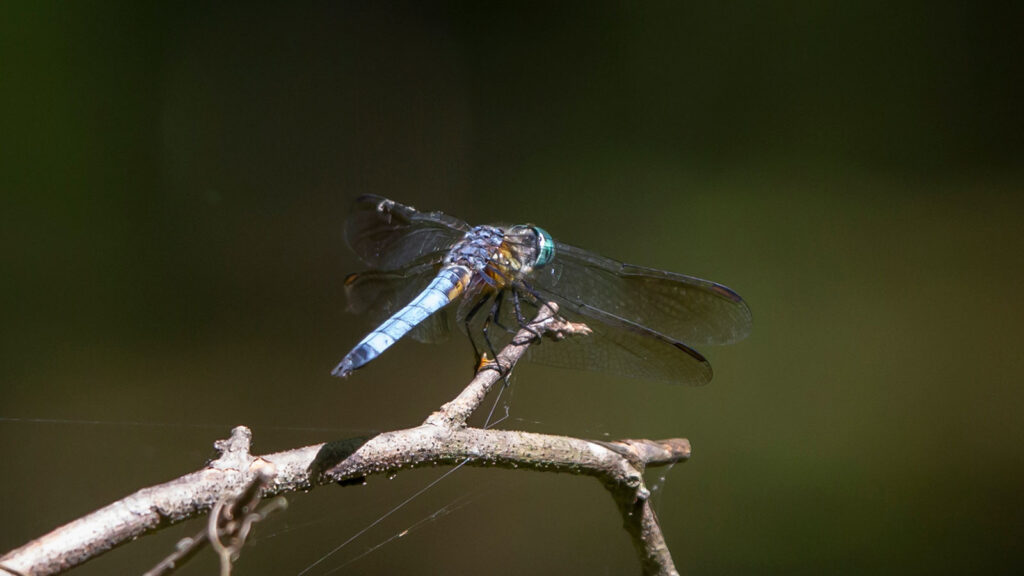
Dash gets his name from the powder-blue color of his abdomen. Mature male Blue Dashers have that bright blue body with a dark tip at the end. Their eyes can look green or blue-green, and their faces look pale or white.
Tootie sees Dash in the sunlight. “His eyes are blue too.”
Grandma says, “They can look blue-green, especially when the light hits them.”
Yoshi watches Dash turn his head. “He sees everything.”
Dragonfly eyes are huge compared with the rest of the head. They help Dash notice tiny movement in the air, avoid branches, watch for other dragonflies, and line up a fast chase.
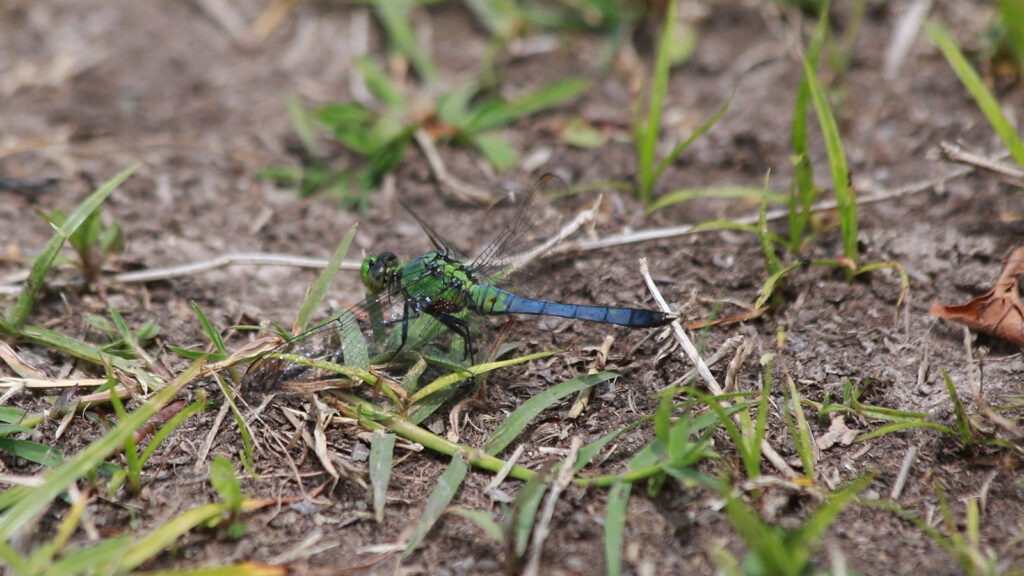
Dash’s blue body does not mean every Blue Dasher looks exactly the same. Females and young Blue Dashers are darker and have yellow markings. The bright powder-blue look tells Grandma that Dash is a grown male.
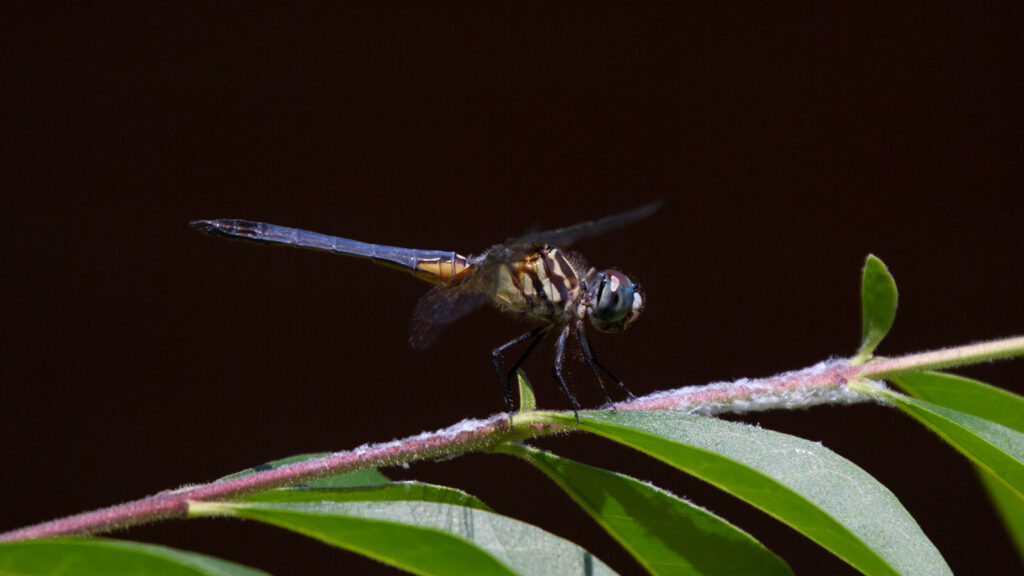
Dash has four wings. Those wings let him fly forward, backward, sideways, upward, and in quick sharp turns. He can hover briefly, but he often uses a fast dash from a perch to catch insects.
Tootie watches Dash sit on a twig over the creek. “Why does he stop if he likes flying?”
Grandma says, “The twig is his lookout post.”
Dash launches, turns left, drops lower, catches a small fly, and returns to another twig nearby.
Yoshi watches closely. “He watches, then dashes.”
“That is why Dash has a good name,” Grandma says.
His wings are clear with dark marks near the base. In bright sunlight, the wings can look almost invisible until Dash moves.
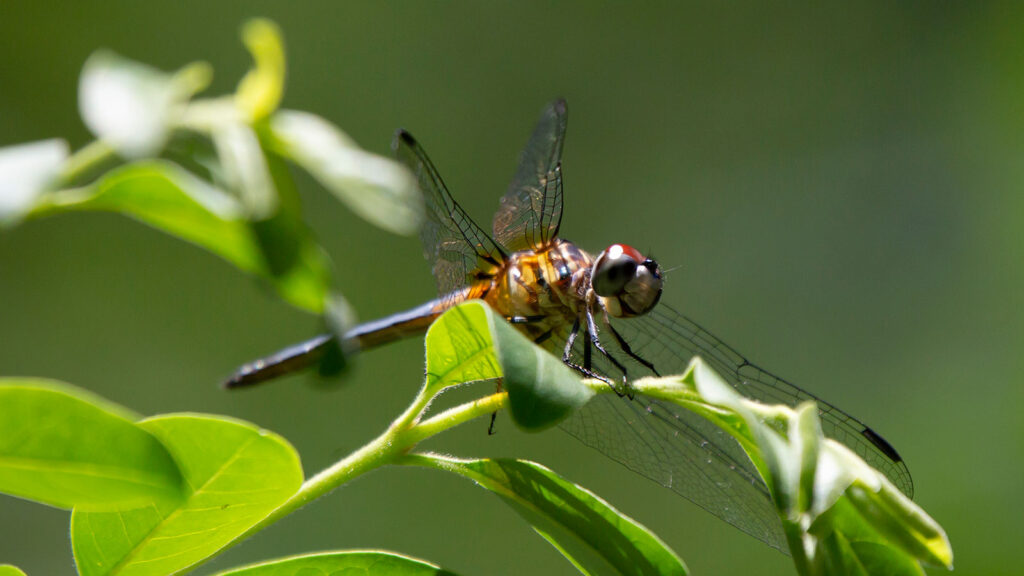
Dash and Dart are both dragonflies, but they are not the same kind. Dart is the dragonfly Tootie first saw patrolling the creek grass. Dash is a Blue Dasher with a powder-blue body, pale face, and dark tip at the end of his abdomen.
Dart may cruise through the yard and creekside air, changing direction quickly as he hunts. Dash often uses a perch, then makes a fast dash out after prey.
One afternoon, Dart flies over the creek while Dash is sitting on a reed.
Tootie points. “There are two.”
Grandma says, “Now you can compare them.”
Dart circles through the air.
Dash launches from the reed and catches a gnat.
Yoshi watches both dragonflies. “One keeps moving. One waits, then moves.”
Grandma nods. “Different styles. Same kind of job.”
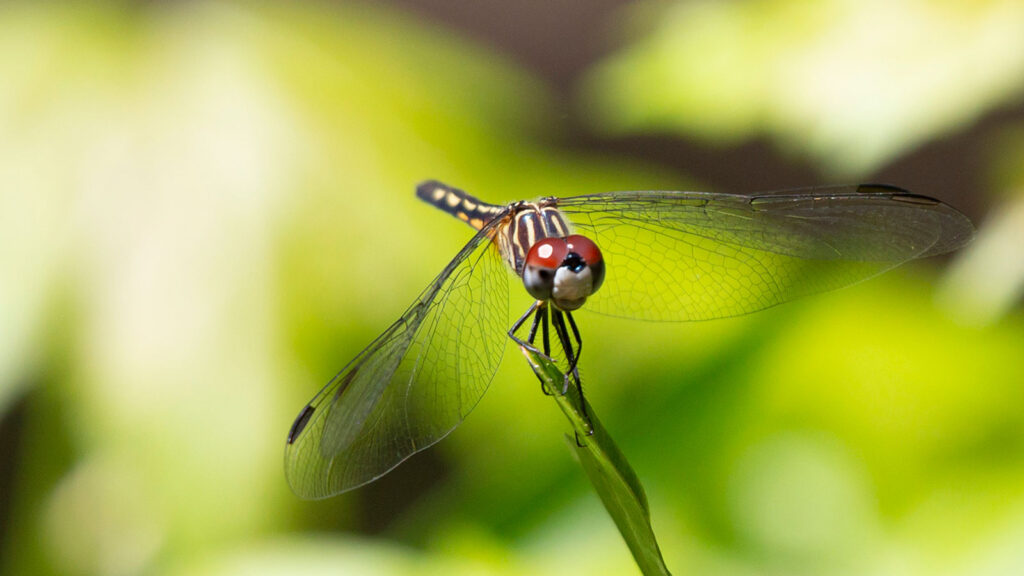
Dash sees the backyard from above the creek. He sees Chirp hiding in wet grass, Knossos waiting at the slow bend, Goldie’s web between tall plants, and Natalie moving through the creekside branches.
He also sees Tootie coming before Tootie gets close enough to notice him.
One afternoon, Inouar lands on a branch over the creek.
“You fly fast,” she says.
Dash does not answer.
Inouar copies a dragonfly wing sound.
Dash does not answer.
Inouar tries again.
Dash launches, catches a midge, and returns to the reed.
Tootie laughs. “He does not care.”
Grandma says, “Dash is listening for insects, not bird impressions.”
Yoshi watches Dash settle his wings. “He has work.”
Grandma likes Dash because he eats small flying insects. She does not try to catch him, swat at him, or let Tootie chase him through the creekside plants.
Dragonflies do not sting. Dash can bite tiny insects, but he does not need to bite people. He would rather fly away than deal with a big animal near his perch.
Tootie watches Dash rest on a reed. “Can I hold him?”
Grandma says, “No.”
“Tootie,” Yoshi adds.
“I only asked.”
Grandma points to the creek. “Dash needs a safe place to land, clean water for young dragonflies, and enough room to hunt. He does not need puppy paws.”
Tootie sits down beside the porch steps.
Dash returns to the reed.
Grandma says, “That is better.”
Dash needs clean water, creekside plants, safe slow-water edges, and many small insects. Keeping soap, oil, trash, fertilizer, and pesticides out of the creek helps young dragonflies grow underwater.
Leave some plant stems and branches along the creek edge where dragonflies can perch. A creek does not need to look trimmed like a sidewalk to be useful. Dash needs reeds, twigs, wet plants, open air, and a place where insects gather.
Grandma says, “Dash needs a healthy creek edge, not a bare muddy bank with nowhere to sit.”
Yoshi watches the reeds move. “And gnats.”
Grandma smiles. “He can find those.”
Dash the Blue Dasher
These are some helpful words for talking about this wild neighbor.
Dash the Blue Dasher
Good wildlife watchers ask good questions. Here are a few to get you started.
He has a powder-blue body and makes quick dashes from a perch to catch insects.
No. Dash is a Blue Dasher, while Dart is a different dragonfly.
Dash eats mosquitoes, gnats, flies, midges, and other small flying insects.
Yes. He began as a dragonfly nymph living in the creek.
No. Dragonflies do not have stingers.
A reed gives him a good perch where he can watch for insects.
No. Dash is wild and delicate. Watch him fly instead.
Watch dragonflies from a distance. Keep pesticides, fertilizers, oil, soap, and trash away from creek edges and slow-water areas where dragonfly nymphs grow. Keep children and pets from disturbing creek banks, and never encourage them to catch dragonflies. Think About They: Why does clean creek water matter even for a dragonfly that spends most of their adult life flying?
🏅 Explorer Progress