A Tootieโs Backyard Adventure

A Tootieโs Backyard Adventure
Adventure Friend: Moss the Barred Owl | Place Type: Dusk Wildlife-Watching Adventure | Best Time: Early evening, with an adult and a plan to leave before trails become dark
Grandma did not call this a night hike. She called it a purple-sky walk.
"We are going to Black Bayou Lake National Wildlife Refuge late enough to hear the day shift change," she said, "but early enough to leave before the trails get dark."
"How do you know when the sky is purple?" Tootie asked.
"You will know," Grandma said.
She packed water, a small flashlight, bug spray, a notebook, and a light jacket. She checked current refuge hours, visitor information, weather, and trail conditions.
"Flashlight rule?" Yoshi asked.
"Point it down when we need it. Do not shine it into animals' faces. Do not wave it around like a tiny lighthouse."
"I was not going to do that," Tootie said.
Yoshi's ears twitched.
Think About It: Why would Grandma plan to leave before a trail becomes fully dark even though some animals are active at night?
The Woods Change Shifts
The boardwalk and wildlife-viewing areas gave them a safe place to look across water and bottomland habitat. The afternoon light faded. The lake turned soft gray-blue. Insects began to call one by one.
"Did they wait until we got here?" Tootie asked.
"No," said a voice above him. "The woods have changed shifts."
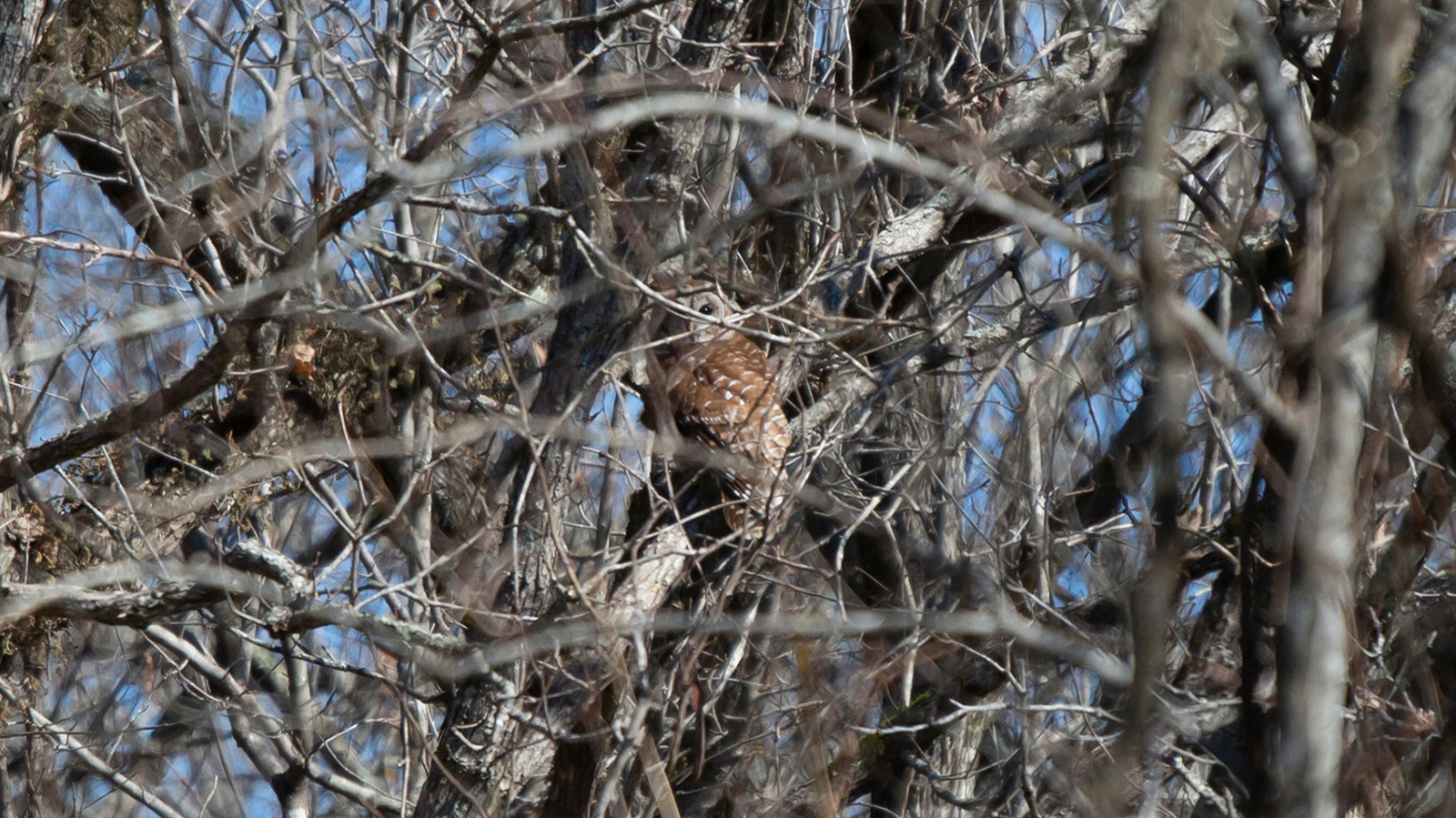
Tootie looked up. Moss the Barred Owl sat on a thick branch, round eyes watching from the shade.
"Moss!" Tootie whispered.
"Good," Moss said. "You finally stopped moving."
Grandma translated. Daytime animals were settling down, and many night-active animals were waking up. A bat crossed the open sky too fast for Tootie to follow.
"A bat?" he asked.
"Maybe," Moss said. "At this distance, we notice shape, movement, time, and place. We do not guess too hard."
Think About It: What sounds do you notice at dusk that you do not hear in the middle of a bright day?
Why Dusk Matters
Moss explained that animals use the same place at different times. A bird may feed in daylight. A frog may begin calling as light fades. A bat may hunt flying insects after sunset. An owl may watch from a perch. Moths may visit flowers after dark.
"So the trail belongs to everybody?" Tootie asked.
"No one animal owns it all the time," Grandma said. "But each animal needs space to live its life. We keep our voices low, stay on open paths, and leave before we become a problem for animals that need darkness."
"Darkness is not empty," Moss said. "Darkness is full of work."
Grandma explained that extra artificial light can affect wildlife. People need light for safety, so the goal is to use only the light needed, point it where it is needed, and avoid shining it into habitat.
Think About It: Why could a bright flashlight pointed into trees bother animals that are trying to hunt, hide, or rest?
The One-Minute Night Listen
Grandma set a one-minute timer. "Quiet bodies. Quiet voices. Notice without grabbing."
Tootie heard insects, a low call near water, a faraway dog, wind through leaves, and a small boardwalk creak when Yoshi shifted her weight.
"Now separate them," Moss said. "Which came from above? Which came from water? Which came from the ground? Which sounds stayed the same? Which appeared once and vanished?"
"That is a lot of homework for a walk," Tootie said.
"It is not homework," Moss replied. "It is listening."
Grandma handed him his notebook. "Write what you know. Use question marks for what you do not."
Think About It: Which is more useful in a field notebook: pretending you know every sound, or writing a question mark beside a sound you want to learn later?
Yoshi's Dusk Safety Check
Yoshi stood close to Grandma.
"Dusk safety report," she said. "We stay with our adult. We use only open visitor areas. We keep the flashlight pointed down. We do not reach into brush, holes, water, or under logs. We do not use owl calls or animal sounds from a phone to make wildlife come closer. We leave before the route becomes too dark to walk safely."
Grandma added, "We check refuge hours before every trip. A place may have daylight-only access, seasonal closures, hunting areas, or other rules that change."
Moss nodded. "An owl call played loudly can make real owls spend energy answering or defending territory. Let wild animals keep their own conversations."
"What if I play a song for them?" Tootie asked.
"No," said Grandma, Yoshi, and Moss together.
Think About It: Why should people let animal sounds happen naturally instead of trying to call wildlife toward them?
A Shadow Over the Lake
As the sky turned purple, a dark shape crossed above the lake. Then an insect bounced near the light. Then a frog called low and wet from somewhere under the trees.
Tootie wrote: MAYBE BAT. FROG NEAR WATER. BUGS LIKE LIGHT.
"That is a good start," Grandma said.
"The world does not run out of questions because you wrote one down," Moss said.
Tootie looked at the dark trees. "That is kind of nice."
"You can come back another day and notice something new," Grandma said.
Try It Yourself: With an adult, sit outside at dusk for three minutes. List sounds, then sort them into sky, trees, ground, water, or mystery. Do not use animal calls or chase anything you hear.
Dusk: The time after sunset when daylight fades but the sky still has light.
Nocturnal: Active mostly at night.
Light pollution: Extra artificial light at night that can affect people, wildlife, and the view of the sky.
Observation: Careful watching or listening to learn what is happening.
Questions Kids Ask
Why do owls hoot? Owls may call to communicate, defend territory, find a mate, or keep track of family members.
Can I use a flashlight to look for frogs? Use a flashlight only with an adult, stay on safe paths, and do not shine it directly at animals for long.
Are bats dangerous? Bats are important insect-eaters, but people should never touch them. Tell an adult if you see a bat on the ground or acting strangely.
Tootie packed up his notebook, Yoshi checked that everyone had their things, and Grandma smiled.
What will they notice on the next adventure?
๐ Keep Reading
Join Tootie, Yoshi, Grandma, and Moss the Barred Owl at Black Bayou Lake National Wildlife Refuge for a kid-friendly dusk adventure about bats, frogs, owls, and listening safely after sunset.
๐ Explorer Progress
Tootie's Backyard participates in the Amazon Associates program. Some links may be affiliate links, which can earn us a small commission at no extra cost to you. We share recommendations for adult Safety Pilots, families, educators, and outdoor learning.
Observe first. Keep your hands to yourself. Leave wild neighbors where they belong.
Tootie's Backyard is designed for families to explore together. We use cookies to save game progress and backyard discoveries โ no personal data is collected or sold. Any commercial content is intended for adult Safety Pilots, not children. Privacy Policy