A Tootie’s Backyard Adventure
A Tootie’s Backyard Adventure
A Lake Claiborne State Park Adventure
It was a clear fall morning when Grandma loaded the Jeep with water bottles, trail snacks, binoculars, a first-aid kit, and the red field notebook. The pine woods at Lake Claiborne State Park still held the cool shade of early morning, but Grandma packed hats anyway. By lunchtime, Louisiana can change its mind about the weather faster than Tootie can change his mind about snacks.
Tootie bounced into his seat. "Are we going to see a woodpecker?"
"We are going to walk one of the allowed trails," Grandma said. "Whether a woodpecker decides to make an appointment with us is up to the woodpecker."
Yoshi settled beside the cooler. Her pointy ears twitched at the rustle of the map. "What is our trail plan?"
Grandma tapped the park guide. "We choose a trail that fits the day, carry water, stay together, and turn around before anybody gets tired or hot. We do not climb on standing dead trees, poke into holes, or follow animal sounds into the woods."
"What if the animal sound is Wilson?" Tootie asked.
"Then you use your ears first," Grandma said. "Your paws can remain right where they are."
Think About It: Why might Grandma choose a trail that fits the day instead of choosing the longest trail every time?
A Knock From the Trees
Pine needles covered the trail like a soft brown carpet. Tall trunks rose above them. Some trees stood bright and living. Others carried peeling bark, old scars, or broken limbs. The lake flashed blue through the trees when the trail turned toward a rise.
Then Tootie heard it. Tap. Tap. Tap-tap-tap.
"Somebody is fixing a tree," he whispered.
"Somebody is checking one," called a voice overhead.
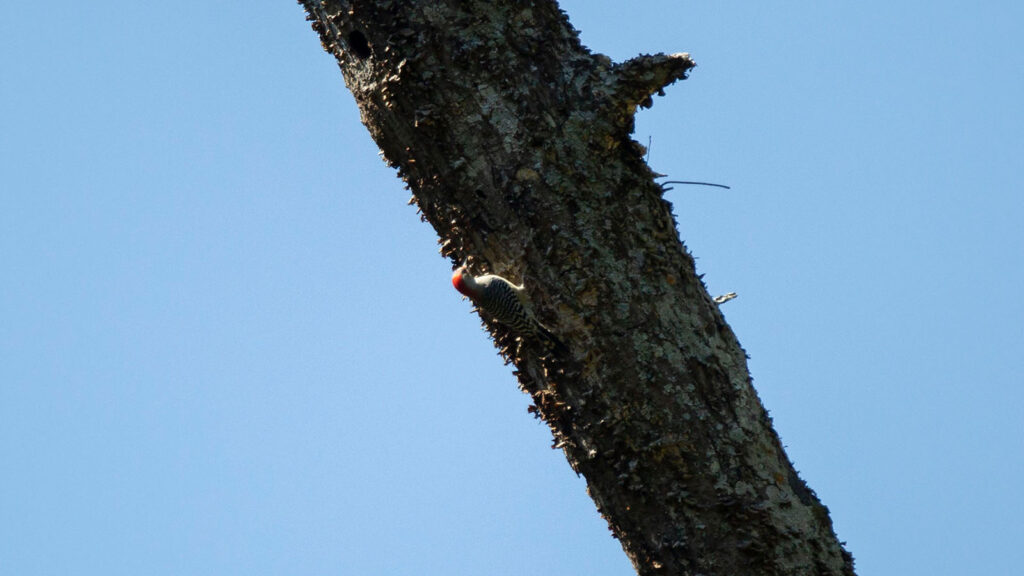
Wilson the Red-bellied Woodpecker clung to a pine trunk. His tool belt sat neat against his feathers. A little pencil tucked behind one wing. He looked from the trunk to Tootie as if Tootie had arrived late to a very serious inspection.
"That tree has a hole," Tootie said.
"That tree has a cavity," Wilson corrected. "A cavity can become a nest space, a resting space, or a shelter. It may help more than one animal over time."
Grandma pointed from the trail. "That standing dead tree is called a snag. It may look worn-out to us, but a snag can still provide food and shelter for wildlife."
Tootie leaned forward. "Can I see inside?"
Yoshi stepped close. "No. Weak branches can fall. Something may be using that hole. We do not turn a wildlife home into a surprise inspection."
Wilson nodded. "Excellent. A cavity has a door for its resident, not a welcome mat for everybody else."
Think About It: Why would a woodpecker hole be useful even after the woodpecker moves away?
Wilson’s Builder Lesson
Wilson flew to a lower branch where the group could see him without getting close. "A forest has more than tall green trees," he said. "It has old wood, young wood, fallen logs, bark, leaf litter, needles, roots, insects, moss, open space, shade, and water nearby. Different animals use different parts."
He tapped the trunk, softer this time. "I search wood for insects. I drum to communicate. I make cavities when the wood is right. Later, another bird, a squirrel, a bat, or a small owl might use an old cavity. That is why one tree can matter to many creatures."
Grandma explained that park and forest workers sometimes protect habitat in ways that surprise visitors. They may leave certain snags where it is safe, thin crowded trees, protect nesting areas, or use trained prescribed-fire crews to care for fire-adapted pine habitats. Children never light fires, enter closed areas, or play near burn work.
Tootie looked at the trail. "So a forest can be busy even when it looks quiet."
"Exactly," Wilson said. "Quiet is not empty. Quiet is often full of clues."
Think About It: Name three forest clues you could notice without touching, moving, or collecting anything.
The Wrong Way to Find a Woodpecker
The tapping started again farther up the trail. Tootie took three quick steps before Grandma called his name.
"I was sneaking," Tootie said.
Yoshi looked at the crackling pine needles behind him. "That sounded like a bag of chips fell down a staircase."
Wilson laughed so hard his pencil nearly slipped. "Woodpeckers notice motion. The best way to see one is to stop, listen, and let your eyes travel slowly up each trunk."
Grandma had Tootie plant both paws beside a trail marker. They listened for ten heartbeats. Then they looked from the tree bases up toward the branches. A flicker of red moved around a trunk. Wilson had shifted without a sound.
"There," Tootie breathed.
"Good looking," Wilson said. "You did not chase the answer. You let the clue arrive."
Think About It: How did Tootie’s body change when he went from chasing to observing?
Before they turned back, Yoshi checked the sky, the trail sign, and the water bottles. "Trail rules are wildlife rules too," she said. "Stay on the marked path. Do not climb snags or stick paws into cavities. Watch for roots, loose ground, insects, and changing weather. Tell Grandma before you step off the trail for any reason."
Grandma added, "Check the current park hours, trail notices, weather, and closures before you visit. A safe adventure begins before the car leaves home."
"And no cheese-cracker crumbs," Wilson said. "The woods already have enough crumbly nonsense without your help."
Think About It: What should a family check before starting a trail walk?
Grandma Brings It Home
On the ride home, Grandma handed Tootie the red notebook. "You do not need a national forest to practice Wilson’s lesson," she said. "A backyard tree, a schoolyard tree, or a safe park tree can hold clues too. Look carefully. Leave the tree and its neighbors alone."
Tootie wrote three words: bark, hole, tapping.
Then he added one more: "No paws."
Yoshi approved. "That is progress."
Think About It: Where could you safely practice a no-touch tree observation near home?
Try It Yourself: The No-Touch Tree Clue Hunt
1. With an adult, choose one safe tree in a yard, schoolyard, or public park.
2. Stand several big steps away. Look for bark patterns, cavities, leaves, seeds, insects, vines, or bird movement.
3. Draw the tree in a notebook and add three clues you noticed.
4. Return another day. What changed? Never peel bark, poke into holes, or pull anything from the tree.
Think About It: What would be a respectful way to learn about an animal home without getting close to it?
Cavity: A hollow space in a tree. Some birds make cavities, and other animals may use old cavities after they are empty.
More to Notice in a Piney Woods
Pine woods can look simple from the trail. Tall trunks, brown needles, a little sunlight, and a lot of sky. Then you slow down. You notice cones in different sizes. You notice bark with cracks, plates, and scars. You notice that one tree has a branch low enough for a squirrel while another has a smooth trunk with no branches until high above your head.
Wilson says the best tree detectives do not rush straight to a cavity. They notice the whole neighborhood first. Are there insects in the bark? Are there acorns, pine seeds, or berries nearby? Does the tree stand close to water or on a dry rise? Is the ground shady or sunny? A woodpecker lives in a place, not inside a single hole by itself.
Grandma also points out that different trees grow differently. Some have needles, some have broad leaves, some drop leaves in the cold months, and some hold on to green all year. A child does not need to identify every tree on the first visit. Starting with one question is enough: What makes this tree different from the one beside it?
Tootie decides he can identify every tree by smell. He sniffs one trunk, sneezes, and says, "This one smells like tree." Wilson writes that down in his notebook as: "Tootie’s first draft. Needs more details."
Think About It: What two details could help you describe a tree without knowing its name?
Grandma’s Field Notes
Grandma writes down the date, the weather, the trail name, and one thing the group heard before they saw anything. Field notes do not have to be fancy. A few honest observations make a strong beginning.
She tells Tootie, "Do not write what you think you are supposed to see. Write what you actually saw. A tiny beetle under a pine needle is still a real discovery."
Yoshi adds a safety note: a good field notebook can help you remember where you turned around, which trail you used, and what weather changed before you headed home.
Think About It: What three facts would you write in a field notebook before leaving a trail?
What the Pine Woods Need
Pine woods need more than pine trees. They need space for sunlight to reach the ground, plants that grow beneath the trees, insects that feed birds, safe places for young animals to hide, and healthy soil that holds water after rain. When one part changes, other parts can change too.
Wilson says a cavity tree can be part of a whole neighborhood. The insects in the bark feed a bird. The bird may make a cavity. Another animal may use the empty cavity. Seeds, leaves, and fallen wood keep feeding the soil. A forest works through many small connections, even when nobody sees all of them at once.
Grandma tells Tootie that a visitor can help without doing anything fancy. Stay on trails. Carry out trash. Leave nesting places alone. Report a hazard to park staff instead of trying to fix it yourself. Good care often looks like knowing when to leave a place alone.
Think About It: What is one small choice a visitor can make that helps protect forest habitat?
A Tiny Trail Challenge
Before leaving a forest trail, choose one tree you noticed and describe it to your grown-up without saying its name. Talk about bark, height, leaves or needles, holes, branches, and what grew near its roots. Your grown-up can guess which tree you mean. Then switch jobs. This helps you practice careful details instead of fast guesses.
Tootie tries it with Wilson. "Tall, brown, has a hole, looks like a tree." Wilson says that description has identified nearly every tree in Louisiana. Tootie tries again and does much better.
Think About It: How did adding more details make Tootie’s clue more useful?
Kid FAQs
Why do woodpeckers peck trees?
They may search for insects, communicate, or make and care for a cavity.
Can I look inside a woodpecker hole?
No. You could disturb an animal or get too close to an unsafe tree. Look from far away.
Why can a dead tree matter?
Standing dead trees and fallen logs can provide food, shelter, and places for many animals to live.
What should I do if I hear a woodpecker?
Stop, listen, and scan tree trunks slowly. You have a better chance of seeing it if you stay quiet.
Adventure Friend Rules
· Stay with your grown-up and follow posted rules.
· Stay on allowed trails, boardwalks, roads, and viewing areas.
· Watch wildlife from far away. Never chase, feed, grab, or collect it.
· Read current closures, weather alerts, seasonal notices, and permits before every visit.
· Take home photographs, drawings, and stories. Leave wild things where they belong.
Tootie packed up his notebook, Yoshi checked that everyone had their things, and Grandma smiled.
What will they notice on the next adventure?
📖 Keep Reading
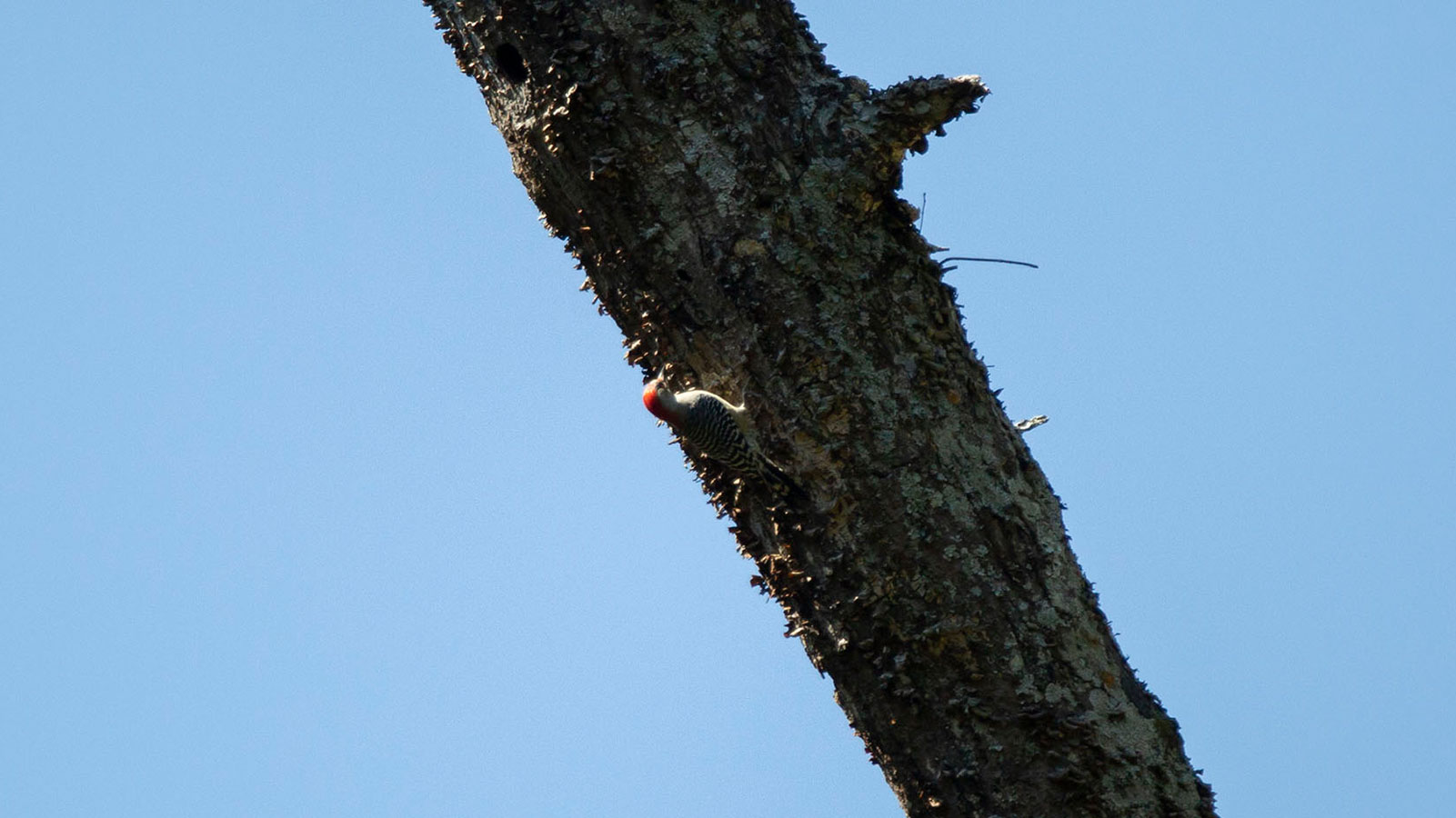
Join Tootie, Yoshi, Grandma, and Wilson the Red-bellied Woodpecker at Lake Claiborne State Park as they learn why tree cavities, snags, and quiet observation matter to wildlife.
Join Tootie, Yoshi, Grandma, and Wilson the Red-bellied Woodpecker at Lake Claiborne State Park as they learn why tree cavities, snags, and quiet observation matter to wildlife.
Join Tootie, Yoshi, Grandma, and Wilson the Red-bellied Woodpecker at Lake Claiborne State Park as they learn why tree cavities, snags, and quiet observation matter to wildlife.
🏅 Explorer Progress
Tootie's Backyard participates in the Amazon Associates program. Some links may be affiliate links, which can earn us a small commission at no extra cost to you. We share recommendations for adult Safety Pilots, families, educators, and outdoor learning.
Observe first. Keep your hands to yourself. Leave wild neighbors where they belong.
Tootie's Backyard is designed for families to explore together. We use cookies to save game progress and backyard discoveries — no personal data is collected or sold. Any commercial content is intended for adult Safety Pilots, not children. Privacy Policy