A Tootie’s Backyard Adventure
A Tootie’s Backyard Adventure
A J. C. “Sonny” Gilbert Wildlife Management Area Adventure
A cool morning followed an overnight rain in Central Louisiana. Grandma loaded the Jeep with water, snacks, rain jackets, a small first-aid kit, and the red field notebook. She also packed a change of socks because she had met Tootie before.
"Today we are visiting a wildlife management area," Grandma said. "That means we use extra care. We check the current rules, seasons, permits, roads, weather, and access information before we go."
Yoshi’s pointy ears twitched. "Why extra care?"
"Because WMAs are managed for wildlife and public use, and conditions can change with the season," Grandma said. "We stay with the plan, wear what the current rules call for, and leave if the area is not open for the kind of visit we planned."
Tootie looked at the rain jacket. "Can I jump in one puddle?"
Grandma considered. "A safe puddle. With permission. Not a creek, ditch, mud hole, or mysterious brown place that has swallowed a boot before lunch."
Think About It: Why might a wildlife management area have different rules in different seasons?
The Map Under Their Feet
The trail at J. C. “Sonny” Gilbert WMA moved through woods with ridges, creek bottoms, and damp places where the rain had darkened the soil. Leaves covered the ground in copper, brown, gold, and red. Every step made a soft crunch, except where the earth held water and made a quiet squish.
Tootie looked down. "The ground is messy."
"The ground is a map," said a calm voice from near a log.
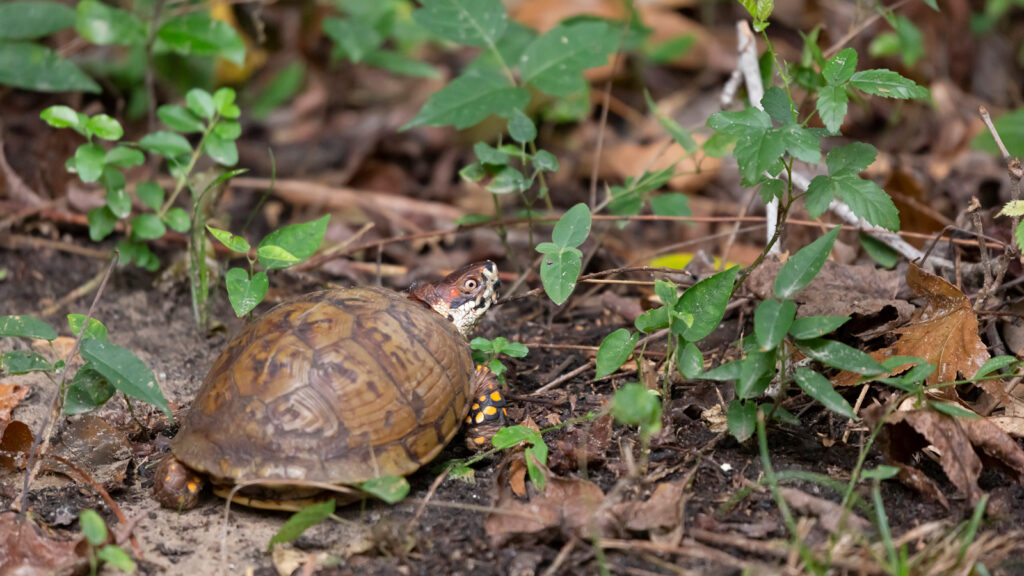
Bob the Eastern Box Turtle sat tucked among leaves. His shell carried the colors of old leaves and warm earth. Tootie almost stepped past him before Bob lifted his head.
"Bob! I thought you were a leaf pile with a helmet."
"A common mistake," Bob said. "The forest floor rewards those who look twice."
Yoshi lowered her nose, then stopped a respectful distance away. "What does the map say?"
Bob looked at the damp leaves. "It says who has passed through, where water moved, what has fallen from the trees, and where small creatures might find food or cover."
Think About It: Why might an Eastern Box Turtle blend in with leaves and soil?
Tracks, Leaves, and Tiny Roads
Bob pointed with one sturdy foot to a narrow trail through the leaves. It curved beneath a shrub, crossed a patch of bare soil, and disappeared under a fallen branch.
"A tiny road," Tootie said.
"Maybe," Bob said. "Small animals use the easiest paths through cover. But we do not tear up the leaves to find out who made it."
Grandma knelt beside the trail without touching it. "Leaf litter is not trash. It can hold insects, seeds, moisture, fungi, and hiding places. Many animals use it."
Tootie saw a small snail shell, a curled leaf, a beetle moving under a twig, and a print in damp soil. "There are clues everywhere."
"Yes," Bob said. "But a clue does not belong to us just because we saw it. The best forest detective leaves the evidence where it is."
Yoshi nodded. "Take a picture or draw it. No collecting."
Think About It: What is the difference between observing a clue and disturbing a clue?
The Wrong Way to Read the Map
Tootie spotted a little track in soft mud and started to follow it toward thick brush.
"Wait," Bob said, not loudly, but firmly enough that Tootie stopped.
"I was tracking," Tootie said.
"You were about to walk into cover where an animal might be resting," Bob replied. "A good tracker knows when the clue says stop."
Grandma pointed to the brush. "Animals use thick cover for safety. We do not push into it because we want a better look."
Yoshi checked the trail marker. "We can notice the track from here, then let the animal have the rest of its day."
Tootie studied the print again. "So I can learn from the track without following the animal."
"That is exactly right," Bob said.
Think About It: Why can stopping be part of being a good wildlife detective?
Bob’s Slow-Down Lesson
They sat on a dry bench for one quiet minute. At first, Tootie squirmed. Then he noticed a drop of water sliding down a leaf. He heard a bird calling from higher in the woods. He saw a small insect carry something much bigger than its own head across the soil.
"The forest floor looks different when you stop trying to get somewhere," Bob said.
Grandma smiled. "That is Bob’s lesson. Slow does not mean boring. Slow gives you time to notice what busy feet miss."
Tootie sighed. "I can be slow for one minute."
Yoshi smiled. "A mighty achievement."
Think About It: What might you notice in one quiet minute that you would miss while rushing?
Yoshi checked the sky and the trail ahead. "WMA safety rules," she said. "Stay with your grown-up. Follow current access and seasonal rules. Wear the clothing the area requires. Stay out of thick brush, deep mud, and creek edges. Do not pick up turtles, snakes, insects, bones, feathers, or anything else you find."
Grandma added, "On a WMA, current rules matter. Check the official information before each trip, even if you visited before."
Bob tucked his head a little closer to his shell. "And please watch your feet. The map has residents."
Think About It: What could you do before a WMA trip to make the visit safer for your family and wildlife?
Grandma Brings It Home
Back at the Jeep, Grandma brushed leaves from Tootie’s paws. "Bob showed us that the ground is full of stories," she said. "You can practice that in a yard, beside a sidewalk, or under a safe tree after rain."
Tootie opened the notebook and wrote: leaf, track, beetle, snail shell, stop.
"Why stop?" Yoshi asked.
"Because I am a better detective when I leave the suspect alone," Tootie said.
Think About It: What clue near home could you draw instead of picking it up?
Try It Yourself: Leaf-Litter Map
9. With an adult, choose a safe patch of leaves or mulch in a yard, park, or schoolyard.
10. Stand beside it without kicking through it. Look for colors, seeds, holes, twigs, insects, and animal signs.
11. Draw a small map of the patch. Label at least five clues.
12. Return another day after rain or wind. What changed? Leave every leaf, insect, and animal where you found it.
Think About It: How can a drawing help you remember a nature clue without taking it home?
Leaf litter: Fallen leaves, twigs, and other plant pieces that cover the ground. Leaf litter can shelter insects, hold moisture, and provide food and cover for many animals.
More to Notice on the Forest Floor
The forest floor has its own weather. Leaves can stay damp after the air feels dry. A log can hold shade on one side and sun on the other. A tiny dip in the soil can collect water after rain. These small places matter to beetles, fungi, worms, snails, insects, and animals that search for food close to the ground.
Bob says that leaf litter works like a blanket and a pantry. It can cover the soil, hold moisture, break down into nutrients, and give small creatures a place to hide. That does not mean every pile of leaves must stay everywhere in a yard. It means a child can learn to see a leaf pile as habitat instead of plain old mess.
Grandma shows Tootie how to compare two safe spots from the trail: one dry and sunny, one damp and shady. The leaves look different. The bugs may be different. The smells may be different too. They do not need to touch anything to notice the change.
Tootie says his first forest-floor map will have a big warning symbol by the mud puddle. Yoshi says, "Good. Label it ‘ask first.’"
Think About It: How could sun, shade, and rain make two leaf piles different?
Grandma’s Field Notes
Grandma writes down the weather and the ground condition: "Cool after rain. Leaves damp. Trail firm. One tiny track near brush." She does not guess the animal from one print. She writes, "Small track. Need more clues."
Bob approves. "A field note can hold a question. It does not have to rush into an answer."
Tootie adds a careful drawing of the track, then marks the edge of the brush with a big circle that says, "Stop here." He has learned that a map can show where not to go, too.
Think About It: Why is it better to write a question than to pretend you know an answer you do not know yet?
What the Forest Floor Needs
The forest floor needs time. Leaves fall, soften, break apart, and return nutrients to the soil. Fungi, insects, and tiny creatures help with that work. The process may look slow, but it keeps soil rich enough for plants to grow and feeds many small animals along the way.
Bob explains that people sometimes see a leaf pile and think it is nothing but cleanup waiting to happen. In a wild place, that leaf pile can be shade, food, cover, and a rainy-day roof. A child can respect that by looking closely without turning the whole patch inside out.
Grandma says good trail visitors make fewer changes than they think. They do not kick through every leaf pile, build new shortcuts, or drag sticks across the trail. They let the woodland keep its own small roads and rooms.
Think About It: What might happen to small animals if every leaf pile in a woodland was kicked apart?
A Tiny Trail Challenge
Before you leave the forest floor, pick one safe spot you observed and describe it in three layers: what was above the ground, what was on the ground, and what might be under the leaves or soil. You do not need to dig. Use your eyes and imagination carefully.
Tootie says his spot has a tree above it, leaves on it, and “probably twelve thousand beetles” under it. Bob says the number may be a little ambitious, but the idea is sound.
Think About It: How does thinking in layers help you notice a habitat more carefully?
Kid FAQs
Why do box turtles move slowly?
A turtle’s body and shell work differently from a dog’s or bird’s body. Moving slowly can also help a turtle stay hidden.
Can I pick up a box turtle?
No. Leave wild turtles where you find them unless a wildlife professional or adult with proper instructions says otherwise.
Why should I leave leaves on the ground?
Leaf litter can help insects, fungi, plants, and small animals. In a managed yard, a grown-up may rake some leaves, but a quiet corner can still help wildlife.
What is a wildlife management area?
It is public land managed for wildlife habitat and outdoor recreation. Rules, access, and activities can change by season and location.
Adventure Friend Rules
· Stay with your grown-up and follow posted rules.
· Stay on allowed trails, boardwalks, roads, and viewing areas.
· Watch wildlife from far away. Never chase, feed, grab, or collect it.
· Read current closures, weather alerts, seasonal notices, and permits before every visit.
· Take home photographs, drawings, and stories. Leave wild things where they belong.
Tootie packed up his notebook, Yoshi checked that everyone had their things, and Grandma smiled.
What will they notice on the next adventure?
📖 Keep Reading
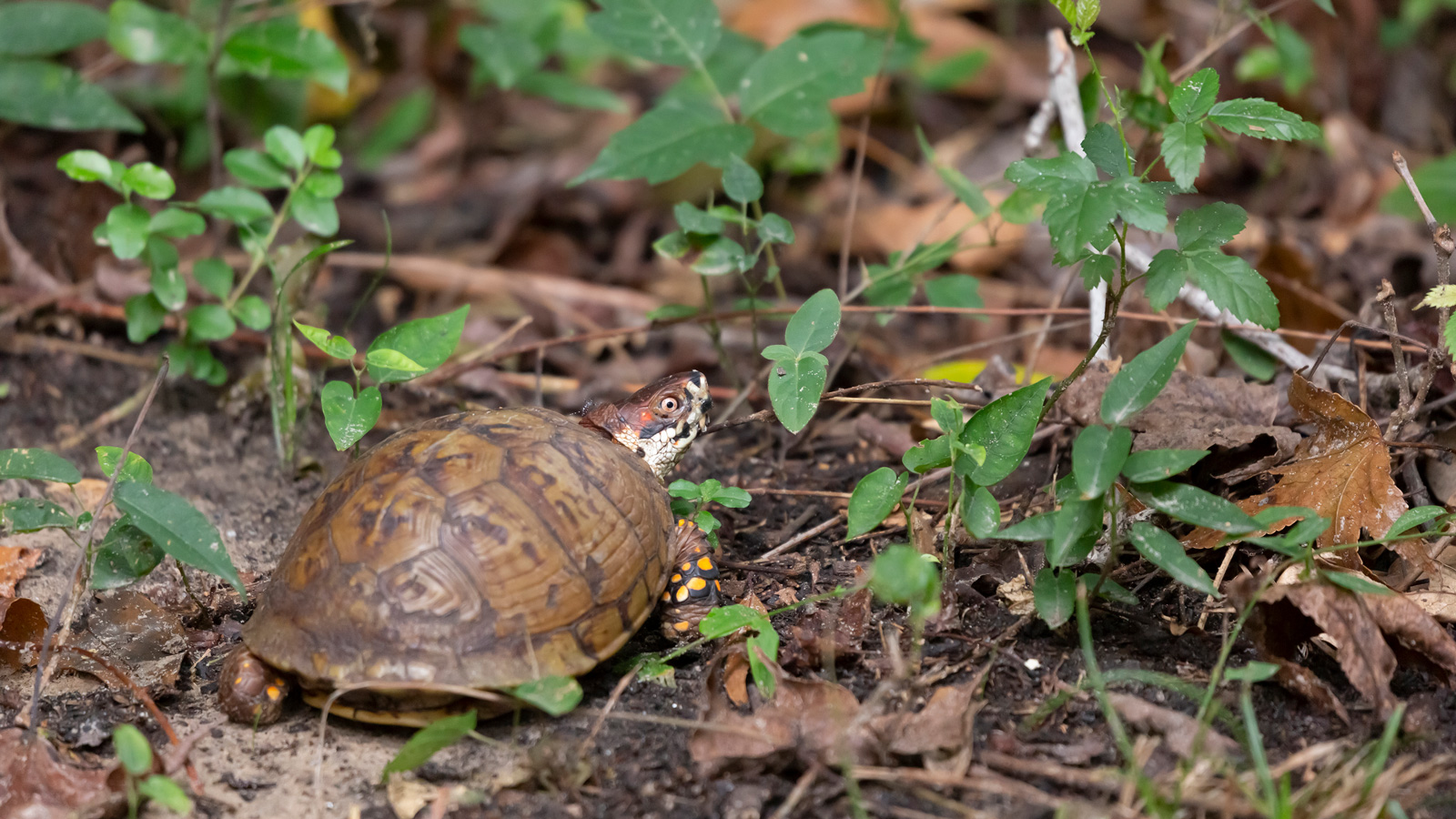
Join Tootie, Yoshi, Grandma, and Bob the Eastern Box Turtle at J. C. “Sonny” Gilbert Wildlife Management Area as they read tracks, leaves, and tiny forest-floor clues without disturbing wildlife.
Join Tootie, Yoshi, Grandma, and Bob the Eastern Box Turtle at J. C. “Sonny” Gilbert Wildlife Management Area as they read tracks, leaves, and tiny forest-floor clues without disturbing wildlife.
Join Tootie, Yoshi, Grandma, and Bob the Eastern Box Turtle at J. C. “Sonny” Gilbert Wildlife Management Area as they read tracks, leaves, and tiny forest-floor clues without disturbing wildlife.
🏅 Explorer Progress
Tootie's Backyard participates in the Amazon Associates program. Some links may be affiliate links, which can earn us a small commission at no extra cost to you. We share recommendations for adult Safety Pilots, families, educators, and outdoor learning.
Observe first. Keep your hands to yourself. Leave wild neighbors where they belong.
Tootie's Backyard is designed for families to explore together. We use cookies to save game progress and backyard discoveries — no personal data is collected or sold. Any commercial content is intended for adult Safety Pilots, not children. Privacy Policy