Why does Biv yell so much?
Grandma says:
Blue Jays use loud calls to talk to other jays and warn birds about danger.
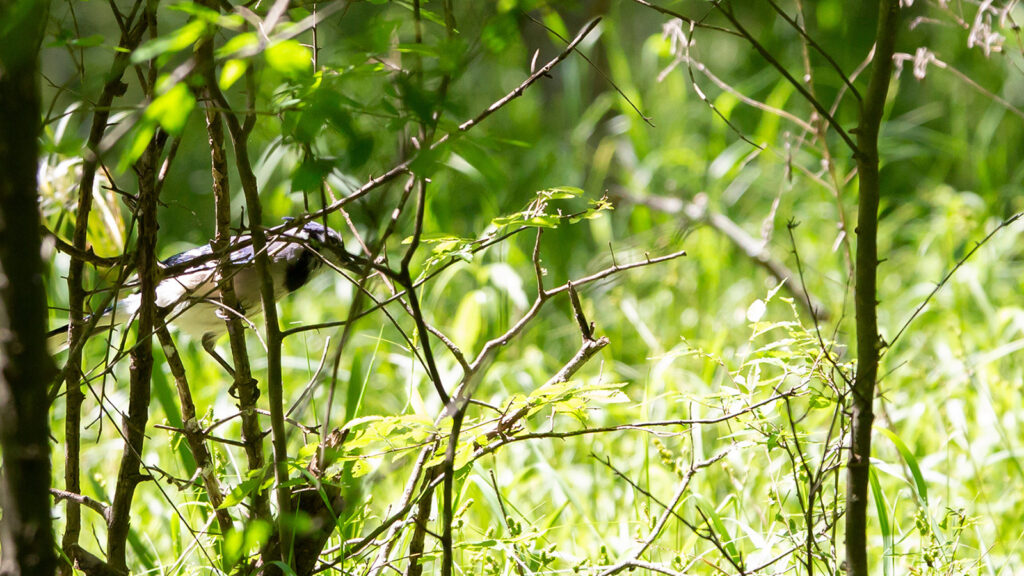
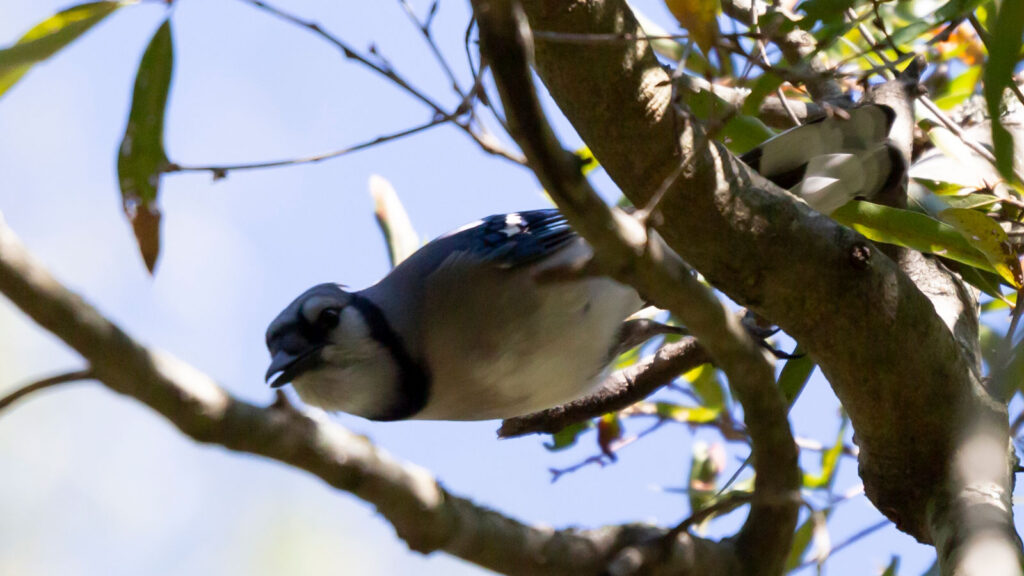
Biv has a loud voice, a blue crest, and very serious opinions about pecans.
Biv lives near Grandma’s backyard in a tall tree close to the two pecan trees.
That is his favorite part of the yard.
Wilson the Red-bellied Woodpecker spends time there too. Kevin the Crow does as well. The three birds do not always agree about who gets the best branch, the best pecan, or the best place to watch the yard. Still, they see each other most days.
Tootie and Yoshi know Biv by sound before they see him.
“Jay! Jay! Jay!” Biv calls from the tree.
Tootie looks up.
“Biv is fussing again,” she says.
Yoshi listens for a minute. “How do you know he is fussing?”
Grandma looks toward the pecan trees. “Because Biv fusses like he has a clipboard and everybody else missed the meeting.”
Biv does not have a clipboard.
He does have a crest.
A crest is the little group of feathers on top of his head. Biv can lift those feathers up when he feels alert or upset. He can lower them when he rests or feeds near birds he knows.
His bright blue feathers make him easy to spot. He also has white feathers on his chest and belly, black marks around his neck, and blue-and-black bars across his wings and tail.
Biv looks like he dressed for a parade.
Then he opens his mouth and sounds like somebody dropped a metal trash can down a staircase.
That is a Blue Jay.
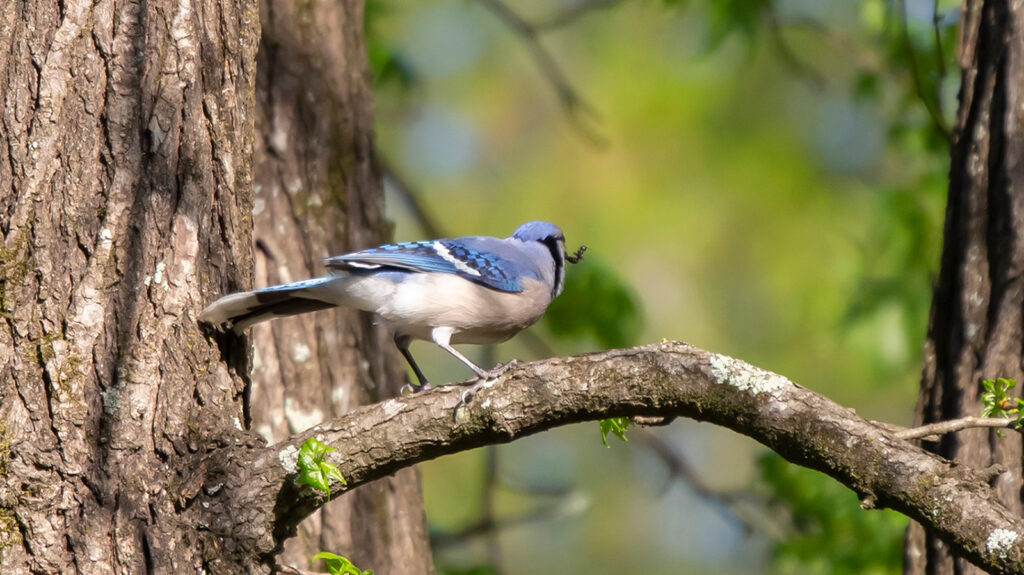
Biv does not live inside the pecan trees all year.
Blue Jays sleep in trees, shrubs, and thick brush where branches and leaves help hide them. During nesting season, Biv and his mate build a nest in a tree.
Their nest looks like a cup made from twigs, roots, grass, mud, and other soft materials. They build he high enough off the ground to keep he away from many animals that might bother eggs or baby birds.
Biv’s nest needs to hold eggs, babies, food, and two tired parent birds who have not had a quiet morning since spring started.
Grandma says that sounds familiar.
Tootie asks if Biv has a bedroom.
“Sort of,” Grandma says. “His bedroom has no walls, no roof, and a squirrel who keeps checking the pantry.”
Biv does not care much about the squirrel joke. He keeps an eye on squirrels anyway.
Squirrels can eat eggs. Snakes can eat eggs too. Raccoons, crows, and some other birds may look for nests. Hawks and owls can catch adult Blue Jays.
That is why Biv pays attention.
He notices movement in the trees.
He listens for strange sounds.
He calls loudly when he sees danger.
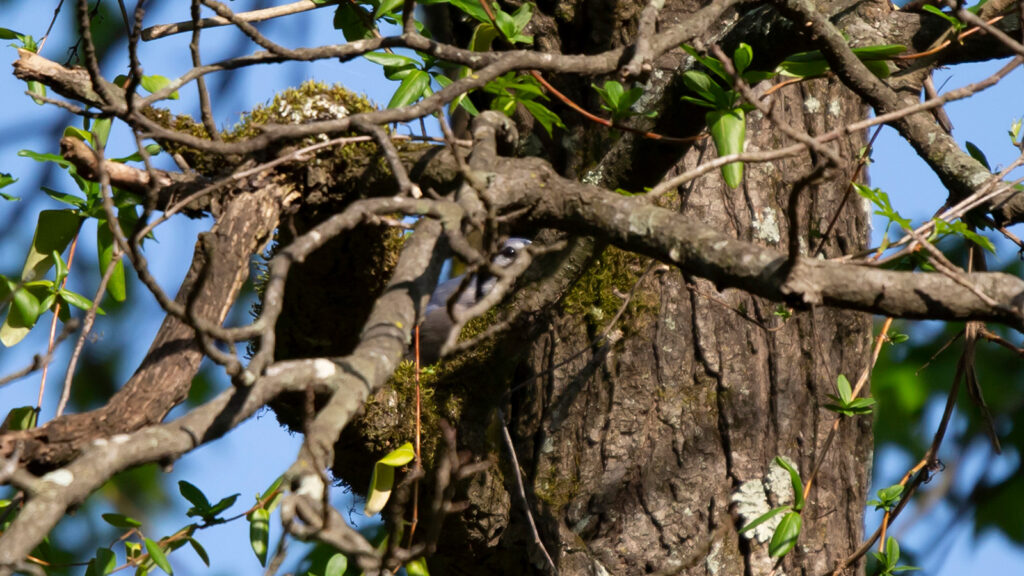
When Biv was very small, he lived in a nest with his parents and his brothers and sisters.
His mother laid eggs in the spring. The eggs were pale blue, greenish, or buff-colored with little brown and gray spots.
Biv’s parents took turns caring for the nest. They brought food. They watched for danger. They kept the babies warm.
When Biv hatched, he did not look much like the proud Blue Jay he is now.
Baby Blue Jays have very few feathers at first. They cannot fly. They cannot find food on their own. They sit in the nest with wide mouths open, ready for a parent to bring the next bite.
Biv’s parents brought insects, caterpillars, and other soft foods that baby birds could eat.
As Biv grew, his feathers came in. His wings got stronger. His tail got longer. He began hopping around the branches near the nest.
Then came the part every baby bird looks forward to and every parent bird probably dreads a little.
Biv learned to fly.
Young Blue Jays leave the nest after a few weeks, but their parents still feed them and watch over them for a while. A young jay may follow his parents through the trees, call loudly for food, and practice landing on branches.
That first year teaches a Blue Jay plenty.
Which trees have food.
Where hawks may hide.
How to land without crashing into a branch.
Which squirrels steal pecans.
Which humans put out birdseed.
Biv grew up fast, but he did not grow up alone.
Now Biv is an adult. He may have a mate during nesting season. Together, they build a nest, care for eggs, and feed their young.
Biv’s family stays busy from spring through summer.
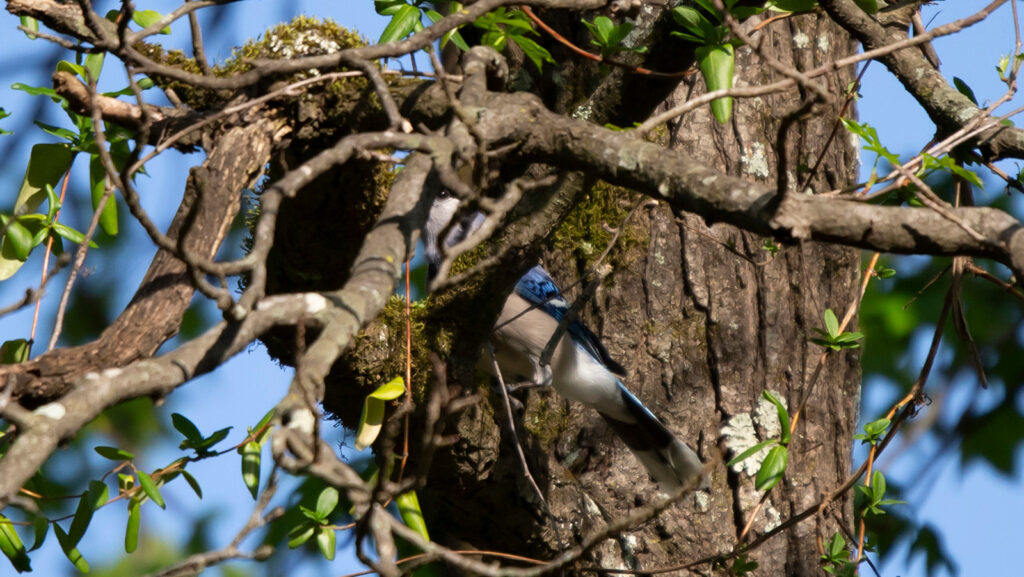
Biv likes pecans.
He likes acorns too.
He likes sunflower seeds, berries, small fruits, insects, caterpillars, beetles, spiders, and other small things he can find in trees, shrubs, and on the ground.
Blue Jays eat many kinds of food. That makes them omnivores.
An omnivore eats both plant foods and animal foods.
Biv needs different foods at different times of year.
In spring and summer, insects help feed growing baby birds. Caterpillars, beetles, and grasshoppers give young birds protein.
Protein helps bodies grow.
In fall, nuts become important. Pecans, acorns, and other hard foods help Biv get ready for cooler weather.
Biv does not swallow every nut as soon as he finds he.
Sometimes he hides food.
He may carry an acorn or pecan away from the tree, push he into soft ground, and cover he with leaves. Then he can come back later when food is harder to find.
That is called caching.
Tootie calls he “secret snack hiding.”
Yoshi says, “That sounds smart.”
Grandma nods. “Birds have been keeping track of snacks longer than people have been losing their car keys.”
Biv’s hidden nuts do not always stay hidden.
Sometimes he forgets one.
Sometimes another animal finds one.
Sometimes the nut grows into a new tree.
That happens because a nut has a seed inside he.
Blue Jays help spread oak trees when they carry and bury acorns. A jay may forget an acorn, and that acorn may grow into an oak tree.
Tootie looks up at Biv. “So you planted all the forests?”
Biv fluffs up his crest.
“I replanted them after the Ice Age,” he says.
Yoshi blinks. “You are not that old.”
Biv gives one sharp jay! call and flies off with another pecan.
Grandma watches him go. “Well, he has been taking credit for he ever since.”
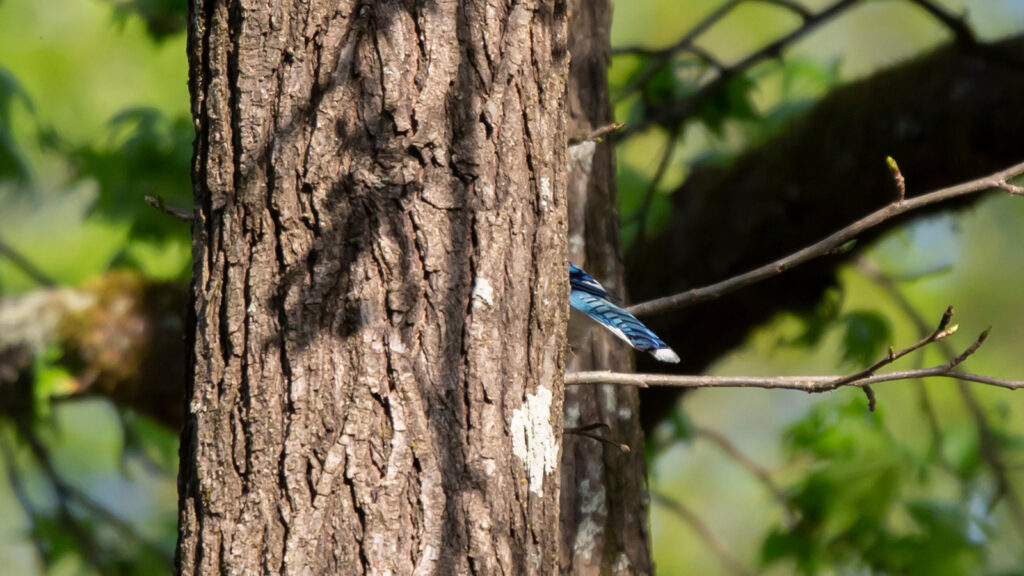
Blue Jays have many calls.
Some calls sound like “jay.”
Some sound harsh and scratchy.
Some warn other birds about danger.
Biv may shout when he sees a hawk flying overhead. Smaller birds sometimes hear a Blue Jay warning call and hurry into thick bushes or trees.
That means Biv’s loud voice can help other birds notice danger.
He does not do he because he wants an award.
He does he because a hawk is a problem for everybody near the yard.
Biv can also copy some sounds.
Blue Jays sometimes copy hawk calls. That can confuse other birds. He may also make other birds move away from food.
Tootie hears Biv make a sharp call one afternoon.
“Is that a hawk?” she asks.
Grandma listens for a moment.
“Maybe,” she says. “Or maybe Biv is practicing his theater voice.”
Yoshi looks toward the trees. “Can birds do theater?”
Grandma says, “Biv can.”
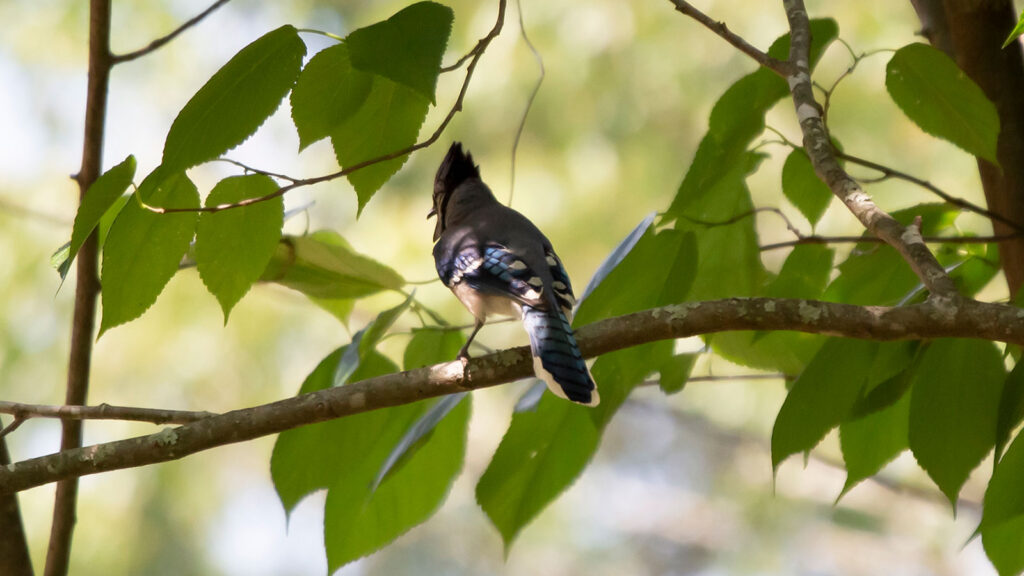
The two pecan trees keep Biv busy.
In warm weather, he checks the branches for insects.
In fall, he looks for pecans.
He watches Wilson climb the bark with his stiff tail feathers braced against the tree trunk. Wilson pecks and taps while he looks for insects.
Kevin the Crow walks across the yard or flies in from another tree. Kevin notices everything. He notices fallen food. He notices people outside. He notices when Biv has a pecan.
Biv notices Kevin noticing.
That usually starts a disagreement.
Biv may give a loud call.
Kevin may call back.
Wilson keeps looking for food because woodpeckers have better things to do than argue about bird manners.
Tootie and Yoshi watch from the porch.
“Who won?” Yoshi asks.
Grandma looks at the birds.
“The pecan tree,” she says.
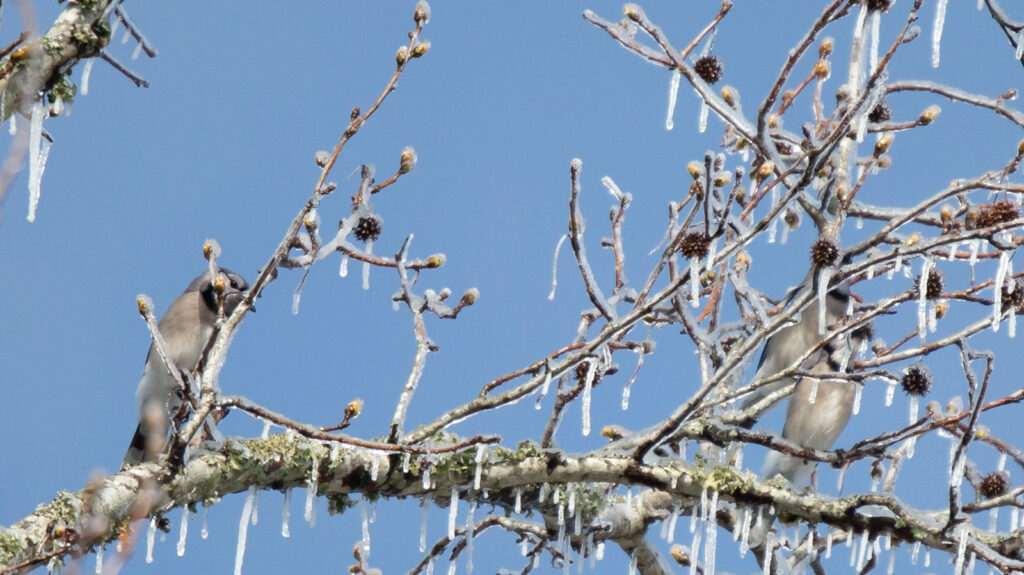
No.
People sometimes see Biv’s blue feathers and call him a bluebird.
Blue Jays and bluebirds are different birds.
A Blue Jay is bigger than an Eastern Bluebird. Biv has a tall crest on his head, black marks around his neck, and loud calls.
An Eastern Bluebird has a rusty orange chest and a smaller, softer voice.
Biv also belongs to the crow and jay family.
That makes sense to Grandma.
“Blue Jays and crows both have a lot to say,” she says.
Tootie asks, “Do they ever stop talking?”
Grandma looks toward the pecan trees.
Then Biv calls.
Then Kevin calls.
Then Wilson starts drumming on the trunk.
Grandma says, “Nope.”
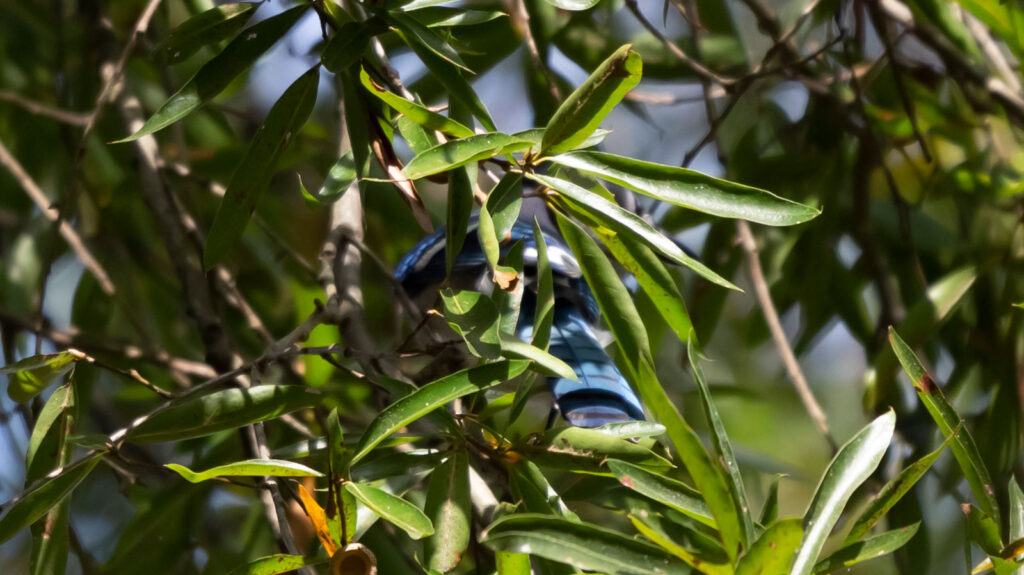
Biv does best when he has trees, shrubs, food, and water.
A bird feeder with sunflower seeds can bring Blue Jays close enough to watch. A tray feeder or platform feeder works better for bigger birds than a tiny tube feeder.
Birds also need water.
A shallow birdbath can help, especially during hot weather. Keep the water clean. Place he where birds can see around them and where cats cannot sneak up close.
Native plants help too.
Trees and shrubs grow berries, seeds, nuts, and insects. Insects matter because many birds feed insects to their babies.
You can also help Biv by keeping cats indoors.
Outdoor cats catch many birds. Biv can fly away from some danger, but baby birds and young birds have a harder time.
When you watch Biv, give him space.
Do not throw things at him.
Do not chase him.
Do not climb near a nest.
Biv has enough on his plate without a kid in a tree trying to inspect his house.
Draw a maze with these parts:
Start: Biv on Grandma’s porch rail
Safe stops: a sunflower-seed feeder, a birdbath, a berry bush, and Wilson on a tree trunk
Wrong turns: a cat hiding under a bush, a hawk shadow, a window, and Kevin guarding a pile of snacks
Finish: The pecan tree with Biv’s hidden pecan
Add Tootie and Yoshi near the porch. They can point toward the safe path.
Maze caption:
Biv found a pecan, but Kevin saw him too. Help Biv reach his hiding place without running into danger.
Biv the Blue Jay
These are some helpful words for talking about this wild neighbor.
Biv the Blue Jay
Good wildlife watchers ask good questions. Here are a few to get you started.
Blue Jays use loud calls to talk to other jays and warn birds about danger.
No. Biv eats nuts, seeds, fruit, insects, caterpillars, spiders, and other foods.
Blue Jays can find many of the nuts and seeds they hide. Some get forgotten, though.
Biv may chase smaller birds away from food. He also eats mostly nuts, seeds, insects, and fruit. Give all birds room at feeders so nobody gets crowded.
No. Blue Jays build nests for raising babies. They rest in trees and thick plants at other times.
His crest can lift when he feels alert, upset, or excited.
No. Blue Jays and bluebirds are different kinds of birds.
Watch birds from a distance. Do not touch nests, eggs, baby birds, or wild birds. Keep cats indoors during bird-watching time. Clean bird feeders and birdbaths regularly, and wash hands after handling any feeder or birdbath.
🏅 Explorer Progress