Why is Fenn called a fence lizard?
Grandma says:
Eastern Fence Lizards are often seen sitting on fences, logs, trees, and other sunny surfaces.
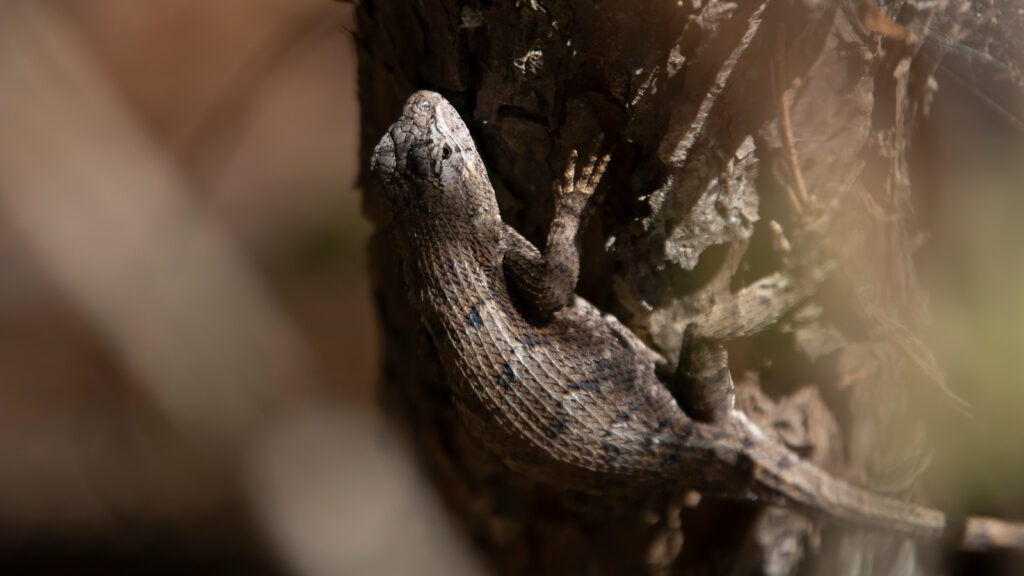
Fenn has rough scales, fast feet, and a favorite fence rail that he treats like the best seat in the whole backyard.
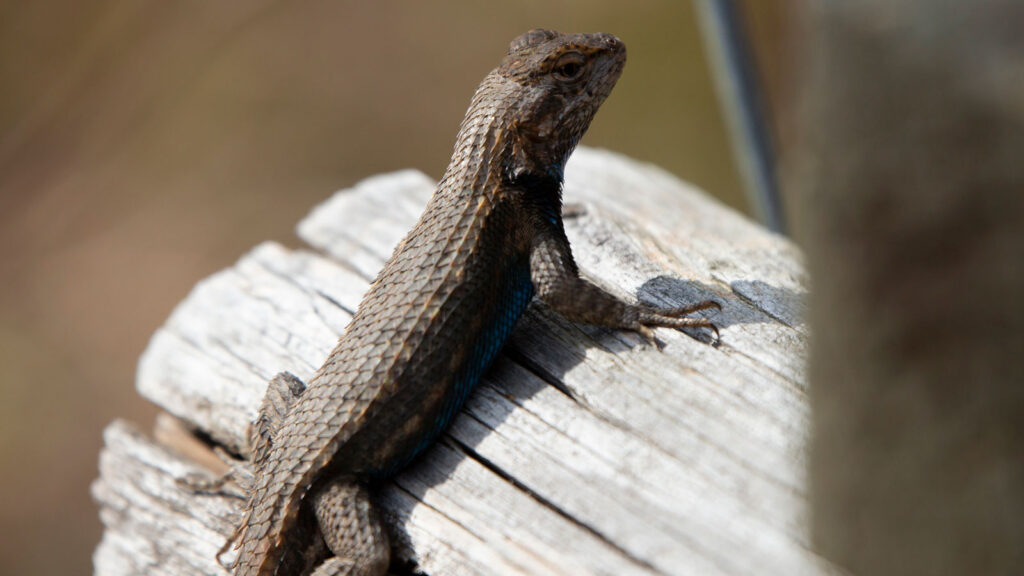
Fenn is an Eastern Fence Lizard. He is gray-brown with dark wavy lines across his back, rough scales that feel more like tiny bumps than smooth skin, and a long tail that helps him balance while he climbs. When the weather turns warm, Fenn spends part of the day on the back fence, a tree trunk, a log, or the sunny edge of Grandma’s flower bed.
Tootie notices Fenn one morning when Grandma is carrying a watering can toward the tulips. Something gray-brown streaks up the fence, then stops halfway up a post. They stays so still that Tootie thinks they are a piece of bark until their head turns.
“Fence bark moved,” Tootie says.
Yoshi’s pointy ears twitch. She watches the post without stepping closer. “That is not bark.”
Grandma looks up and smiles. “That is Fenn. He is an Eastern Fence Lizard.”
Fenn presses flat against the wood, his colors matching the old boards almost perfectly. He does not blink at Tootie. He does not wave. He just watches the yard like a tiny gray sheriff who has already seen enough foolishness before breakfast.
Tootie leans closer. “Is he named Fenn because he lives on the fence?”
Grandma nods. “That is one reason.”
Yoshi watches Fenn turn his head toward a beetle crawling near the flower bed. “The other reason is that he looks like a Fenn.”
Grandma says, “That is not science, but they are good enough for this yard.”
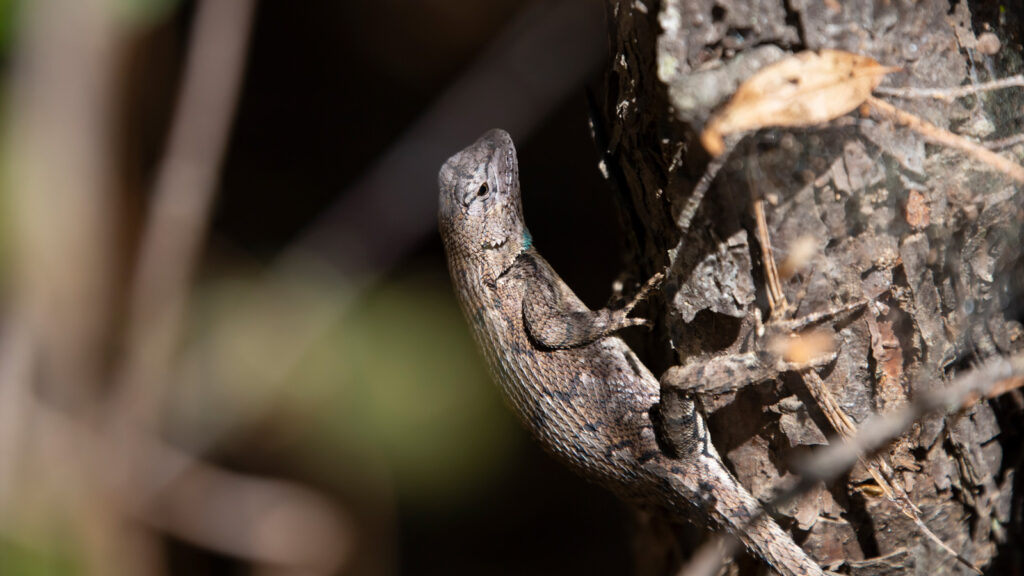
Fenn lives around the back fence, pecan trees, old logs, brushy corners, and sunny spots where he can warm himself. Eastern Fence Lizards like places that have both open sunshine and nearby cover. They need a warm place to sit, but they also need cracks, leaves, bark, logs, or low branches where they can duck away when something bigger comes through.
The fence is one of Fenn’s favorite places because they gets warm in the sun and gives him a good view of the yard. From there, he can spot moving insects, watch Tootie bounce around the porch, and keep an eye on Scott and Phoenix when they race through the trees. He can also disappear quickly if he sees a bird, a cat, or a dog coming too close.
Grandma says the fence is like Fenn’s lookout tower.
Tootie looks at the fence post. “Does he sleep there too?”
“Sometimes he rests in cracks, under bark, beneath logs, in leaf litter, or in other sheltered places,” Grandma says. “But he does not stay out on top of the fence all night. He needs cover when the air cools down.”
Yoshi looks toward the flower bed. “He needs sun and hiding places.”
Grandma nods. “Exactly. A good backyard has more than one kind of room.”
Fenn likes the sunny side of the yard. Gee uses the tulips and back fence too, but Gee is bright green more often and climbs around leaves and stems. Fenn looks more like bark, dirt, fence boards, and dry leaves. The two lizards may share part of the yard, but they do not look or behave exactly the same.
Fenn began life inside a small egg hidden in warm soil. His mother found a good spot where the dirt stayed loose enough for digging and warm enough for the eggs to develop. She laid the eggs, covered them, and left them there.
Fence lizard mothers do not sit on eggs like birds. They do not build a nest with twigs and leaves. They do not bring food after the babies hatch. The eggs stay underground while the little lizards grow inside them.
Tootie looks surprised. “Nobody checks on the babies?”
Grandma shakes her head. “Not the way Roy and Renee check on their babies. Fence lizards start life in a different way.”
After the eggs hatch, the young lizards come out already shaped like tiny versions of adults. They have little legs, little tails, small claws, and rough scales. They may be very small, but they already have to find insects, warm themselves in the sun, and hide from animals that might eat them.
Yoshi watches Fenn stay still against the fence. “They have to learn fast.”
“They do,” Grandma says. “A young lizard learns which places are warm, which places are safe, and which shadows mean trouble.”
Fenn grew by eating insects and shedding his old skin as his body got bigger. A lizard cannot keep wearing the exact same skin forever, so their skin loosens and comes off in pieces. Fenn may rub against bark or rough wood while he sheds, and afterward his new skin fits better.
Tootie thinks that sounds strange. “Does they hurt?”
“Usually they do not hurt,” Grandma says. “They are more like outgrowing clothes you cannot take off the normal way.”
Yoshi looks at Fenn’s tail. “Do young lizards know how to climb right away?”
“They can climb early,” Grandma says, “but they still have to practice being quick, being careful, and knowing when to freeze.”
Tootie glances toward the fence. “I am good at being quick.”
Grandma smiles. “Fenn is good at knowing when not to move.”
Yoshi says, “That is the harder part.”
Fenn eats insects and spiders. He hunts beetles, ants, moths, grasshoppers, crickets, small spiders, stink bugs, caterpillars, and other little animals that crawl through leaves or land near the fence.
He does not eat pecans like Scott. He does not eat berries like Roy and Renee. He does not eat dog food, tulip petals, or Grandma’s tomatoes. Fenn watches for something small to move, then rushes forward before they can escape.
One afternoon, Tootie sees a moth land on the fence near Fenn. The moth folds their wings and sits still. Fenn does not move at first, but his head turns just enough to follow them.
“Fenn sees they,” Tootie whispers.
Grandma nods. “He surely does.”
The moth twitches.
Fenn darts forward.
The moth disappears.
Tootie stares at the empty fence. “Where did they go?”
Grandma says, “Into Fenn.”
Yoshi’s ears twitch. “That was fast.”
Fenn needs insects because they give him energy and nutrients that help his body grow and move. The garden, flower beds, logs, shrubs, and trees around Grandma’s yard all attract small insects. That means Fenn has a whole neighborhood full of possible meals.
Grandma says, “Fenn’s snack bar has six legs.”
Tootie thinks about they. “That is not my kind of snack bar.”
Grandma says, “They are a good thing you and Fenn do not have to order the same lunch.”
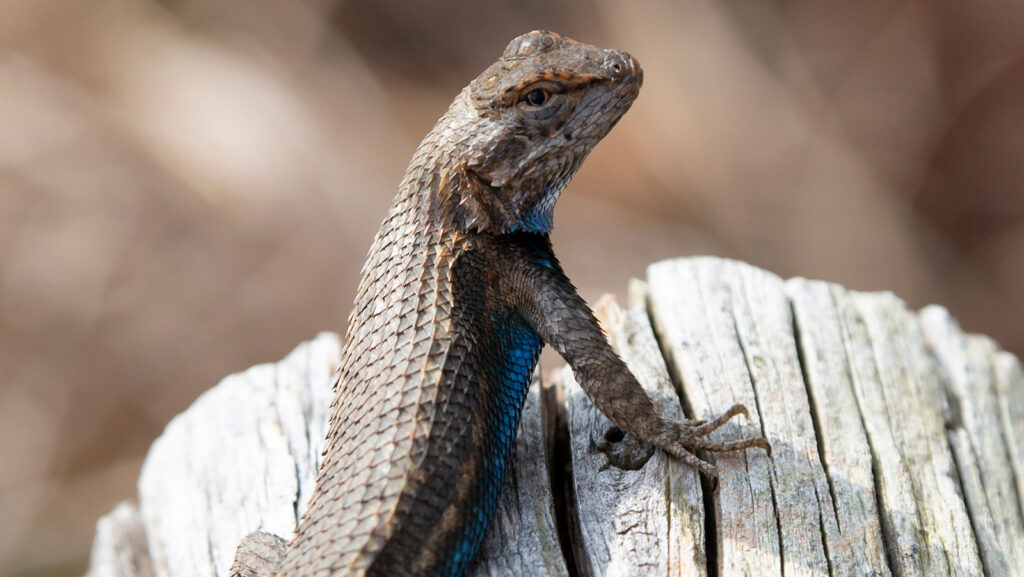
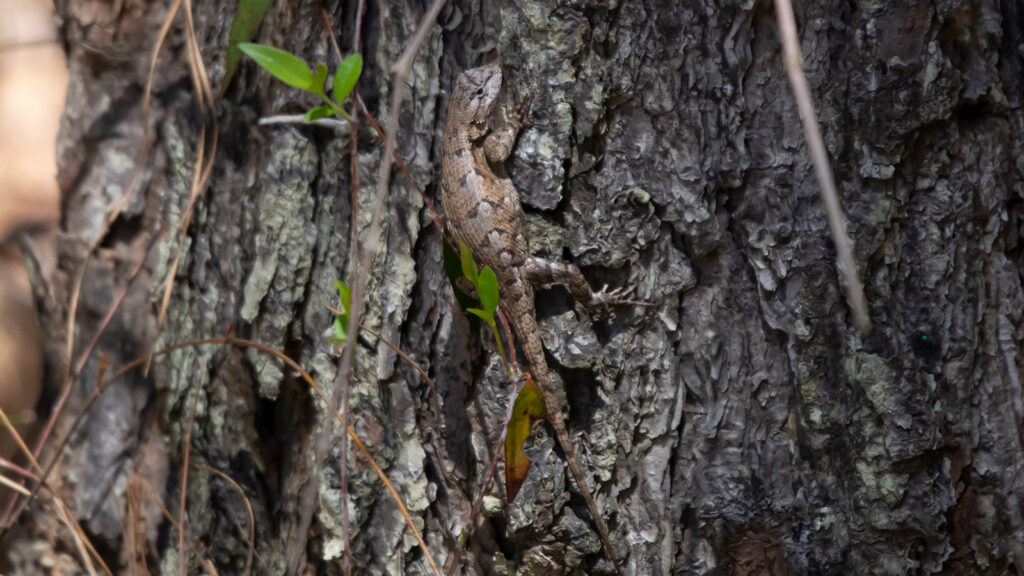
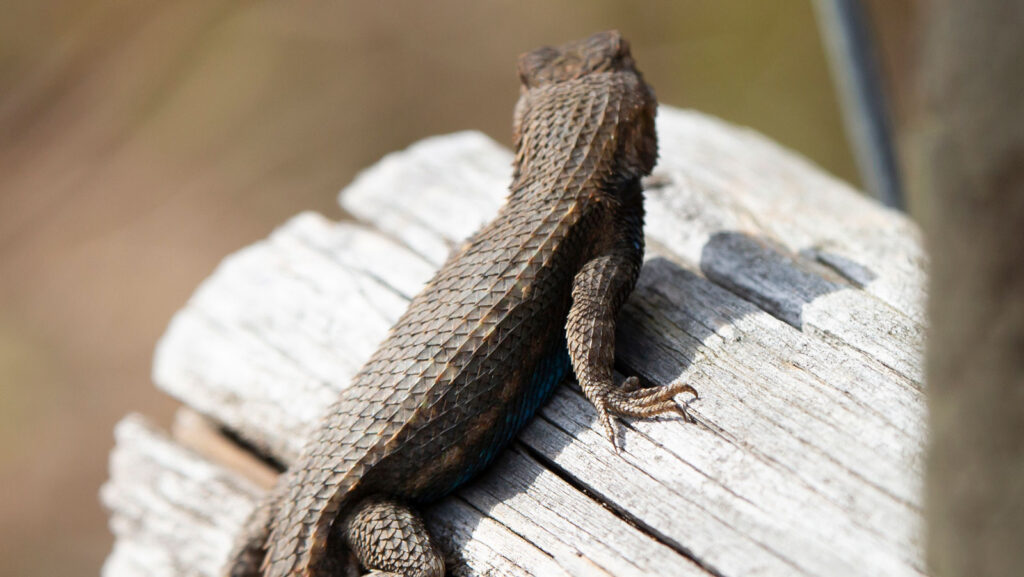
Fenn’s scales feel rough because they have little ridges on them. Those ridges help give Eastern Fence Lizards their scratchy, bumpy look. When Fenn presses himself against weathered fence boards or tree bark, his colors and rough scales help him blend in.
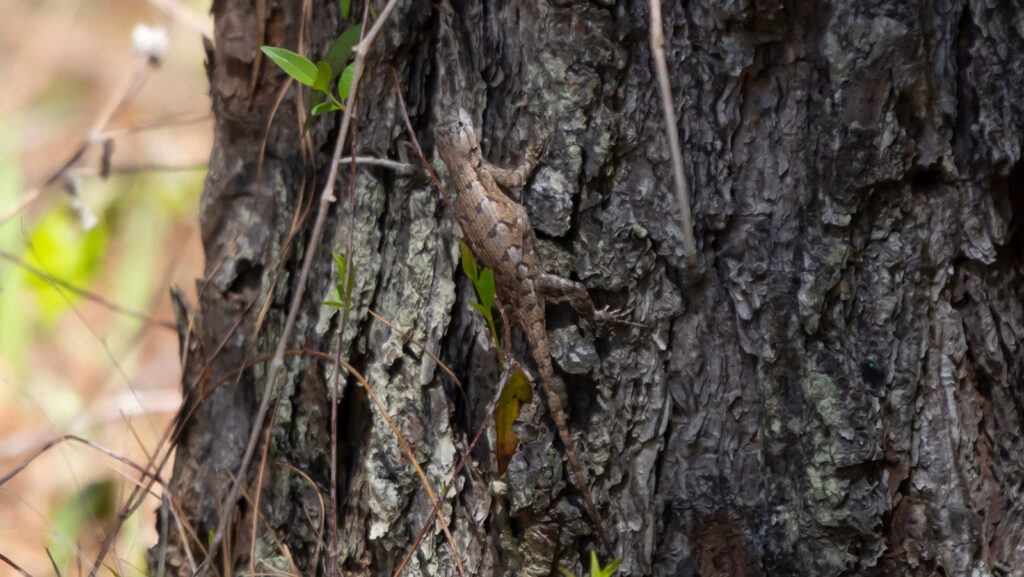
Tootie sees Fenn near a gray piece of bark one afternoon and cannot find him for a whole minute. Fenn has not run away. He is simply holding still so well that he looks like part of the tree.
“Where did he go?” Tootie asks.
Yoshi points with her nose. “There.”
Tootie squints. “That is bark.”
Then the bark moves.
Tootie jumps back. “Fenn!”
Grandma laughs. “That is camouflage. His colors help him blend into the places where he lives.”
Fenn may look gray, brown, tan, or darker depending on the light and the place where he is sitting. He does not change colors like Gee can, but he already matches many of the dry, sunny parts of the yard.
Grandma says, “Gee can look like a leaf. Fenn can look like the fence forgot to stay still.”
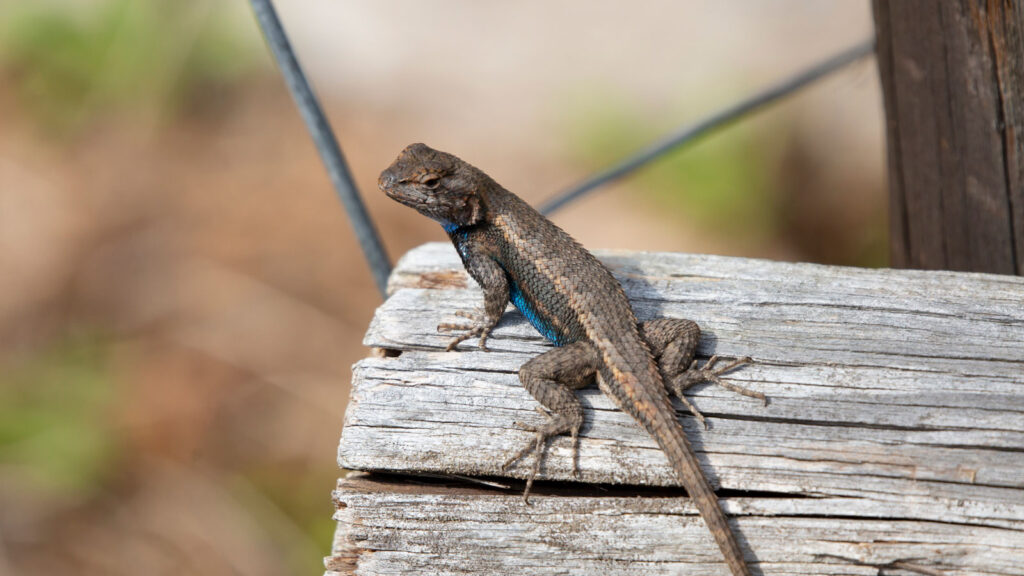
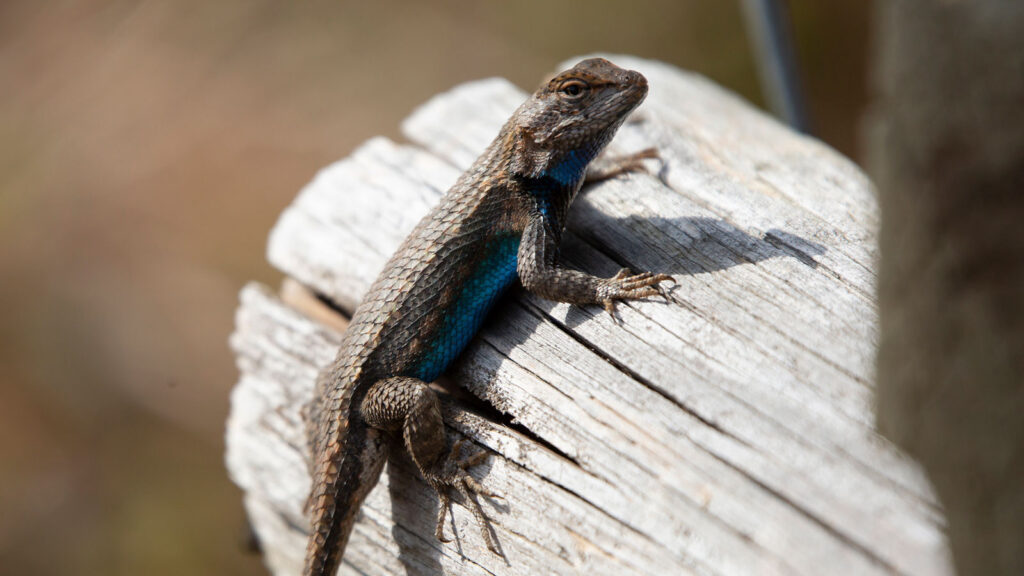
Fenn has a secret splash of blue.
Male Eastern Fence Lizards can have bright blue patches along their throat and belly. The blue does not always show when he is sitting flat against a fence post, but another lizard may see them when Fenn moves, lifts himself, or does a little push-up display.
Tootie sees Fenn bobbing on the fence one warm afternoon. Fenn raises and lowers the front part of his body, then pauses with his throat stretched out.
“Why is he doing exercises?” Tootie asks.
Grandma smiles. “He may be showing another fence lizard that he is here.”
Yoshi watches Fenn do another push-up. “He has something to say.”
“He may be telling another male to keep moving,” Grandma says. “Or he may be trying to look impressive.”
Tootie looks impressed. “They are working on me.”
Grandma says, “You are easy to impress.”
Fenn does another small push-up.
From the pecan tree, Biv calls, “Everybody is showing off today!”
Fenn does not look up. He has fence-lizard business to handle.
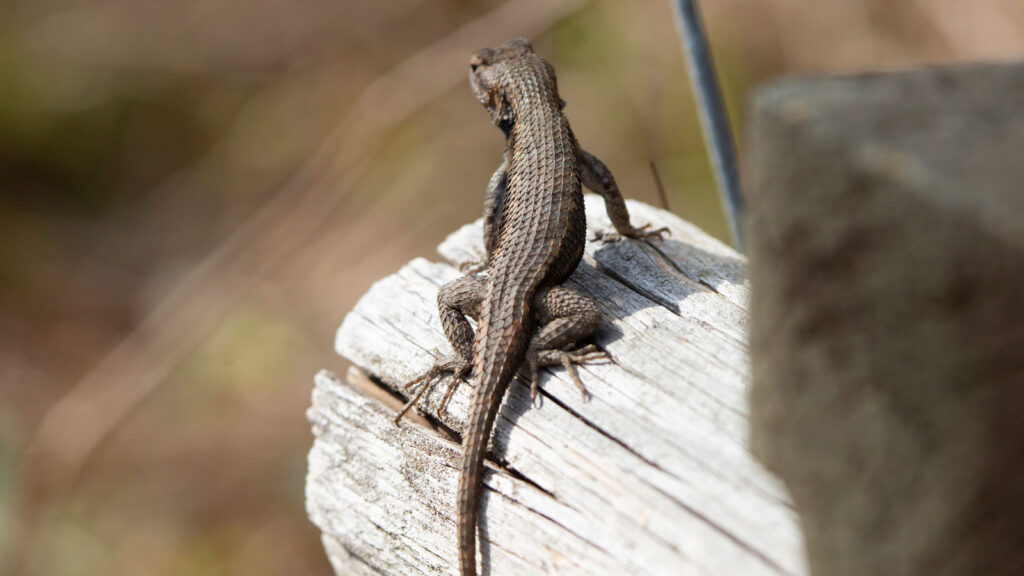
Fenn needs warmth from the sun because he is a reptile. Reptiles do not make their own body heat the same way mammals and birds do. Instead, they use warm places and cool places around them to help manage their body temperature.
On a cool morning, Fenn may climb onto a fence rail, rock, log, or sunny patch of ground. He sits still while the warmth reaches his body. Once he is warm enough, he can move faster, hunt insects, and climb more easily.
When the day gets too hot, Fenn may move into shade, slide beneath a log, tuck into leaf litter, or hide in a crack near the fence. He needs both sunny places and shady places because too much heat can be as much trouble as too little.
Tootie watches Fenn move from the bright side of the fence to the shadowy side.
“Did he get bored of the sun?” he asks.
Grandma shakes her head. “He is choosing the temperature that feels right for his body.”
Yoshi looks at the porch shade. “That is sensible.”
Grandma smiles. “You and Fenn would get along.”
Tootie looks at the sunny fence. “I would sit in the sun all day.”
Grandma says, “For about six minutes, then you would need water and complain about being hot.”
Tootie thinks that is probably true.
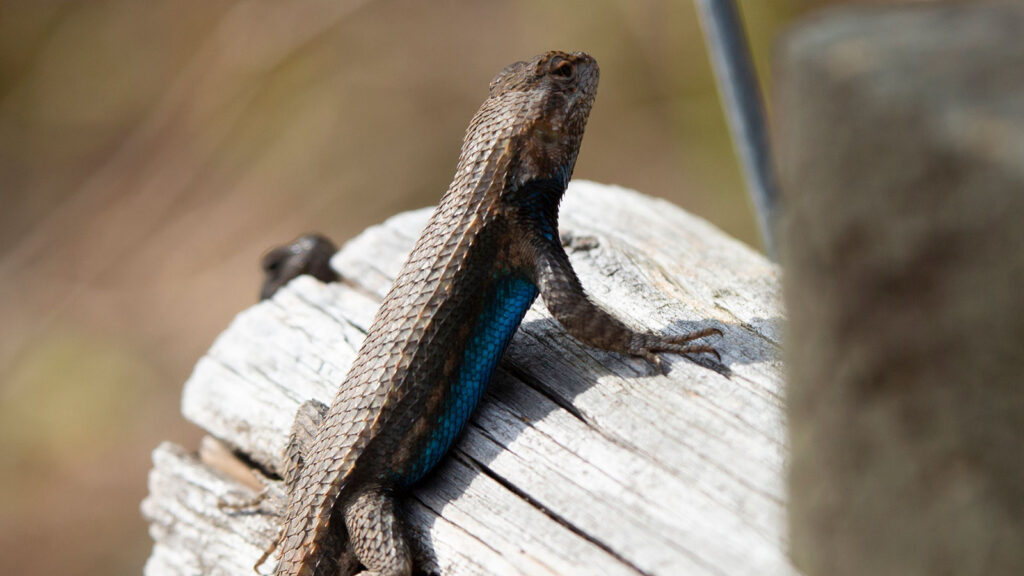
Fenn and Gee both use the back part of Grandma’s yard, but they are not the same kind of lizard.
Gee is a Green Anole. He is often bright green, can turn brown sometimes, has a pink throat fan, and uses toe pads to climb smooth surfaces. He spends a lot of time around the tulips, leaves, and flower stems.
Fenn is an Eastern Fence Lizard. He is gray-brown, rough-scaled, and built to blend into bark, boards, logs, and dry ground. He has blue patches underneath and may do push-ups when he wants another fence lizard to notice him.
Tootie looks from Gee on a tulip leaf to Fenn on the fence. “They are both lizards, but one looks like a leaf and one looks like wood.”
Grandma nods. “That is a good way to start noticing the difference.”
Yoshi watches both of them. “Gee disappears in plants. Fenn disappears on the fence.”
Grandma says, “Exactly.”
One afternoon, Gee sits on a tulip leaf while Fenn rests on a fence post nearby. Tootie tries to count how many times each one moves.
Gee twitches his head.
Fenn runs three steps.
Gee catches a fly.
Fenn freezes against the wood.
Tootie decides the whole yard has too many tiny animals doing important things without telling him first.
Fenn knows the backyard has larger animals in they, and he is careful around them. He knows Tootie gets curious. He knows Yoshi watches quietly. He knows Scott, Phoenix, and Robbie can move through the trees and grass without looking for a small lizard near the ground.
When something big gets close, Fenn may freeze first. If that does not work, he can race to a tree, log, fence crack, brush pile, or patch of leaves. He moves quickly, but he does not run around just for fun. Every fast trip has a reason.
One afternoon, Scott races along the fence toward a hidden pecan. Fenn flattens himself against the board and stays completely still. Scott passes by without seeing him.
Tootie watches from the porch. “Did Scott see Fenn?”
Grandma shakes her head. “Probably not.”
Yoshi looks at the fence. “Fenn knew when to stay still.”
Grandma nods. “That is one of his best skills.”
Tootie thinks that sounds useful.
Grandma looks at him.
Tootie looks at a butterfly.
Then he runs after they.
Yoshi closes her eyes.
Grandma likes having Fenn around because he eats insects and gives her another reason to stop and look at the yard. She does not try to catch him. She does not let Tootie paw at him. She does not move logs or boards without checking first, because small animals may be using the space underneath.
Fenn is wild. He may look small enough to pick up, but lizards can be hurt easily when people grab them. A frightened lizard may also drop part of their tail if something catches they. A tail may grow back, but they will not look exactly the same, and Fenn would rather keep the one he has.
Tootie watches Fenn climb the fence. “Can I pet him?”
Grandma says, “No.”
“Tootie,” Yoshi adds.
“I only asked.”
Grandma points toward Fenn. “Fenn does not need a puppy hand reaching down from the sky. He needs sun, bugs, cover, and quiet.”
Tootie sits down beside the porch steps.
Fenn stays on the fence for another minute, then slips behind an old board.
Tootie sighs. “He is gone.”
Grandma says, “He is not gone. He is just done with visitors.”
Fenn needs sunny places, shady places, logs, brush, leaf litter, trees, and safe places to hide. A yard with a few natural corners gives small lizards room to hunt insects and get away from trouble.
Avoid spraying broad insect killers around every plant and fence line. Fenn eats insects, so fewer insects can mean less food for him. Chemicals can also hurt the small animals that lizards hunt.
Keep cats indoors when possible, and do not let dogs chase lizards. Tootie and Yoshi can watch Fenn from the porch or yard, but they should leave him alone.
Grandma says, “Fenn is not a toy, a pet, or a tiny fence decoration. He is a hunter with a schedule.”
Yoshi watches the empty fence rail. “A very small schedule.”
Grandma smiles. “Still a schedule.”
Fenn the Eastern Fence Lizard
These are some helpful words for talking about this wild neighbor.
Fenn the Eastern Fence Lizard
Good wildlife watchers ask good questions. Here are a few to get you started.
Eastern Fence Lizards are often seen sitting on fences, logs, trees, and other sunny surfaces.
Fenn eats insects and spiders, including beetles, ants, moths, crickets, grasshoppers, and caterpillars.
Fenn is a reptile. He uses warmth from the sun to help his body work well.
Holding still helps him blend into bark, fence boards, and dry leaves.
Male Eastern Fence Lizards may show blue patches on their throat and belly when they are communicating or trying to look impressive.
No. Fenn is wild and easy to hurt. Watch him from a distance instead.
No. Gee is a Green Anole, while Fenn is an Eastern Fence Lizard.
Watch lizards from a distance. Do not catch them, pull their tails, or let pets chase them. Keep cats indoors when possible, and avoid broad insect sprays around places where lizards hunt. Check beneath logs, pots, boards, and garden items before moving them because small wildlife may be sheltering underneath.
🏅 Explorer Progress