Why is Wes called a Metric Wasp?
Grandma says:
Metric Wasp is a common name for the species Polistes metricus, a kind of paper wasp.
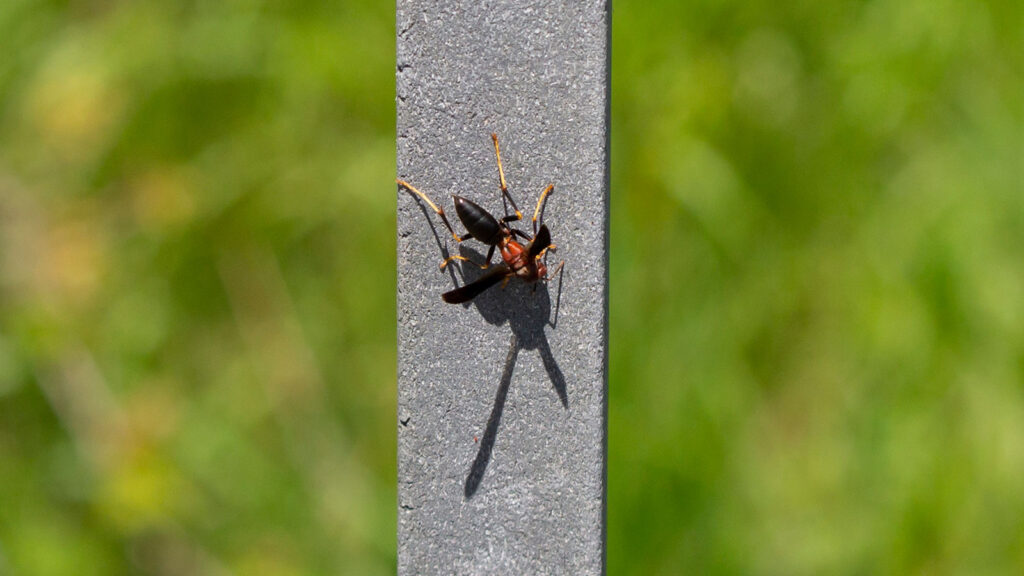
Wes is a Metric Paper Wasp with long legs, a reddish-brown body, a tiny waist, and a family nest that looks like somebody hung a little upside-down paper umbrella under the porch.
Wes is a Metric Paper Wasp, also called a Metric Wasp. His scientific name is Polistes metricus. He is a male wasp, which means he does not have a stinger. His sisters and mother do have stingers, but they prefer gathering food and caring for the nest over bothering anybody who stays out of their space.
One warm afternoon, Tootie notices a small gray paper comb beneath the porch eave. Several long-legged wasps are walking across they, their wings folded lengthwise along their backs.
Tootie’s droopy ears lift. “Is that a tiny upside-down city?”
Yoshi’s pointy ears twitch. “They are a wasp nest.”
Grandma looks carefully from a safe distance. “That is Wes’s family. They are Metric Paper Wasps.”
Wes walks along the edge of the comb, then flies off into the garden.
Tootie watches him go. “Does he build the paper?”
Grandma says, “His mother and sisters did most of that work. Wes has other things to do.”
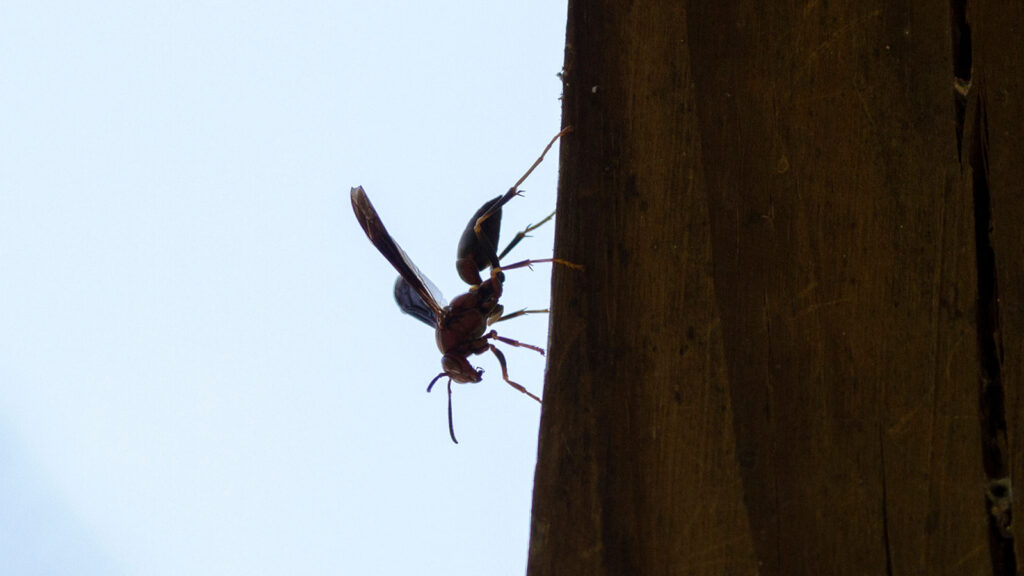
Wes’s family uses protected places for their paper nest. They may build beneath porch eaves, under a shed roof, along a sturdy branch, on a fence structure, or in another sheltered spot protected from heavy rain.
The nest is made from wood fibers. Female wasps scrape tiny pieces from old weathered wood, dead plants, or paper-like materials. Then they chew those fibers and mix them with saliva to make a soft paper pulp.
Grandma points toward the open comb under the eave. “See the little rooms?”
Tootie squints. “They are open.”
“That is one important clue,” Grandma says. “Paper wasp nests have open cells. They are not wrapped inside a big paper ball.”
Yoshi watches a wasp land on the nest. “They looks like an umbrella upside down.”
“Exactly,” Grandma says. “That is why people sometimes call paper wasps umbrella wasps.”
The open comb stays attached by one little stalk. That stalk holds the nest up while the wasps build more cells around they.
Wes began life as an egg inside one of the open paper cells. His mother, the queen, started the nest in spring after surviving winter in a protected hiding place.
The queen built the first few paper cells herself. She laid eggs inside them and hunted soft insects, especially caterpillars, to feed the young larvae. When those larvae grew up, they became worker wasps.
The workers were Wes’s sisters. They took over much of the nest work: hunting, feeding larvae, building new cells, and guarding the nest.
Tootie looks at the little open rooms. “So Wes had sisters who brought food home?”
Grandma nods. “That is right. Paper-wasp families share the work.”
Wes spent his young life as a larva inside a cell. He ate food brought by workers, then changed into a pupa inside a little cap-covered cell. When he became an adult, he chewed his way out and joined the late-season part of the colony.
Male wasps like Wes usually appear later in the season. They do not start new nests. New queens mate in fall, find sheltered places to survive winter, and begin the next generation in spring.
Adult paper wasps drink sweet liquids such as nectar, plant juices, and sugary fluids from fruit or flowers. Wes may visit blooms around Grandma’s garden, sip from a fallen berry, or find sweetness on a plant stem.
The female workers in Wes’s family also hunt caterpillars and other soft insects. They chew the prey into food for the larvae in the paper nest.
Tootie sees a worker carrying a small green caterpillar toward the nest.
“She has a bug,” he says.
Grandma nods. “That is baby wasp food.”
Yoshi watches the worker enter a paper cell area. “So the adults eat sweet things, but the babies eat insects.”
“That is a good way to think about they,” Grandma says.
Wes does not chew wood for food. The nest uses wood fibers, but the wasps do not eat the paper they make.
Wes has a slender body, long dangling legs, and narrow wings that fold lengthwise when he is resting. Those folded wings are a helpful clue because many paper wasps hold their wings in a long skinny shape instead of flat and wide.
Tootie sees Wes land on the porch rail.
“His legs hang down,” he says.
Grandma nods. “Paper wasps often fly with their long legs dangling.”
Yoshi watches Wes fold his wings. “They look narrow.”
“That is another clue,” Grandma says. “Long legs, thin waist, folded wings, and an open paper comb nearby.”
Wes may look scary because he is a wasp, but his body shape helps people see that he is not a bee, fly, or beetle. He is built for flying, walking across the nest, finding sweet food, and staying near his family during the right part of the season.
The paper nest is a nursery, not a house full of honey. Each open cell holds an egg, larva, or pupa. The workers check the cells, bring food, build more paper around the edges, and protect the growing young.
Tootie looks at the cells. “They look like tiny cups.”
Grandma says, “That is exactly what they are.”
Wes walks over one cell while a worker brings food to another.
Yoshi watches closely. “Everybody has a job.”
“Most of the females do,” Grandma says. “The queen lays eggs. Workers build, hunt, and care for larvae. Wes is part of the later generation.”
The nest grows through the warm season. By fall, they may contain new queens and males. When cold weather arrives, the old nest is usually abandoned. The new queens survive winter elsewhere and start new nests next spring.
Wes’s sisters and Bucky’s caterpillar stage have an important connection. Female paper wasps hunt soft-bodied insects, especially caterpillars, to feed their larvae.
That does not mean Grandma lets the wasps hunt every caterpillar in the yard. Nature is full of animals that eat other animals, and different species need different things. Bucky’s caterpillars need oak leaves. Faye’s caterpillars need passionvine. Mary’s caterpillars need milkweed. Wes’s sisters need insect food for the young paper wasps.
Tootie looks concerned. “Do Wes’s sisters eat all the caterpillars?”
Grandma shakes her head. “No. A healthy yard has many insects, plants, birds, spiders, and other hunters. Nobody gets every meal.”
Yoshi watches a worker fly toward the shrubs. “She is looking for food for babies.”
“That is right,” Grandma says. “Paper wasps help keep some plant-eating insects from becoming too numerous.”
Wes sees the yard from porch height, branch height, and flower height. He sees Carl buzzing near blooms, Bea gathering pollen, Dot hunting aphids, and Goldie waiting in her web for flying insects.
One afternoon, Carl hovers near the porch rail where Wes’s nest hangs.
Tootie watches both insects. “They both fly near the wood.”
Grandma says, “But Carl uses wood for nest tunnels. Wes’s family uses wood fibers to make paper.”
Carl circles once, then flies away toward a flower.
Wes walks along the edge of the nest.
Yoshi watches the two. “Same wood. Different plans.”
Grandma says, “Exactly.”
Inouar lands on the fence and starts singing. Wes does not answer. He is interested in the nest, the flowers, and the other wasps—not bird reviews.
Grandma watches Wes’s family from a safe distance. She does not slap at the nest, spray they without a reason, or let Tootie investigate with his nose.
Paper wasps can sting when they think their nest is in danger. Wes cannot sting because he is male, but the female workers can. They are not looking for trouble, but they will protect their nursery if somebody pokes, shakes, traps, or swats at the nest.
Tootie looks toward the eave. “Can I say hi?”
Grandma says, “From the porch steps.”
“Tootie,” Yoshi adds.
“I only asked.”
Grandma points toward the open cells. “That nest is their nursery. We do not put our faces, paws, or hands near somebody else’s nursery.”
If a nest is high and out of the way, Grandma leaves they alone. If one appears beside a doorway, low play space, or other place where people could easily bump they, a grown-up needs to decide the safest next step.
Wes’s family needs flowers for adult food, insects for larvae, and protected places to build. A yard with plants, caterpillars, aphids, spiders, and other insects can support paper wasps without forcing people to share every porch corner with them.
Grandma avoids broad insect sprays because paper wasps, birds, spiders, dragonflies, and many other animals depend on insects. She also checks eaves, sheds, porch furniture, and play spaces early in spring before nests grow large.
Grandma says, “Wes can hunt bugs and visit flowers. He does not need to build an entire city beside the back door.”
Yoshi watches the paper comb sway gently. “That is fair.”
Wes the Metric Paper Wasp
These are some helpful words for talking about this wild neighbor.
Wes the Metric Paper Wasp
Good wildlife watchers ask good questions. Here are a few to get you started.
Metric Wasp is a common name for the species Polistes metricus, a kind of paper wasp.
No. Wes is male, and male paper wasps do not have stingers.
Yes. Female paper wasps can sting if they feel their nest is threatened, so give the nest space.
Adult wasps drink sweet liquids such as nectar and plant juices.
Female workers bring caterpillars and other soft insects to feed the larvae.
Wasps chew wood fibers into a paper-like material and build open cells with they.
No. Never touch or disturb an active nest.
Never touch, spray, shake, or knock down an active paper-wasp nest yourself. Give wasps space, keep children and pets away, and avoid swatting at individual wasps. If a nest is close to a busy doorway, play area, or other unavoidable space, contact a local pest-management or extension professional for safe advice. Think About They: Why is giving a wasp nest room safer than trying to scare the wasps away?