Why is Clover called a cottontail?
Grandma says:
Her white tail looks like a little puff of cotton when she runs.
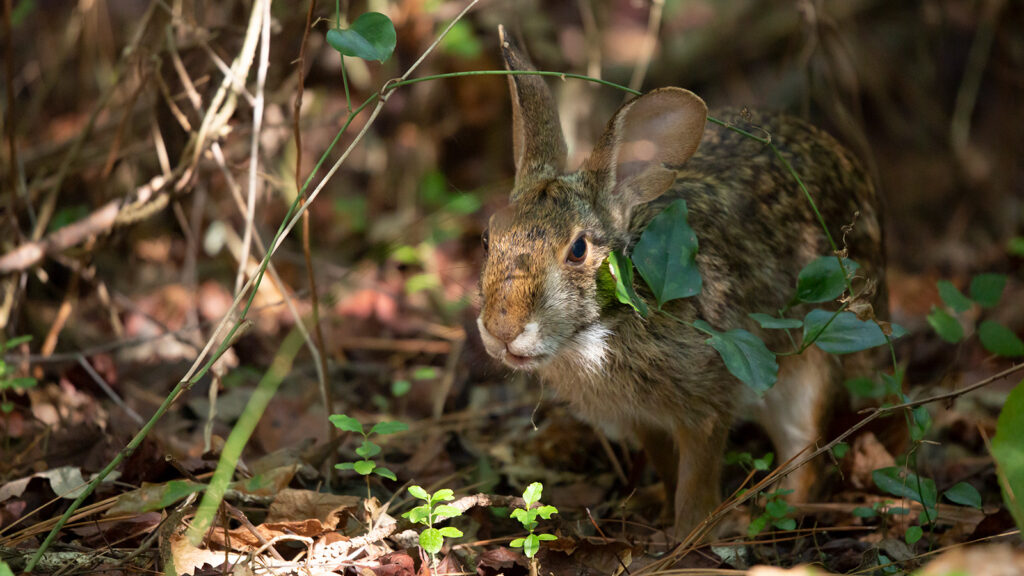
Clover has long ears, wide dark eyes, a white puff of a tail, and a very serious belief that the best part of the yard is wherever the clover, grass, and tender leaves are growing.
Clover is an Eastern Cottontail. She has soft brown fur mixed with gray, a pale belly, long ears, strong back legs, and a bright white tail that flashes when she hops away. Most of the time, Clover stays near the edge of the yard, where the grass meets shrubs, brush, creekside plants, and places she can disappear into quickly.
One evening, Tootie sees something brown moving near the back fence. They freezes beside the clover patch, ears up and nose twitching.
Tootie’s droopy ears rise. “Is that a tiny deer?”
Yoshi’s pointy ears twitch. “Too small.”
Grandma looks toward the grass. “That is Clover. She is an Eastern Cottontail.”
Clover takes one slow bite of clover, then another. When Tootie shifts his paws, her white tail flashes and she disappears into the brush.
Tootie stares at the empty grass. “She was right there.”
Grandma says, “Clover knows every fast way into cover.”
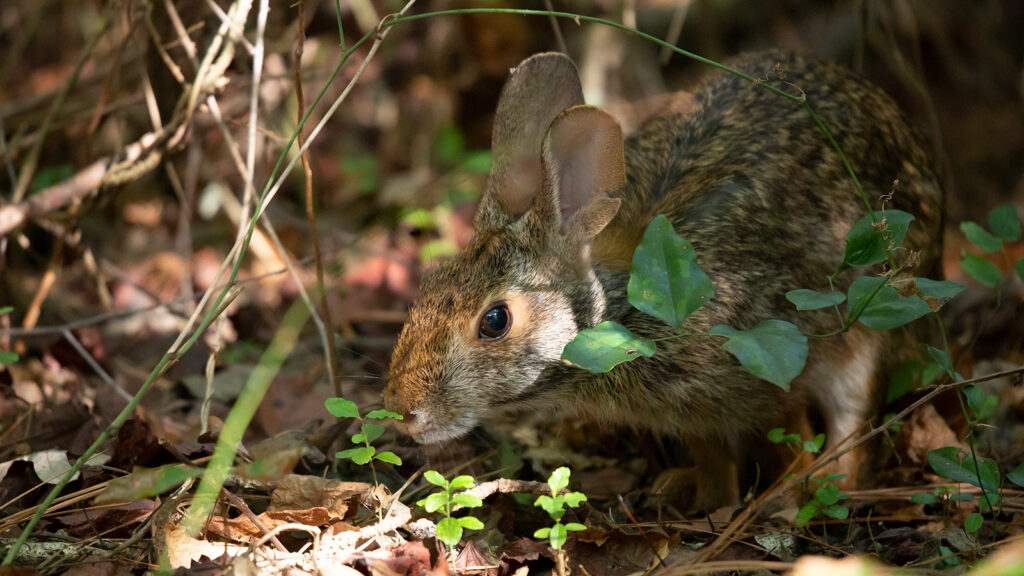
Clover needs two kinds of places close together: open spots where she can eat and thick cover where she can hide. She uses grassy edges, clover patches, low shrubs, brushy corners, creekside plants, fence lines, and places where tall grass or vines give her a quick escape route.
The open lawn by themselves would not make a good cottontail home. Clover could find grass there, but she would have nowhere to hide if a dog, hawk, owl, fox, or other danger came near. A yard with shrubs, brush piles, low branches, and natural edges gives her a safer way to move through the world.
Tootie watches Clover stop near the grass, then hop back toward the shrubs.
“Why does she keep looking at the bushes?” he asks.
Grandma says, “Because Clover needs to know where her nearest hiding place is.”
Yoshi watches the brush move. “She does not go far from cover.”
“That is right,” Grandma says. “Clover likes food, but she likes a fast escape route too.”
Clover may rest in a shallow spot under grass, shrubs, or other cover during the day. She does not usually dig a big burrow like a cartoon rabbit. She uses tucked-away places, brush, and natural shelter.
Clover began life in a shallow nest on the ground. Her mother made a small hollow in grass or soft soil, then lined they with fur and dried plant material. The nest was hidden in a grassy place, not high in a tree or deep inside a big underground tunnel.
When Clover was born, she was tiny, blind, and almost hairless. She could not hop, chew clover, or run away. She stayed tucked down with her brothers and sisters while her mother visited to feed them.
Tootie looks shocked. “Her mama left her there?”
Grandma nods. “For much of the day, yes. That helps keep attention away from the nest.”
A mother cottontail does not sit beside the nest all day because a large animal going back and forth could lead predators straight to the babies. Instead, she usually visits briefly, often around dawn or dusk, feeds the young, and leaves again.
As Clover grew, fur covered her body, her eyes opened, and her ears became more useful. Soon she could nibble plants, hop after her mother, and learn where brushy cover was waiting.
Yoshi watches the tall grass. “So a baby rabbit may look alone even when they are not.”
Grandma says, “Exactly. A quiet nest with no mother sitting beside they may still be a perfectly normal rabbit nursery.”
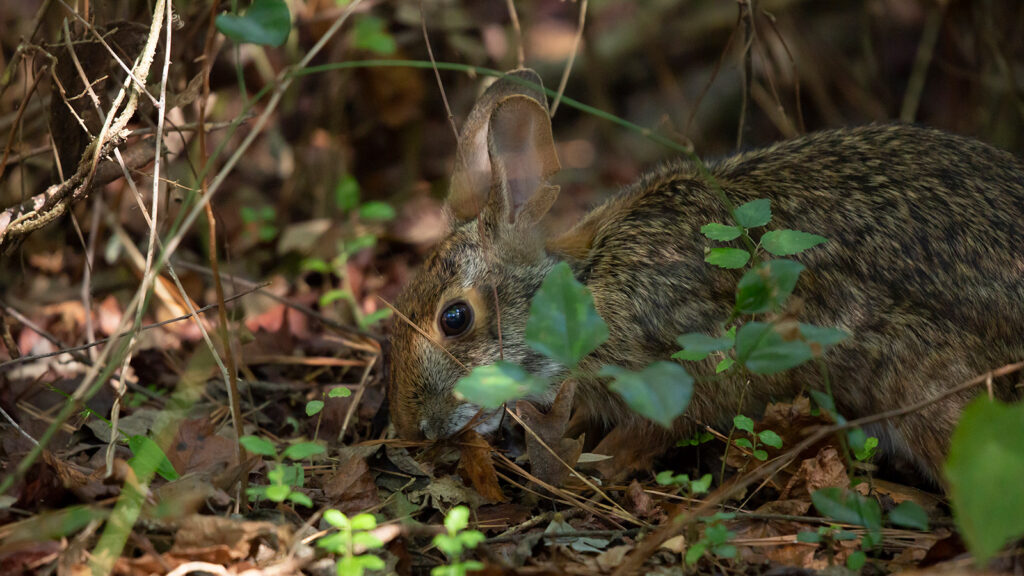
Clover eats plants. She may nibble clover, grass, leaves, garden plants, flowers, young shoots, bark, twigs, and fallen fruit, depending on the season and what is available.
In spring and summer, Clover looks for tender green plants. In fall and winter, when soft green food is harder to find, she may eat bark, twigs, buds, and dry plant pieces. She does not eat insects like Carol or seeds like Coorha. Her meals come from leaves, stems, grass, and other plant material.
One evening, Tootie sees Clover eating clover near the creekside grass.
“She is eating her own name,” he says.
Grandma smiles. “That is one reason Clover is a fitting name.”
Yoshi watches Clover nibble a tender leaf. “Does she eat flowers too?”
“She might,” Grandma says. “That is why gardeners have to share carefully.”
Grandma likes wildlife, but she also protects young plants she has worked hard to grow. Clover can use the wilder edges of the yard, while Grandma may keep tender vegetables or favorite flowers protected.
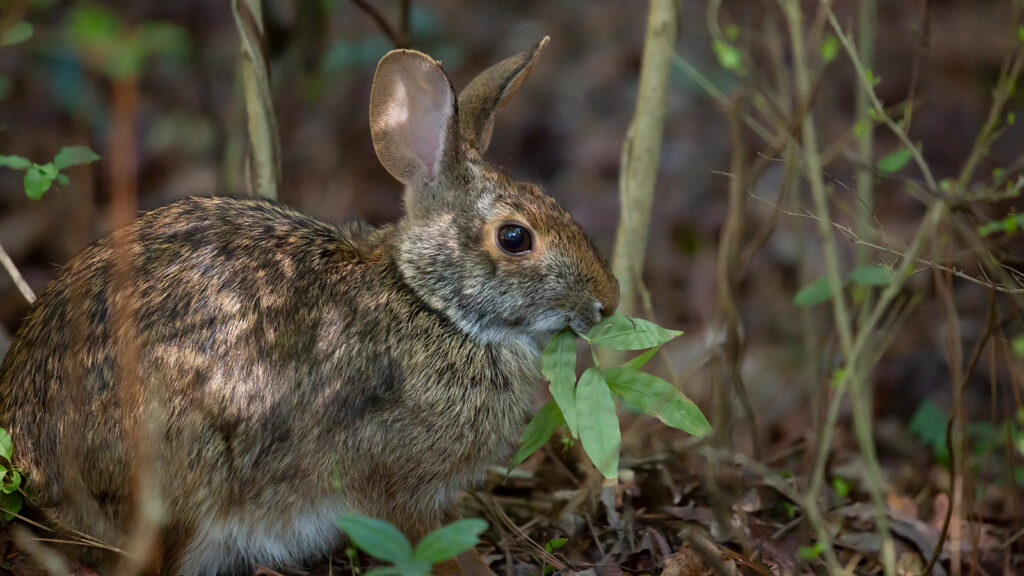
Clover’s bright white tail is one of the easiest ways to recognize her. When she runs, the white underside flashes like a little puff of cotton bouncing through grass.
Tootie sees Clover hop near the back fence.
“There goes the cotton ball,” he says.
Grandma laughs. “That is why rabbits like Clover are called cottontails.”
The white tail can be a signal. When Clover runs, other rabbits may notice that flash and know something has startled her. They can also confuse a predator for a moment as Clover zigzags toward brushy cover.
Yoshi watches Clover disappear behind a shrub. “Her tail showed where she went.”
“For one second,” Grandma says. “Then she was gone.”
Clover’s strong back legs help her make quick turns and sudden hops. She does not usually run in a straight line when she is scared. She may dart, turn, and change direction on the way to cover.
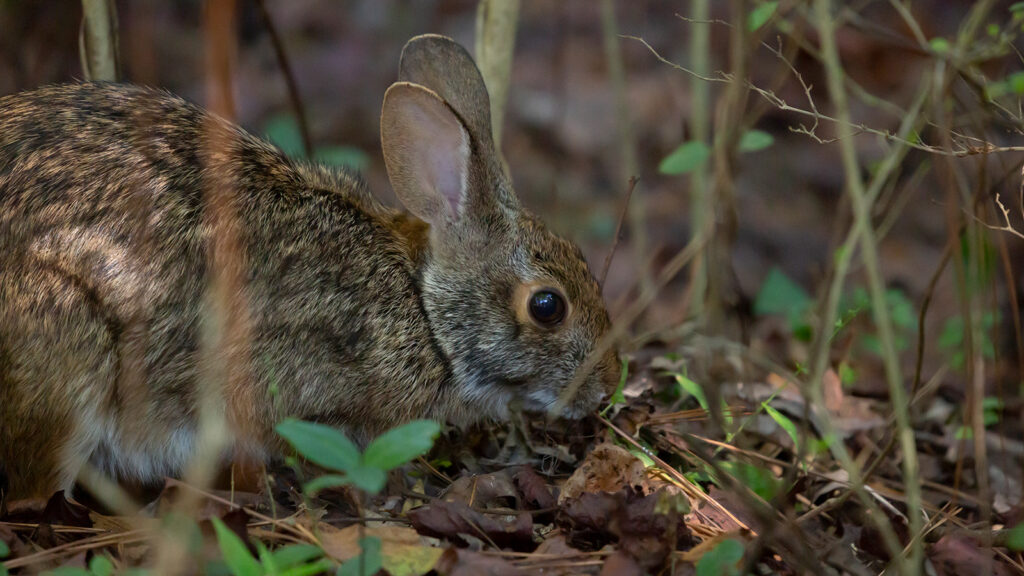
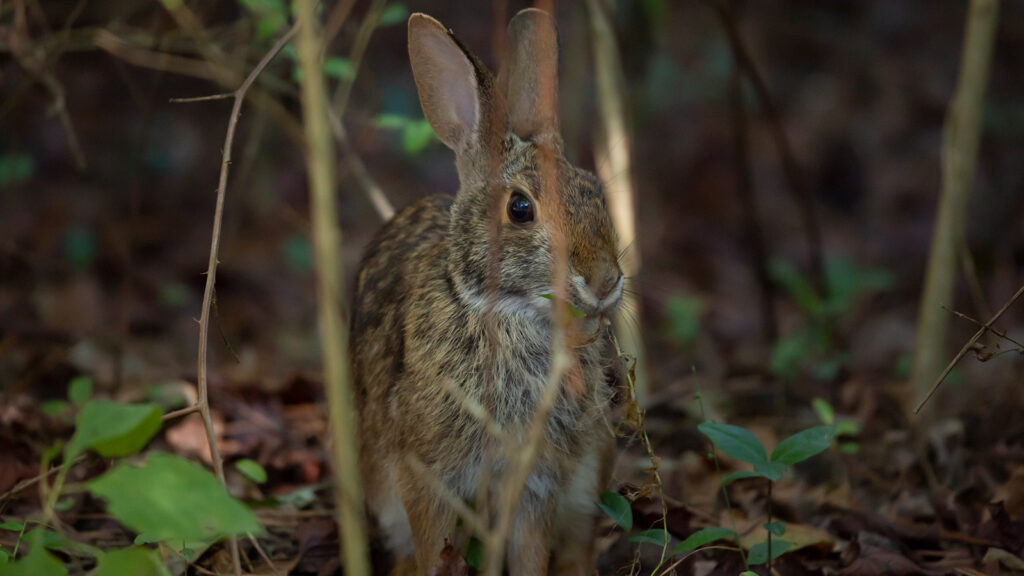
Clover’s long ears help her hear what is happening around her. She can turn them toward sounds, listening for leaves moving, birds calling, dogs walking, or anything else that might matter.
Her nose is always twitching too. Clover uses her sense of smell to notice food, other rabbits, and danger in the yard. She may freeze for a long time while she listens and smells before deciding whether they are safe to move.
One morning, Tootie sees Clover sitting perfectly still beneath a low shrub.
“Is she asleep?” he whispers.
Yoshi watches Clover’s nose move. “No.”
Grandma says, “Clover is checking the air.”
A rabbit often freezes because moving can make they easier for a predator to notice her. If the danger passes, she may keep eating. If they comes closer, she can spring away toward cover.
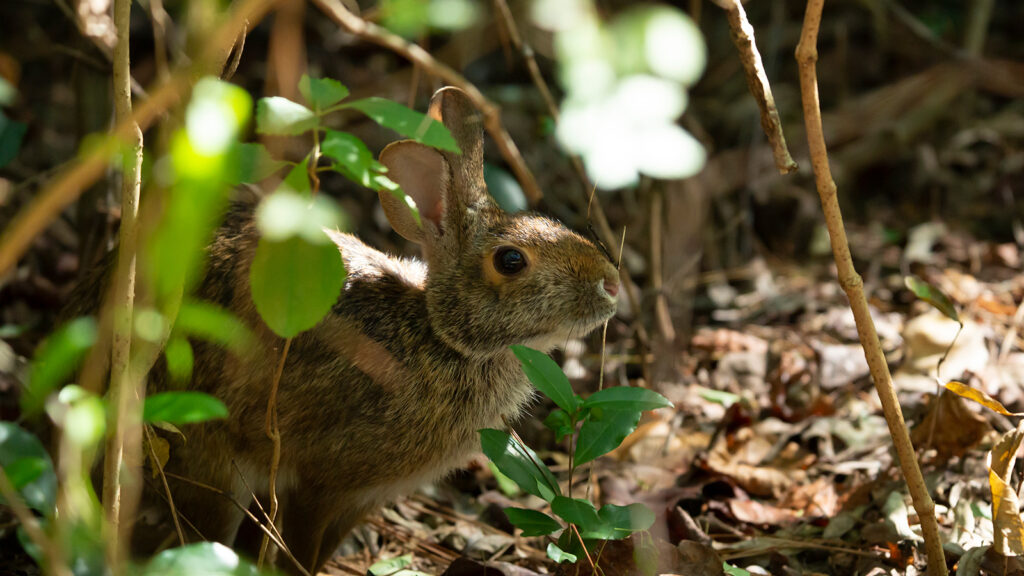
Clover sees the backyard from ground level. She sees Scott racing through the grass after a pecan, Thrash flipping leaves under the shrubs, Lucki listening for worms, and Carol disappearing under a flowerpot.
One evening, Scott finds Clover nibbling clover near the pecan tree.
“You are eating grass,” Scott says.
Clover keeps chewing.
“There are perfectly good pecans,” Scott adds.
Clover looks at him.
Grandma hears this from the porch. “Everybody does not need to eat pecans, Scott.”
Scott thinks about this. “That seems like a personal choice.”
Yoshi watches Clover hop toward the brush. “She has a better plan.”
Tootie sits down on the porch steps, and Clover eventually comes back to the clover patch. Grandma tells him that quiet dogs are easier for rabbits to trust from a distance.
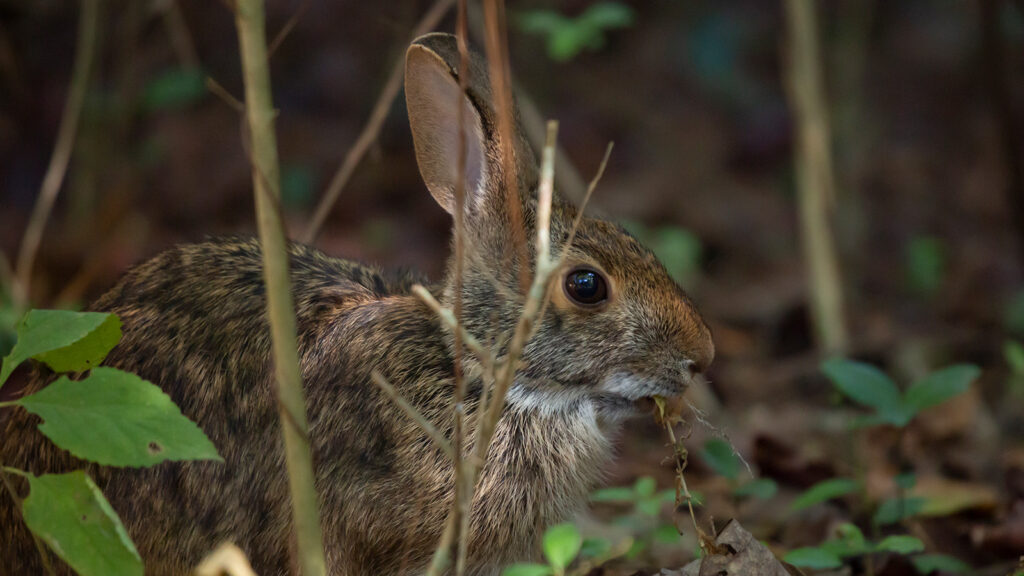
Grandma watches Clover from the porch or through a window. She does not try to catch her, feed her by hand, or let Tootie chase her through the yard.
A cottontail is wild, even when she looks soft and friendly. Clover can become badly frightened if she feels trapped. A dog chasing a rabbit can hurt the rabbit, even if the dog only thinks they are playing.
Tootie sees Clover near the flower bed.
“Can I go say hi?”
Grandma says, “No. Clover does not need an introduction.”
“Tootie,” Yoshi adds.
“I only asked.”
Grandma points toward the brush. “Clover needs to decide where she goes. She is safest when she has space.”
If someone finds a tiny rabbit in a nest, Grandma says to look carefully first and leave them alone unless they are clearly injured or the nest has been destroyed. A mother rabbit may be nearby even if people do not see her.
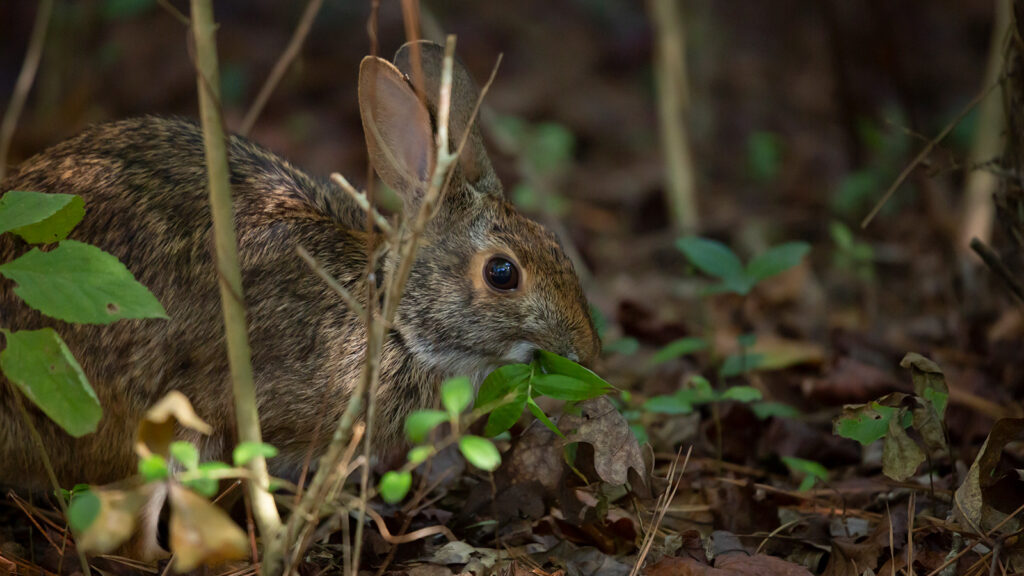
Clover needs brushy cover, native grasses, clover or other safe plants, and quiet edges where she can move between food and shelter. A yard does not have to turn into a wild thicket everywhere, but a few natural corners can help rabbits and many other animals.
Keep dogs supervised outside, especially at dawn and dusk when rabbits may be active. Check long grass before mowing, and avoid cutting down thick brush during the time when rabbits may be raising young.
Grandma says, “Clover needs food close to cover, not a wide-open lawn with nowhere to go.”
Yoshi watches the brushy edge near the creek. “That is sensible.”
Grandma nods. “Rabbits are sensible when people let them be.”
Clover the Cottontail
These are some helpful words for talking about this wild neighbor.
Clover the Cottontail
Good wildlife watchers ask good questions. Here are a few to get you started.
Her white tail looks like a little puff of cotton when she runs.
She eats clover, grass, leaves, flowers, young shoots, bark, twigs, and other plant material.
Usually no. Eastern Cottontails use shallow nests, brush, grass, and hiding places instead of digging large underground homes.
Mother rabbits usually visit the nest only briefly, often around dawn or dusk, to keep attention away from the babies.
No. Watch from a distance and leave a healthy nest alone unless a wildlife professional says help is needed.
Staying still can help her avoid being noticed while she listens and smells for danger.
No. Clover can be injured or badly frightened if a dog chases her.
Keep dogs supervised outdoors, especially around brushy edges and at dawn or dusk. Do not disturb rabbit nests unless the young are clearly injured or the nest has been destroyed. Before mowing tall grass or clearing brush, check carefully for wildlife using the area. Think About They: Why is looking carefully before mowing or clearing brush important for small animals?