Why is Coorha called a Mourning Dove?
Grandma says:
Her low coo can sound sad to people, even when she is simply communicating.
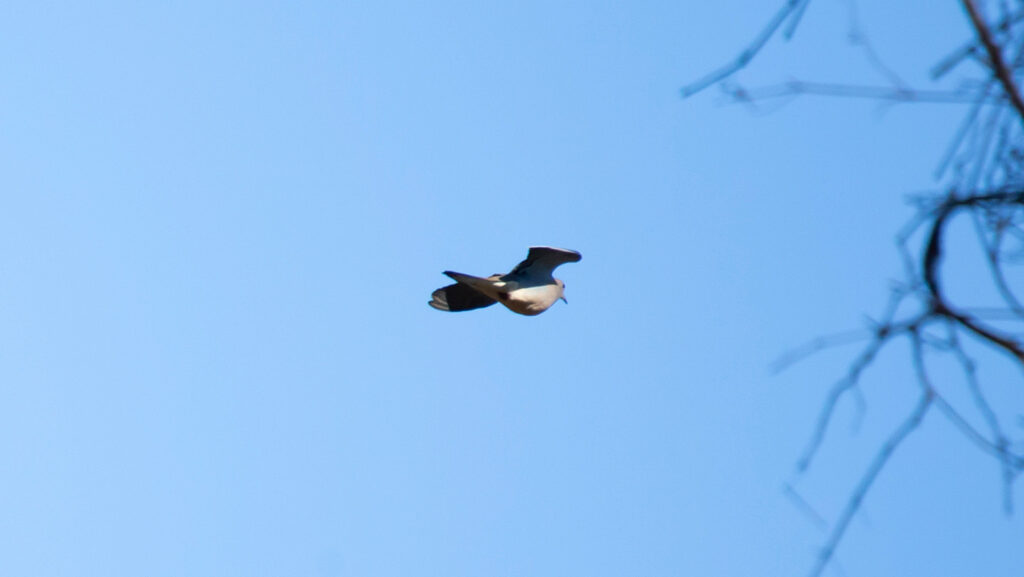
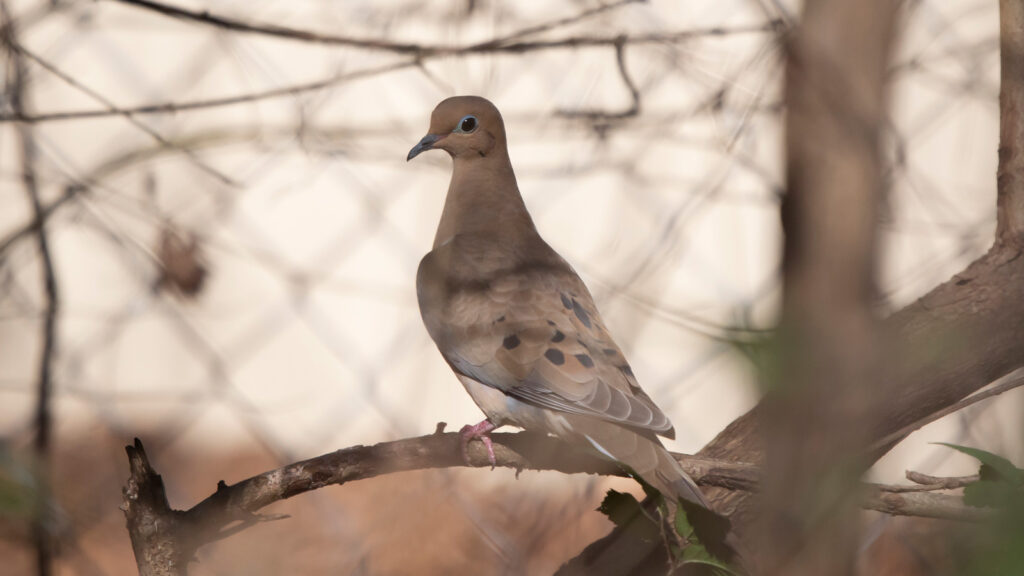
Coorha has soft brown feathers, gentle black spots on her wings, and a low, sad-sounding coo that makes Tootie wonder why she sounds so serious when she is simply sitting in the sunshine.
Coorha is a Mourning Dove. She is warm gray-brown with a small round head, a long pointed tail edged with white, and black spots along her wings. Her name comes from her soft, low call, which can sound a little mournful even when she is perfectly fine.
One morning, Tootie hears a slow coo-OOO, coo, coo from the pecan tree.
He looks around the porch. “Who is sad?”
Yoshi’s pointy ears twitch. “Nobody. That is a bird.”
Grandma looks toward a branch above the yard. “That is Coorha. She is a Mourning Dove.”
Coorha gives the call again, then glides down to the grass with a soft rush of wings.
Tootie watches her land. “She sounds sad, but she does not look sad.”
Grandma says, “Her call is simply her call. Birds do not need to feel sad to make a sad-sounding song.”
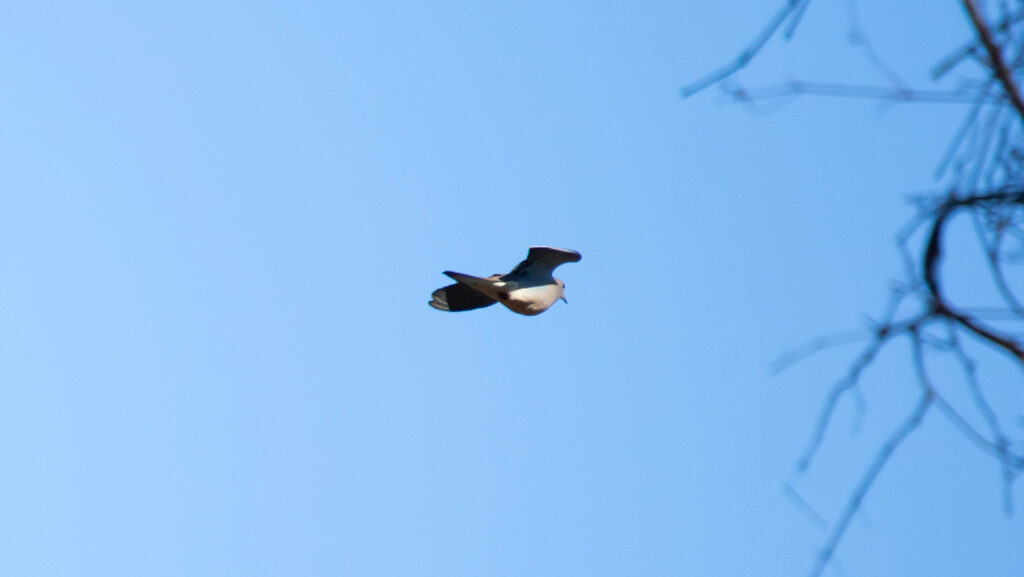
Coorha uses open lawns, garden edges, creekside clearings, pecan branches, shrubs, and low trees. She needs open ground where she can walk and find seeds, but she also needs branches and cover where she can rest, sleep, or build a nest.
Grandma’s yard gives Coorha both kinds of spaces. The lawn has grass seeds and fallen plant seeds. The little garden and flower beds drop more seeds as plants grow and dry. The pecan trees and shrubs give Coorha a place to sit above the ground when she wants to rest.
Tootie watches Coorha walk across the grass. “Why does she stay on the ground?”
Grandma says, “That is where she finds much of her food.”
Yoshi watches Coorha look around before pecking at the grass. “She still needs the trees.”
“She does,” Grandma says. “A dove needs food below and safety above.”
Coorha may build a nest in a low tree, a shrub, a vine, or another sheltered place. Mourning Dove nests can look surprisingly simple, with loose twigs arranged into a shallow platform.
Coorha began life in a small nest made mostly from twigs. Her parents built they together, though Mourning Dove nests can look loose and thin compared with the tidy nests some other birds make.
Her mother laid small white eggs, and both parents took turns keeping them warm. When Coorha hatched, she was tiny, hungry, and unable to leave the nest. Her parents had a special way of feeding her.
They made crop milk.
Crop milk is not milk from a bottle or a cow. They are a rich food made inside the parent dove’s crop, a food-storage pouch in the throat area. Both mother and father doves can make they and feed them to their babies.
Tootie listens closely. “Both parents make baby food?”
Grandma nods. “They do. That is one of the special things doves do.”
As Coorha grew, her parents brought her more seed-based food. She grew feathers, practiced balancing on branches, and eventually left the nest. Even after leaving, a young dove still needs time to learn where food is, how to fly safely, and when they are time to take off fast.
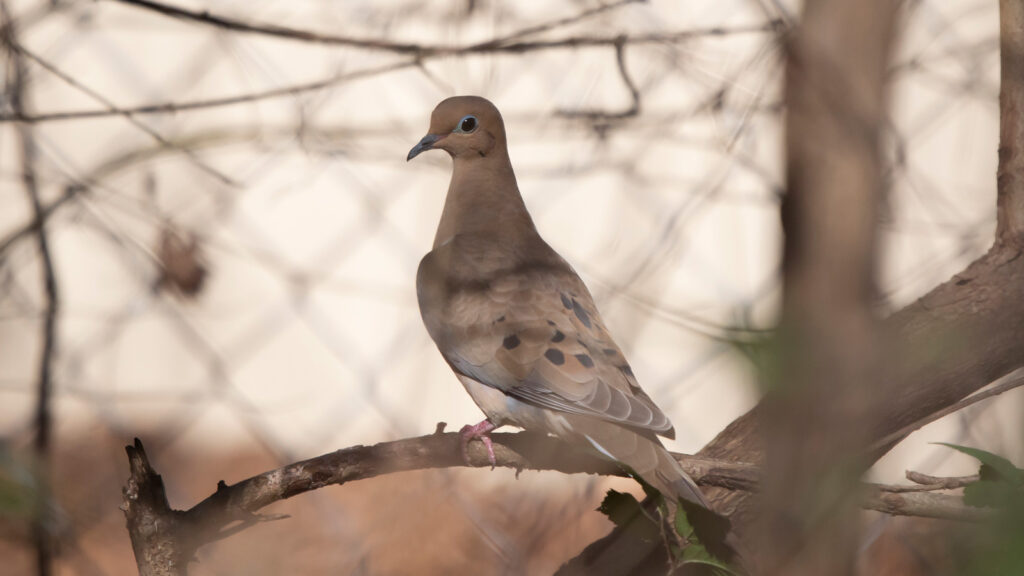
Coorha eats mostly seeds. She looks for grass seeds, weed seeds, seeds from flowers, grains, and other small plant foods scattered across the ground. She does not usually hunt insects like Carol or Natalie. She is built for finding tiny seeds and swallowing them quickly.
Mourning Doves have a crop, which is like a little storage pouch. Coorha can fill they with seeds, then fly to a safer branch or quiet spot to digest her meal.
One afternoon, Tootie watches Coorha peck at the ground.
“She is eating tiny rocks,” he says.
Grandma looks closer. “Some may be grit. Birds can swallow small bits of grit to help grind food in their bodies. But mostly she is finding seeds.”
Yoshi watches Coorha peck again. “She eats a lot of little things.”
“That is right,” Grandma says. “A dove meal is made of many tiny bites.”
Coorha may also drink from the creek edge or a clean birdbath. Unlike many birds, doves can take in water without tipping their heads back after every sip.
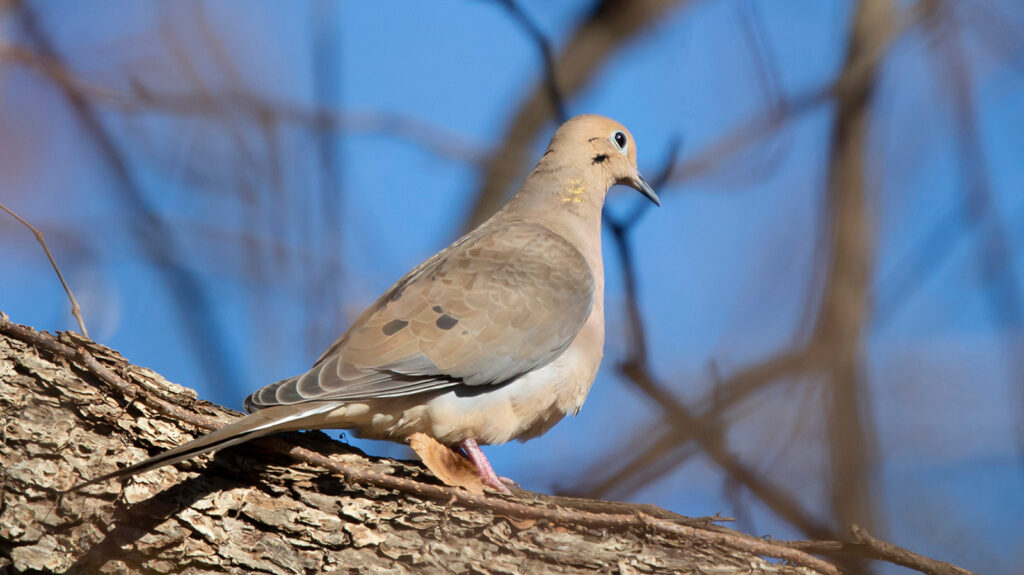
Coorha’s voice is one of the easiest ways to know she is nearby. Her call is low, slow, and gentle. They may sound sad to people, but they are part of how Mourning Doves communicate.
Tootie hears Coorha call from the pecan tree again.
“Is she calling somebody?”
Grandma says, “Maybe. Birds use sounds to stay in touch, attract a mate, and let other birds know they are nearby.”
Yoshi listens for a second call. “They sounds softer than Inouar.”
Grandma laughs. “Most birds sound softer than Inouar.”
Coorha does not need a loud complicated song like a mockingbird. Her low coo carries through a quiet yard without making a big fuss.
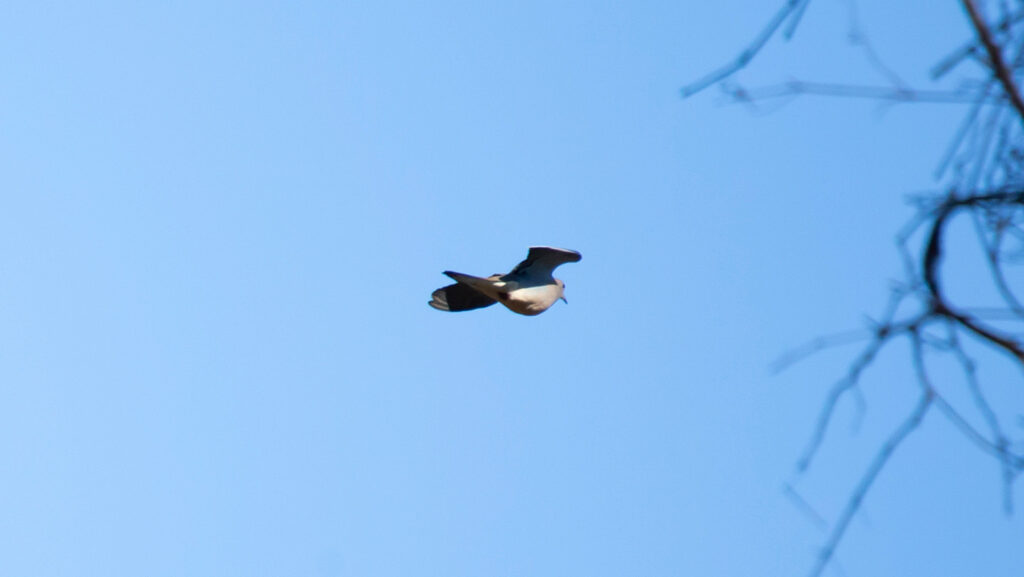
Coorha may look calm while she is walking on the grass, but she can take off in a hurry. When startled, Mourning Doves often launch into the air with a sharp whistling sound from their wings.
One day, Tootie takes two bouncy steps toward Coorha before Grandma says, “Leave they.”
Coorha shoots up from the grass. Her wings make a quick whistling sound as she flies into the pecan tree.
Tootie stops. “She made a noise with her wings.”
Grandma nods. “Mourning Dove wings can whistle when they take off.”
Yoshi watches Coorha land higher in the tree. “She was faster than she looked.”
“That is true,” Grandma says. “A quiet bird can still be ready to leave fast.”
Coorha’s long pointed tail helps her steer through trees and open yard space.
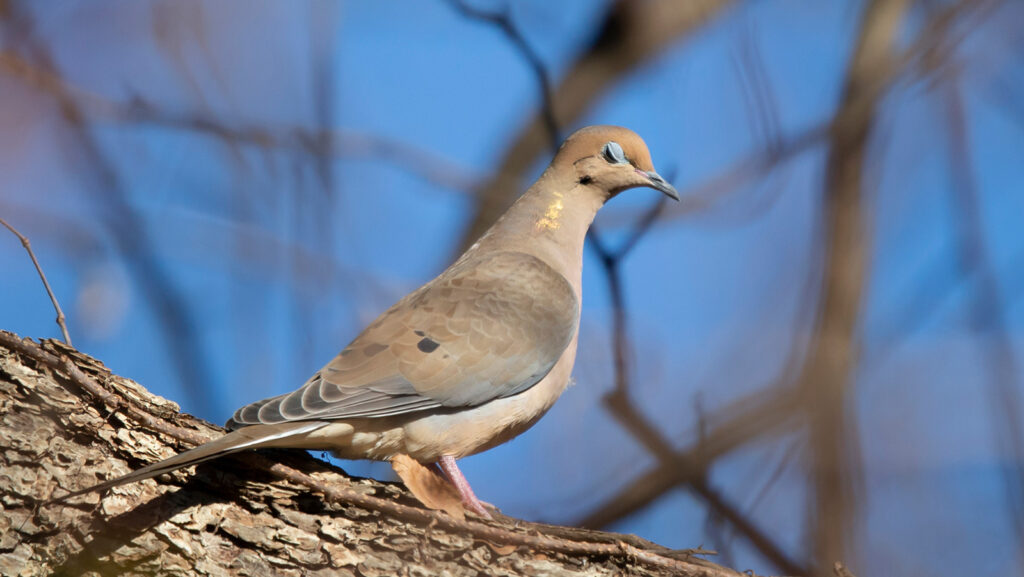
Coorha knows the backyard from the ground and the pecan branches. She sees Scott and Phoenix arguing over fallen pecans, Lucki listening for worms in the lawn, and Thrash flipping leaves under the shrubs.
One morning, Scott finds Coorha walking near a patch of fallen seeds.
“That is not a pecan,” Scott says.
Coorha keeps pecking.
Scott watches her swallow another seed. “You could do better.”
Coorha does not answer.
Grandma hears this from the porch. “Everybody does not need a pecan, Scott.”
Yoshi watches Coorha move farther across the grass. “She knows what she likes.”
Tootie sits beside the porch steps, and Coorha returns to the lawn after the yard becomes quiet again.
Grandma likes Coorha because doves bring a quiet feeling to the yard. She does not chase her, try to touch her, or scatter food too close to the porch where Tootie might rush out.
Grandma keeps the yard safer by avoiding pesticides that can harm seeds, soil, insects, and birds. She also keeps bird-feeding areas tidy when she uses them so old seed does not collect in wet clumps.
Tootie watches Coorha peck near the garden edge. “Can I say hello?”
Grandma says, “From where you are.”
“Tootie,” Yoshi adds.
“I know.”
Grandma smiles. “Coorha knows you are there. Let her decide how close she wants to be.”
Coorha needs open ground with seeds, clean water, shrubs or trees for cover, and a quiet place to rest. Native grasses, seed-producing flowers, and natural plant edges can give doves food without turning the yard into a pile of loose birdseed.
Keep cats indoors when possible. Avoid broad chemicals on the lawn or garden, and leave a few plants standing long enough for their seeds to feed wildlife.
Grandma says, “Coorha does not need a fancy restaurant. She needs seeds, water, a good branch, and a yard where nobody is trying to chase her.”
Yoshi watches Coorha fly into the pecan tree. “That seems reasonable.”
Coorha the Mourning Dove
These are some helpful words for talking about this wild neighbor.
Coorha the Mourning Dove
Good wildlife watchers ask good questions. Here are a few to get you started.
Her low coo can sound sad to people, even when she is simply communicating.
She eats mostly seeds from grasses, weeds, flowers, and other plants.
They are special food that parent doves make in their crop and feed to baby doves.
Yes. Both parents can feed crop milk to young doves.
Her wing feathers can make a sound when she takes off quickly.
No. Coorha is a wild bird and should be watched from a distance.
That is where she finds seeds.
Watch doves from a distance. Keep cats indoors when possible, avoid broad lawn and garden chemicals, and keep feeding areas clean if birdseed is used. Never disturb a nest, even if they looks simple or unfinished. Think About They: Why should people leave even a plain-looking bird nest alone?