Is Dot a ladybug?
Grandma says:
People often call her that, but Dot is more exactly called a lady beetle.
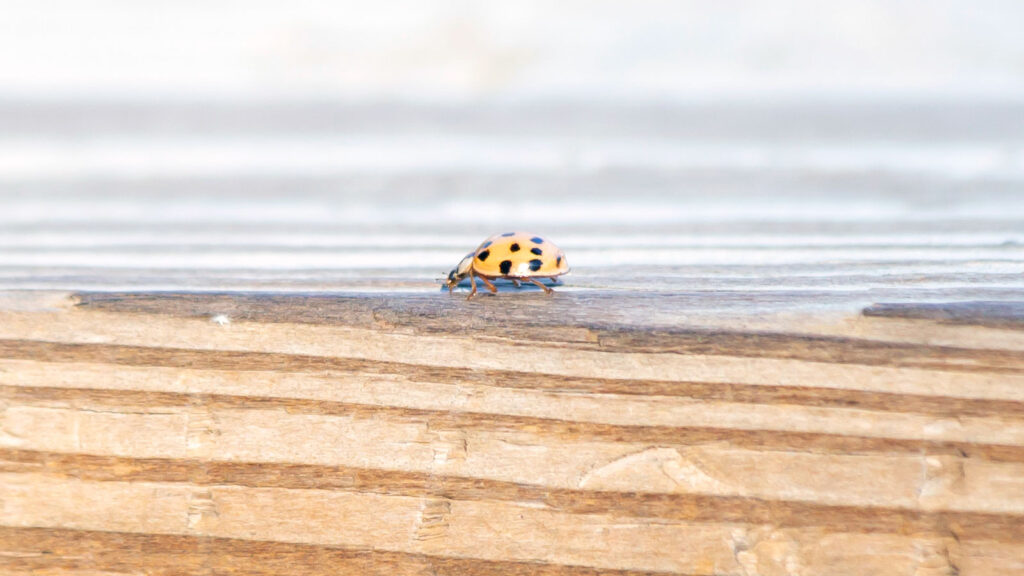
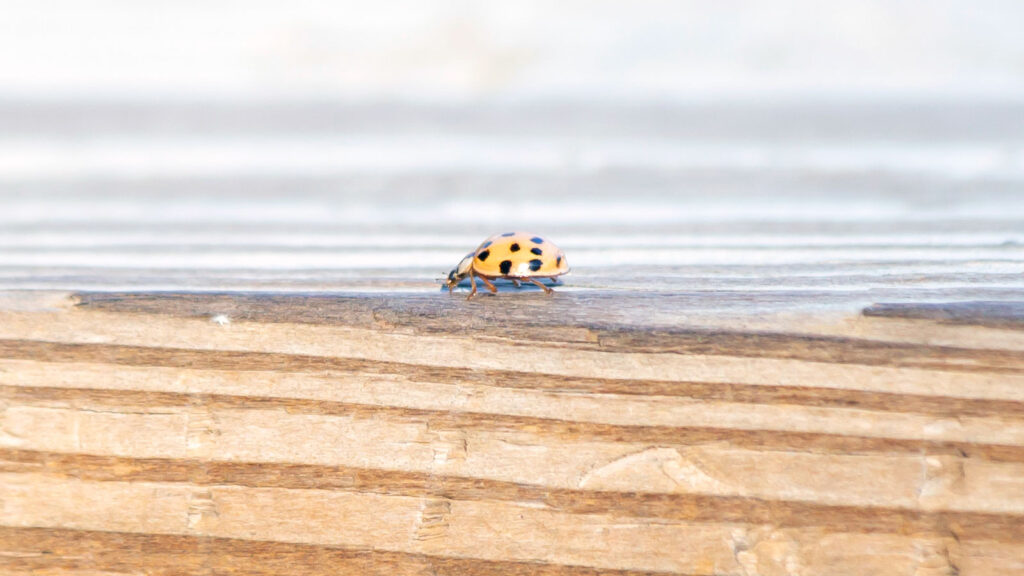
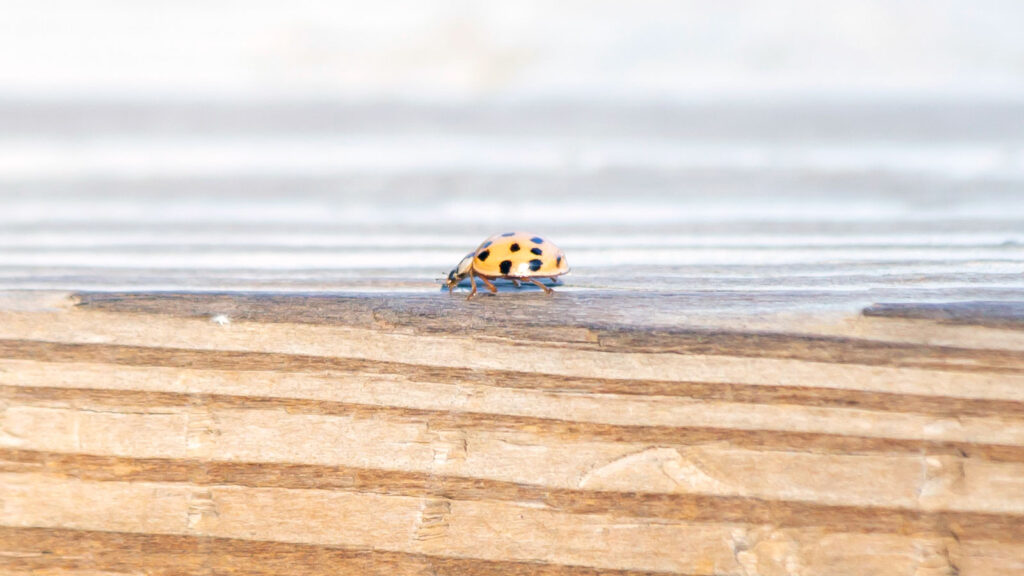
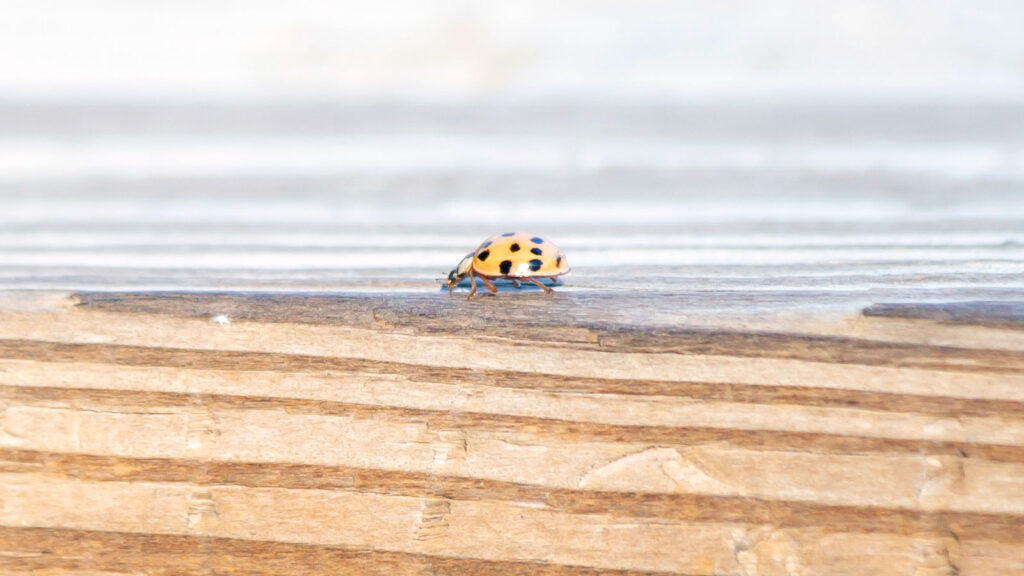
Dot is a little orange beetle with black spots, a white-and-black mark behind her head, and a habit of finding aphids wherever they are trying to eat Grandma’s plants.
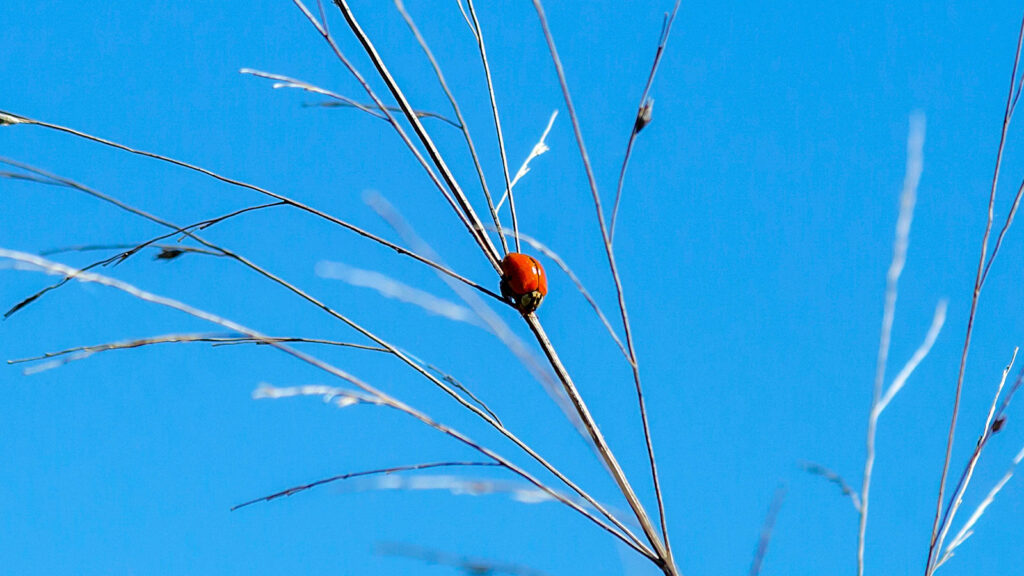
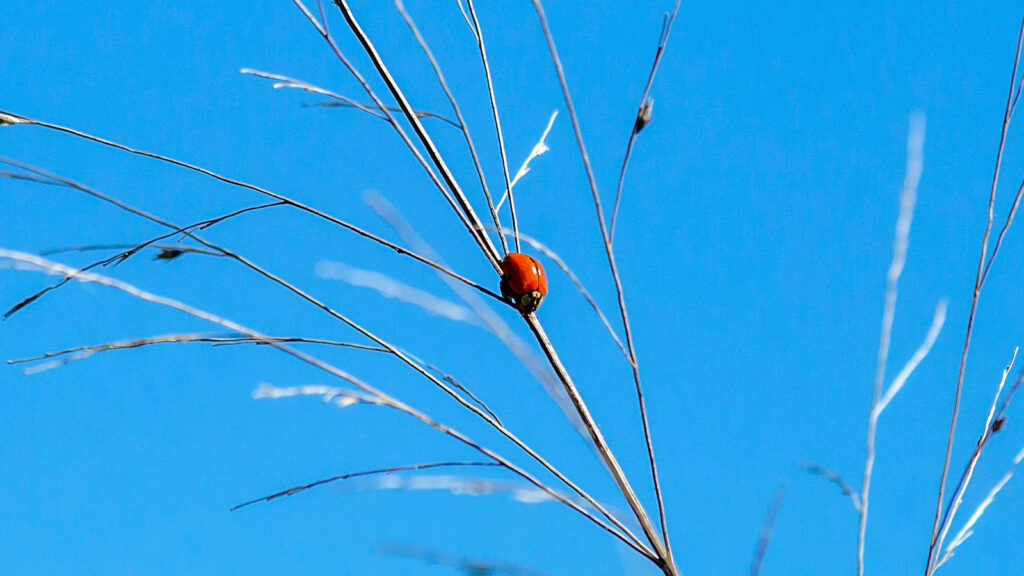
Dot is an Asian lady beetle, also called a multicolored Asian lady beetle. People often call her a ladybug, but she is actually a beetle. Her body may be orange, yellow-orange, or red-orange, and she may have no spots, a few spots, or many black spots.
One afternoon, Grandma is looking at a rosebush near the porch when she notices tiny green aphids clustered along a stem. Then she sees Dot crawling toward them.
Tootie’s droopy ears lift. “A tiny red beetle is on the plant.”
Yoshi’s pointy ears twitch. “She has spots.”
Grandma looks closer. “That is Dot. She is an Asian lady beetle.”
Dot reaches the aphids and begins eating.
Tootie watches in surprise. “She is smaller than they are.”
Grandma says, “Not by much. But Dot is a hunter.”
Dot uses gardens, flower beds, shrubs, trees, farms, weedy edges, and places where aphids or other soft-bodied insects gather. She does not build a nest or web. She crawls, flies, and searches plants for food.
Grandma’s garden gives Dot a good hunting place because plants can attract aphids. Aphids are tiny soft insects that drink sap from stems and leaves. A few aphids may not cause much trouble, but a large group can weaken a plant.
Dot sees aphids as food.
Tootie watches her crawl along a stem. “Does she live on the rosebush?”
Grandma says, “She may hunt there today, then fly somewhere else tomorrow. Dot goes where the food is.”
Yoshi watches Dot disappear under a leaf. “She is checking the plant.”
“That is right,” Grandma says. “Lady beetles are small, but they cover a lot of ground.”
Dot may also use the creekside shrubs and trees. Aphids live on many kinds of plants, so Dot has food to find in more than one part of the yard.
Dot began as a tiny yellow egg attached to a leaf or stem near a group of aphids. Her mother chose a place where the young would have food close by after hatching.
When Dot came out of the egg, she did not look like the round orange beetle she is now. She was a lady beetle larva. The larva had a long, bumpy body with dark colors and orange markings. They looked more like a tiny alligator than a ladybug.
Tootie sees a lady beetle larva near the garden and steps back. “That is not Dot.”
Grandma says, “They are a young lady beetle. Dot looked like that once too.”
Yoshi watches they crawl. “They do not look round.”
“No,” Grandma says. “Insects can change a great deal while they grow.”
Dot’s larva ate aphids too. After growing and shedding her skin several times, Dot attached herself to a leaf or stem and became a pupa. Inside the pupa, she changed into an adult beetle with hard wing covers, spots, and wings for flying.
Dot eats aphids and other small soft-bodied insects. She may eat mites, insect eggs, scale insects, and tiny larvae when she finds them. Both adult Asian lady beetles and their young larvae are hunters.
That makes Dot useful around plants that have aphids. She does not chew leaves like Loni. She does not drink nectar like Faye. She looks for insects that are already feeding on plants.
One morning, Tootie sees Dot moving through a cluster of aphids.
“She is eating Grandma’s plant bugs,” he says.
Grandma nods. “She is.”
Yoshi watches the aphids disappear one by one. “She is good at that.”
“Lady beetles can be very hungry,” Grandma says. “Dot is little, but she needs many meals.”
Dot may also eat pollen or nectar sometimes, especially when prey is hard to find, but aphids and other soft insects are her main hunting food.
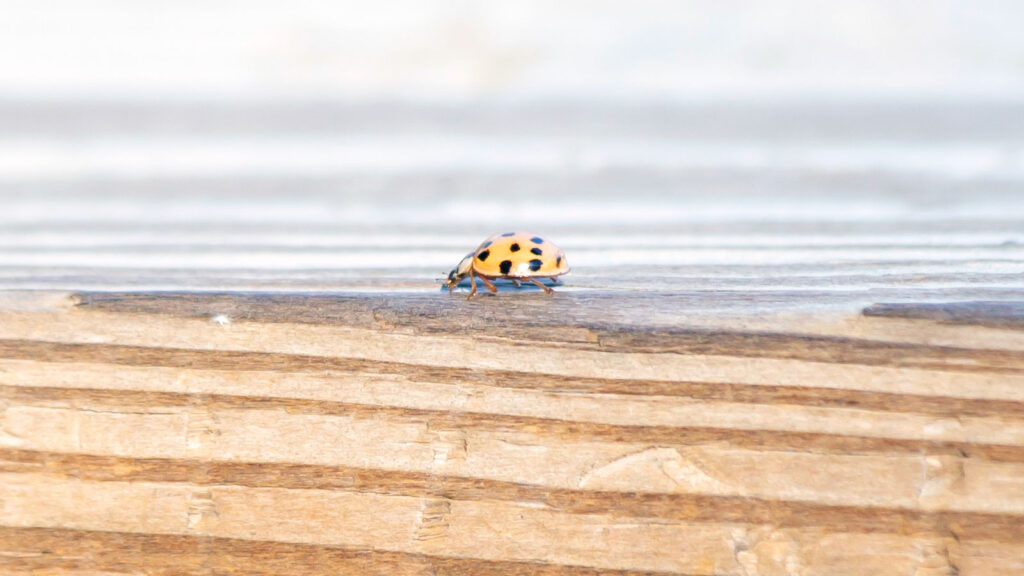
Dot can look different from other Asian lady beetles because this species has many color patterns. Some have many black spots. Some have only a few. Some have almost none.
One useful clue is the pale area behind Dot’s head. They often has a dark mark shaped a little like an M or W, depending on which way people look at they.
Tootie leans toward Dot’s leaf. “I see the M.”
Grandma says, “Good looking.”
Yoshi watches Dot turn around. “Now they looks like a W.”
Grandma smiles. “That is why people sometimes call they an M or W mark.”
Dot’s spots are not the only way to identify her. Other lady beetles can have spots too. Looking at her body shape, color, and the dark mark behind her head helps people tell Dot apart from some native lady beetles.
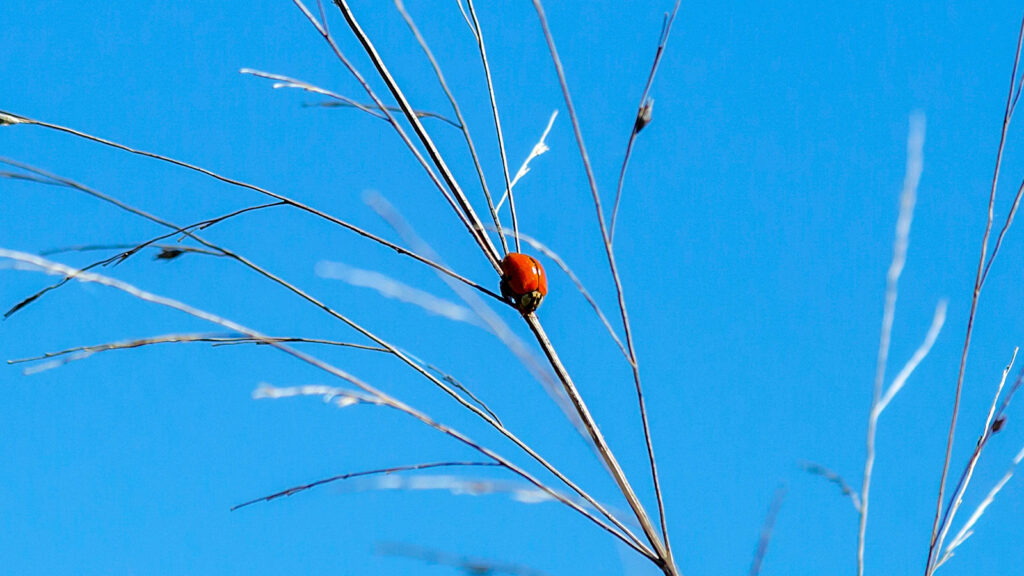
Dot’s species came to North America from Asia. People first brought Asian lady beetles here because they eat aphids and other crop pests. They can be helpful hunters in gardens and farms, but they can also compete with native lady beetles and become a nuisance when many gather around houses.
Grandma explains this without blaming Dot.
Tootie looks confused. “Did Dot do something wrong?”
Grandma says, “No. Dot is doing what beetles do: eating, growing, and looking for a safe place.”
Yoshi watches Dot crawl across the leaf. “People moved her species.”
“That is right,” Grandma says. “Sometimes people bring an animal somewhere for one reason, and later they changes how the whole neighborhood works.”
Dot is a real part of the yard now. Grandma can appreciate her appetite for aphids while still learning about the native lady beetles that have lived in the region much longer.
When weather turns cool, Dot may gather with many other Asian lady beetles on sunny walls, windows, doors, and light-colored buildings. They look for cracks and protected spaces where they can spend the winter.
Dot is not trying to move into Grandma’s house to eat food or build a family. She is looking for a sheltered place to wait out cold weather. But large groups indoors can be a nuisance.
One fall afternoon, Tootie sees several orange beetles on the sunny side of the house.
“Why are Dot’s cousins on the wall?”
Grandma says, “They are looking for winter shelter.”
Yoshi watches more beetles land near the window. “They picked the house.”
“They often do,” Grandma says. “Warm, sunny walls can look like a safe place.”
If Dot gets inside, Grandma does not crush her. Asian lady beetles can release a yellow fluid with a strong smell when scared, and they can stain surfaces. Grandma uses a vacuum carefully or blocks the little gaps where beetles get in.
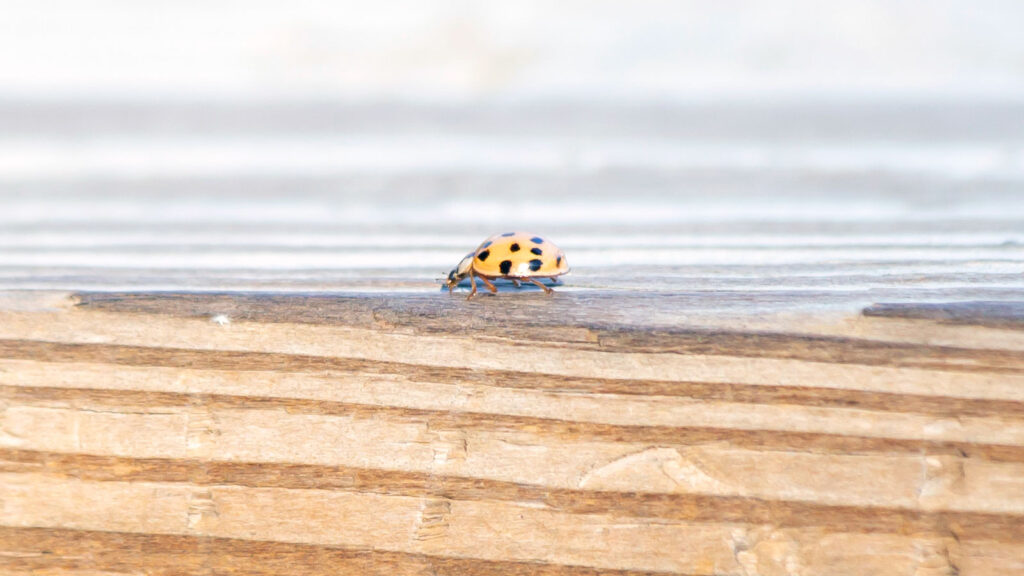
Dot sees the backyard from leaf level. She does not care about pecan arguments, creekside songs, or who is sitting on the fence. She cares about aphids, soft insects, and places to hide under leaves.
One morning, Loni is chewing the edge of a leaf while Dot crawls along the stem below.
Tootie looks back and forth. “Loni eats the plant. Dot eats the plant bugs.”
Grandma says, “Exactly.”
Loni takes another bite.
Dot catches an aphid.
Yoshi watches them both. “Same plant. Different lunch.”
Later, Faye lands on a nearby flower. Dot ignores her. Faye ignores Dot. They are both insects, but their lives use the yard in completely different ways.
Grandma does not let Tootie mouth Dot or chase her through the garden. Dot is tiny and easy to hurt, but she can also pinch or bite lightly if handled, especially when she feels trapped.
Grandma watches where Dot is crawling, then lets her keep hunting aphids. She does not spray the whole plant just because she sees a few bugs. The plant may already have a tiny hunter working on the problem.
Tootie watches Dot disappear under a leaf. “Can I hold her?”
Grandma says, “No.”
“Tootie,” Yoshi adds.
“I only asked.”
Grandma points to the aphid-covered stem. “Dot is busy. She has a job, and she does not need puppy help.”
A healthy yard can support many kinds of beetles. Flowers, shrubs, trees, and plants with small insects give lady beetles food and shelter. Avoid broad insect sprays whenever possible because they can kill Dot, native lady beetles, and the insects birds, spiders, and other animals need.
Grandma also knows that Dot’s species can gather indoors in fall. Keeping window screens in good shape and sealing small gaps around doors and windows can help keep large groups outside where they belong.
Grandma says, “Dot can stay in the garden and eat aphids. Her whole extended family does not need to rent the attic.”
Yoshi watches Dot crawl into the leaves. “That is a fair rule.”
Dot the Asian Lady Beetle
These are some helpful words for talking about this wild neighbor.
Dot the Asian Lady Beetle
Good wildlife watchers ask good questions. Here are a few to get you started.
People often call her that, but Dot is more exactly called a lady beetle.
Dot eats aphids and other tiny soft-bodied insects.
Many Asian lady beetles have a dark mark behind their heads that can look like an M or W.
Asian lady beetles can have different numbers of spots and different orange, red, or yellow-orange colors.
No. Her species was brought here from Asia.
They look for protected places to spend the winter when the weather turns cold.
No. She is small and easy to hurt, and she may release a smelly yellow fluid if she feels trapped.
Avoid crushing Asian lady beetles indoors because they can release a yellow, strong-smelling fluid that may stain surfaces. Seal gaps around windows and doors, repair screens, and use careful vacuuming for beetles that get inside. Outdoors, avoid broad insect sprays so lady beetles and other helpful predators can keep hunting. Think About They: Why might sealing a small gap be better than spraying many insects after they get inside?