Do Faye’s caterpillar spines sting?
Grandma says:
No. They look prickly, but Gulf Fritillary caterpillar spines are soft and do not sting people.
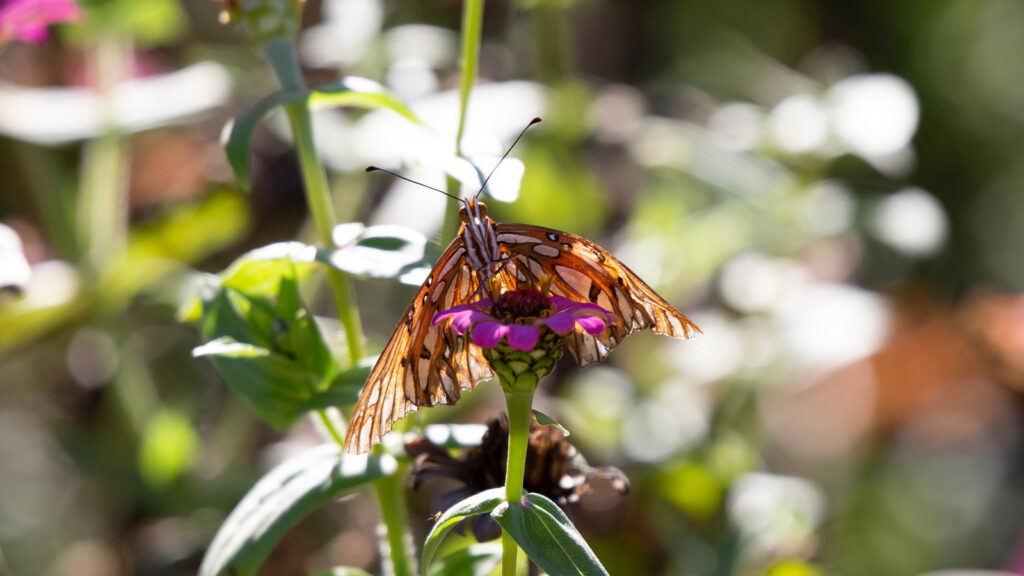
Faye is bright orange, fast around the flowers, and the reason Grandma leaves one very particular vine alone even when they tries to climb where they were not invited.
Faye is a Gulf Fritillary butterfly. She has bright orange wings with dark spots, long narrow forewings, and a pale silvery pattern underneath. When she flies through Grandma’s yard, she moves quickly and low around the flowers, then settles for a moment with her wings closed before zipping toward the creekside plants.
One warm afternoon, Tootie sees an orange butterfly race past the flower bed and land on a vine near the back fence.
“Mary is moving fast today,” he says.
Yoshi’s pointy ears twitch. “That is not Mary.”
Grandma looks up from the garden. “That is Faye. She is a Gulf Fritillary.”
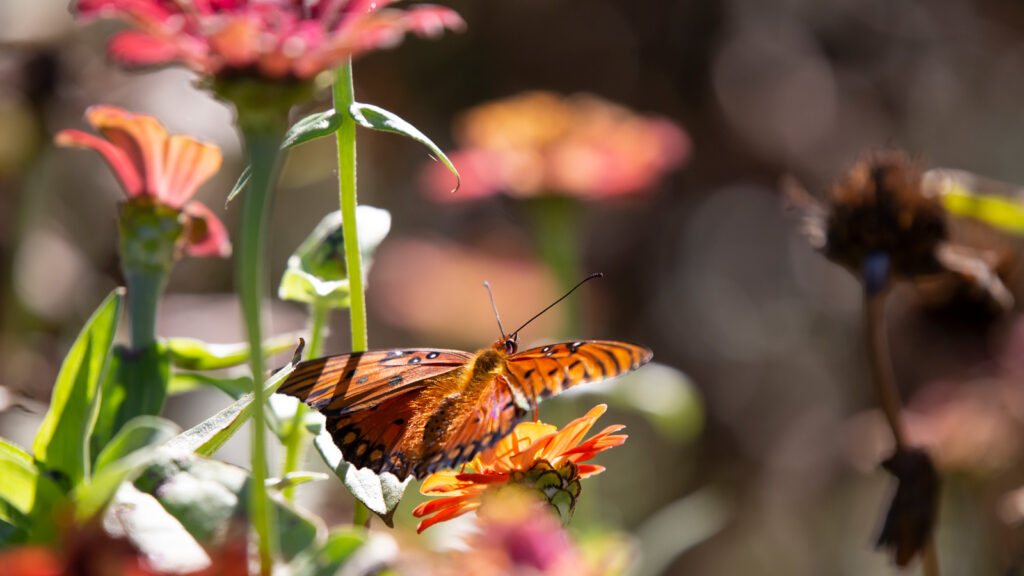
Faye opens her wings in the sunshine. Her orange looks brighter than Mary’s, and dark spots dot the wings instead of black lines.
Tootie studies her. “She looks like a little orange kite.”
Grandma smiles. “She does. And she has been looking for passionvine.”
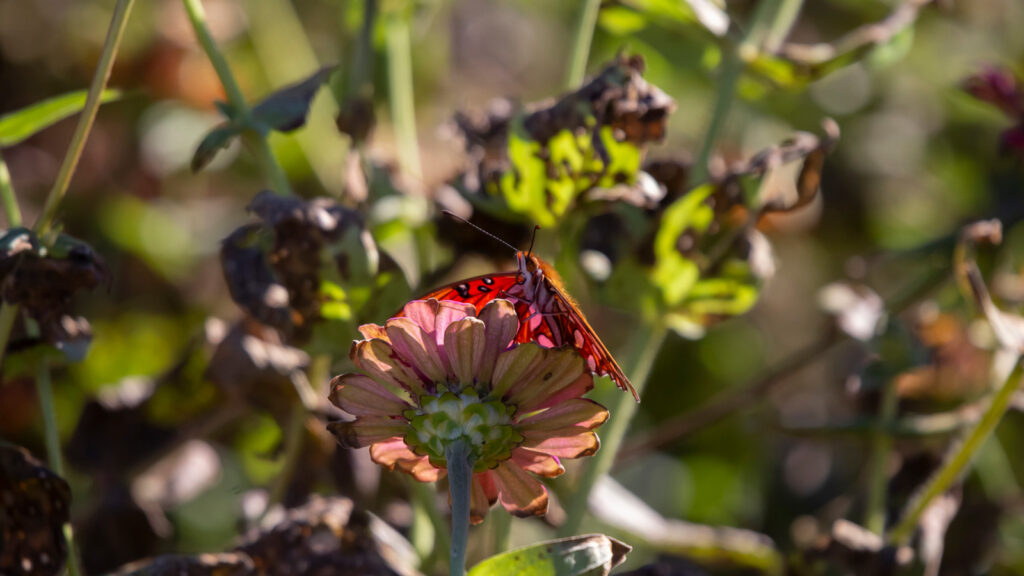
Faye uses sunny flower beds, garden edges, shrubs, creekside plants, and any place where passionvine grows. Adult Gulf Fritillaries need nectar flowers, but their caterpillars need passionvine. That makes passionvine the most important plant in Faye’s family story.
Grandma has passionvine growing near the back fence where they can climb without taking over her favorite flowers. The vine has curling tendrils, unusual flowers, and leaves that Faye checks carefully when she is ready to lay eggs.
Tootie watches Faye land on the vine. “Does she drink from that?”
Grandma says, “Not exactly. Faye needs that vine for her babies.”
Yoshi watches Faye move along a leaf. “Like Mary needs milkweed.”
“Very much like that,” Grandma says. “Mary’s caterpillars eat milkweed. Faye’s caterpillars eat passionvine.”
The flowers in Grandma’s garden give Faye nectar, while the passionvine gives her caterpillars the plant they need to grow. One yard can help both parts of her life if they have the right plants.
Faye began as a tiny yellow egg on or near a passionvine leaf, stem, or curling tendril. Her mother placed the egg where the caterpillar would have food as soon as they hatched.
When Faye came out of the egg, she was not a butterfly yet. She was a caterpillar. Gulf Fritillary caterpillars are orange to reddish-brown with black spines all over their bodies. The spines can make them look prickly and fierce, but they are soft and do not sting people.
Tootie sees one crawling across a leaf and stops. “That caterpillar has porcupine hair.”
Grandma says, “Those are spines, but they are not sharp like a porcupine’s quills.”
Yoshi watches the caterpillar chew a leaf. “They are still eating.”
“That is their main job right now,” Grandma says. “Eat passionvine, grow, and make room for the next stage.”
Faye molted several times as a caterpillar. Each old skin became too small, so she shed they and grew larger. When she was ready, she hung upside down in a J shape and formed a chrysalis. Her chrysalis was brown and bumpy, a little like a dry curled leaf.
Inside that chrysalis, Faye changed into a butterfly. She grew wings, antennae, long legs, and a curled tongue for drinking nectar. Then one day, she came out with soft wet wings, waited for them to dry, and flew away.
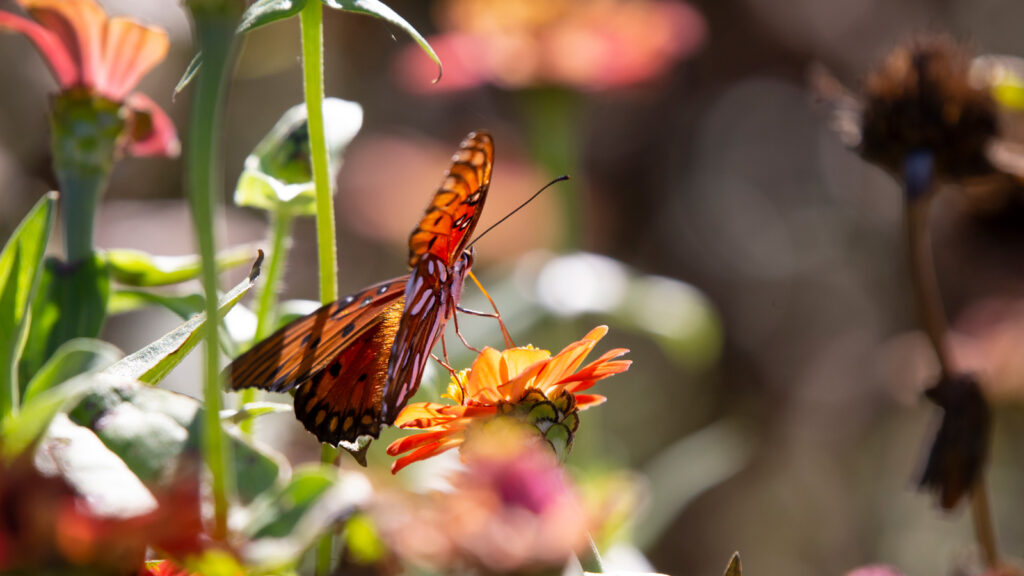
Faye drinks nectar from flowers. She uses her long curled tongue, called a proboscis, to reach sweet liquid inside blooms. She may visit lantana, zinnias, coneflowers, bee balm, buttonbush, and many other flowers that hold nectar.
As an adult, Faye does not chew passionvine leaves. Her caterpillar stage does that. The butterfly stage needs flower nectar, sunshine, and safe places to rest between flights.
One morning, Tootie watches Faye settle on a purple flower.
“Is she eating they?” he asks.
Grandma says, “She is drinking nectar.”
Yoshi watches Faye uncurl her tiny tongue. “Like Zip.”
“A little,” Grandma says. “Zip drinks nectar with his long tongue too, but he is a bird. Faye is a butterfly.”
Faye may move from flower to flower quickly, carrying pollen on her body as she goes. The flowers give her food, and she may help flowers make seeds by moving pollen between them.
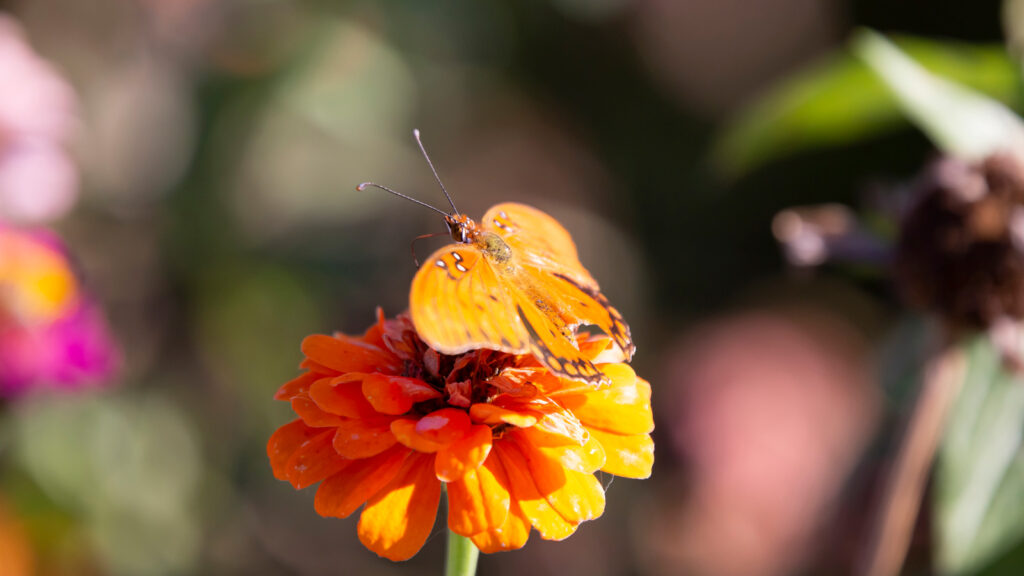
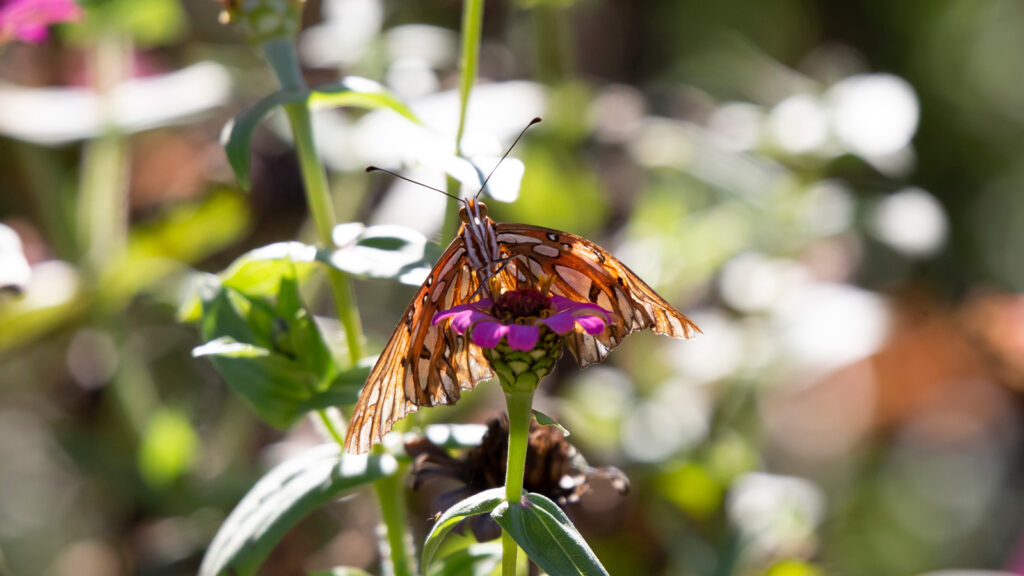
Faye’s upper wings are bright orange with dark spots. The underside of her wings looks different. They have pale silvery patches that can flash when she rests with her wings closed.
Tootie watches Faye land on a vine. “She turned into a different butterfly.”
Grandma laughs. “She did not. You are looking at the other side of her wings.”
When Faye opens her wings, the bright orange upper side shows. When she closes them, the silvery pattern underneath becomes easier to see. Both sides help people recognize her.
Yoshi watches the butterfly fold her wings. “She has two looks.”
Grandma nods. “Many butterflies do.”
Faye’s orange color can also make her easy to notice in a flower bed. She does not blend in like Gee, Fenn, or Grenda. Her bright wings say she belongs in the sunshine.
Faye’s caterpillar has one very important job: eat passionvine. That is why Grandma does not panic when she sees holes in the vine’s leaves.
The caterpillars may eat many leaves, especially when several hatch near one another. Grandma knows the vine may look rough for a while, but she planted they because they helps Faye’s family. A passionvine can grow new leaves, and every caterpillar that grows safely may become a butterfly.
Tootie looks at a vine with chewed leaves. “They ate almost all of they.”
Grandma says, “They did. That is what host plants are for.”
Yoshi watches a caterpillar crawl under a leaf. “Will the plant be okay?”
“They usually can be,” Grandma says. “The vine and the butterfly have been doing this together for a long time.”
Grandma watches the plant, makes sure they are healthy enough to recover, and gives the caterpillars room to grow. She does not spray the vine with bug killer just because caterpillars are eating.
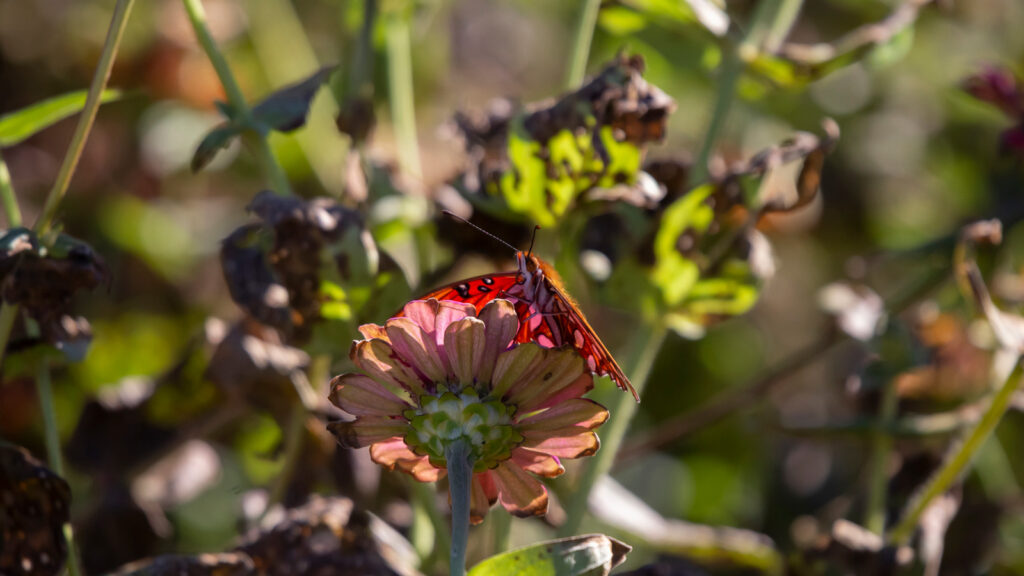
Faye and Mary are both orange butterflies, but they have different family plants and different wing patterns. Mary is a Monarch Butterfly with black veins and white spots along dark wing edges. Faye is a Gulf Fritillary with dark spots and a more silvery underside.
Mary’s caterpillars eat milkweed. Faye’s caterpillars eat passionvine. Both butterflies drink flower nectar as adults, and both need sunny, flower-filled places in the yard.
Tootie sees both butterflies near the garden one day.
“Which orange one is which?” he asks.
Grandma points carefully. “Mary has black lines across her orange wings. Faye has dark spots.”
Yoshi looks at the plants below them. “Then look for milkweed or passionvine too.”
Grandma smiles. “That is good field work.”
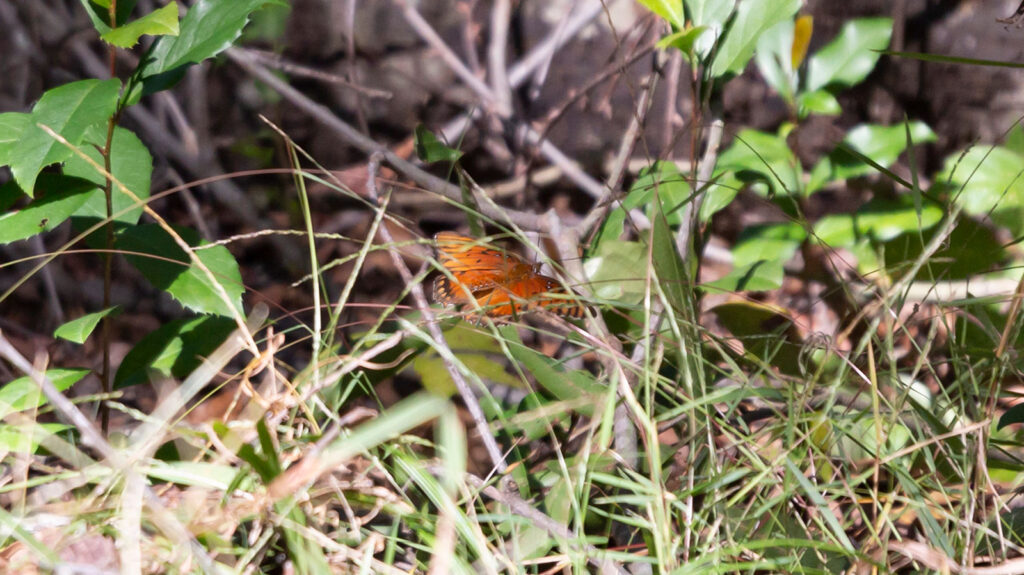
Faye sees the backyard from flower height. She sees Mary visiting the milkweed patch, Dart racing above the creek, Goldie’s web shining between tall plants, and Tootie trying to walk carefully through the garden without stepping on anything.
One afternoon, Mary lands on a flower near Faye.
Tootie whispers, “There are two orange butterflies.”
Grandma says, “And both have important places to be.”
Mary opens her orange wings with black lines. Faye flutters past with dark spots on hers.
Dart circles over the flowers. “You both fly slow.”
Mary settles on another bloom. “We are busy.”
Faye lands on the passionvine. “And we are not chasing mosquitoes.”
Dart thinks about that. “Fair.”
Yoshi watches the two butterflies move through the flowers. “The yard needs more than one kind of flyer.”
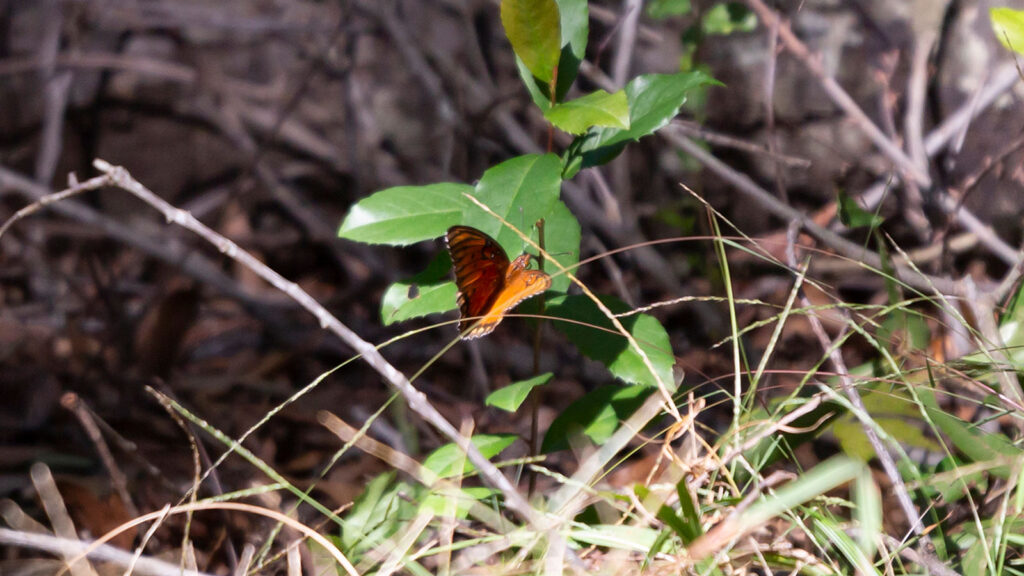
Grandma watches Faye without catching her. She does not touch the caterpillars, pull them from the passionvine, or let Tootie bounce through the vines.
Faye’s caterpillars look spiky, but they are harmless to watch. Grandma still says not to handle them because tiny caterpillars can be hurt easily, and their host plant is where they need to stay.
Tootie watches a caterpillar eat. “Can I put they on another leaf?”
Grandma says, “No. They knows where they are.”
“Tootie,” Yoshi adds.
“I only asked.”
Grandma points toward the passionvine. “Faye’s caterpillar needs that exact kind of plant. Watching is helpful. Moving they are not.”
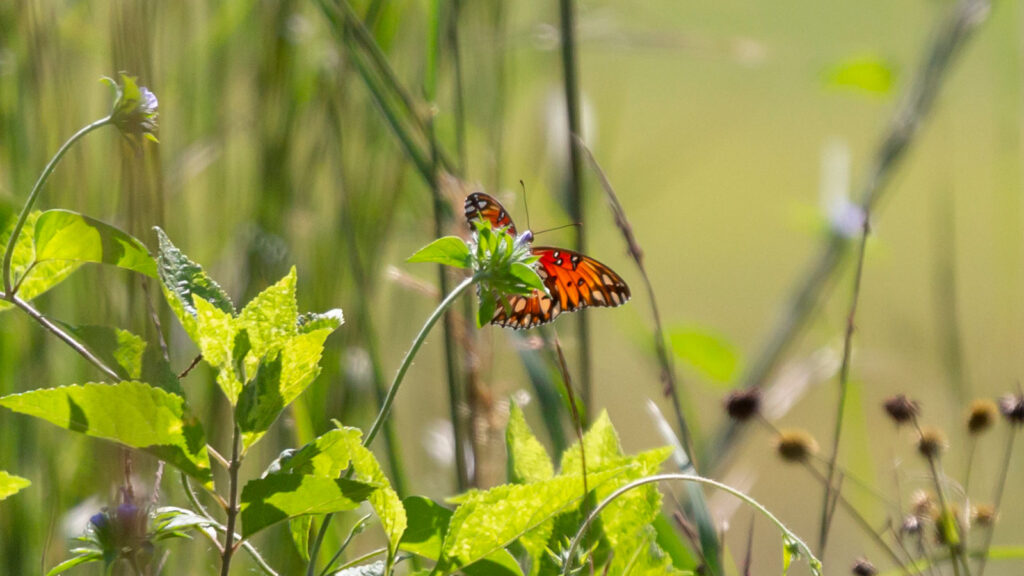
Faye needs passionvine for caterpillars and nectar flowers for adult butterflies. A sunny space with both kinds of plants can help her family through the warm season.
Avoid broad insect sprays around passionvine, flowers, and creekside plants. Caterpillars are insects, and chemicals meant to kill pests can hurt butterflies too. Let passionvine grow where they have room, watch for caterpillars before trimming they, and leave flowers blooming when possible.
Grandma says, “Faye needs passionvine for babies, flowers for adults, and people patient enough to see a chewed leaf as part of the plan.”
Yoshi watches Faye disappear behind the vines. “That is sensible.”
Faye the Gulf Fritillary
These are some helpful words for talking about this wild neighbor.
Faye the Gulf Fritillary
Good wildlife watchers ask good questions. Here are a few to get you started.
No. They look prickly, but Gulf Fritillary caterpillar spines are soft and do not sting people.
They eats passionvine leaves.
She drinks nectar from flowers.
Because those leaves are food for Faye’s caterpillars.
No. Mary is a Monarch Butterfly. Faye is a Gulf Fritillary.
They are best to watch without touching. Both are delicate, and the caterpillar needs to stay on passionvine.
The pale silvery pattern is part of her wing colors and helps people recognize Gulf Fritillaries.
Watch butterflies and caterpillars without handling them. Avoid spraying insecticides on passionvine or nearby flowers, and keep pets from chewing unfamiliar vines or caterpillars. Plant passionvine where they have room to grow and where caterpillars can eat without creating a problem in a walkway. Think About They: Why can a plant that looks a little chewed still be important to a healthy yard?