Why is Gary called green if he looks dark?
Grandma says:
His back and cap can show greenish-black color, especially in good light.
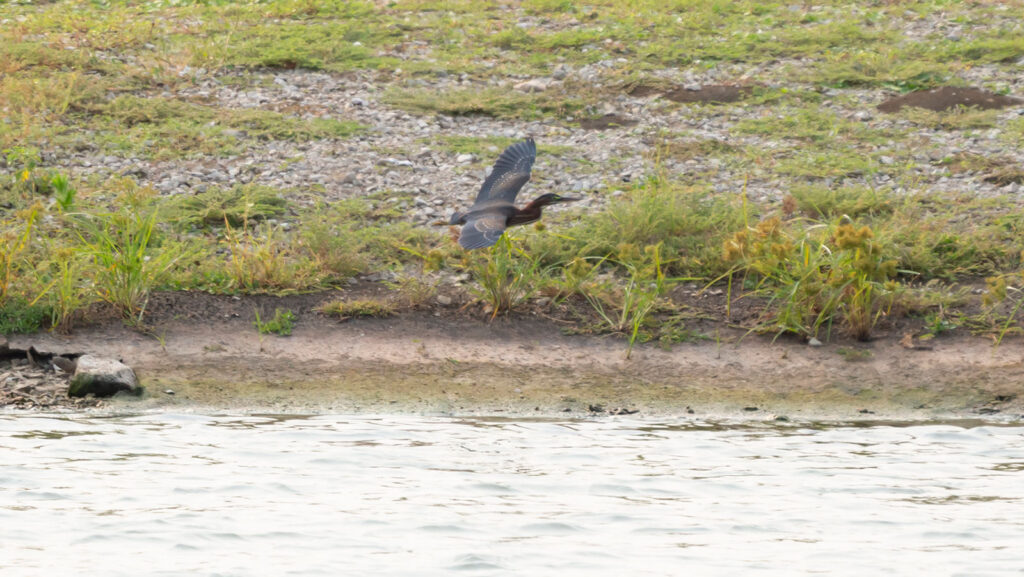
Gary is small for a heron, dark for a bird called green, and so still at the creek’s edge that Tootie keeps mistaking him for a soggy stick with very serious eyes.
Gary is a Green Heron. He has a dark green-black cap and back, a rusty brown neck, short yellow legs, a sharp pointed bill, and a compact body that often looks hunched. He is much smaller than a Great Blue Heron, but he has the same patient idea about fishing: stand still, wait for movement, and strike fast.
One warm afternoon, Tootie sees Gary standing beside the slow bend of the creek behind Grandma’s house.
“Is that a bird?” Tootie whispers.
Yoshi’s pointy ears twitch. “They have not moved.”
Grandma looks through her binoculars. “That is Gary. He is a Green Heron.”
Gary’s neck stays tucked close to his body. Then a tiny fish flickers near the muddy edge.
Snap.
Gary’s bill darts forward.
Tootie stares. “He was waiting the whole time.”
Grandma says, “Gary has patience. Tootie has other gifts.”
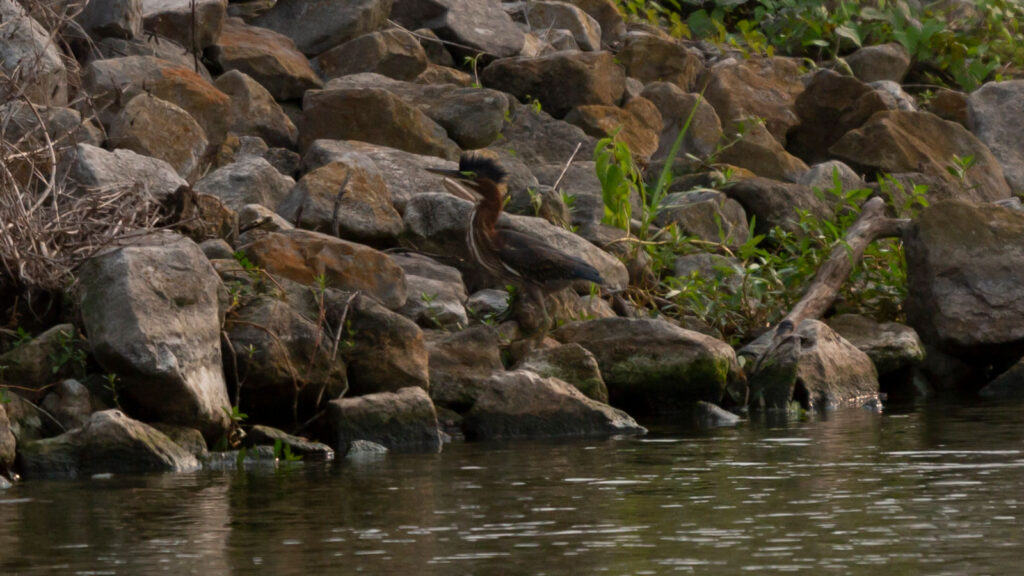
Gary uses quiet freshwater edges. He likes slow creek bends, shallow pockets, wetland borders, ponds, ditches, marshy places, low branches over water, and tangled creekside plants where he can hide while watching for prey.
The creek behind Grandma’s fence gives Gary the kind of spot he needs. The slow bend has muddy edges, reeds, low branches, little fish, frogs, crayfish, insects, and enough plants to keep him from standing in the open.
Tootie watches Gary step behind a clump of creek grass. “Where did he go?”
Grandma says, “He is still there. Green Herons like to fish where people have to look twice.”
Yoshi watches the water ripple beneath a branch. “He likes cover.”
“That is right,” Grandma says. “Gary needs food in the water and leaves around him so he does not feel exposed.”
Gary does not wade belly-deep through the creek the way a larger heron might. He often stands near the edge, on a low branch, or on solid ground and waits for something to come close.
Gary began life in a stick nest built in a tree or shrub near water. His parents made a loose platform from twigs, usually in a place with branches around they for cover.
When Gary hatched, he had soft down instead of sleek feathers. Both parents helped keep the babies warm and brought food to the nest. Young Green Herons eat food their parents bring back, including fish, insects, and other small animals from the water’s edge.
Tootie looks toward the creekside trees. “Was baby Gary born in the water?”
Grandma shakes her head. “No. He was born in a nest above the water.”
Yoshi watches a low branch over the creek. “Then he had to learn not to fall.”
“And learn to climb, perch, fly, and fish,” Grandma says. “That is a lot for one little bird.”
Young Green Herons begin moving around the nest area before they are strong flyers. Their parents keep feeding them after they leave the nest while they learn where fish hide and how long to wait before striking.
Gary eats small animals from the creek and their edges. He may eat little fish, tadpoles, frogs, crayfish, insects, spiders, snails, and other small prey he can catch with his sharp bill.
Gary does not eat like Sinbad, who nibbles plants and hunts underwater. Gary uses his eyes. He watches the surface, waits for a flicker, then strikes with his bill.
One afternoon, a crayfish creeps along a shallow creek rock.
Gary freezes.
The crayfish moves again.
Gary strikes so quickly that Tootie almost misses they.
“He got they!” Tootie says.
Grandma nods. “Gary is a sit-and-wait hunter.”
Yoshi watches Gary swallow his meal. “He does not waste steps.”
“No,” Grandma says. “His whole plan is waiting until one step is enough.”
Gary’s neck can stretch farther than they first appears. When he is standing still, he often keeps they tucked close to his body, making him look short and compact. When he strikes or flies, the neck can stretch and change his whole shape.
Tootie watches Gary stand beside a reed. “He looks smaller than he did before.”
Grandma says, “His neck is folded in.”
Yoshi watches Gary look toward the water. “He is saving they.”
“That is one way to put they,” Grandma says. “Herons can tuck their necks close, then stretch quickly when they need to.”
Gary’s short-looking shape helps him stay hidden among creekside stems and shadows. His sharp bill is easier to miss when he is standing still too.
Gary can stand still for a long time, then move all at once. His eyes track tiny movements in the water, and his bill shoots forward to grab prey before they can get away.
Tootie tries to stand like Gary beside the porch steps.
He lasts two seconds.
Then he sneezes.
Then he wiggles.
Then he chases a leaf.
Grandma laughs. “You may need more practice.”
Yoshi watches Gary catch another tiny fish. “Gary has more patience.”
“Much more,” Grandma says.
Gary’s quick strike does not mean he is rushing. He waits until the best moment arrives. His stillness is part of the hunt.
Gary and Knossos both use the slow bend of the creek, but they use they differently. Knossos is a Bronze Frog who sits near the edge, calls, and catches prey from low down. Gary stands taller on the bank or branch and watches the water from above.
One afternoon, Knossos sits near a muddy edge while Gary stands on a low branch above him.
Tootie points. “They are both waiting.”
Grandma says, “They are. But they are looking for different things.”
Knossos watches for insects and small prey near him.
Gary watches for fish, frogs, crayfish, and other little animals in the water.
Yoshi watches the creek. “Same creek. Different view.”
Grandma nods. “That is why a good creek can feed more than one hunter.”
Gary sees the backyard from the creek. He notices Dash hovering above the water, Sinbad climbing onto a log, Chirp hiding in wet grass, and Mabel moving through the deeper edge of the creek.
One evening, Dash loops past Gary’s fishing spot.
“You sit still a lot,” Dash says.
Gary does not move.
Dash circles once.
Gary catches a fish.
Dash pauses. “Fine. That works.”
Grandma hears Tootie laughing from the porch. “Gary does not need to fly fast when dinner comes to him.”
Yoshi watches Gary step behind a reed. “He is hard to see again.”
“That is part of his plan,” Grandma says.
Grandma watches Gary from a distance. She does not throw food into the creek, rush toward his fishing spot, or let Tootie splash through the plants near him.
Gary needs quiet water, natural cover, and room to hunt. A loud dog or a person standing too close can make him leave before he finds food.
Tootie watches Gary disappear behind the reeds.
“Can I go see him better?”
Grandma says, “No. The best way to see Gary is to let Gary forget you are there.”
“Tootie,” Yoshi adds.
“I know.”
Grandma points toward the creek. “Gary is a wild bird, not a porch guest.”
Gary needs clean water, native creekside plants, fish and insects, low branches, and quiet edges. Keeping oil, soap, trash, fishing line, fertilizer, and pesticides out of the creek helps all of the animals Gary depends on.
Grandma leaves some creekside plants in place because bare banks do not give Gary much cover or food. She also keeps pets out of the water’s edge when possible.
Grandma says, “Gary needs a healthy creek full of little things, not a bare ditch with nowhere to stand.”
Yoshi watches Gary fly farther down the creek. “That is sensible.”
Gary the Green Heron
These are some helpful words for talking about this wild neighbor.
Gary the Green Heron
Good wildlife watchers ask good questions. Here are a few to get you started.
His back and cap can show greenish-black color, especially in good light.
He eats small fish, frogs, tadpoles, crayfish, insects, snails, and other small animals near water.
He uses the creek edge for food, but he nests in trees or shrubs near water.
He is watching for prey and waiting for the best moment to strike.
No. Green Herons are a different, much smaller kind of heron.
No. Wild birds find the food their bodies need in the creek.
No. Gary is a wild bird and should be watched from a distance.
Watch creek wildlife from a safe distance. Keep children and pets out of muddy banks, avoid feeding wild birds, and keep trash, fishing line, soap, oil, and chemicals away from water. Never try to catch a heron or disturb a nesting bird. Think About They: Why is a clean, quiet creek safer for both wildlife and people?