Why is Loni called a lubber?
Grandma says:
“Lubber” is part of the common name Eastern Lubber Grasshopper. Say they like LUB-er.
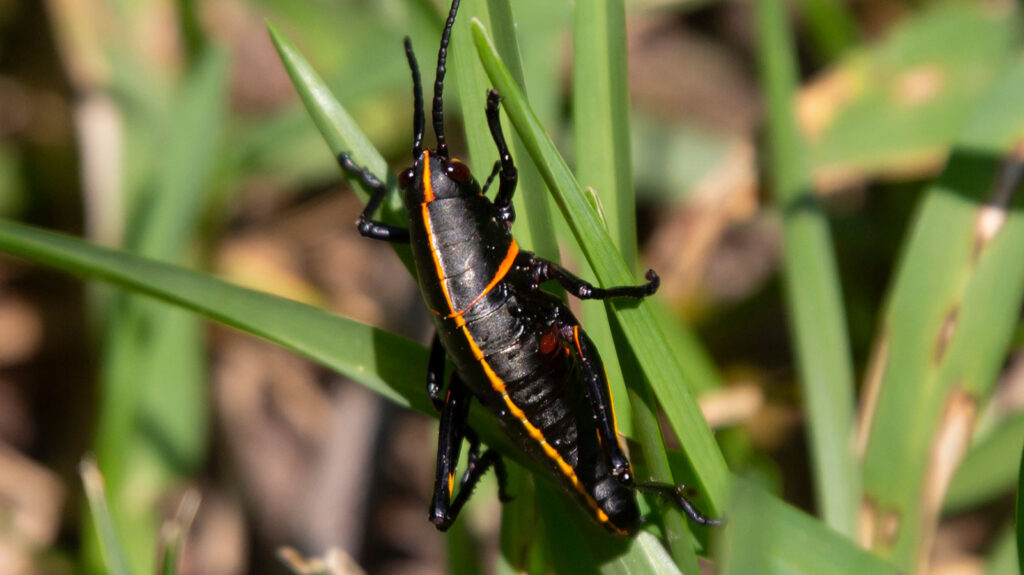
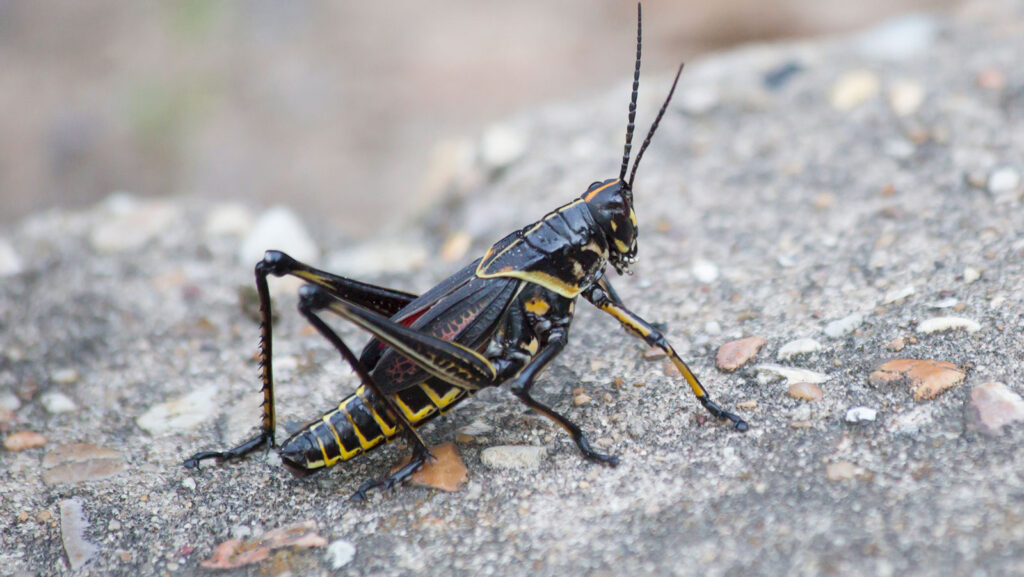
Loni is a giant grasshopper with bright colors, slow feet, and the confidence of somebody who has never once worried about being easy to spot.
Loni is an Eastern Lubber Grasshopper. Say lubber like LUB-er. People also call Eastern Lubbers graveyard grasshoppers, though Grandma says that name sounds much spookier than Loni really is.
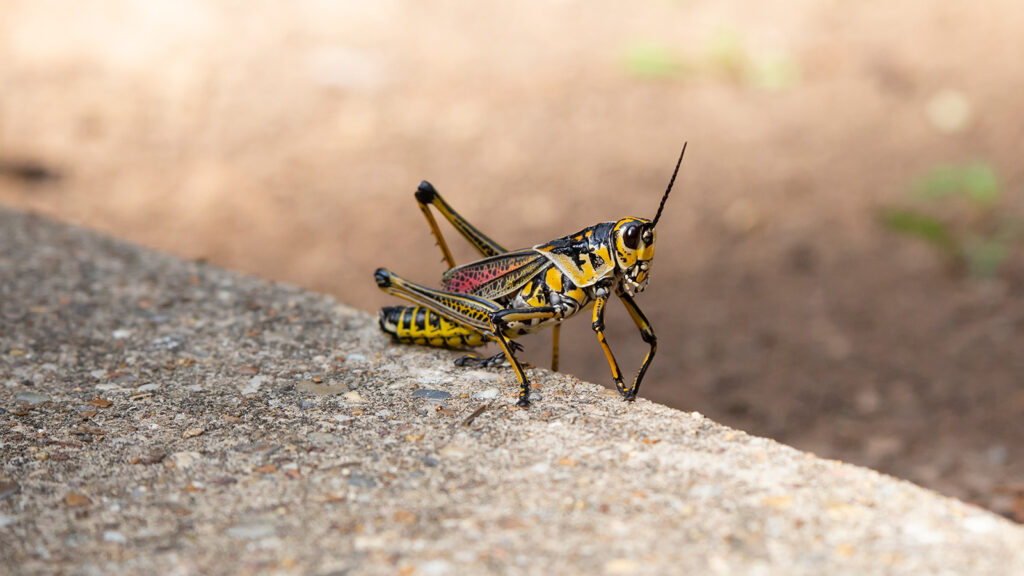
Loni is big for a grasshopper. Her body can be black with bright yellow, orange, or red markings, and she has strong back legs, short wings, and a thick little body that looks built for serious leaf chewing. She can hop, but she is not a fast flyer like Dart or Zip. Most of the time, Loni walks through the flower beds and garden like she has all afternoon.
One warm morning, Grandma is checking her plants when Tootie sees a big black-and-yellow shape on a leaf.
“Is that a bug or a toy?” he asks.
Yoshi’s pointy ears twitch as she watches the leaf move. “Bug.”
Grandma bends down carefully. “That is Loni. She is an Eastern Lubber Grasshopper.”
Tootie stares at her. “She is huge.”
Loni takes one slow bite from the leaf.
Grandma nods. “And hungry.”
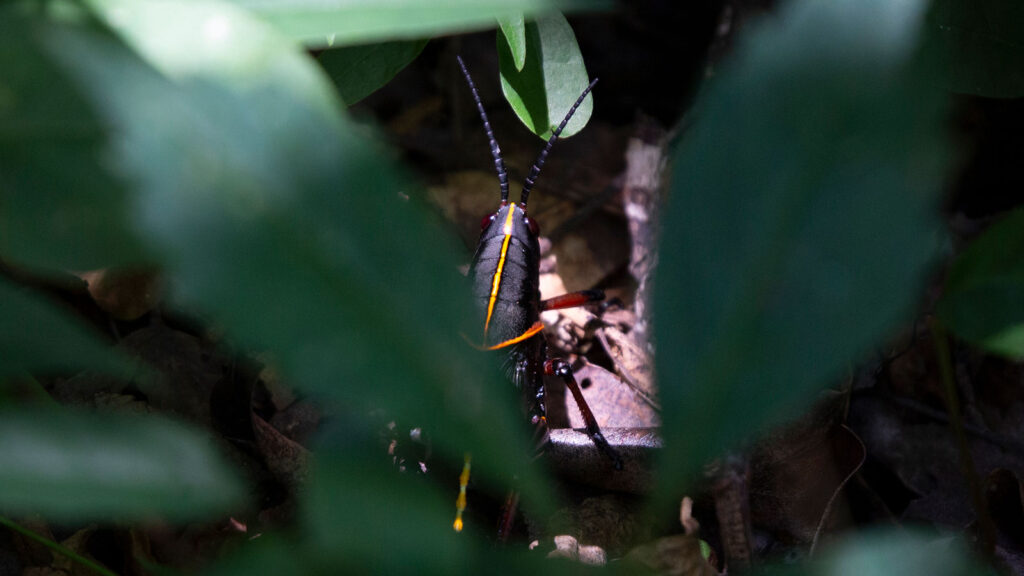
Loni uses warm places with plenty of plants to eat. She may live around flower beds, gardens, grassy edges, weedy patches, low wet places, and sunny spots near shrubs. She does not need a tree hollow like Robbie or a creek bank like Chirp. She needs plants, soil, sunlight, and enough cover to move through the yard without getting stepped on.
Grandma’s flower beds look like a buffet to Loni. The same leaves that make the yard pretty can also become lunch for a hungry grasshopper. Loni may eat flowers, leaves, tender stems, and garden plants. She is not trying to ruin Grandma’s work. She is simply built to eat plants, and Grandma’s garden has plenty of them.
Tootie watches Loni climb a stem. “Does she know those are Grandma’s flowers?”
Grandma laughs. “Loni does not know who planted them. She knows they are food.”
Yoshi watches Loni reach another leaf. “She has a large lunch.”
“She does,” Grandma says. “That is why gardeners notice lubbers.”
Loni does not stay in one exact spot forever. She may move between the garden, tall grass, weeds, and damp edges of the yard. Still, she likes places where plants grow thick enough to give her food and places to hide when birds or other animals come through.
Loni began life underground.
Her mother used the tip of her abdomen to place groups of eggs in the soil. The eggs stayed there through the cooler months, safe below the ground while the weather changed above them. When the soil warmed in spring, the young grasshoppers hatched and crawled up into the world.
Baby lubbers are called nymphs. A nymph is a young insect that looks somewhat like the adult but does not yet have full adult wings or adult colors. Young Eastern Lubbers often look much darker than adults. They may be mostly black with lighter stripes or small bright markings, and they can gather together in groups when they first hatch.
Tootie looks at Grandma. “So Loni was tiny once?”
Grandma nods. “Tiny, dark, and probably just as hungry.”
As Loni grew, she molted. That means she shed her old outer skin because they had become too small. Insects have a hard outer covering, so they cannot simply stretch bigger the way Tootie can grow into a larger collar. Loni had to leave the old covering behind and make room for a larger body.
She went through several molts before becoming an adult. Her colors changed. Her body grew bigger. Her wings developed, though Eastern Lubbers do not fly long distances the way many grasshoppers do.
Yoshi watches Loni crawl through the leaves. “She grew by leaving old skin behind.”
Grandma nods. “That is right.”
Tootie thinks about they. “I am glad puppies do not have to do that.”
Grandma says, “So is your vacuum cleaner.”
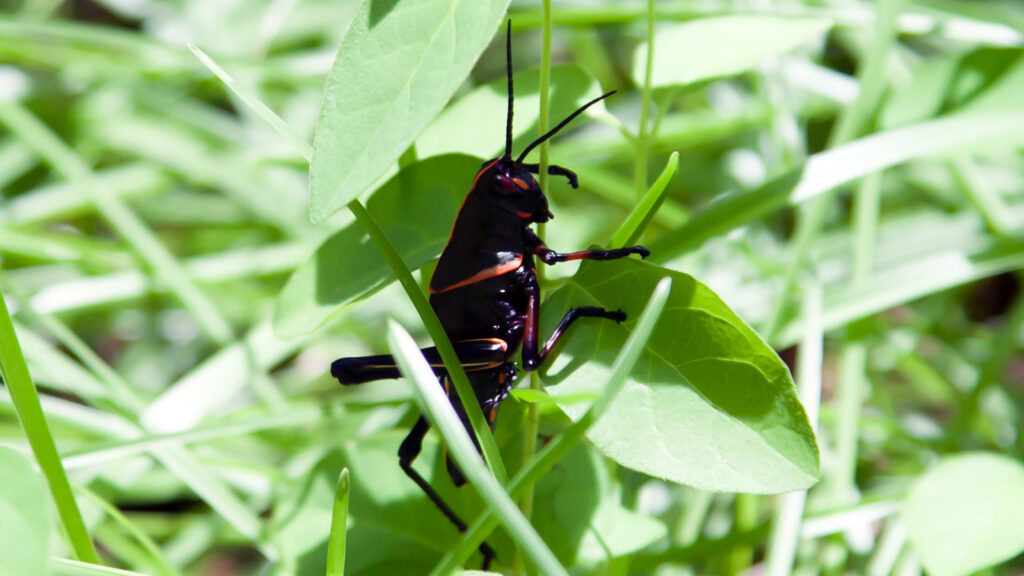
Loni eats plants. She may chew leaves, flowers, stems, garden plants, weeds, and other soft green parts of plants. Eastern Lubbers can eat many kinds of plants, which is why one big grasshopper can make a gardener stop and look twice.
Grandma does not panic when she sees one Loni. A yard can support many kinds of wildlife, and insects need food too. But Grandma does pay attention, especially around her favorite flowers and the little garden. A large group of lubbers can eat enough leaves to make plants look rough in a hurry.
One afternoon, Tootie sees Loni chewing the edge of a flower leaf.
“Is she eating Grandma’s plant?”
Grandma looks down. “She surely is.”
Tootie waits for Grandma to sound angry.
Instead, Grandma sighs. “Loni has picked an expensive lunch spot.”
Yoshi watches Loni keep chewing. “Does she eat pecans?”
“No,” Grandma says. “Scott and Phoenix can keep those. Loni wants leaves and flowers.”
Loni does not eat mosquitoes like Dart, bugs like Chirp, or berries like Rumpy. She is an herbivore, which means she eats plant material.
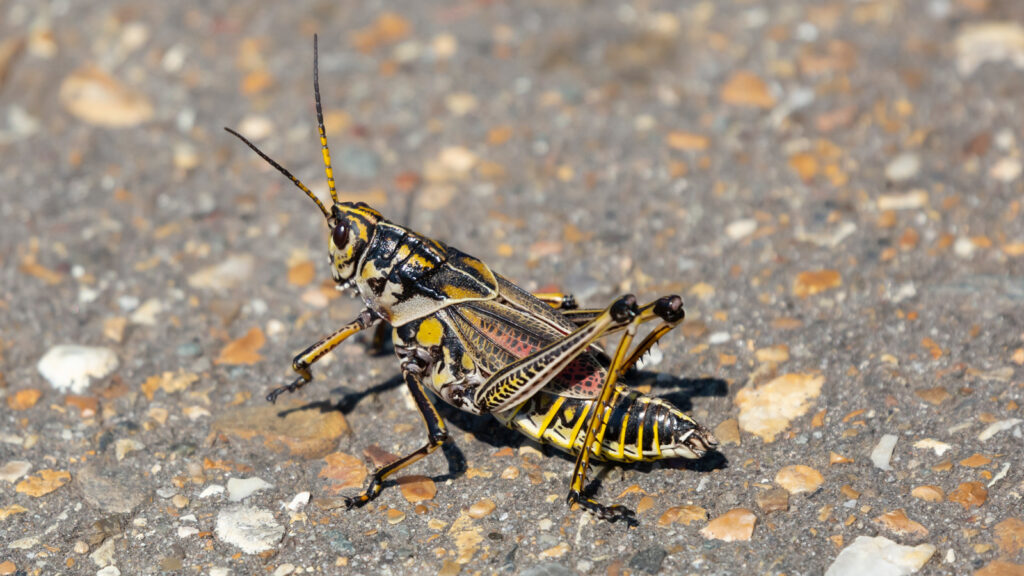
Loni’s bright colors are not there to help her hide. They help tell other animals to be careful.
Eastern Lubbers can carry chemicals from the plants they eat, and those chemicals can make them taste bad to many animals. Their bright black, yellow, orange, and red colors may warn predators that Loni is not an easy snack.
Grandma says bright colors can work like a warning sign.
Tootie looks at Loni’s markings. “Like a tiny stoplight?”
“That is a good way to think about they,” Grandma says. “Her colors say, ‘You might want to choose something else for lunch.’”
Yoshi watches a bird land nearby, then move along without trying to catch Loni. “They listened.”
“Maybe,” Grandma says. “Or maybe they have learned before.”
Loni does not need to be sneaky like Gee or Fenn. She is easy to see because her colors give her a different kind of protection.
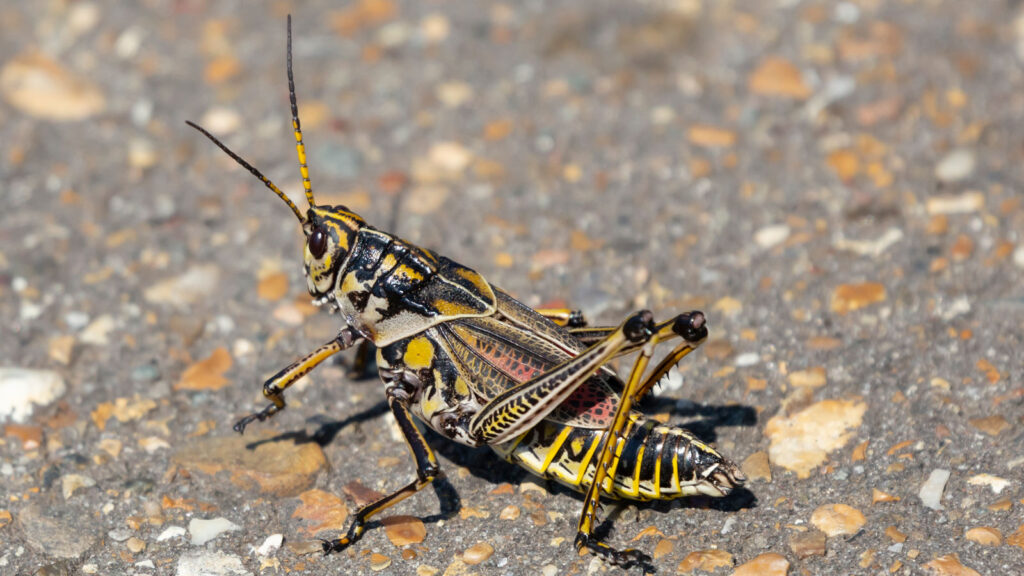
Loni has wings, but she is not known for flying far. Her wings are much shorter than people expect from such a large grasshopper. She can hop and move through plants, but she usually walks or makes short jumps instead of lifting into the sky like Dart.
Tootie sees Loni on the ground near the garden path.
“Why does she not fly away?” he asks.
Grandma says, “Because she does not need to. Loni has other ways to stay safe.”
Yoshi watches Loni turn toward a patch of grass. “She is not in a hurry.”
“That is true,” Grandma says. “Loni is not built for speed. She is built for chewing, growing, hopping, and making herself hard to ignore.”
Loni may hiss softly or spread her wings when she feels threatened. She may also hop away into grass or under leaves. But her main plan is not to race. Her main plan is to look large, look bright, and make predators think twice.
Tootie watches her take another slow step. “She walks like Kevin when he has a plan.”
Kevin hears this from the pecan tree.
“I walk with purpose,” he says.
Grandma says, “Loni does too. Her purpose is apparently the flower bed.”
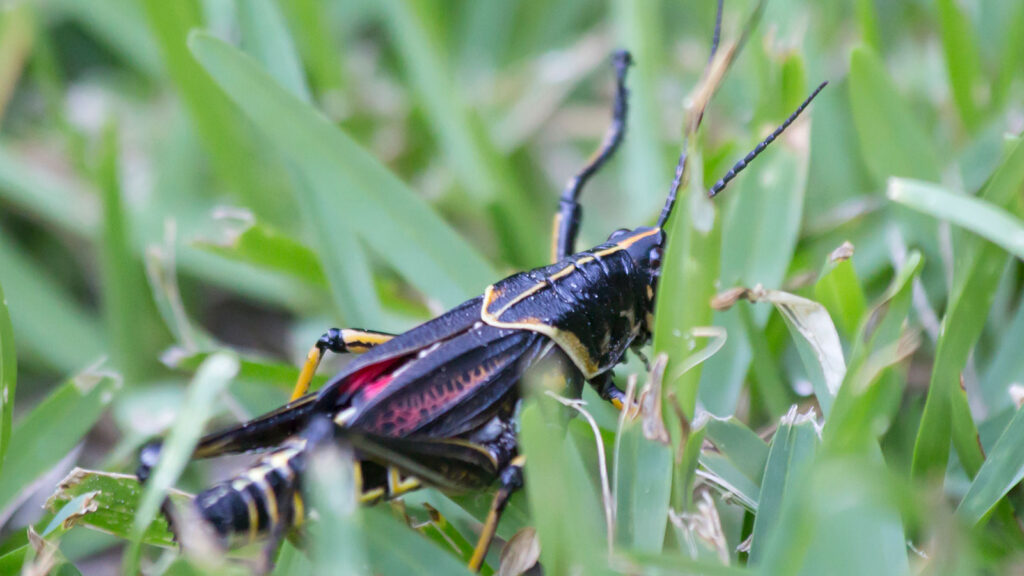
Loni does not spend much time in the trees, so she sees the backyard crew from lower down. She sees Tootie’s paws coming across the grass. She sees Yoshi’s shadow near the porch. She sees Grandma’s gardening gloves, watering can, and very concerned face when a leaf has too many bite marks.
One day, Scott runs across the flower bed looking for a pecan he buried somewhere last week. Loni stays still on a stem while Scott rushes past.
Tootie watches from the porch. “Did Scott see her?”
Grandma shakes her head. “Probably not. Scott was thinking about pecans.”
Scott calls from the grass, “I was thinking about a specific pecan.”
Loni does not react. She keeps eating.
Later, Biv lands on a nearby branch and looks down at her.
“You are eating the flowers,” he says.
Loni takes another bite.
Biv looks at Grandma. “She is eating the flowers.”
Grandma says, “I am aware.”
Yoshi watches Loni move to another leaf. “She is not worried about anybody.”
Grandma says, “Loni is a graveyard grasshopper. She has a name to live up to.”
Tootie’s ears lift. “Is she spooky?”
Grandma smiles. “No. She is just big, bright, and very committed to lunch.”
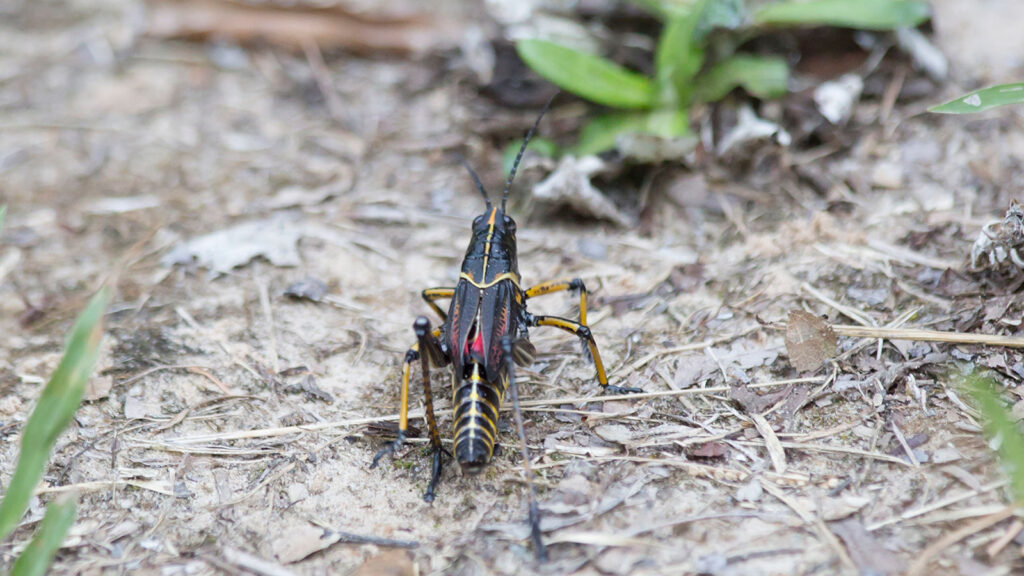
Grandma does not let Tootie pick Loni up or mouth her. Eastern Lubbers can release a messy, unpleasant-smelling fluid when they feel threatened, and they may have chemicals in their bodies from the plants they eat. Loni is not dangerous to watch, but she is not a snack, a toy, or a pet.
Tootie looks at her bright colors. “Can I say hi?”
Grandma says, “From over there.”
“Tootie,” Yoshi adds.
“I only asked.”
Grandma points toward Loni. “She needs room to eat, move, and hide. You do not need to make her feel trapped.”
Tootie sits down in the grass a safe distance away. Loni walks behind a leaf, then comes back out when she decides the puppy is no longer a problem.
Grandma nods. “That is better.”
Loni needs plants, soil, sunny spots, and places to move through the yard. A backyard does not have to be perfectly neat to support insects. Weeds, grasses, plant stems, and quiet corners can all provide food or shelter.
Grandma also knows that gardeners may need to protect special plants when too many lubbers gather in one place. The goal is not to hurt every insect in the yard. The goal is to notice what is happening and keep the garden healthy.
Avoid spraying broad insect killers everywhere. Those chemicals can hurt helpful insects, pollinators, dragonflies, and other animals that use the yard. A grown-up can decide what kind of garden care is needed when plant-eating insects become too numerous.
Grandma says, “A yard needs bugs. They just does not need every bug holding a family reunion in my azaleas.”
Yoshi watches Loni chew another leaf. “Loni would attend.”
Grandma says, “She would organize they.”
Loni the Eastern Lubber Grasshopper
These are some helpful words for talking about this wild neighbor.
Loni the Eastern Lubber Grasshopper
Good wildlife watchers ask good questions. Here are a few to get you started.
“Lubber” is part of the common name Eastern Lubber Grasshopper. Say they like LUB-er.
That is another old common name for Eastern Lubbers. The name sounds spooky, but Loni is simply a large plant-eating grasshopper.
She has wings, but Eastern Lubbers do not usually fly far. They mostly walk, hop, and move through plants.
Loni eats leaves, flowers, stems, weeds, and other plant material.
Her colors can warn predators that she may taste bad or be a poor choice for lunch.
No. Watch her from a distance. She may release a messy fluid if she feels scared or trapped.
Young Eastern Lubbers, called nymphs, often look much darker than adults. Their colors change as they grow and molt.
Watch Eastern Lubber Grasshoppers without handling them. Keep pets from mouthing them, and avoid broad insect sprays that can harm many kinds of wildlife. A grown-up can decide how to protect special garden plants if many large plant-eating insects gather in one spot. Think About They: Why is they better to solve a garden problem carefully instead of spraying every insect you see?
🏅 Explorer Progress