Why do monarch caterpillars need milkweed?
Grandma says:
Milkweed is the plant monarch caterpillars eat as they grow.
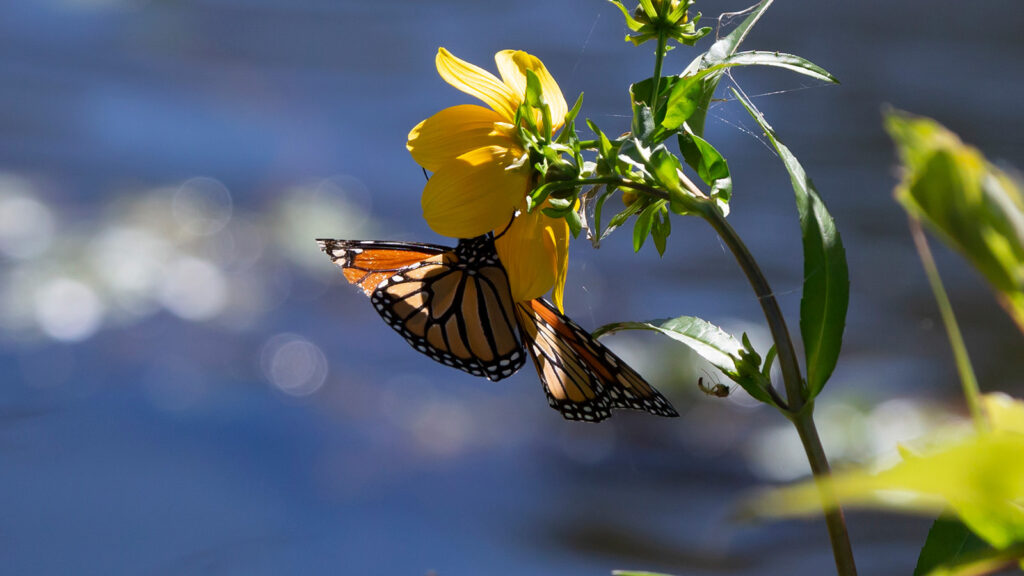
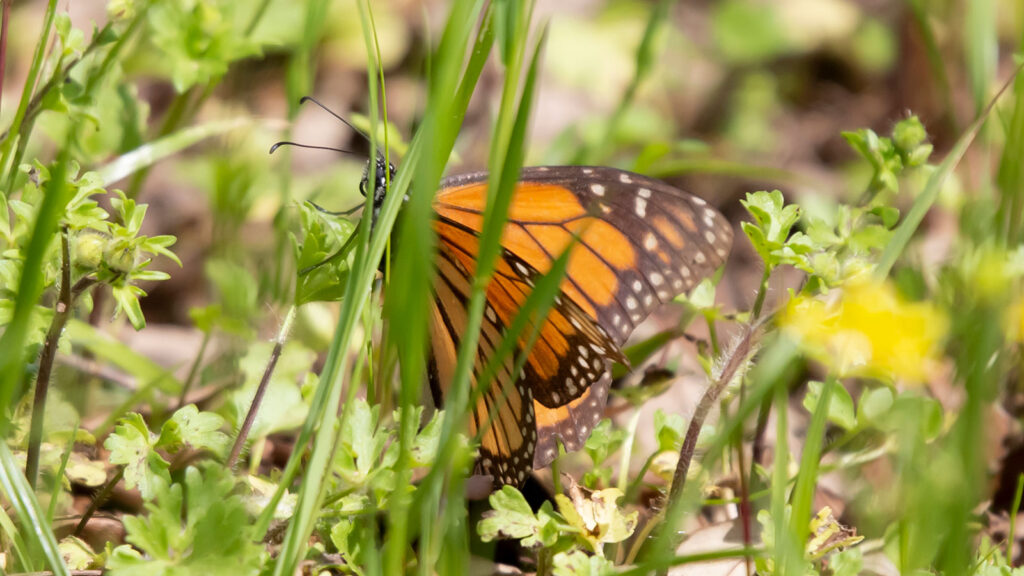
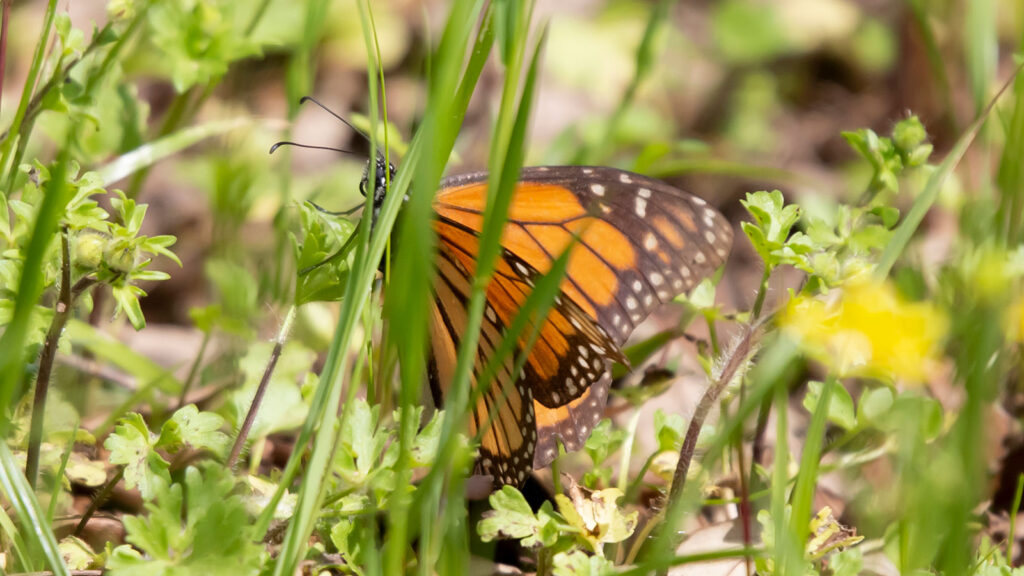
Mary wears orange wings with black lines, white-spotted borders, and the kind of bright pattern that makes Tootie stop chasing shadows long enough to look up.
Mary is a Monarch Butterfly. Her wings are orange with bold black veins, black edges, and little white spots along the border. When she opens them in the sun, she looks bright enough to stand out against Grandma’s flowers. When she closes them on a stem, the darker underside helps her blend a little more into leaves and shadows.
One warm afternoon, Grandma is checking the flower bed near the creek when an orange butterfly floats past the azaleas. They lands on a purple flower, opens their wings, then closes them again while they drinks.
Tootie’s droopy ears lift. “Is that a flower that learned to fly?”
Yoshi’s pointy ears twitch. “No. They are a butterfly.”
Grandma smiles. “That is Mary. She is a Monarch Butterfly.”
Mary lifts off again, floats over the garden, and settles on another flower before Tootie can take two steps.
Tootie watches her carefully. “She is not as fast as Dart.”
Grandma says, “No. Mary does not need to be. She has a different kind of work.”
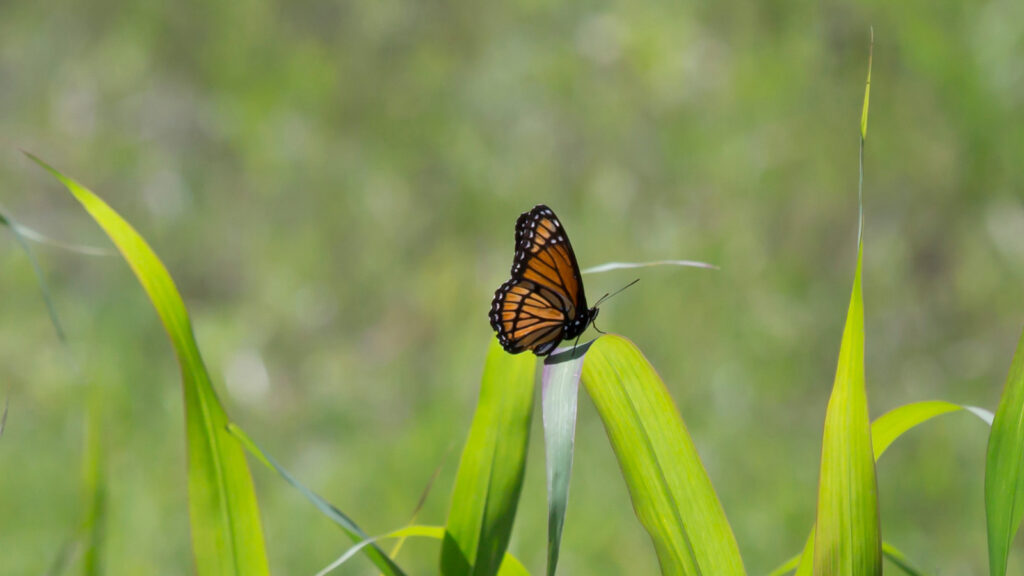
Mary uses flower beds, sunny fields, creekside plants, open yards, and places where milkweed grows. Adult monarchs need flowers with nectar, but monarch caterpillars need milkweed. That means Mary’s family needs more than one kind of plant in the same neighborhood.
Grandma keeps some milkweed growing near the creekside edge and in a sunny patch away from her favorite flowers. The milkweed may not look as fancy as the azaleas, but they gives monarch butterflies something many other plants cannot. They gives them a place to lay eggs and a place for the caterpillars to eat.
Tootie looks at the milkweed leaves. “Does Mary live on that plant?”
Grandma says, “Mary visits flowers for food, but her babies need milkweed.”
Yoshi watches Mary land on a bloom. “So one plant is for grown-ups and one plant is for babies.”
“That is a good way to start thinking about they,” Grandma says. “Mary needs flowers. Her caterpillars need milkweed.”
Mary also uses sunny places because butterflies need warmth. On cool mornings, she may sit with her wings open where sunlight can warm her body before she starts flying.
Mary began as a tiny egg laid on a milkweed leaf. Her mother placed the egg where the caterpillar would have food as soon as they hatched. The egg was smaller than a fingernail clipping, pale in color, and easy to miss unless someone looked closely at the leaf.
When the egg hatched, Mary was not a butterfly yet. She was a caterpillar. Monarch caterpillars have stripes of black, white, and yellow, and they spend most of their young life eating milkweed leaves.
Tootie hears this and looks surprised. “Mary used to be the long wiggly part?”
Grandma nods. “She surely did.”
Yoshi watches a milkweed leaf move in the breeze. “Did she have wings then?”
“No,” Grandma says. “Caterpillars do not have wings. They eat, grow, molt, and get ready for the next stage.”
As Mary grew, she shed her old skin several times. Each time, she needed more room for her larger body. After she had eaten enough and grown enough, she found a safe place to hang upside down. Then she made a chrysalis around herself.
Inside the chrysalis, Mary changed completely. She did not simply grow wings onto a caterpillar body. Her body changed into an adult butterfly with wings, long legs, antennae, and a curled tongue for drinking nectar.
Tootie looks toward the flowers. “So Mary had to become a whole different shape.”
Grandma says, “That is called metamorphosis.”
Yoshi watches Mary flutter past the creek. “That is a very big change.”
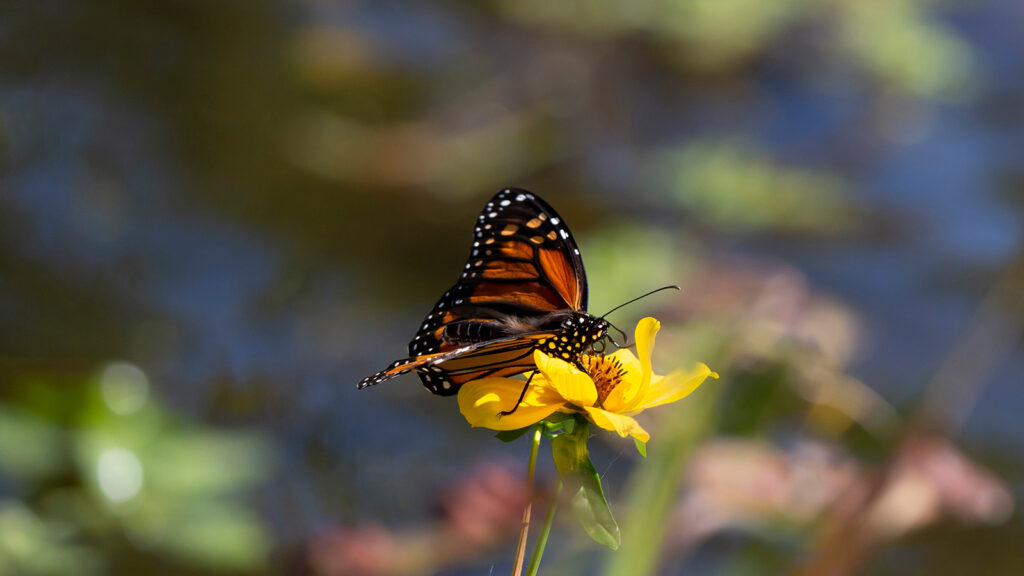
Mary drinks nectar from flowers. Nectar is a sweet liquid made by many blooms. Mary uses her long curled tongue, called a proboscis, to sip nectar from deep inside flowers.
She may visit flowers in the garden, along the creek, near field edges, or around sunny shrubs. Different flowers bloom at different times, so Mary needs a yard with more than one kind of bloom if she is going to find food through much of the warm season.
Tootie watches Mary land on a purple flower. “Is she eating the flower?”
Grandma shakes her head. “She is drinking nectar from they.”
Yoshi watches Mary uncurl her tongue. “She has a tiny straw.”
Grandma nods. “That is a good way to picture they.”
Mary does not eat milkweed as an adult butterfly. Milkweed is mostly for the caterpillar stage. The adult butterfly needs nectar, water, warmth, and safe places to rest.
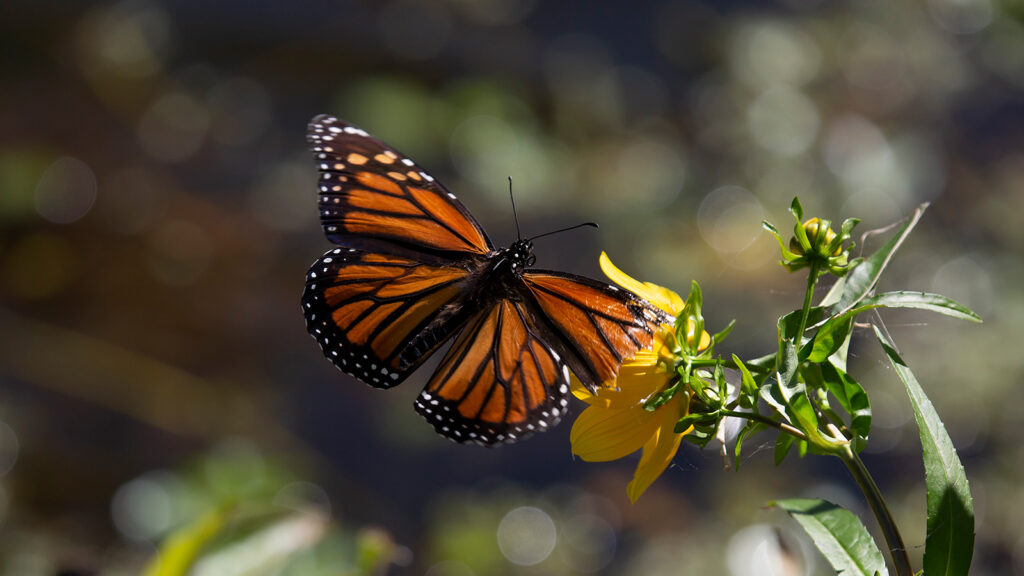
Mary’s orange-and-black wings help people recognize her, but the colors may also warn animals that she is not the best choice for lunch. Monarch caterpillars eat milkweed, and the chemicals in milkweed can stay in their bodies as they grow. Those chemicals may make monarchs taste bad to some predators.
Grandma says Mary’s bright colors can work like a warning sign.
Tootie looks at Mary’s wings. “Like Loni’s colors?”
Grandma smiles. “Very much like Loni’s colors. Both are easy to see, but for different reasons than Roy’s red feathers.”
Yoshi watches Mary float past a bird. “So bright colors can help instead of hurt.”
“Sometimes,” Grandma says. “Animals have many ways to stay safe.”
Mary’s colors also help people tell her from many other butterflies. The black lines make her wings look like stained glass when sunlight shines through them.
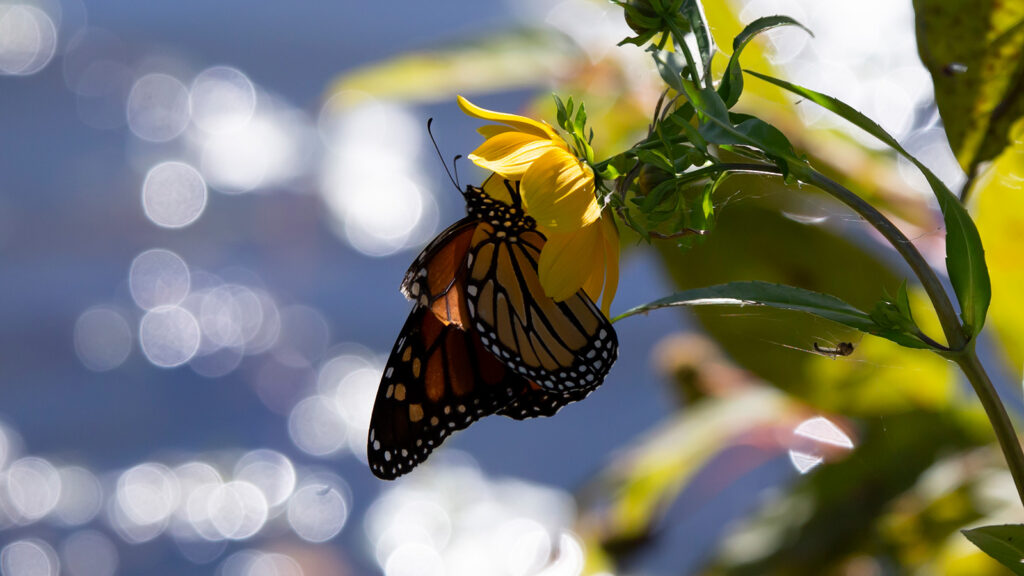
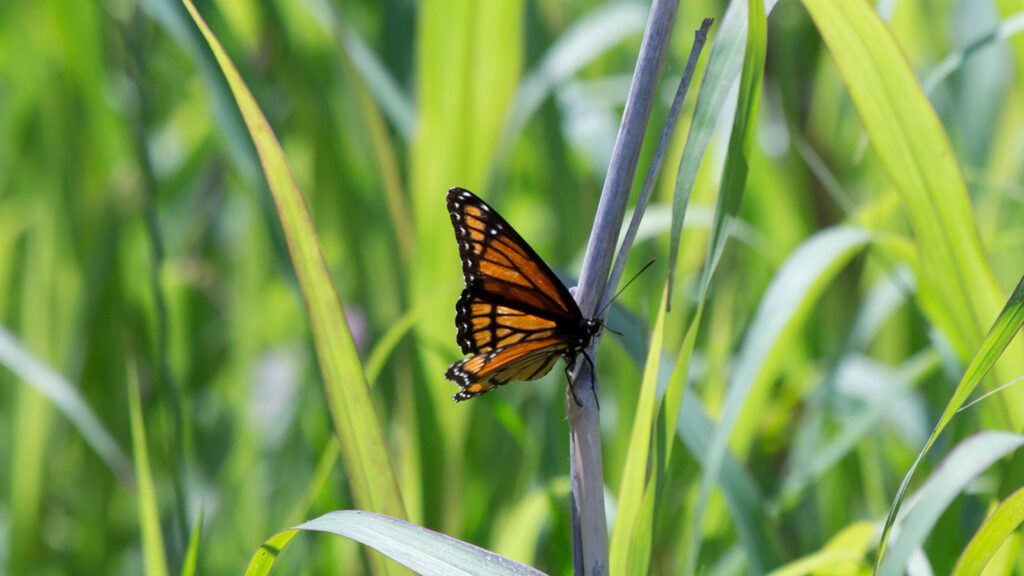
Mary has a look-alike called a Viceroy Butterfly. Viceroys can look very much like monarchs because they are orange and black too. The easiest clue is often a black line that crosses the lower part of a viceroy’s hindwing. Monarchs do not have that extra line.
Tootie sees another orange butterfly near the creek one day and looks at Grandma.
“Mary?”
Grandma says, “Look carefully before you decide.”
The butterfly closes their wings, then opens them again.
Yoshi watches from the porch. “Does they have the extra black line?”
Grandma nods. “That one is a viceroy.”
Tootie looks impressed. “So the backyard has two orange butterflies.”
Grandma says, “And now you know one way to tell them apart.”
Mary does not mind having a look-alike. The yard has room for both butterflies, especially when there are flowers, trees, shrubs, and creekside plants to use.
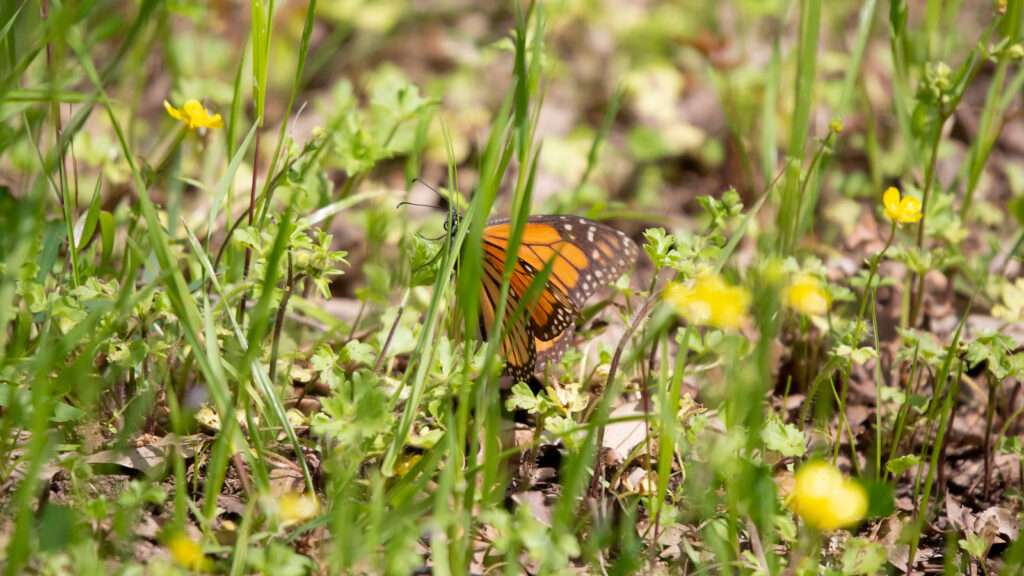
Some monarch butterflies make one of the longest migrations of any insect. In fall, monarchs from much of eastern North America travel south toward Mexico. They need nectar plants along the way because flying long distances takes a great deal of energy.
Mary may spend warm months in Grandma’s yard, but she does not stay there forever. When the season changes, the days grow shorter, and the weather starts shifting, monarchs begin moving south.
Tootie looks at Mary, who is resting on a flower.
“She goes all the way to Mexico?”
Grandma nods. “Many monarchs do.”
Yoshi looks toward the creek. “That is far.”
“They surely is,” Grandma says. “That is why flowers along the way matter so much.”
The butterflies that fly south are part of a special generation that can live longer than the earlier summer generations. They need time to travel, rest, and survive through winter before starting north again.
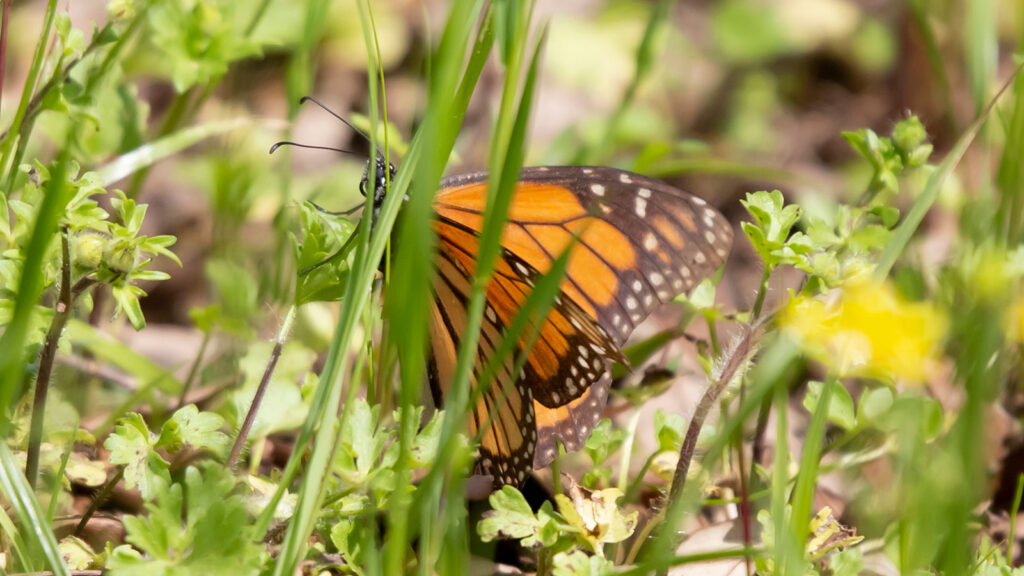
Mary sees the backyard from flower height. She sees Grandma’s hands near the garden, Tootie’s paws bouncing through grass, Yoshi resting in porch shade, and Dart cutting through the air above the creek.
Dart notices Mary one day while she is moving between flowers.
“You fly slow,” he says.
Mary settles on a bloom. “I do not need to catch mosquitoes.”
Dart circles once above her. “Fair.”
Tootie watches Mary land on a milkweed plant and takes one careful step closer.
Yoshi’s ears twitch.
Grandma says, “Leave they.”
Tootie stops.
Mary opens her wings, then floats toward a taller flower.
Tootie sits down. “She does not want to be friends.”
Grandma scratches behind his droopy ear. “Mary has butterfly work. She has flowers to visit, eggs to lay, and a whole migration to think about.”
Grandma likes seeing Mary around the yard because monarchs are beautiful, useful pollinators, and part of a much bigger migration story. She does not catch butterflies, touch caterpillars, or let Tootie chase them through the milkweed.
Milkweed sap can irritate skin and eyes, so Grandma handles the plant carefully when she needs to trim or move they. She also leaves caterpillars alone. A caterpillar chewing milkweed leaves may look busy, but that is exactly what they needs to do to grow.
Tootie watches a striped caterpillar on a leaf. “Can I move they to another flower?”
Grandma says, “No. They needs that milkweed.”
“Tootie,” Yoshi adds.
“I only asked.”
Grandma points toward the caterpillar. “That little one has a whole butterfly future ahead of they. Let they eat.”
Mary needs milkweed for caterpillars and nectar plants for adult butterflies. A yard with flowers that bloom at different times can help adults find food from spring through fall. Native milkweed and native flowers are especially useful because they fit the local plants and insects around them.
Avoid spraying broad insect killers on milkweed or nearby flowers. Monarch caterpillars are insects too, and chemicals meant for pests can hurt them. Leave some sunny, flower-filled places in the yard, and watch for eggs or caterpillars before cutting milkweed back.
Grandma says, “Mary needs milkweed for babies, flowers for grown-ups, and people who know the difference.”
Yoshi watches Mary float over the garden. “That seems manageable.”
Grandma smiles. “They are, once you pay attention.”
Mary the Monarch Butterfly
These are some helpful words for talking about this wild neighbor.
Mary the Monarch Butterfly
Good wildlife watchers ask good questions. Here are a few to get you started.
Milkweed is the plant monarch caterpillars eat as they grow.
Not as an adult butterfly. Mary drinks flower nectar. The caterpillar stage eats milkweed.
They are the case where a caterpillar changes into a butterfly.
They are best to watch without touching. Caterpillars and milkweed plants can be delicate, and milkweed sap may irritate skin.
The colors help people recognize monarchs and may warn predators that monarchs can taste bad.
Many monarchs from eastern North America migrate south toward Mexico.
A viceroy has an extra black line across the lower hindwing. A monarch does not.
Watch butterflies and caterpillars without handling them. Keep pesticides away from milkweed and flowering plants, and be careful with milkweed sap because they can irritate skin and eyes. Keep pets from chewing milkweed, and choose local native milkweed when possible. Think About They: Why can one kind of plant matter so much to a butterfly family?