Why is Phoenix called a Fox Squirrel?
Grandma says:
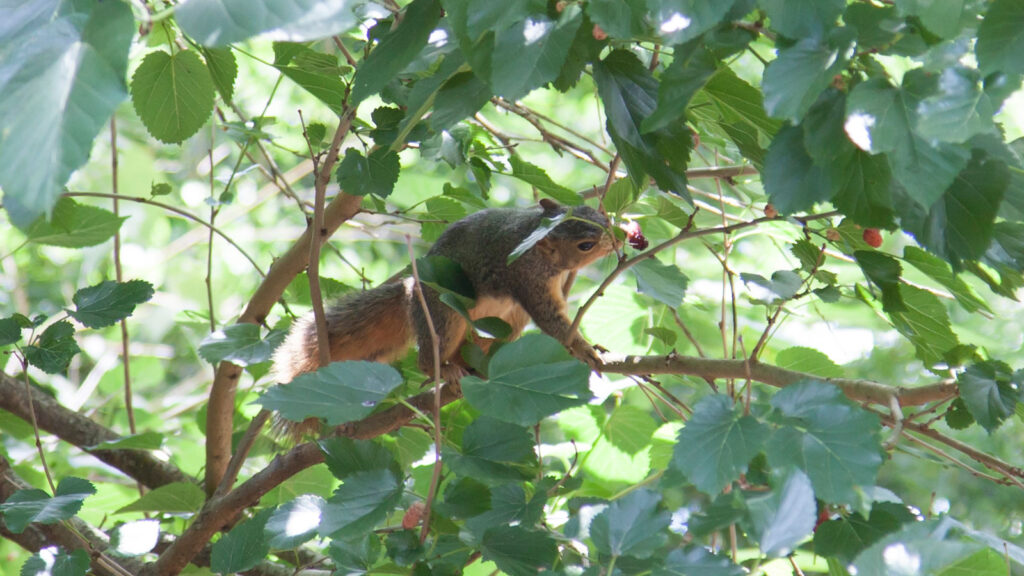
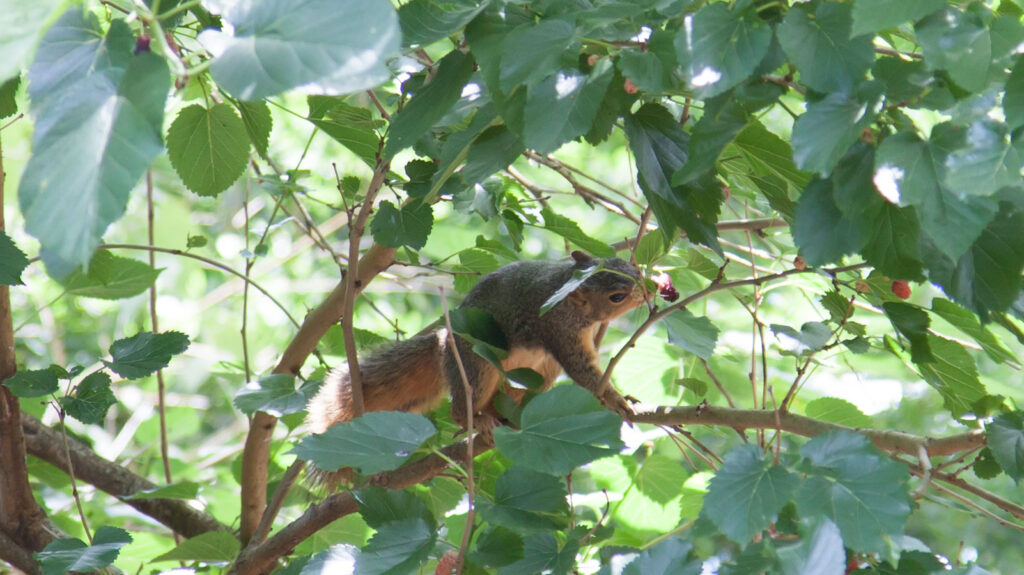
Fox Squirrels are a kind of large tree squirrel. Their fur may have rusty or orange colors that can remind people of a fox.
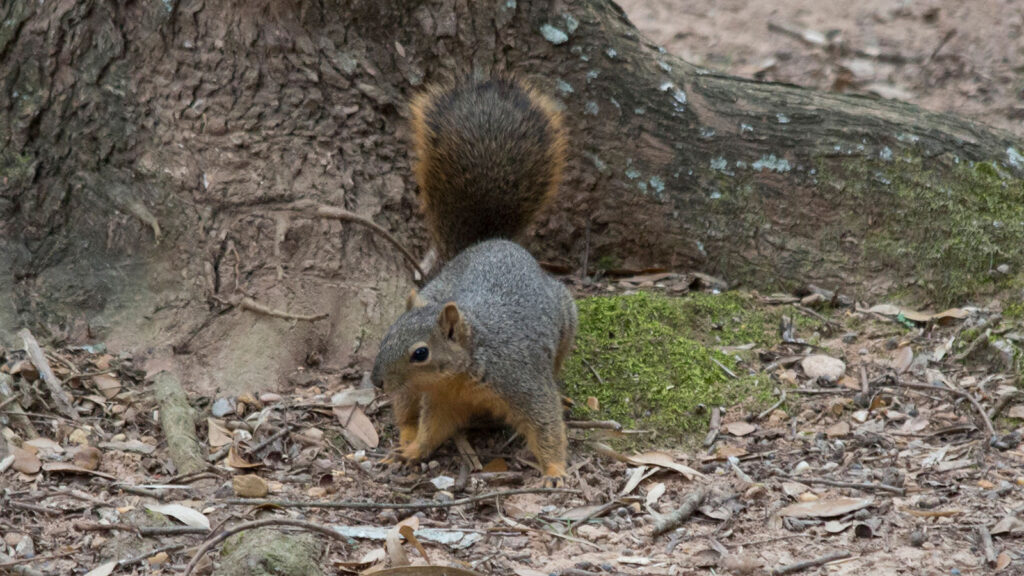
Phoenix is bigger than Scott, rustier than Scott, and very tired of being asked whether he is just Scott after a mud bath.
Phoenix is a Fox Squirrel. He has a big fluffy tail, strong back legs, sharp claws, and fur that can look gray, brown, rusty orange, or warm gold in the sunlight. Scott the Gray Squirrel looks smaller and smoother beside him. Phoenix looks like somebody took Scott, added extra tail, and left him out near a pile of autumn leaves.
Tootie meets Phoenix under Grandma’s pecan trees one cool morning. Phoenix is sitting on the ground with a pecan in his paws, chewing through the shell with his sharp front teeth. Tootie stops at the porch steps and stares.
“Scott got huge,” Tootie says.
Yoshi’s pointy ears twitch. She watches the squirrel for a moment, then looks at Grandma.
Grandma smiles. “That is not Scott. That is Phoenix.”
Phoenix looks up from the pecan. His tail gives one slow flick.
“To be fair,” Phoenix says, “Scott does look like he skipped breakfast.”
Scott calls from a branch overhead.
“I heard that!”
Kevin the Crow lands nearby because pecan arguments attract Kevin the way porch lights attract moths.
Grandma sighs. “The tree committee has expanded.”
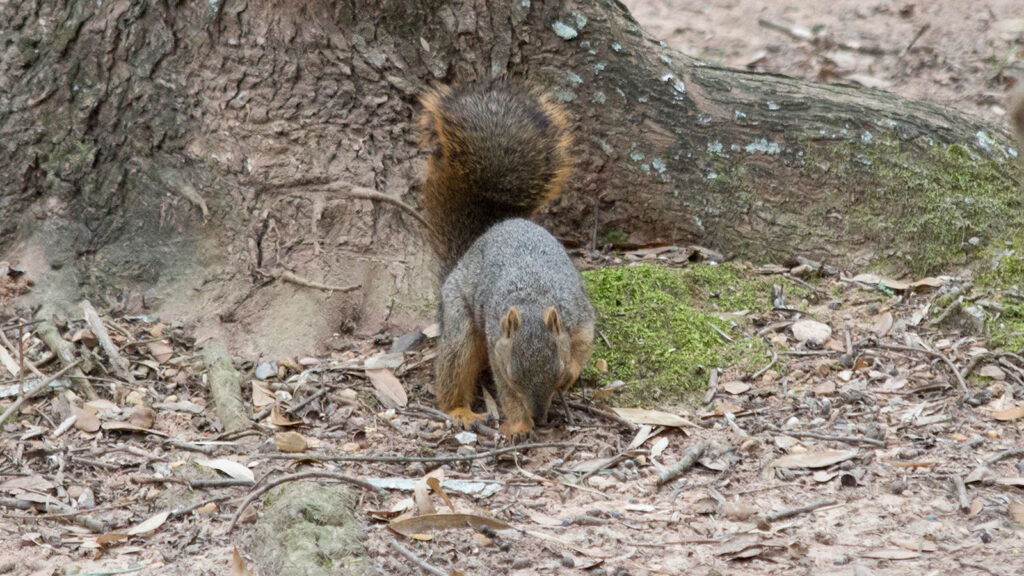
Phoenix lives in and around trees. He may sleep in a hollow place inside a tree, called a cavity, or build a leafy nest high in the branches. A squirrel’s leaf nest is called a drey. From far away, a drey can look like a messy ball of leaves stuck where branches split apart.
Tootie sees one of Phoenix’s dreys in a tree near the yard.
“That looks like Scott’s house,” he says.
Phoenix looks toward the nest. “They are a different house.”
Tootie studies they. “But they are made of leaves.”
Phoenix nods. “Leaves are very popular in squirrel architecture.”
Grandma laughs. “He is right. Squirrels use what they have.”
Phoenix may use more than one resting place during the year. A leafy drey works well in warm weather, while a tree cavity can give better shelter from rain, wind, and cold. Phoenix does not hibernate through winter. He may stay tucked away during bad weather, but he still comes out when he needs food.
Yoshi thinks winter sounds like a good reason to stay inside.
Phoenix thinks winter sounds like a good reason to remember every pecan he buried.
Before Phoenix became the big squirrel in the pecan-tree crowd, Phoenix was a tiny baby squirrel in a nest with a mother and littermates. Littermates are brothers and sisters born around the same time. Baby squirrels are born very small, with little fur and closed eyes. They cannot climb, jump, or find food on their own.
Their mother keeps them warm and feeds them milk while they grow. As young squirrels get bigger, their eyes open, their fur comes in, and their tails begin to fluff out. They start moving around the nest, then practice climbing on branches close to home.
Phoenix had to learn a lot. Which branches hold steady. Which trees have food. Which places make good hiding spots. When to freeze because a hawk is flying overhead. When to run because somebody’s dog is getting too curious.
Tootie listens to that last part.
“I am not always curious,” he says.
Yoshi looks at him.
Tootie looks toward a leaf moving beside the porch.
Grandma says, “Bless your heart, you are curious about air.”
Young Fox Squirrels chase, leap, wrestle, and scramble through branches while they grow. Those games help them build strength and practice balance. Phoenix learned how to land, climb down tree trunks, and jump between branches before becoming an adult squirrel with opinions about everybody else’s business.
Now Phoenix knows the yard well. Phoenix knows where the pecans fall. Phoenix knows when Grandma is working in the garden. Phoenix knows Scott hides snacks in places Scott thinks nobody has noticed.
Scott does not enjoy that part.
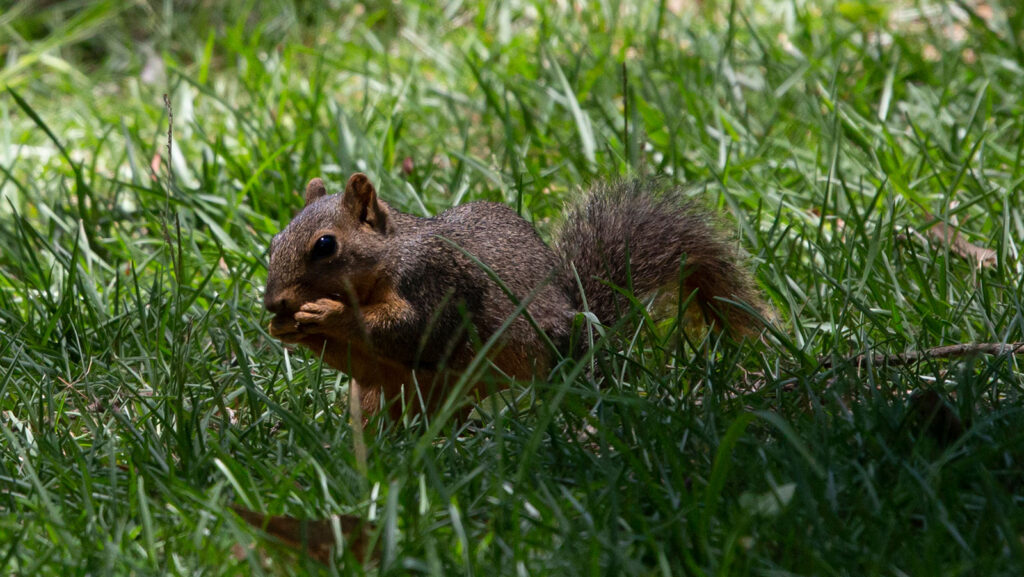
Phoenix likes pecans, acorns, seeds, berries, fruit, buds, flowers, mushrooms, and other foods that change with the seasons. Insects can also become part of the menu when they are easy to find. A Fox Squirrel does not eat the same thing every day because the yard does not grow the same food every day.
In spring, Phoenix may find buds, tender leaves, and fresh plant parts. In summer, fruit, seeds, insects, and green foods become easier to find. In fall, pecans, acorns, and other nuts become especially important. Winter brings fewer fresh choices, so hidden nuts matter a lot.
Grandma sees Phoenix holding a pecan one afternoon.
“He has hands,” Tootie says.
Grandma smiles. “They are paws, but squirrels use them almost like hands.”
Phoenix turns the pecan carefully between his front paws. His sharp front teeth gnaw through the shell. Those teeth keep growing through his life, so chewing nuts and hard foods helps wear them down.
Yoshi watches Phoenix carry a pecan across the grass.
“He is taking that somewhere,” she says.
Grandma nods. “That is usually the plan.”
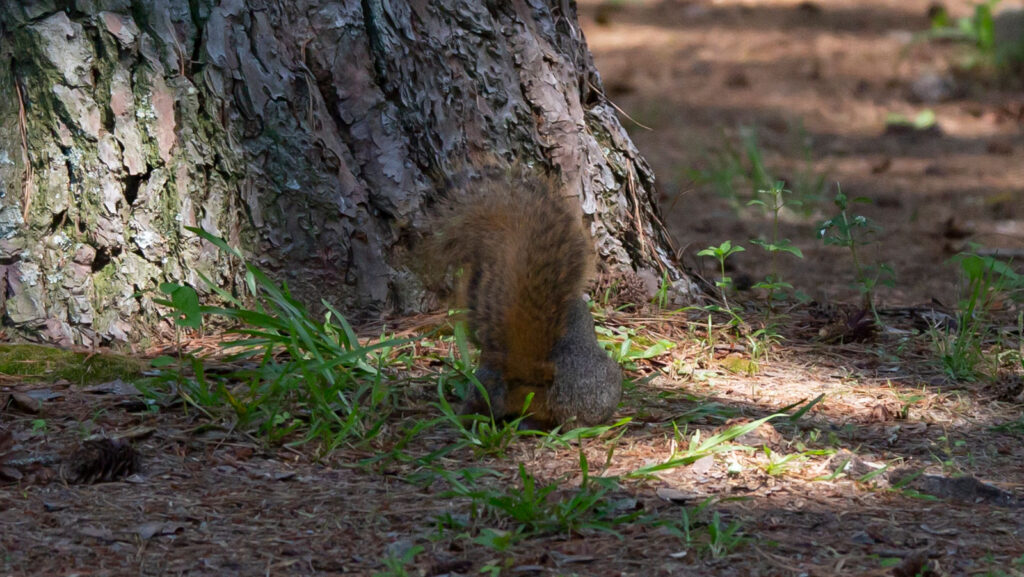
Phoenix does not eat every nut right away. Like Scott, Phoenix hides food for later. A squirrel may carry a pecan or acorn away from the tree, dig a little hole, tuck the nut inside, and cover they with dirt or leaves.
That hidden food spot is called a cache.
Phoenix has many caches.
Tootie thinks this is brilliant.
“Can I have a cache?” he asks.
Grandma says, “You already have one. They are under the couch, and they are full of things you were told to leave alone.”
Yoshi’s curled tail gives one small wag.
Phoenix remembers many hidden nuts by smell. But Phoenix does not find every single one again. Some stay in the ground long enough to grow.
That means Phoenix sometimes helps plant trees without trying.
Biv hears Grandma explain this and fluffs up his crest.
“I replanted all the forests after the Ice Age,” Biv says.
Phoenix looks up from a pecan.
“You dropped some acorns,” Phoenix says. “Do not take credit for every tree in the country.”
Scott calls from the branch above them. “He does that every fall.”
Kevin lands nearby. “I support Biv taking credit. They makes the meetings more interesting.”
Grandma laughs. “Birds and squirrels both help move nuts around. Some forgotten snacks get the chance to become trees.”
Tootie thinks forgotten snacks are wonderful.
Yoshi thinks forgotten snacks are why the couch has a problem.
Phoenix’s tail does more than look fancy.
They helps Phoenix balance on narrow branches. They helps steer while jumping. They can cover part of the body when the weather turns cold. They also helps other squirrels notice when Phoenix feels nervous, upset, or alert.
One afternoon, Phoenix sits on the ground near the pecan tree. The tail starts flicking hard.
Tootie sees they first.
“Why is Phoenix mad?” he asks.
Grandma looks toward the sky. A hawk circles high above the yard.
“Phoenix saw danger,” she says.
Phoenix freezes for a moment, then races around the far side of the tree trunk. Scott vanishes into the leaves. Biv gives a sharp warning call. Kevin caws from the grass.
Yoshi’s ears twitch toward the sky.
Grandma rests a hand on Tootie’s back. “Everybody heard that.”
Phoenix stays still until the hawk moves on.
Grandma says, “A big tail helps with balance. Good sense helps with the rest.”
Tootie thinks good sense sounds important.
Yoshi thinks Tootie should write that down.
Phoenix and Scott both use Grandma’s pecan trees, but they do not look exactly alike.
Scott is an Eastern Gray Squirrel. He usually looks smaller and grayer, with a pale belly and a fluffy gray tail. Phoenix is a Fox Squirrel, usually bigger and often warmer in color. Phoenix may look gray and orange, rusty brown, or golden around the belly and tail.
Tootie tries to remember.
“Scott is gray,” he says. “Phoenix is bigger.”
Grandma nods. “That is a good start.”
Yoshi watches Phoenix move across the ground. “Phoenix spends more time down low.”
Grandma smiles. “Good noticing.”
Fox Squirrels often forage on the ground more than Gray Squirrels do. Phoenix still climbs trees well, but Phoenix does not mind checking under pecan trees, near roots, and along open spots where food has fallen.
Scott thinks Phoenix is too comfortable on the ground.
Phoenix thinks Scott spends too much time showing off in the branches.
Neither squirrel asked anybody for a vote.
Phoenix likes the pecan trees because they provide food, shade, and a clear view of the yard. When pecans start falling, Phoenix checks the ground before Scott can get there. That does not always go smoothly.
One fall afternoon, Phoenix finds a pecan near the roots. Scott reaches the same pecan from the opposite side.
Scott puts one paw on they.
Phoenix puts one paw on they.
Biv lands on a branch above them.
Kevin lands near the grass.
Tootie leans toward the porch rail. “Who gets they?”
Grandma looks at the squirrels.
“Whichever one is willing to look sillier,” she says.
Scott tugs.
Phoenix tugs.
The pecan rolls downhill.
Kevin picks they up.
Everybody goes quiet.
Kevin looks around.
“Thank you all for your cooperation,” he says.
Then he flies away with the pecan.
Grandma laughs so hard she has to sit down.
Tootie looks shocked.
Yoshi says, “Kevin had a plan.”
Grandma nods. “Kevin always has a plan. They are usually somebody else’s problem.”
Phoenix knows Tootie wants to make friends with every animal in the yard. Phoenix knows Yoshi watches first and decides later. Phoenix knows Grandma has rules, especially when pecans, flower beds, or dogs get involved.
Phoenix also knows Grenda lives in the front shrubs and prefers privacy. Phoenix does not push into those leaves unless Phoenix has a very good reason. A squirrel may be bold, but even squirrels understand that a snake-shaped leaf is not a leaf.
One morning, Tootie sees Phoenix under the pecan tree and starts bouncing.
“Phoenix!”
Phoenix freezes.
Grandma says, “Tootie.”
Tootie stops.
Yoshi’s ears twitch.
Grandma says, “You can watch. You cannot chase.”
Tootie sits down, though his whole body wiggles.
Phoenix waits another moment, then grabs a pecan and runs up the tree.
Tootie watches Phoenix disappear into the branches.
“He did not want to play.”
Grandma scratches behind one of Tootie’s droopy ears. “Phoenix has squirrel work.”
Yoshi looks at Tootie. “You have puppy work.”
Tootie looks worried. “What is puppy work?”
Yoshi says, “Learning when somebody wants to be left alone.”
Grandma smiles. “That one will take a while.”
Phoenix needs trees, shrubs, food, water, and safe places to rest. Pecan trees, oak trees, berry shrubs, and other native plants can give squirrels food across the year. Tree cavities and strong branches can give them places to sleep and raise young.
Do not hand-feed squirrels. Phoenix may get used to coming too close, and a squirrel can bite if fingers look like food. Keep trash covered so wildlife does not get into plastic, wrappers, or spoiled food.
Keep dogs supervised outside. Tootie and Yoshi need to give Phoenix space, especially near trees, nests, or places where young squirrels may be hiding.
Grandma says, “Phoenix can find his own groceries. He does not need porch service.”
Tootie thinks porch service sounds excellent.
Yoshi thinks Grandma has made her point.
Draw a maze with these parts:
Start: Phoenix under Grandma’s pecan tree with a pecan in his paws
Safe stops: a tree root, a patch of leaves, Wilson on a tree trunk, and Yoshi resting on the porch
Wrong turns: Biv calling from a branch, Kevin watching the ground, Tootie bouncing near the tree, and a cat hiding beside a shrub
Finish: A quiet patch of soft soil near an oak tree
Add Grandma on the porch with a watering can. Add Scott looking down from a branch.
Maze caption:
Phoenix found a pecan, but everybody else noticed. Help Phoenix hide they before Kevin starts another “investigation.”
Phoenix the Fox Squirrel
These are some helpful words for talking about this wild neighbor.
Phoenix the Fox Squirrel
Good wildlife watchers ask good questions. Here are a few to get you started.
Fox Squirrels are a kind of large tree squirrel. Their fur may have rusty or orange colors that can remind people of a fox.
Usually, yes. Fox Squirrels are often bigger than Eastern Gray Squirrels.
No. Phoenix does not hibernate. Phoenix may stay in a nest or cavity during bad weather, then come out to look for food.
Phoenix hides nuts to eat later when food is harder to find.
No. Some nuts stay in the ground and may grow into trees.
Yes. Like other tree squirrels, Phoenix has claws and flexible feet that help grip bark while climbing.
No. Phoenix is wild. Watch from a distance and let Phoenix decide where to go.
Phoenix is usually bigger and warmer in color. Scott is usually smaller and grayer.
Watch squirrels from a distance. Do not hand-feed, chase, trap, or try to pet them. Keep pets supervised outside, especially near trees, squirrel nests, and places where young squirrels may be hiding. A qualified wildlife professional should handle injured, trapped, or indoor wildlife.