Is Ruby a hummingbird?
Grandma says:
No. Ruby is a Ruby-crowned Kinglet. He is tiny and quick, but he does not hover and drink nectar the way Zip does.
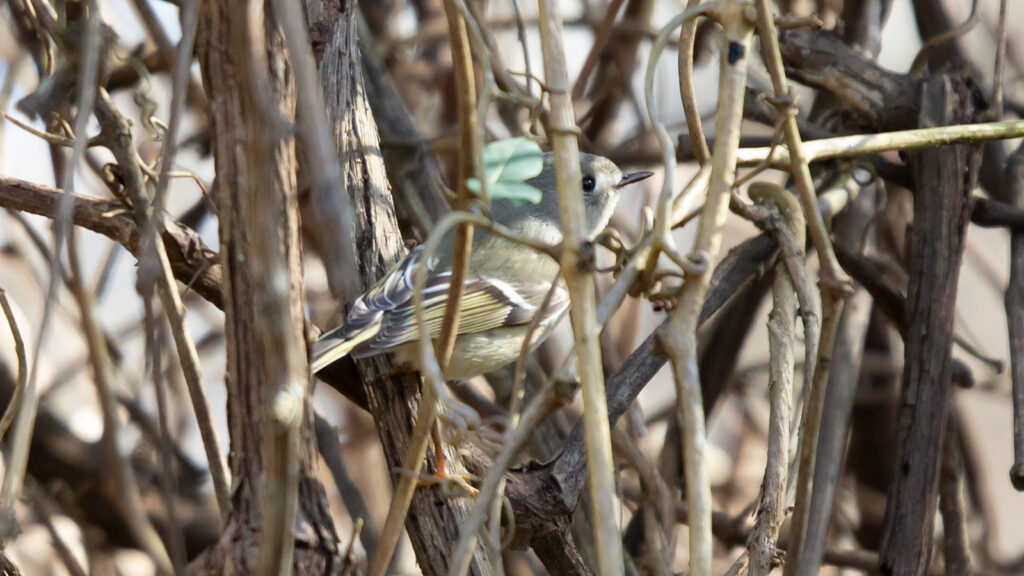
Ruby is smaller than most people expect, quicker than most people can follow, and so busy checking every leaf that Tootie decides she must have lost something.
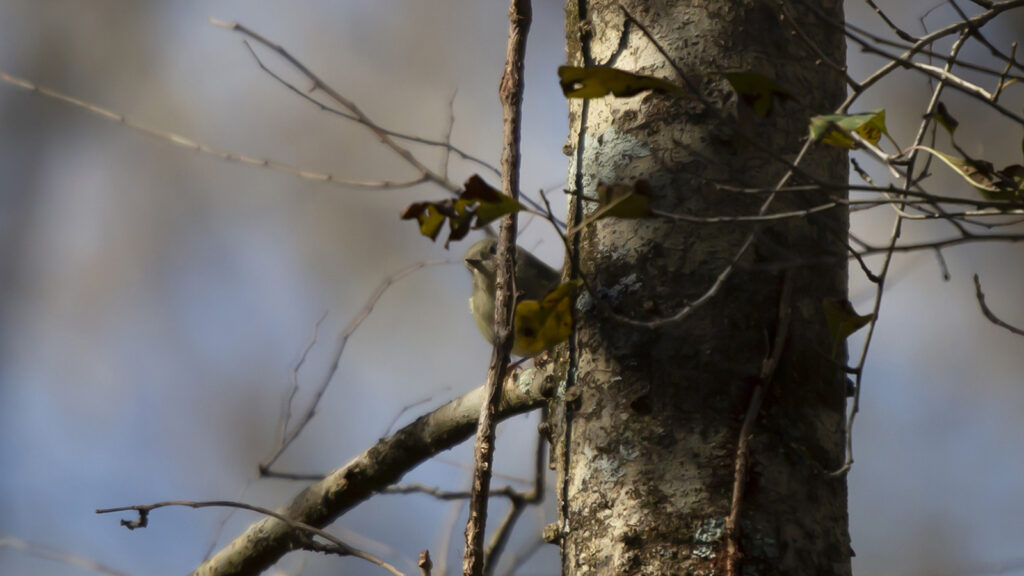
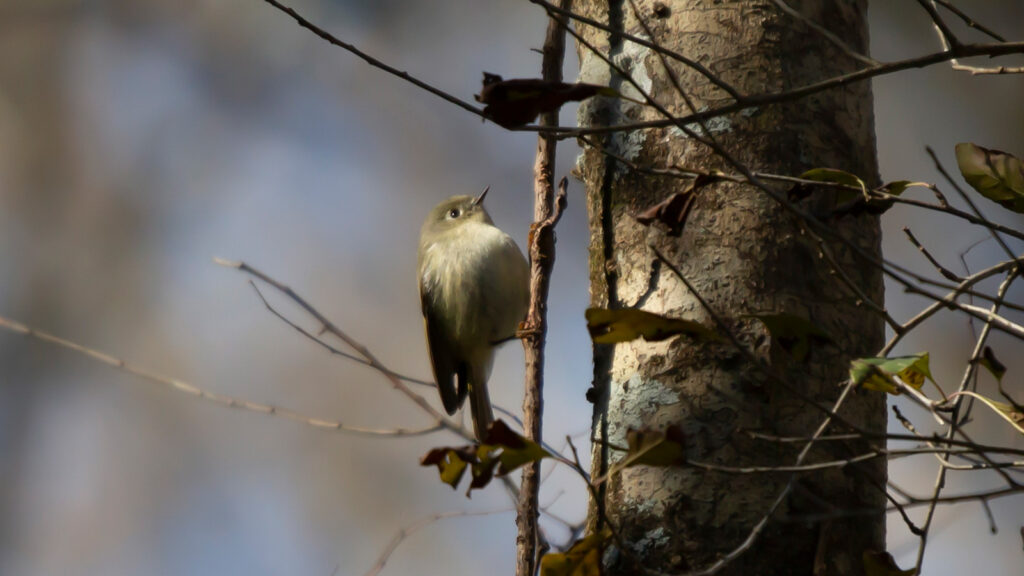
Ruby is a Ruby-crowned Kinglet. She is a tiny olive-gray bird with pale wing bars, a light ring around her eye, and a small red crown that usually stays hidden. Ruby visits Grandma’s yard during the cooler months, moving through shrubs, low branches, and creekside trees while she hunts for insects too small for most of the backyard crew to notice.
Tootie first sees Ruby during a chilly morning near the front-yard shrubs. He notices one little bird moving through the leaves, then another little movement farther down the branch, then nothing at all. He stares so hard that his droopy ears pull forward.
“Was that Rumpy?” he asks.
Yoshi’s pointy ears twitch as she follows the tiny bird through the branches. “Too small.”
Grandma looks up from the flower bed. “That is Ruby. She is a Ruby-crowned Kinglet.”
Ruby hops under a leaf, turns upside down for a moment, and pulls something tiny from the branch. Then she disappears into the shrub again before Tootie can say hello.
Tootie blinks. “She is gone.”
Grandma smiles. “Ruby has work to do.”
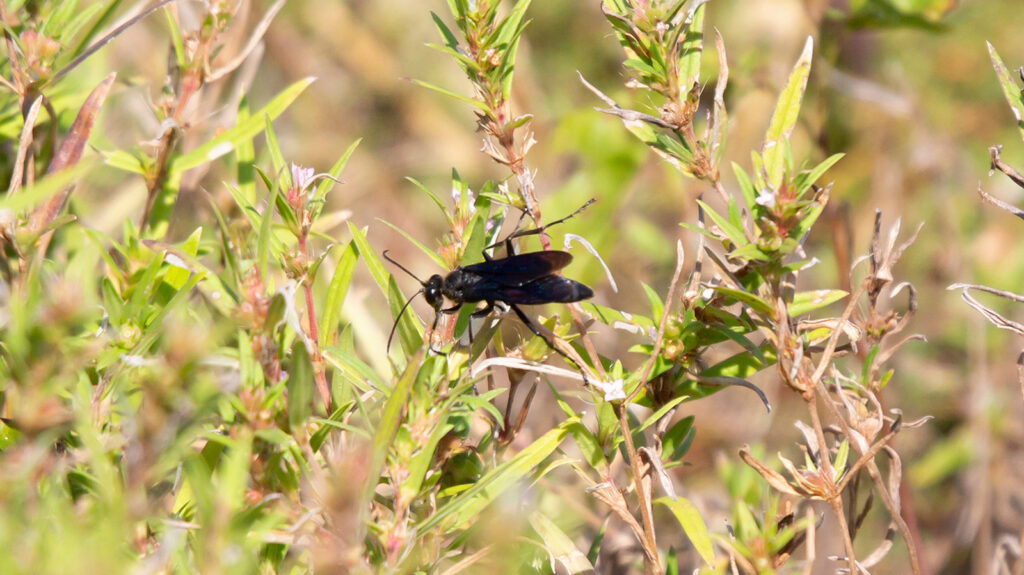
Ruby uses shrubs, small trees, brushy edges, and creekside branches while she visits Grandma’s yard in winter. She likes places with lots of twigs, leaves, and little hiding spots because those places also hold tiny insects, spiders, and insect eggs. Ruby does not need a big open space like Zip does. She needs a thick, busy-looking place where she can search branch by branch.
Grandma’s front-yard shrubs are useful for Ruby during the cool season. Rumpy may visit higher parts of the shrubs, while Ruby checks the smaller twigs, undersides of leaves, and tight places where little bugs hide. The creek behind the house gives her more trees and brush to search when the wind moves through the yard.
Tootie watches Ruby disappear into a shrub. “How does she fit in there?”
Grandma says, “Ruby is tiny. The parts of the shrub that look crowded to you are full-sized hallways to her.”
Yoshi watches a leaf shake. “She is looking under everything.”
“That is how kinglets find food,” Grandma says. “They keep moving because their meals are small.”
Ruby does not stay in Grandma’s yard all year. She spends the winter in the South, then travels north to breed in cooler forests. During the winter, Grandma’s shrubs, trees, and creekside cover are part of Ruby’s temporary neighborhood.
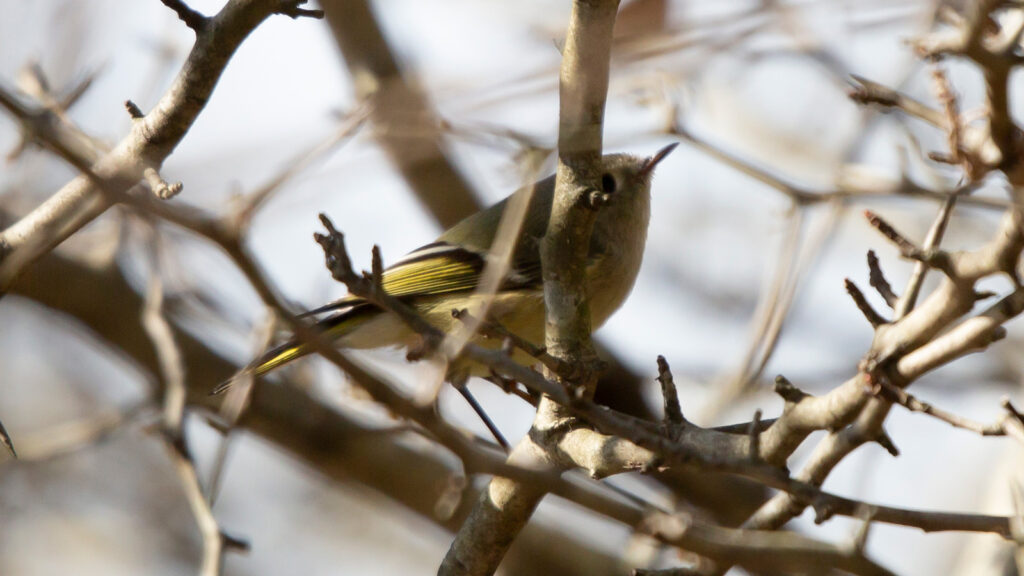
Ruby began life far north of Grandma’s yard, in a forest where tall trees offered hidden places for kinglet nests. Her mother built a tiny cup-shaped nest high in a tree, often tucked near the trunk or hidden among branches and needles. The nest was made from soft plant material, moss, feathers, and spider silk or webbing.
When Ruby hatched, she was small, hungry, and unable to fly. Her parents brought food to the nest while she and her brothers or sisters grew feathers and stronger wings. Like many young birds, Ruby spent her first days opening her mouth and waiting for a parent to bring a tiny insect.
Tootie listens carefully. “Ruby was born far away?”
Grandma nods. “Farther north than this yard. She comes here later, when they gets cold where she was raised.”
As Ruby grew, she learned how to move quickly through branches, pick tiny insects from leaves, and avoid larger birds. She also learned the kinglet way of feeding: check one leaf, then the next leaf, then the twig behind they, then the branch above they. Ruby does not sit in one place and wait for food to come to her. She searches almost constantly.
When fall arrived, Ruby migrated south with other kinglets. She followed the changing season toward warmer places where insects and sheltered shrubs could still be found. Grandma’s yard is not where Ruby raises babies, but they can be one of the places that helps her get through winter.
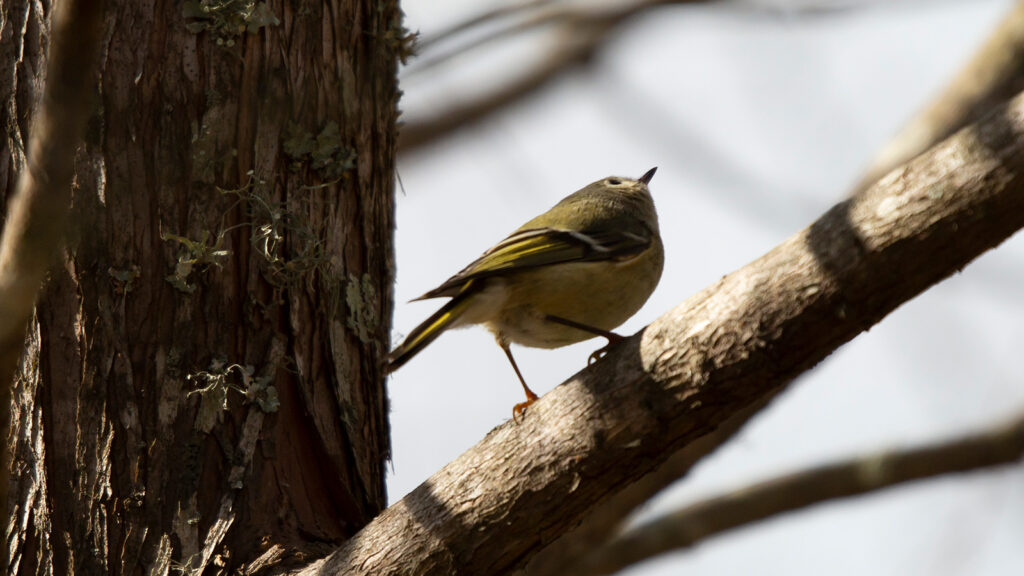
Ruby eats mostly tiny insects and spiders. She hunts little beetles, flies, leafhoppers, caterpillars, true bugs, aphids, insect eggs, and small spiders hiding among leaves and bark. During winter, she may also eat some berries, seeds, sap, or nectar when insects are harder to find.
Ruby does not eat pecans like Scott and Phoenix, and she does not drink nectar the way Zip does. Her favorite meals are often so small that Tootie cannot see them. She moves through the shrub, flicks her wings, hangs upside down under a leaf, and picks off one tiny snack at a time.
One morning, Ruby pulls a small insect from the underside of a leaf near the creek.
Tootie looks at the leaf. “There was food there?”
Grandma nods. “There is food on more leaves than people realize.”
Yoshi watches Ruby check the next branch. “She keeps looking.”
“She has to,” Grandma says. “Tiny birds need many tiny meals.”
Ruby’s busy feeding helps the yard in a quiet way. She eats small insects that live in shrubs, trees, and creekside plants. She does not make a show of they, but she stays very busy.
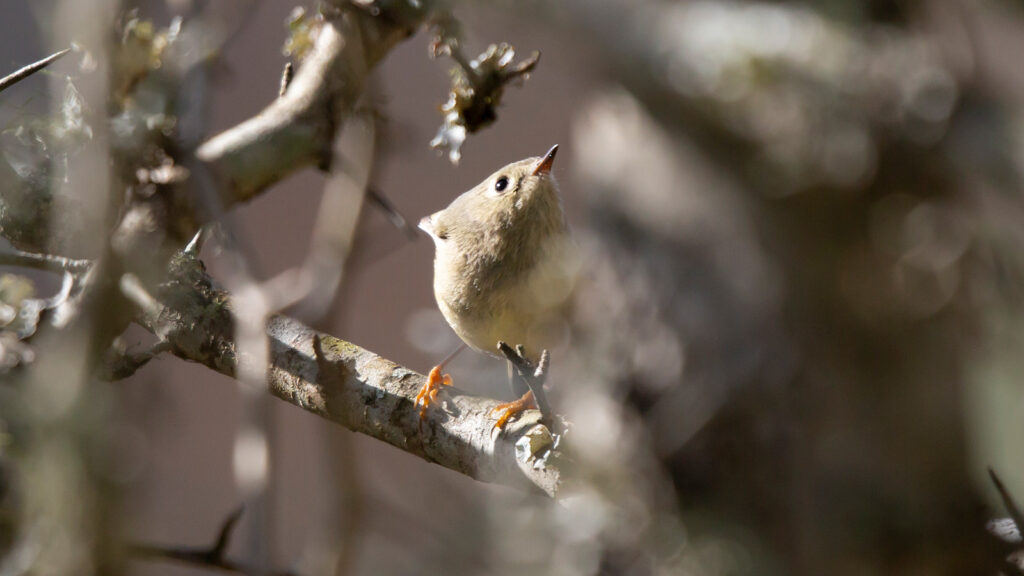
Ruby is called a Ruby-crowned Kinglet because male kinglets have a bright red crown on top of their heads. Most of the time, that crown stays hidden under gray feathers. A male may raise they when he is excited, singing, or feeling especially worked up.
Ruby is a male kinglet with a red crown, even though he is named Ruby. Grandma says the name still fits because he has the brightest little crown in the shrubs when he decides to show they.
Tootie studies Ruby one day and sees only a grayish head.
“Where is the ruby?” he asks.
Grandma says, “Wait.”
Another kinglet moves into the shrub nearby. Ruby hops forward, flicks his wings, and suddenly lifts the feathers on top of his head.
A little red crown flashes bright against the gray.
Tootie gasps. “There they are!”
Yoshi watches Ruby settle the feathers again. “He was saving they.”
Grandma says, “He does not need they out all the time.”
The crown does not make Ruby a king in the way people might imagine. He does not rule the shrubs or order other birds around. They are simply a bright feather patch that can show when he is excited.
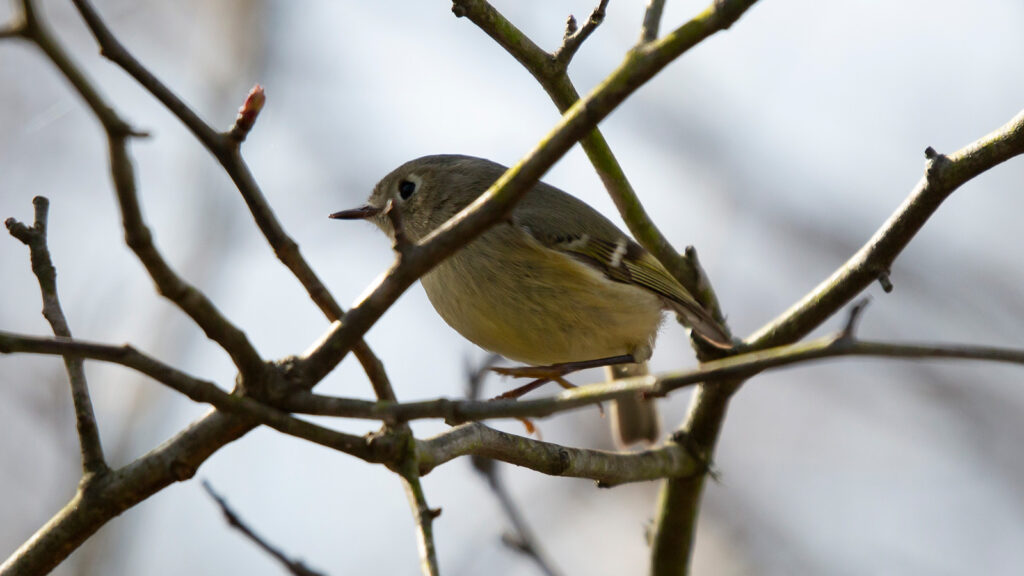
Ruby rarely seems to sit still. She flicks her wings, hops from twig to twig, hangs upside down under leaves, and changes direction so quickly that Tootie loses track of her. Her fast movements help her search every part of a shrub for food.
Tootie watches Ruby move through the front-yard shrubs and becomes dizzy.
“She has been on twelve branches,” he says.
Yoshi watches the leaf tips shake. “More than twelve.”
Grandma laughs. “Kinglets are little busybodies. They check everything.”
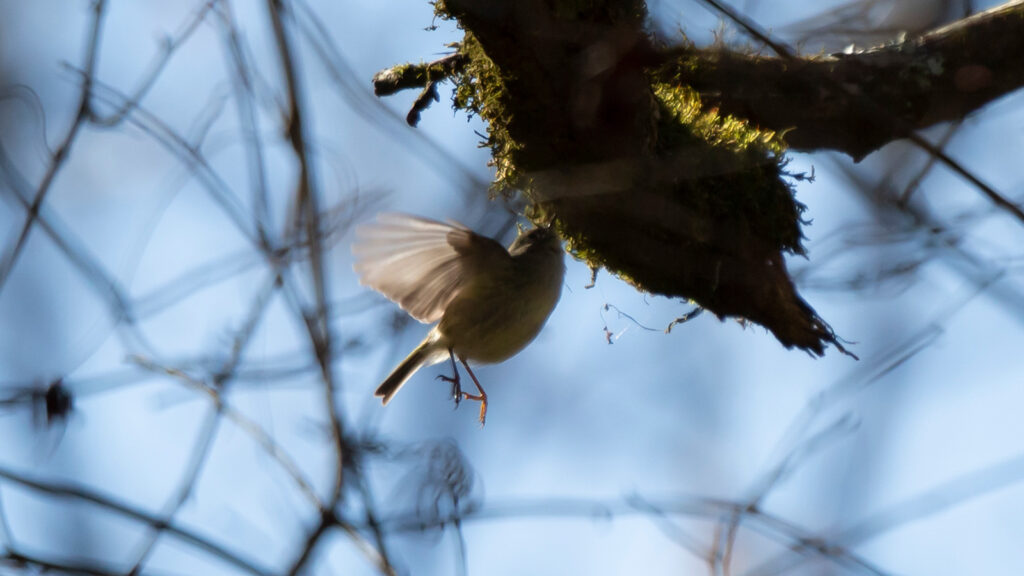
Ruby may flick her wings while she feeds, especially when she is moving between leaves and twigs. She can hover very briefly, but she does not hover around flowers the way Zip does. Ruby’s style is more like a quick inspection: look, hop, flick, grab a bug, and move on.
Tootie decides Ruby must be looking for a lost pecan.
Scott hears this from the tree. “Nobody loses a pecan on purpose.”
Grandma says, “Ruby is looking for bugs, Scott.”
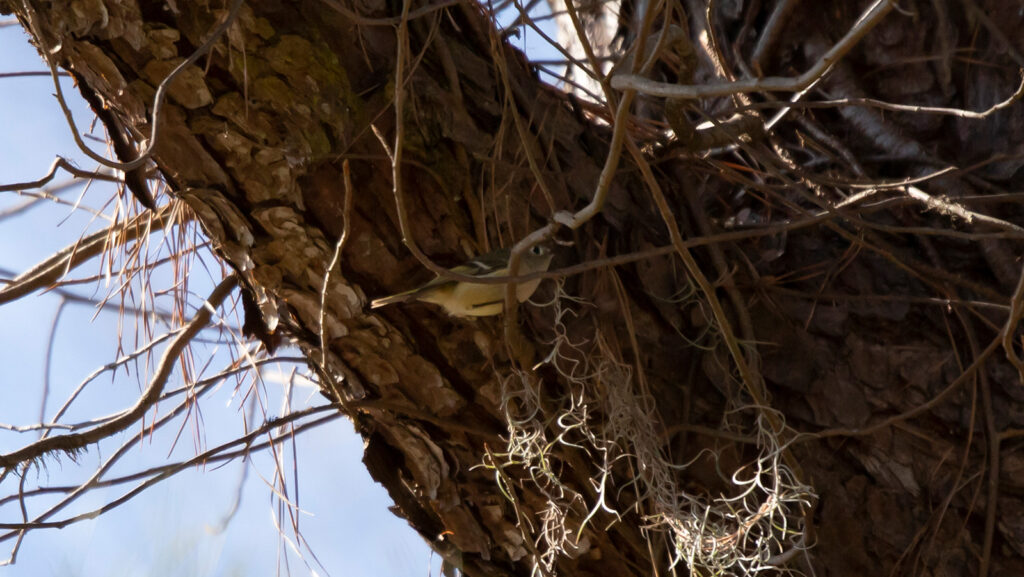
Ruby comes to Grandma’s yard during the cooler months. When winter arrives in the places where she breeds, food can become harder to find, especially in high northern forests. Ruby moves south to places where sheltered shrubs, trees, insects, and berries can still help her make they through the season.
Grandma knows Ruby is a winter visitor because she starts seeing him in the shrubs when the weather turns cool. He works through branches near Rumpy, but Ruby is smaller, grayer, and much more restless. Rumpy may stop long enough to show his yellow rump. Ruby seems to have no interest in posing for anybody.
Tootie watches Ruby disappear into the shrub again. “Does she live here now?”
“Only for part of the year,” Grandma says. “Ruby’s real nesting home is farther north.”
Yoshi looks at the bare branches near the creek. “Then why come here?”
Grandma says, “Because winter here has food and cover that winter farther north may not have.”
Ruby needs shrubs and small trees because they give her shelter from wind, rain, and bigger birds. The same plants can hold insects, berries, and little places to rest between meals.
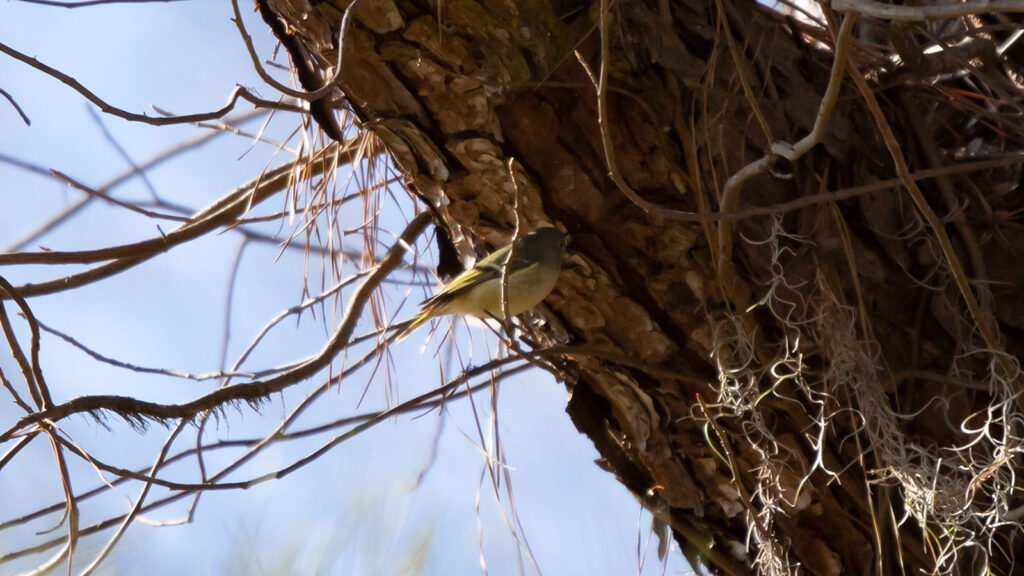
Ruby and Rumpy both visit Grandma’s yard during the cooler months, but they do not look alike once you know what to watch for. Rumpy is a Yellow-rumped Warbler with yellow patches and a bright yellow rump that flashes when he flies. Ruby is a smaller olive-gray kinglet with pale wing bars and a hidden red crown.
Tootie sees both birds in the shrubs one morning.
“Which one is which?” he asks.
Grandma points gently. “The bird checking leaves nonstop is Ruby. The bird with the yellow flash is Rumpy.”
Rumpy moves to a higher twig. Ruby flicks through the lower branches, checking every leaf edge in sight.
Yoshi watches them both. “Rumpy looks for berries too.”
“He does,” Grandma says. “Ruby spends more of his time hunting tiny insects.”
The two birds can use the same shrubs because they look for food in different ways and at different places in the plant. Rumpy may take berries and insects from open branches, while Ruby searches tucked-away leaves and twigs.
Ruby knows the backyard crew from a safe distance. She sees Grandma moving through the flower beds, Yoshi resting quietly on the porch, and Tootie trying very hard not to bounce toward every bird he sees. She hears Biv long before she sees him, and she stays out of the pecan-tree arguments because the shrubs hold better food and less yelling.
One chilly afternoon, Biv lands above Ruby and looks down into the shrub.
“You are too small to make that much motion,” Biv says.
Ruby keeps searching.
“You have checked that leaf three times,” Biv says.
Ruby catches a tiny insect.
Biv pauses. “Fine. Maybe twice was not enough.”
Grandma hears this from the porch and smiles. “Ruby has a system.”
Tootie sits still beside Yoshi, and Ruby comes closer than usual. She hops onto a low twig, flicks her wings, and looks directly at him for one second before moving on.
Tootie whispers, “She saw me.”
Yoshi says, “He.”
Tootie looks at Grandma.
Grandma says, “Ruby is a boy. The name is still Ruby.”
Grandma likes winter birds because they make the yard feel busy even when many flowers are resting. She leaves shrubs and creekside plants standing through the cool months when she can, because those places give Ruby shelter and food. She does not let Tootie chase birds through the shrubs, and she does not cut every twig away just because the yard looks bare.
Ruby needs the little parts of the yard that people sometimes overlook. A twiggy shrub can hold insects. A leaf pile can shelter small creatures. A creekside branch can give a tiny bird a safe place to rest when the wind blows.
Tootie looks at the shrub. “Can I look for Ruby?”
Grandma says, “You can look with your eyes.”
“Tootie,” Yoshi adds.
“I know,” Tootie says.
Grandma smiles. “Good. Ruby is safe when he gets to choose how close he comes.”
Ruby needs shrubs, small trees, insects, berries, and safe places to hide. Native shrubs and trees can help because they hold insect life and may grow berries or seeds. Avoid spraying broad insect killers all over the yard, because tiny birds like Ruby depend on the insects living in leaves and branches.
Keep cats indoors when possible, and let shrub edges stay full enough to give birds cover. Clean birdbaths can help birds get water, but Ruby will still spend much of his day searching leaves for tiny food.
Grandma says, “Ruby does not need a fancy hotel. He needs a safe shrub full of little things to eat.”
Yoshi watches the leaves shake again. “And fewer puppy inspections.”
Grandma nods. “That too.”
Ruby the Ruby-Crowned Kinglet
These are some helpful words for talking about this wild neighbor.
Ruby the Ruby-Crowned Kinglet
Good wildlife watchers ask good questions. Here are a few to get you started.
No. Ruby is a Ruby-crowned Kinglet. He is tiny and quick, but he does not hover and drink nectar the way Zip does.
Male Ruby-crowned Kinglets have a red patch on top of their heads, though they usually keep they hidden.
Ruby eats mostly tiny insects, spiders, and insect eggs. In winter, he may also eat some berries, seeds, sap, or nectar.
He is searching leaves and twigs for very small food.
Ruby travels north to breed in cooler forests.
No. Ruby is wild and very small. Watch him from a distance.
Rumpy has yellow patches and a yellow rump. Ruby is smaller, olive-gray, and may flash a hidden red crown.
Watch small birds from a distance. Keep cats indoors when possible, avoid broad insect sprays, and leave some shrubs, leaf litter, and creekside plants in place through winter. Tiny birds use those spaces for cover and for the insects they eat.