Why is Rumpy called Yellow-rumped?
Grandma says:
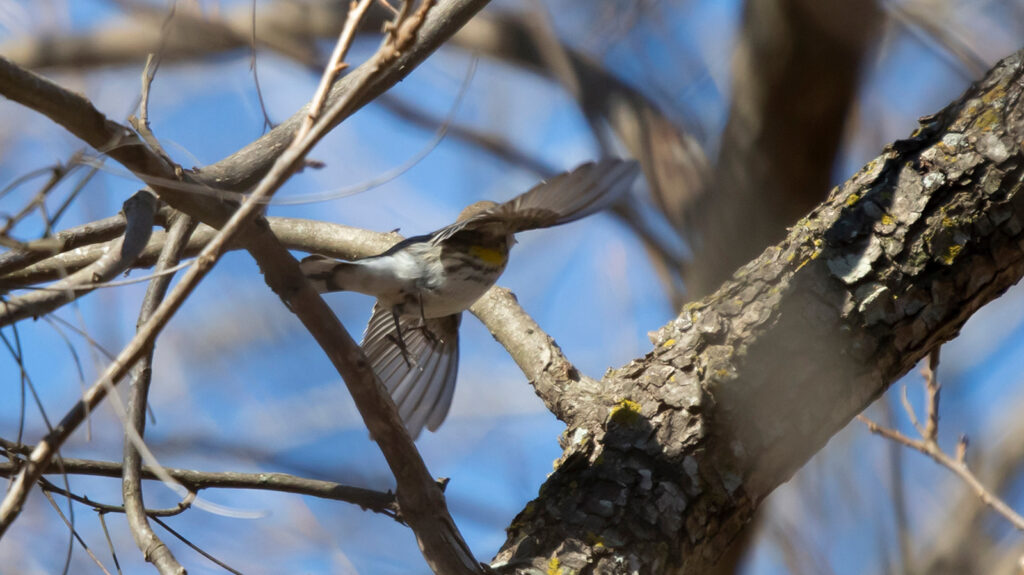
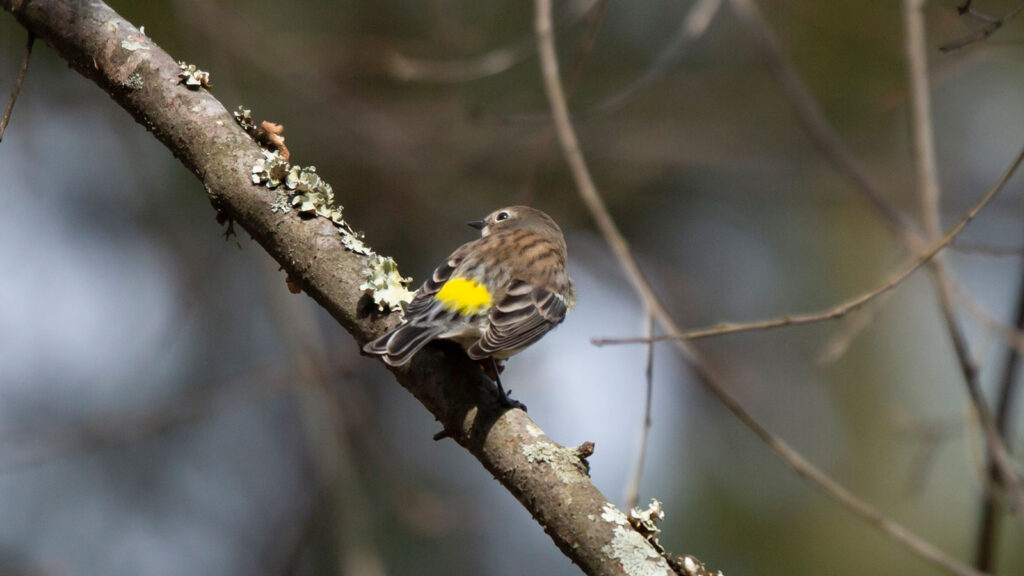
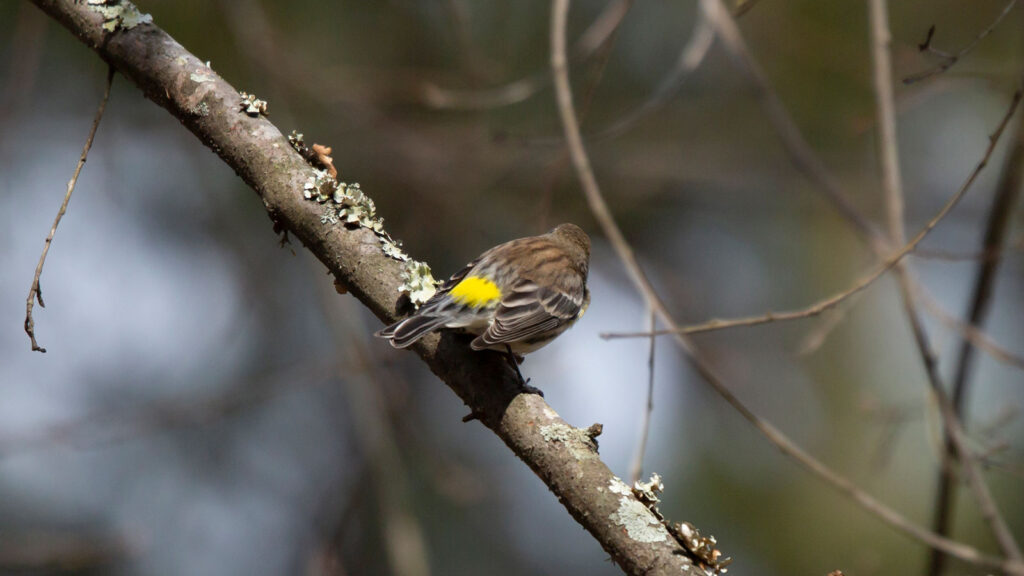
He has a bright yellow patch above his tail. You may see them flash when he flies away.
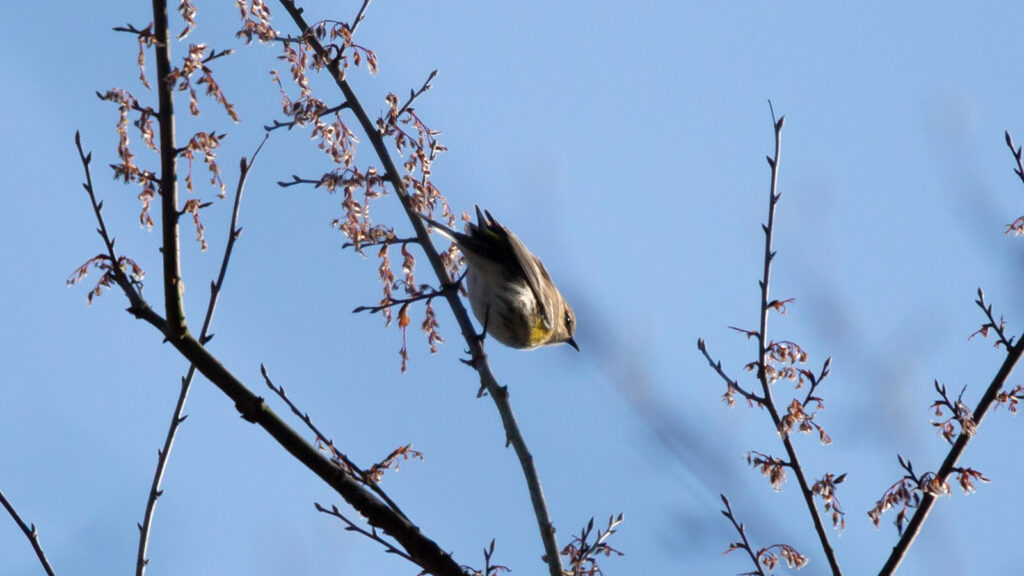
Rumpadumpalous is his full name, but everybody calls him Rumpy because he is already three branches away by the time you finish saying they.
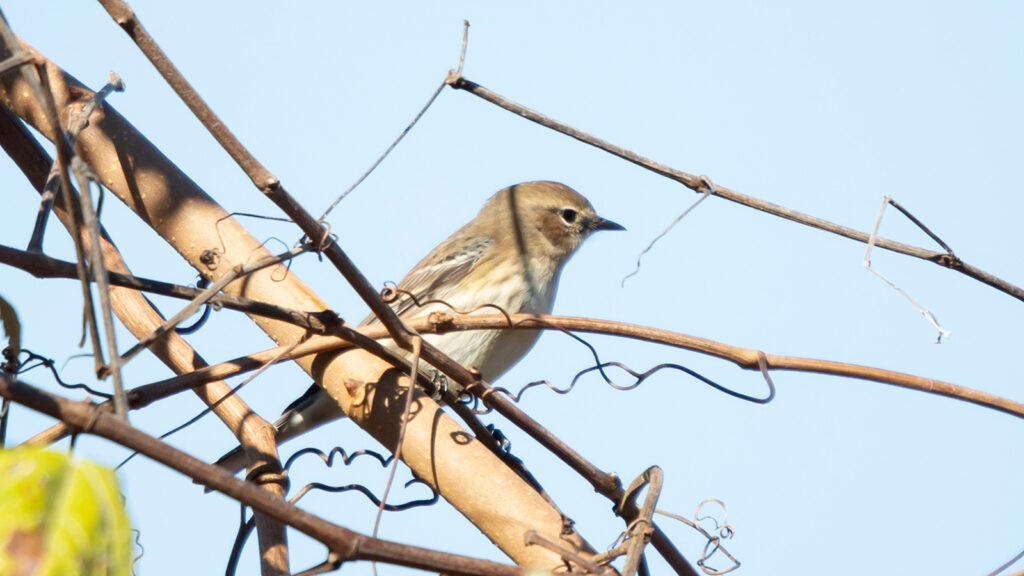
Rumpy is a Yellow-rumped Warbler, a small bird with streaky brown-and-gray feathers, little yellow patches on his sides, and one bright yellow patch right above his tail. That yellow patch is called his rump, which Tootie thinks is the funniest possible word for a bird part. Rumpy moves quickly through Grandma’s shrubs and pecan trees, hopping from twig to twig, flicking his tail, and checking every leaf for food.
One cool morning, Tootie stands near the porch and stares up at a little bird moving through the branches. The bird hops to a twig, looks under a leaf, flicks his tail, and vanishes behind the shrub. Tootie tilts his head toward Yoshi.
“Yoshi, do you see my friend?”
Yoshi’s pointy ears twitch. She looks at the shrubs, then looks back at Tootie. “I do not see anybody.”
Grandma is sitting on the porch with her coffee. “Tootie has an imaginary friend,” she says. “That happens when puppies get too much sunshine and not enough naps.”
“I do not,” Tootie says. “His name is Rumpadumpalous.”
Grandma smiles. “That sounds exactly like something you made up after chasing a moth.”
Then the little bird flies from the shrubs to the pecan tree. A bright yellow patch flashes above his tail as he lands. Yoshi’s ears twitch again.
“Oh,” she says. “There he is.”
Rumpy gives one sharp little chek! from the branch.
Tootie bounces. “See? Rumpy is real.”
Grandma looks up at the bird. “Well, I owe you an apology. Your imaginary friend has excellent field marks.”
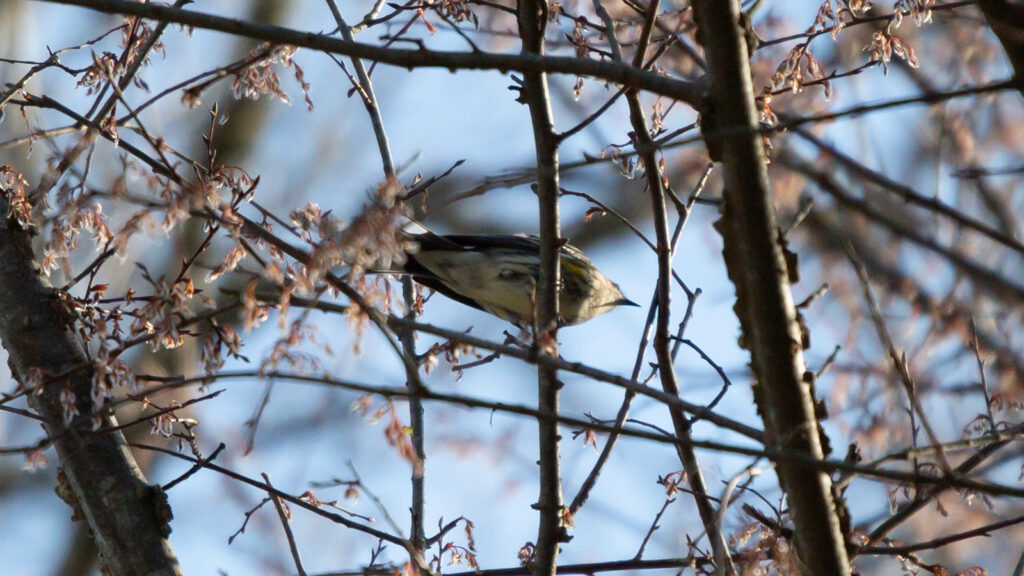
Rumpy does not stay in Grandma’s yard all year. He comes during the cooler months, when Yellow-rumped Warblers travel south from their nesting places farther north. Some spend winter in warm parts of the Southeast, where they can find shrubs, trees, berries, insects, and safe places to rest.
Grandma’s front-yard shrubs make a good winter stop for Rumpy. Grenda the Green Snake stays low in those shrubs, where she can hide among leaves and look for insects. Rumpy stays higher in the branches, where he can search for berries, tiny bugs, and good places to perch. They use different parts of the same shrub, which Grandma says proves there is room for everybody when nobody starts acting foolish.
The pecan trees give Rumpy a high place to watch the yard. The flower beds bring insects. The shrubs give him cover when a hawk passes overhead or when somebody larger than him starts moving around below.
Tootie thinks Rumpy should stay forever.
“Does he not like they here?” he asks.
Grandma looks toward the branches. “He likes they fine. But birds can have more than one home. Rumpy has places to go when the seasons change.”
Yoshi watches Rumpy zip from one branch to another. “He knows where he is going.”
Tootie looks impressed. He gets lost in the hallway sometimes.
Before Rumpy became a winter visitor in Grandma’s yard, he was a baby bird in a nest much farther north. Yellow-rumped Warblers build small cup-shaped nests in trees, usually on branches where leaves and twigs help hide the eggs. Rumpy’s parents used grasses, soft plant pieces, twigs, and feathers to make the nest comfortable enough for tiny birds.
Rumpy’s mother laid small pale eggs with darker marks. His parents kept the eggs warm, then brought insects after the babies hatched. Young warblers need soft foods full of protein because their bodies have a lot of growing to do. They need feathers, wings, strong legs, and enough energy to start exploring the world beyond the nest.
Baby Rumpy did not look much like the quick little bird Tootie sees now. At first, he was small, fluffy, and hungry. He waited in the nest while his parents returned with food, opening his mouth wide whenever they came close.
Grandma says every baby bird starts with the same idea. “Open your mouth and hope somebody shows up with lunch.”
Tootie thinks that is a good plan.
Yoshi looks at him. “You already use that plan near Grandma’s kitchen.”
Tootie does not answer.
As Rumpy grew, his feathers came in and his wings grew stronger. He practiced hopping along branches, landing without falling, finding insects, and following his parents through the trees. By the time cooler weather arrived, he knew how to travel, find food, and stay alert for danger.
Now Rumpy makes a long trip each year. Tootie thinks that sounds exciting. Yoshi thinks they sounds exhausting. Grandma says both opinions are probably correct.
Rumpy eats insects whenever he can find them. He looks for caterpillars, spiders, tiny beetles, gnats, aphids, and other small bugs hiding on leaves, twigs, bark, and branches. Sometimes he sits still for a moment, watches a flying insect pass by, and darts out to catch them in the air.
One afternoon, Tootie watches Rumpy fly out from a branch, turn quickly, and land again.
“Did he catch a bug?” Tootie asks.
Grandma nods. “Rumpy can grab insects right out of the air.”
Tootie watches him settle back onto the twig. “He is fast.”
Yoshi’s ears twitch. “He is smaller than a leaf.”
“And still faster than you,” Grandma says.
Yoshi gives Grandma a look.
During winter, bugs can be harder to find. That is when Rumpy starts eating more berries. He likes berries from shrubs and vines, especially wax myrtle berries. Wax myrtle berries have a waxy coating that many birds cannot digest, but Yellow-rumped Warblers can use that wax for food.
Grandma says Rumpy has a very useful stomach.
Tootie asks, “Can he eat candle wax too?”
Grandma says, “No. Do not start.”
Rumpy may also visit clean bird feeders for sunflower seeds, raisins, suet, or peanut butter made for birds. Tootie thinks this proves Rumpy has excellent taste. Yoshi thinks Rumpy should stay far away from Tootie’s food bowl.
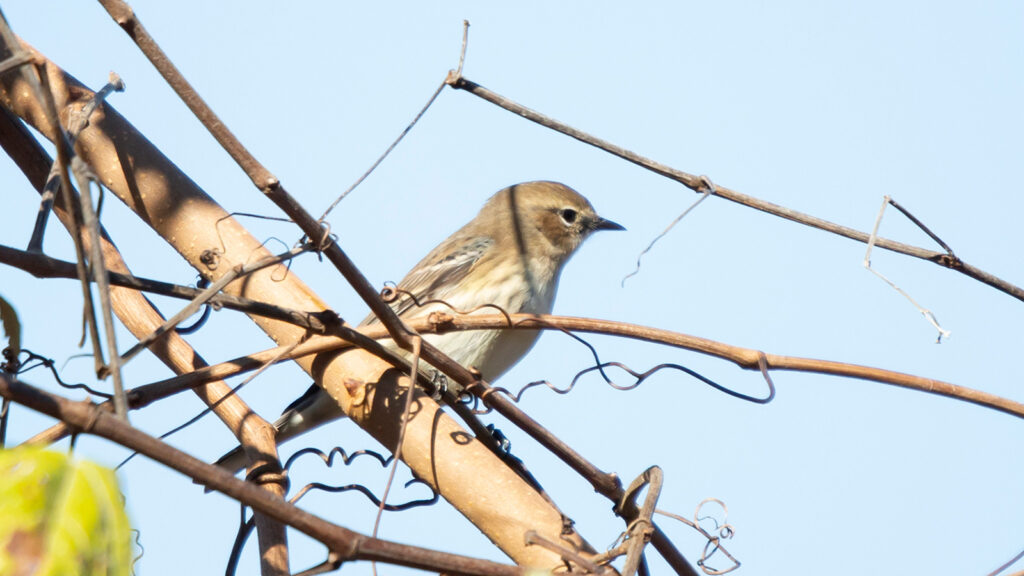
Rumpy’s yellow rump helps people spot him when he flies. He may look mostly brown and gray while he sits in the shrub branches, then suddenly lift off and flash bright yellow above his tail. That little patch can be easier to notice than the rest of him.
Tootie looks up at the tree. “So he is called Yellow-rumped because his rump is yellow?”
Grandma nods. “For once, bird names are making their case pretty clearly.”
Rumpy also has yellow patches on his sides, white wing bars, and a pale throat. In winter, his feathers usually look softer and browner. In spring, he may look brighter, with stronger gray, black, white, and yellow colors.
Tootie thinks that sounds like getting a whole new outfit.
Grandma says, “Birds handle wardrobe changes much better than people do.”
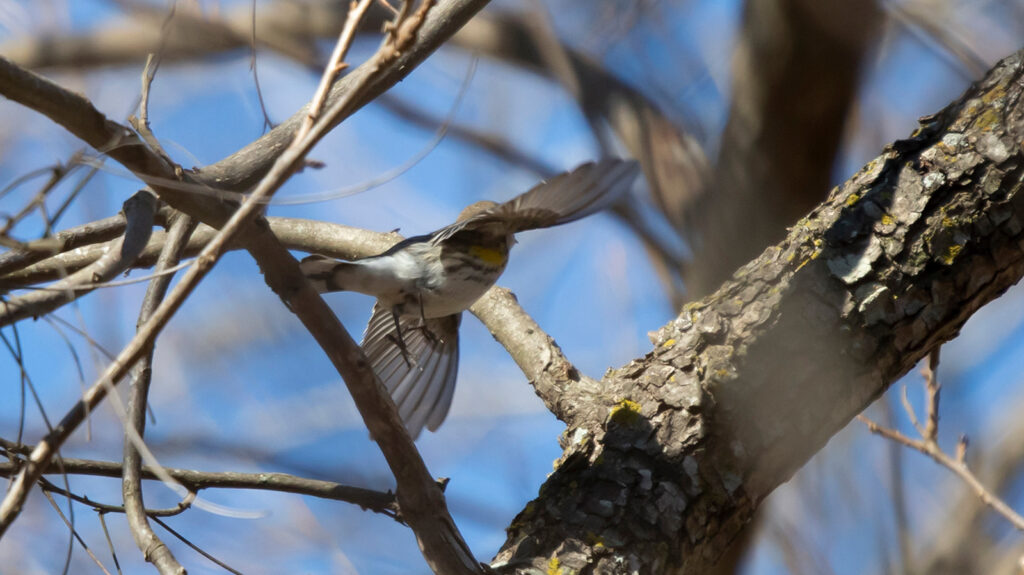
People sometimes see Rumpy’s yellow patches and think he is a goldfinch. American Goldfinches are different birds. They often have shorter, thicker beaks for cracking seeds, and males can turn bright yellow in spring and summer.
Rumpy has a thinner beak for catching insects. He also has streaky feathers, white wing bars, and that yellow patch above his tail. He belongs to a group of small birds called warblers, which often move quickly through trees and shrubs while looking for food.
Tootie has trouble keeping up with him.
“Rumpy was right there,” he says.
Grandma looks toward the shrub. “He is still right there.”
Tootie squints. Rumpy moves behind another branch.
Tootie sighs.
Yoshi says, “He is very good at being small.”
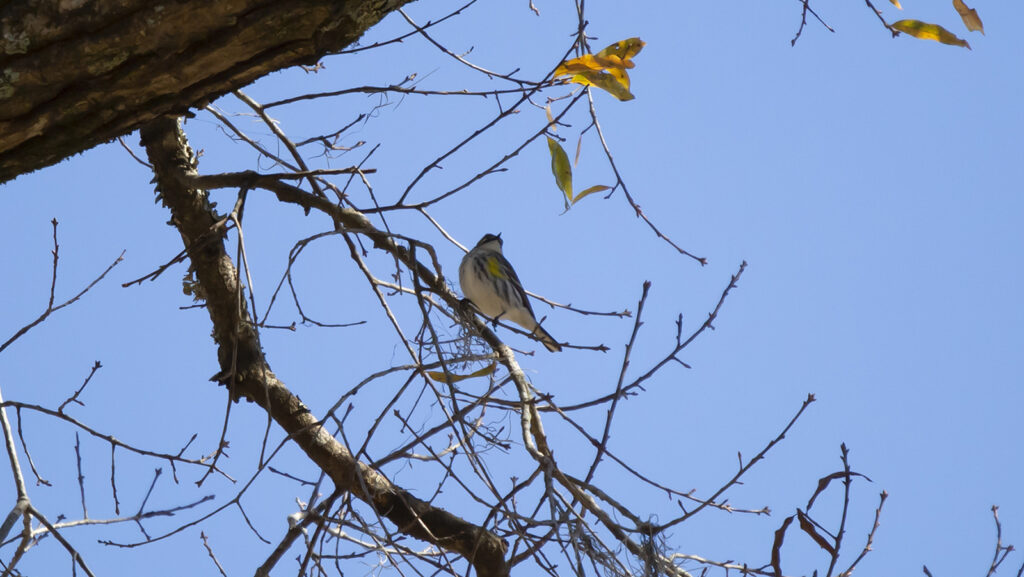
Rumpy likes Grandma’s shrubs almost as much as Grenda does. Grenda stays low in the leaves, where she looks for insects and spiders. Rumpy stays higher in the branches, where he checks twigs for berries and bugs.
Grandma says the shrub has more rooms than people think. The lower branches hold cool shade and hiding places. The middle branches hold beetles, spiders, caterpillars, and small leaves. Higher twigs give birds places to perch, rest, and watch for danger. The roots hold soil in place, and the leaves catch rain.
Tootie looks at the shrub. “They are like an apartment building.”
Grandma nods. “A very leafy apartment building.”
Yoshi watches Rumpy move to another branch. “Does he pay rent?”
Grandma looks toward the leaves. “He pays in bug control.”
Tootie thinks that sounds like a good deal.
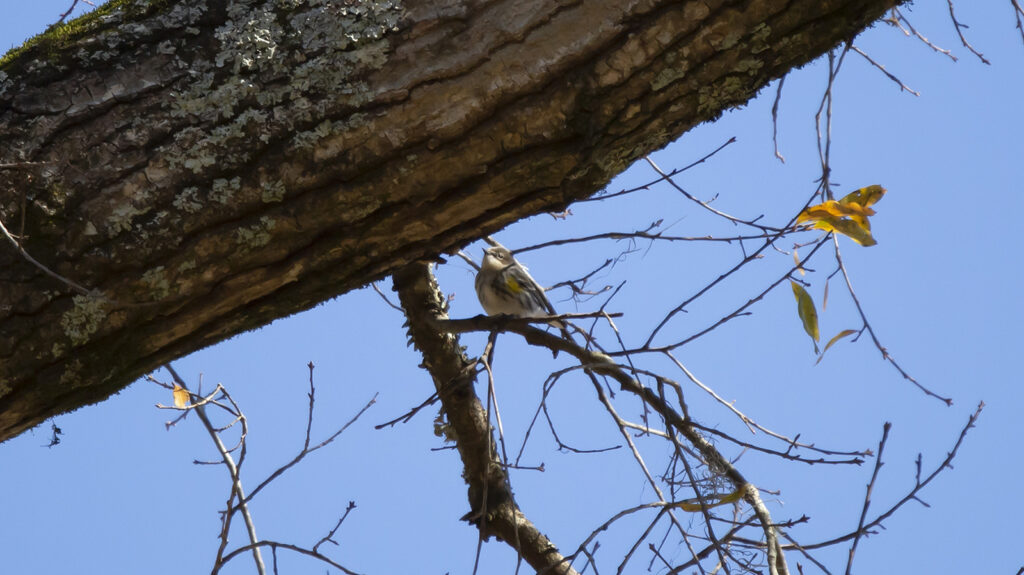
Biv notices Rumpy first. Blue Jays notice most things first, especially if somebody new shows up near their pecan trees.
Biv gives one sharp call from a branch. “Who is that?”
Rumpy gives a quick chek!
Kevin the Crow watches from the grass. “He is small.”
“He is a warbler,” Grandma says.
Tootie looks up. “Is he here to sing?”
Grandma smiles. “Some warblers sing beautifully. Rumpy also has a sharp little call that sounds like he is checking in.”
Tootie likes that. “Rumpy is the attendance bird.”
Yoshi’s ears twitch.
Biv calls again. Kevin caws. Wilson taps at the pecan tree trunk. Rumpy gives another chek! from the shrubs.
Grandma looks around the yard. “Everybody has something to say this morning.”
Tootie sits near the porch steps and looks up at the branches.
“Hi, Rumpadumpalous!”
Rumpy flies to another twig.
Yoshi watches him go. “He heard you.”
Grandma says, “He probably wishes we had picked a shorter name.”
Rumpy is a migrant. A migrant is an animal that travels from one place to another during the year. Rumpy spends warmer months farther north, where he nests and raises babies. When colder weather comes, he travels south to places where he can still find food.
Migration takes work. Rumpy needs places to rest, trees and shrubs for cover, water to drink, and enough food to keep flying. A yard with berries, insects, and safe plants can help a bird like Rumpy during a long trip.
Grandma keeps her yard useful by caring for shrubs, keeping water clean, and leaving places where birds can find food. She knows small birds need more than one safe stop along the way.
Tootie thinks Rumpy is on vacation.
Grandma shakes her head. “Traveling that far is work. He is not lounging around with a tiny suitcase.”
Yoshi looks toward the sky. “He does not even have a suitcase.”
Grandma says, “Exactly. Very poor planning, but he manages.”
Rumpy needs food, water, and safe places to rest. Native shrubs can grow berries that birds use in fall and winter. Trees, flowers, and garden plants can bring insects. A clean birdbath gives birds water to drink and bathe in.
Bird feeders can help too, especially when people keep them clean. Grandma says bird feeders are like kitchen tables. They need washing.
Keeping cats indoors can also help small birds. Rumpy spends time low in shrubs and close to branches, where cats may be able to sneak up on him. Bright outdoor lights can confuse migrating birds too, especially when they travel at night.
Grandma says, “Rumpy has enough trouble flying through weather. He does not need somebody’s porch light trying to give him directions.”
Tootie thinks porch lights are friendly.
Yoshi thinks they attract moths.
Grandma says both dogs are correct.
Draw a maze with these parts:
Start: Rumpy on a pecan-tree branch
Safe stops: a berry shrub, Wilson on the tree trunk, Grandma’s clean birdbath, and Yoshi resting on the porch
Wrong turns: Tootie jumping under the tree, a cat hiding near a shrub, a bright porch light, and Kevin guarding a snack pile
Finish: A wax myrtle branch with berries
Add Biv on a high branch looking suspicious. Add Grandma near the porch with binoculars.
Maze caption:
Rumpy needs a winter snack. Help him reach the wax myrtle berries without flying into trouble.
Rumpy the Yellow-Rumped Warbler
These are some helpful words for talking about this wild neighbor.
Rumpy the Yellow-Rumped Warbler
Good wildlife watchers ask good questions. Here are a few to get you started.
He has a bright yellow patch above his tail. You may see them flash when he flies away.
No. He visits during cooler months, then travels north to nest and raise babies.
He eats insects, spiders, and berries. In winter, berries help him find food when bugs are harder to find.
His body can digest the waxy coating on the berries, which gives him food many other warblers cannot use.
No. Rumpy is a warbler. He has a thinner beak, yellow patches, and a fast way of moving through shrubs and trees.
He is looking for food, watching for danger, and moving through branches where small birds can hide.
A clean feeder with safe bird food may help. Native shrubs, clean water, and safe trees help even more.
Watch birds from a distance. Do not chase, catch, or touch wild birds. Keep dogs away from bird feeders and shrubs where birds are resting. Clean feeders and birdbaths regularly, and keep cats indoors when possible so small birds can feed more safely.
🏅 Explorer Progress