Why does Scott bury pecans?
Grandma says:
Scott hides food so he can find them later when pecans and other foods are harder to find.
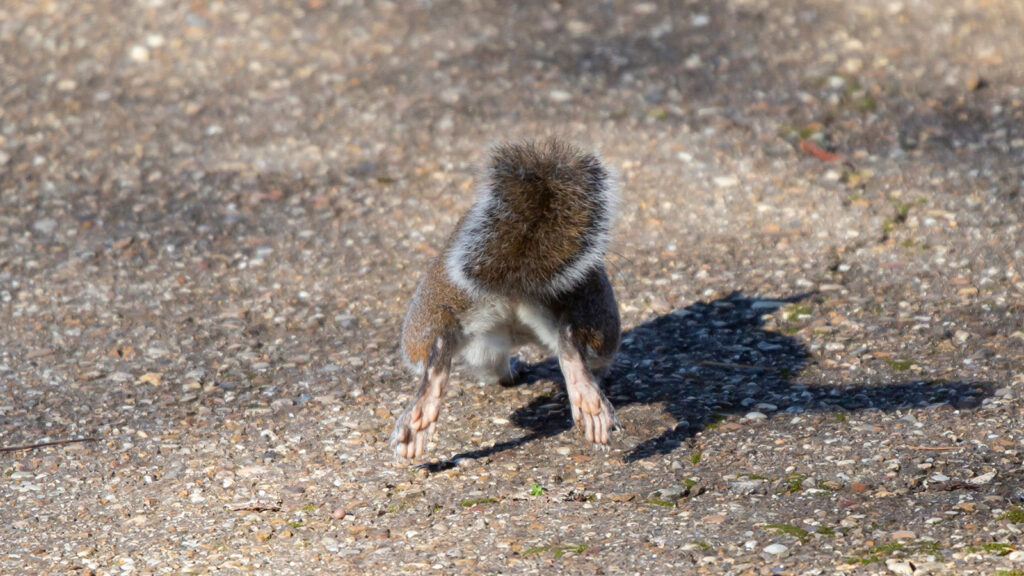
Scott thinks Grandma’s pecan trees are a grocery store, a climbing gym, and a very good place to keep an eye on Biv.
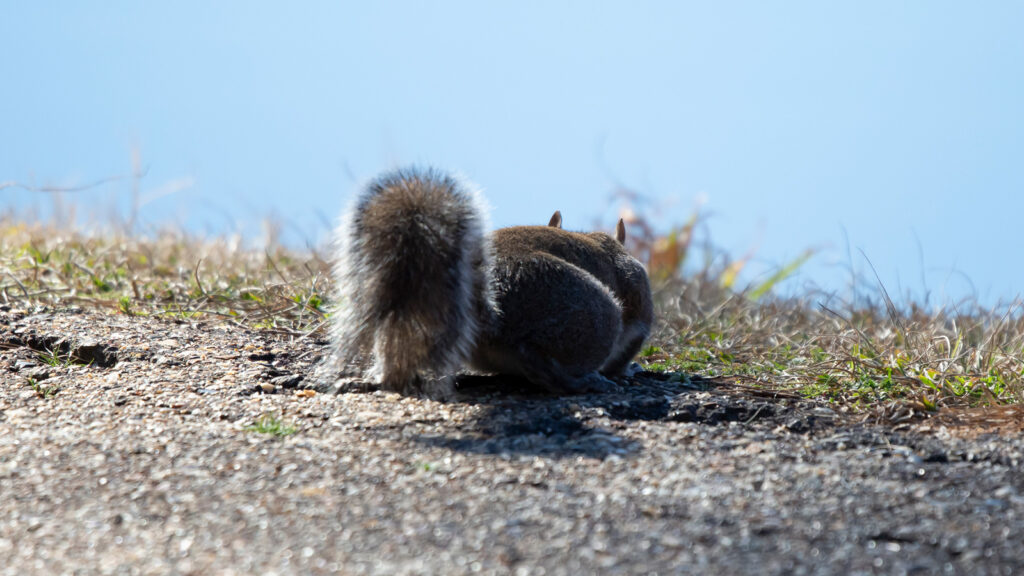
Scott is an Eastern Gray Squirrel. He has gray fur, a pale belly, bright dark eyes, quick little paws, and a big fluffy tail that curls behind him when he sits still. Most of the time, he looks neat and serious. Then he launches from one branch to another like he has forgotten there is gravity.
Tootie notices Scott before breakfast one morning. Scott is halfway up the pecan tree, gripping the bark with all four feet. His tail flips once. He pauses beside a branch, looks down at the porch, and sees Tootie staring at him.
Tootie’s droopy ears bounce as he races to the porch rail.
“Scott!” he says.
Yoshi’s pointy ears twitch. She looks toward the tree, then settles beside Grandma’s chair. Scott does not seem worried about either dog. He has lived around the pecan trees long enough to know that Tootie is loud, Yoshi is watchful, and Grandma does not let anybody chase wildlife.
Scott climbs a little higher.
Grandma looks over her coffee cup. “That squirrel has already checked the tree, the fence, the feeder, and your breakfast plate.”
Tootie looks at his bowl. “How does he know about my breakfast?”
Grandma says, “Scott has a degree in noticing things that might be food.”
Scott flicks his tail.
Biv the Blue Jay calls from a branch above him.
Kevin the Crow lands near the grass below.
Wilson keeps working the bark on the other pecan tree.
Grandma sighs. “The pecan committee is meeting again.”
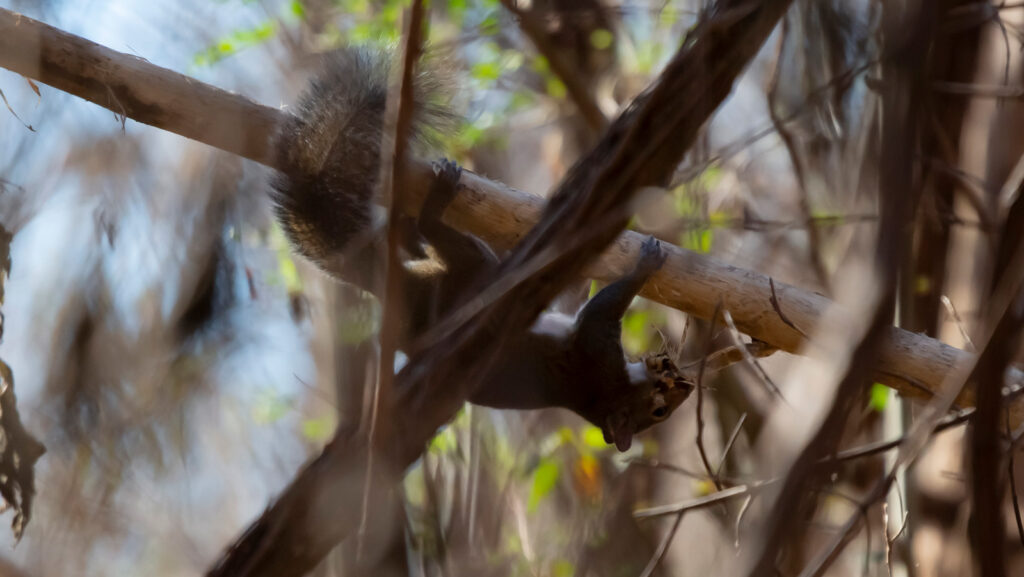
Scott does not live in a tiny house with windows and a porch. He lives in trees.
Sometimes Scott uses a hollow place inside a tree. A tree hollow can give him a dry, protected place to sleep, rest, or stay warm when the weather turns chilly. Other times, he builds a leafy nest high in the branches.
That nest is called a drey.
A drey looks like a round, messy ball of leaves and twigs from far away. Inside, Scott may add softer leaves, bark, moss, or other plant material. He builds the nest where branches split apart, which helps hold they in place.
Tootie sees one of Scott’s dreys high in the pecan tree.
“Is that a bird nest?” he asks.
Grandma shakes her head. “That is Scott’s leaf house.”
Tootie squints at they. “They looks like a pile of yard trash.”
Grandma says, “Scott would be offended. He worked hard on that pile of yard trash.”
Yoshi looks toward the branches. “Does they have a door?”
“Probably,” Grandma says. “But Scott does not publish his floor plan.”
Scott may use more than one shelter during the year. A leafy drey can work well in warm weather. A tree cavity can offer more protection when they are cold or wet. He does not hibernate through winter, so he still needs safe places to rest when the yard gets quiet and chilly.
Tootie thinks winter sounds hard.
Yoshi thinks winter sounds like a good excuse to stay in a warm bed.
Scott thinks winter means he needs to remember where he buried the pecans.
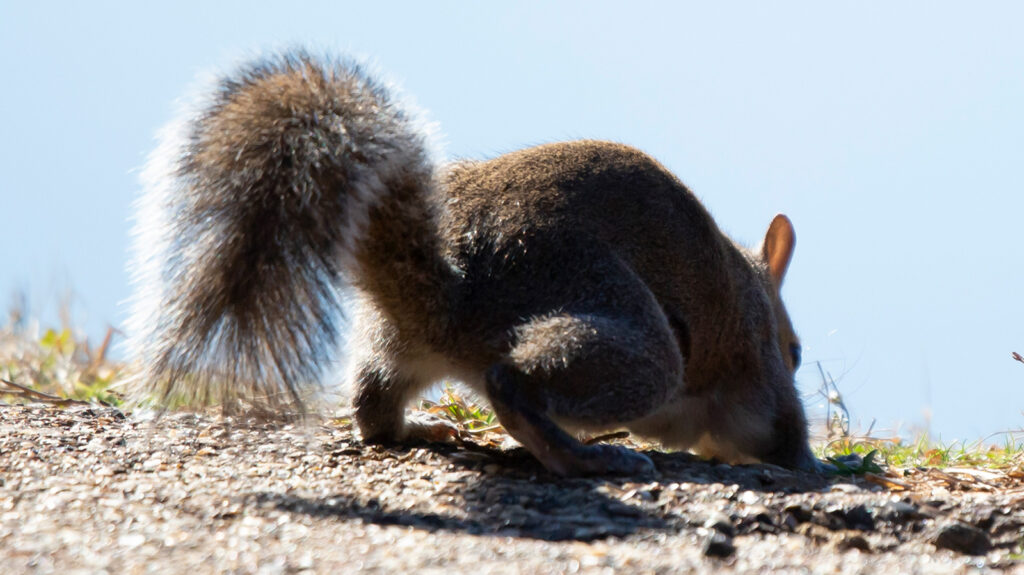
Before Scott became the squirrel everybody sees racing through the pecan trees, he was a tiny baby squirrel in a nest with his mother and littermates.
Littermates are brothers and sisters born around the same time.
Baby squirrels are born very small. They do not have much fur at first. Their eyes stay closed. They cannot climb, leap, find food, or build nests. Their mother keeps them warm and feeds them milk while they grow.
Tootie thinks that sounds familiar.
“I had a dog mama,” he says.
Grandma nods. “Yep. Scott had a squirrel mama.”
As Scott grew, his fur came in. His eyes opened. His tail got fluffier. He learned how to move around inside the nest, then how to climb branches without falling. He had to learn where food grows, where hawks may watch from above, and how to freeze when something dangerous comes near.
Young squirrels spend a lot of time learning. They chase each other around branches, wrestle, leap, and practice climbing. Some of that play helps them build strong muscles and learn how to move through trees.
Tootie thinks squirrel games sound excellent.
Yoshi looks at him. “You already play squirrel games. You just do them on the porch.”
Tootie feels that is unfair.
Scott grew up, found places to sleep, learned the pecan trees, and became very good at collecting food. Now he may have his own family one day. When young squirrels grow big enough, they leave their mother’s nest and begin finding places of their own.
Grandma says, “That is why you see squirrels all over the yard. Every one of them has somewhere to be.”
Tootie watches Scott run along a branch.
“Where is Scott going?”
Grandma says, “Probably somewhere he has already been three times this morning.”
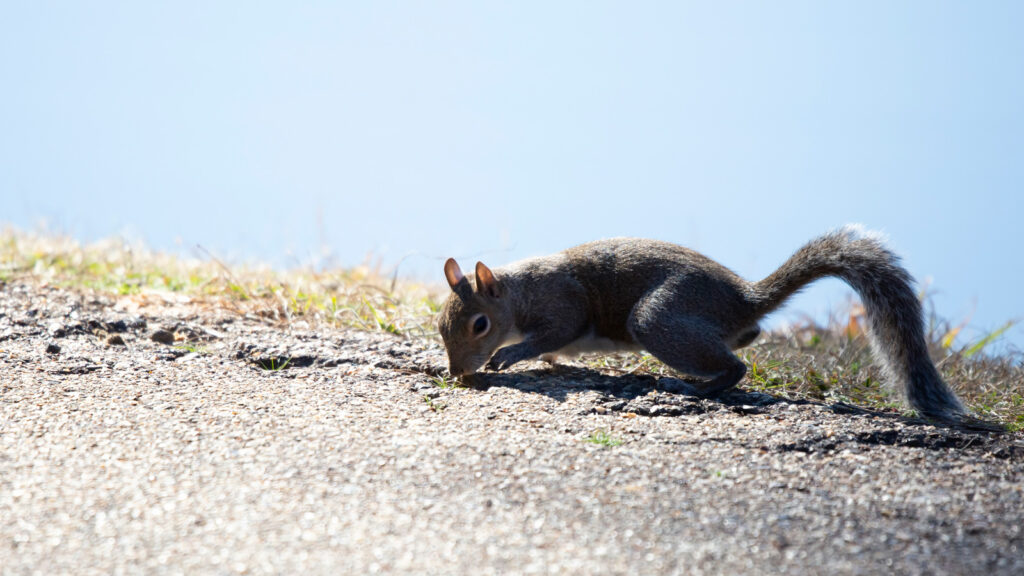
Scott likes pecans.
He likes acorns too.
He likes seeds, berries, buds, flowers, mushrooms, and fruit. In some seasons, he may also eat insects or other small things he finds while searching for food.
But Grandma’s pecan trees are Scott’s favorite place to eat.
When pecans begin falling, Scott gets busy. He picks one up with his front paws, turns they around, and gnaws through the shell with his sharp front teeth. His front teeth keep growing through his life, so chewing hard foods helps wear them down.
Tootie watches Scott sit on a branch with a pecan.
“He has hands,” Tootie says.
Grandma smiles. “They are paws, but squirrels can hold food with them very well.”
Scott’s paws have long fingers and sharp claws. His claws help him climb bark, grip branches, and hang onto food while he eats. His back feet can turn around so he can climb down a tree headfirst.
Tootie looks up at the trunk. “Headfirst?”
Grandma says, “Yep.”
Tootie backs away from the porch steps. He does not think that sounds sensible.
Yoshi watches Scott walk down the trunk with his head pointed toward the ground.
“That is a lot of confidence,” she says.
Scott reaches the bottom, grabs a pecan, and races back up.
Grandma says, “He has been practicing longer than you have.”
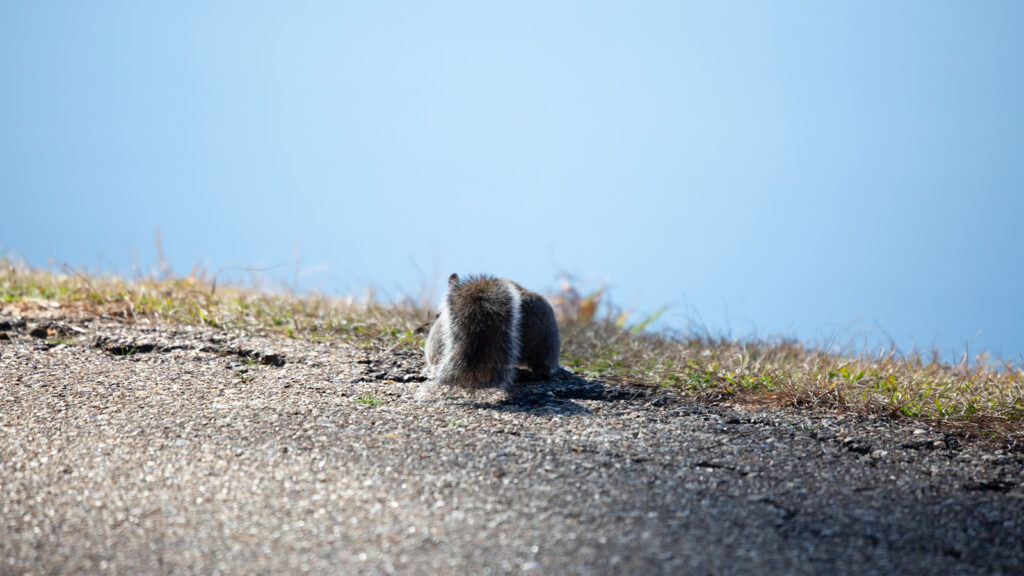
Scott does not eat every pecan right away.
Sometimes he hides food.
He may carry a pecan away from the tree, dig a tiny hole, place the pecan inside, and cover they with dirt or leaves. He may hide other nuts in cracks, under roots, beside logs, or in loose soil.
That is called caching.
Scott has many hiding places.
Tootie thinks this sounds like a very good idea.
“Can I hide treats?” he asks.
Grandma looks at him. “You already hide treats. You call they dropping them under furniture.”
Yoshi’s curled tail gives one small wag.
Scott remembers many of his hiding places. He uses his sense of smell to help find food later. But he does not find every pecan again.
Some nuts stay buried.
Some grow into new trees.
That means Scott helps plant trees without trying.
Biv the Blue Jay likes to claim he replanted all the forests after the Ice Age.
Scott hears Biv say this one day from the pecan tree.
Biv fluffs his crest. “I replanted the forests after the Ice Age.”
Scott sits on a low branch with a pecan in his paws.
“You dropped a few acorns,” Scott says. “Do not act like you built the whole country.”
Biv gives one loud jay!
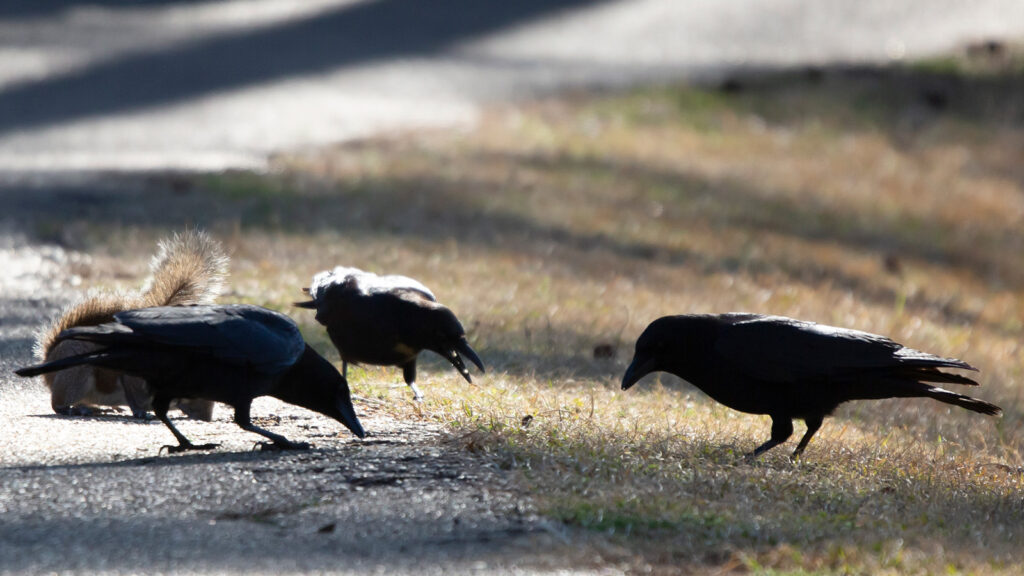
Kevin the Crow watches from the grass.
“To be fair,” Kevin says, “both of you forget things in the dirt.”
Grandma laughs so hard she has to set down her watering can.
Tootie looks confused. “Did they plant the forest?”
Grandma says, “They helped. Birds and squirrels both carry nuts around, hide them, forget some, and give little trees a chance to grow.”
Yoshi looks toward the pecan trees.
“So the trees started as forgotten snacks?”
Grandma nods. “Some of them did.”
Tootie thinks that is the best kind of mistake.
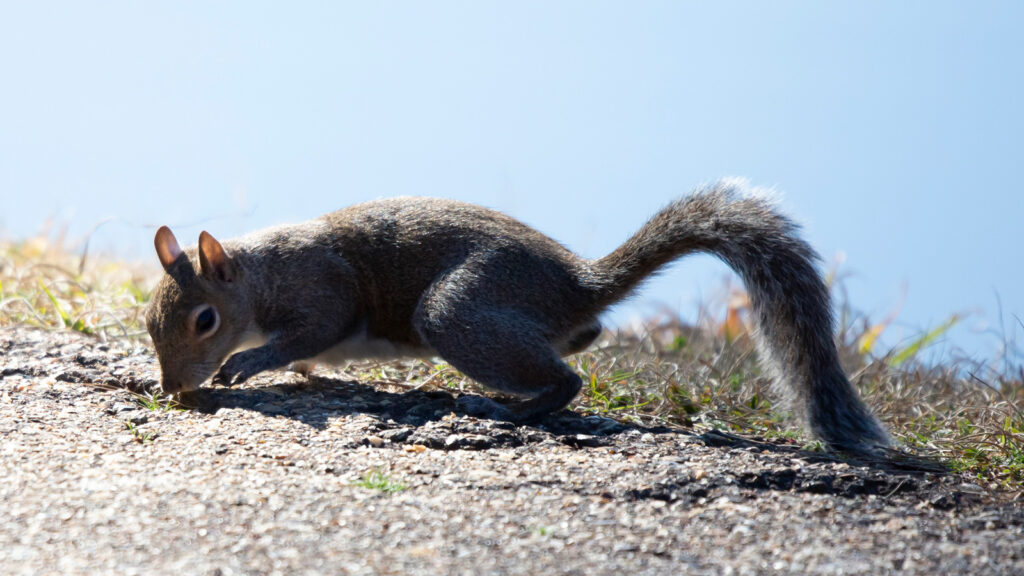
Scott’s tail does a lot of work.
They helps him balance when he runs along branches. They helps him steer when he jumps. They can cover him when he rests in cold weather. They also helps other squirrels understand how he feels.
When Scott gets nervous, excited, or upset, he may flick or wave his tail. He may also make warning sounds if he sees danger.
Grandma calls Scott’s tail “a whole extra person.”
Tootie watches Scott sit on a branch, tail twitching.
“What is they saying?” he asks.
Grandma watches for a moment. “Probably that he saw something he does not like.”
A hawk circles far above the pecan tree.
Scott freezes.
Then he races around the trunk where the hawk cannot see him easily.
Biv gives a warning call.
Kevin caws from the grass.
Yoshi’s ears twitch toward the sky.
Grandma puts one hand on Tootie’s back. “Everybody heard that.”
Tootie sits beside her.
Scott stays on the far side of the trunk until the hawk moves away.
Grandma says, “That tail helps him balance, but his good sense helps him stay alive.”
Tootie thinks good sense sounds like something he should practice.
Yoshi thinks that is a fine idea.
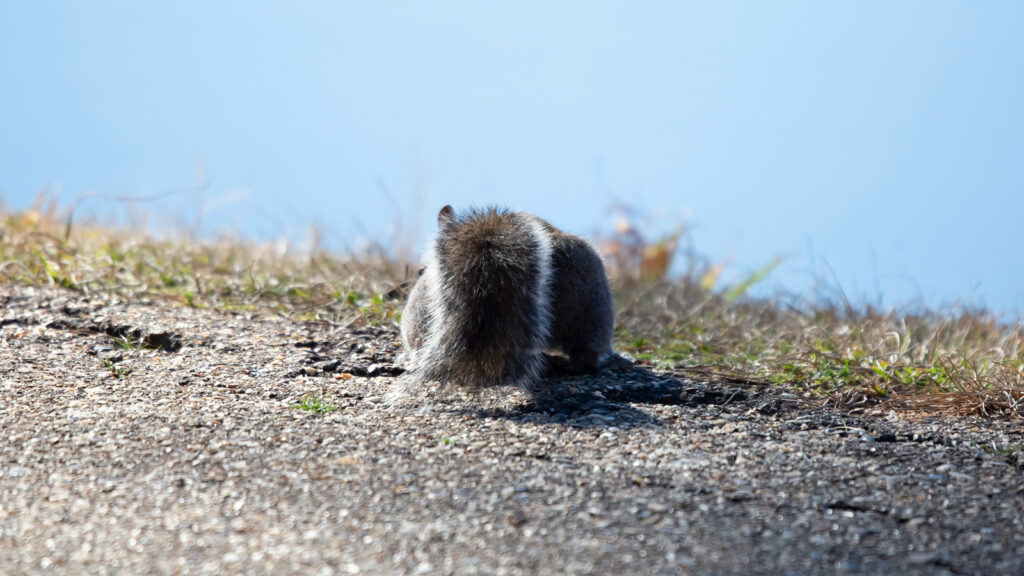
Scott knows every useful branch in the pecan trees.
He knows which limbs make good jumping places. He knows where the bark has cracks. He knows which branches hold shade in the afternoon. He knows where pecans fall after a windy day.
Biv knows some of those things too.
That causes problems.
One fall morning, Scott finds a pecan on the ground under the tree. He picks they up and starts toward the trunk. Biv swoops down from above.
“That is my pecan,” Biv says.
Scott looks at the pecan.
“They were on the ground.”
“I saw them first.”
Scott looks at Biv. “From the branch?”
“Yes.”
Scott tucks the pecan against his chest. “That is not how ownership works.”
Kevin lands nearby.
“I am listening,” Kevin says.
Nobody asked him to.
Wilson keeps pecking at the bark because he has better things to do than argue over pecans.
Grandma watches from the porch.
“Scott, Biv, and Kevin have turned one nut into a legal case again,” she says.
Tootie looks worried. “Who gets they?”
Grandma watches Scott leap onto the trunk with the pecan.
“The squirrel,” she says. “He has possession.”
Yoshi watches Scott climb away.
“That does seem important.”
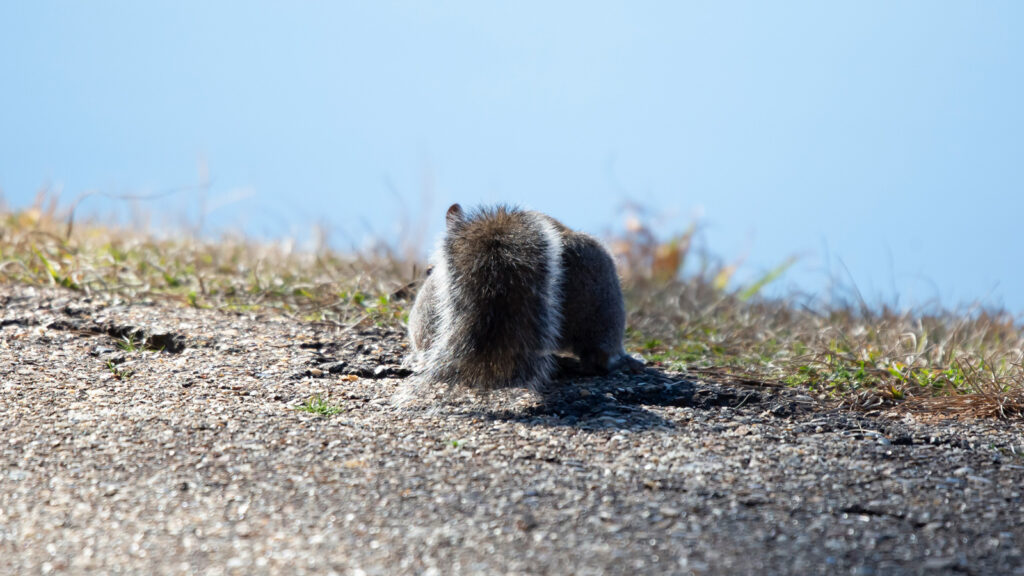
Scott is an Eastern Gray Squirrel.
His fur looks gray with some brown mixed in. His belly is pale. His tail is large and fluffy.
Phoenix the Fox Squirrel looks different. Fox Squirrels are usually larger, and their fur may look more orange, rusty, brown, or mixed with gray. Phoenix also has a big tail, but he does not look exactly like Scott.
Tootie thinks this is easy.
“Scott is gray. Phoenix is fox.”
Grandma says, “That is a start.”
Yoshi looks at the two squirrels when they show up near the trees.
“Phoenix looks warmer,” she says.
Grandma nods. “That is a good way to remember they.”
Bessie the Flying Squirrel is different too. She is much smaller and mostly comes out at night. She does not fly with wings. She glides from tree to tree using skin between her legs.
Tootie thinks that sounds impossible.
Grandma says, “Wait until dark. Bessie has tricks.”
Scott hears this from the branch above.
“She is going to make us all look slow,” he says.
Yoshi says, “You are already moving too fast for me.”
Scott flicks his tail.
He takes that as a compliment.
Scott knows the backyard crew.
He knows Tootie wants to be friends.
He knows Yoshi watches first.
He knows Grandma has rules.
He knows Biv will argue about pecans.
He knows Kevin will watch a pecan argument as if he is reporting the news.
He knows Wilson stays busy.
He knows Grenda lives in the front shrubs and prefers nobody poke around in her leaves.
One afternoon, Tootie spots Scott near the bottom of the pecan tree and bounces toward him.
“Scott!”
Scott freezes.
Grandma says, “Tootie.”
Tootie stops.
Yoshi’s ears twitch.
Scott looks at the puppy, then looks at the tree trunk.
Grandma says, “Wild animals need space. You can watch Scott, but you cannot chase him.”
Tootie sits down.
Scott waits.
Then he runs up the trunk, across a branch, and into the leaves.
Tootie watches him disappear.
“He did not want to play.”
Grandma scratches behind Tootie’s droopy ear. “Nope. He had squirrel work.”
Yoshi gives one small tail wag.
“Tootie has puppy work,” she says.
Tootie looks at her. “What is puppy work?”
Yoshi says, “Learning when to leave people alone.”
Grandma laughs.
Scott needs trees, shrubs, food, water, and safe places to rest.
Pecan trees, oaks, hickories, berry shrubs, and other native plants can give squirrels food through the year. Trees with cavities and strong branches can give them places to shelter.
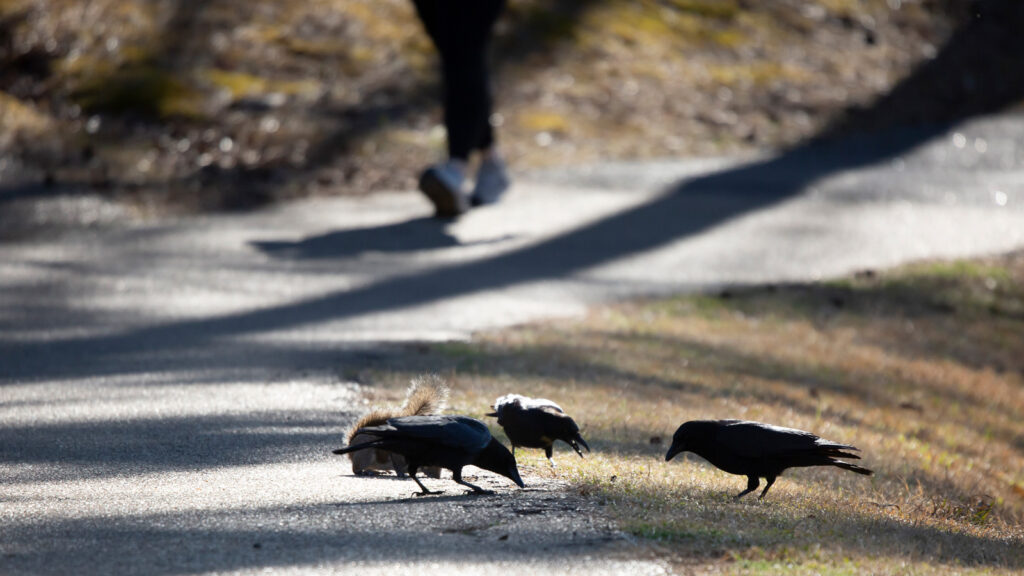
Keep cats indoors when possible. Cats can catch young squirrels or squirrels feeding close to the ground.
Do not leave trash open. Scott may investigate, but wrappers, plastic, and old food can hurt wildlife.
Do not feed Scott from your hand. Wild squirrels may bite if they think fingers are food, and hand-feeding can make them come too close to people.
Grandma says, “Scott can find plenty to eat without learning that porch visitors come with snack service.”
Tootie thinks that sounds disappointing.
Yoshi thinks they sounds safe.
Grandma says both dogs are learning.
Draw a maze with these parts:
Start: Scott under Grandma’s pecan tree with one pecan in his paws
Safe stops: a tree root, a leafy branch, Wilson on a tree trunk, and Yoshi sitting on the porch
Wrong turns: Biv guarding a pecan, Kevin watching from the grass, Tootie bouncing near the tree, and a cat hiding beside a shrub
Finish: A soft patch of dirt under a safe oak tree
Add Grandma on the porch holding a watering can. Add Scott’s leafy drey high in the pecan tree.
Maze caption:
Scott found a perfect pecan, but Biv and Kevin both noticed. Help Scott find a safe place to hide his snack for later.
Scott the Gray Squirrel
These are some helpful words for talking about this wild neighbor.
Scott the Gray Squirrel
Good wildlife watchers ask good questions. Here are a few to get you started.
Scott hides food so he can find them later when pecans and other foods are harder to find.
He remembers many of them and can use his sense of smell to help. He forgets some, which can give new trees a chance to grow.
His tail helps him balance, steer while jumping, stay warm, and warn other squirrels.
No. Eastern Gray Squirrels do not hibernate. They may stay in their nests more during bad weather, but they still come out to find food.
His back feet can turn so his claws grip the bark while he climbs downward.
No. Scott is a wild animal. Watch him from a distance and let him choose where to go.
No. Scott is an Eastern Gray Squirrel. Phoenix is a Fox Squirrel, which is usually larger and often more orange or rusty-colored.
Watch squirrels from a distance. Do not hand-feed, chase, trap, or try to pet them. Keep pets supervised outside, especially near tree roots and bird feeders. Check trees for falling limbs before standing underneath, and call a qualified wildlife professional if a squirrel is injured, trapped, or inside a home.