Is Tad a frog?
Grandma says:
Tad is a toad. Toads and frogs are related, but Tad has bumpy skin and spends more time on land.
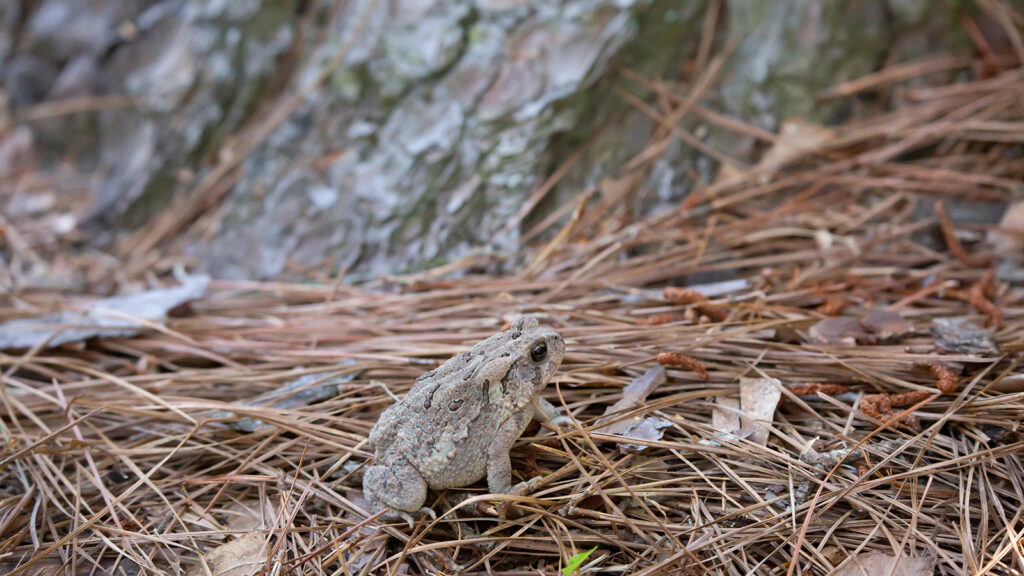
Tad has bumpy skin, gold-flecked eyes, short sturdy legs, and the kind of serious little walk that makes Tootie think somebody left a potato with opinions beside Grandma’s flower bed.
Tad is an American Toad. He has dry-looking, bumpy brown skin, a pale belly, squat little legs, and wide eyes that notice movement fast. He is not a frog, even though he began life in water like Chirp and Knossos. Tad spends most of his grown-up life on land, especially near damp soil, leaves, flower beds, shrubs, and places where bugs gather.
One warm evening after a rain, Tootie sees a brown lump beside Grandma’s flower bed.
“Is that a mud rock?” he asks.
Yoshi’s pointy ears twitch. “Rocks do not blink.”
Grandma looks down and smiles. “That is Tad. He is an American Toad.”
Tad takes two slow hops, stops beside a damp leaf, and waits very still.
Tootie stares. “He is thinking.”
Grandma says, “He may be waiting for something smaller than he is to move.”
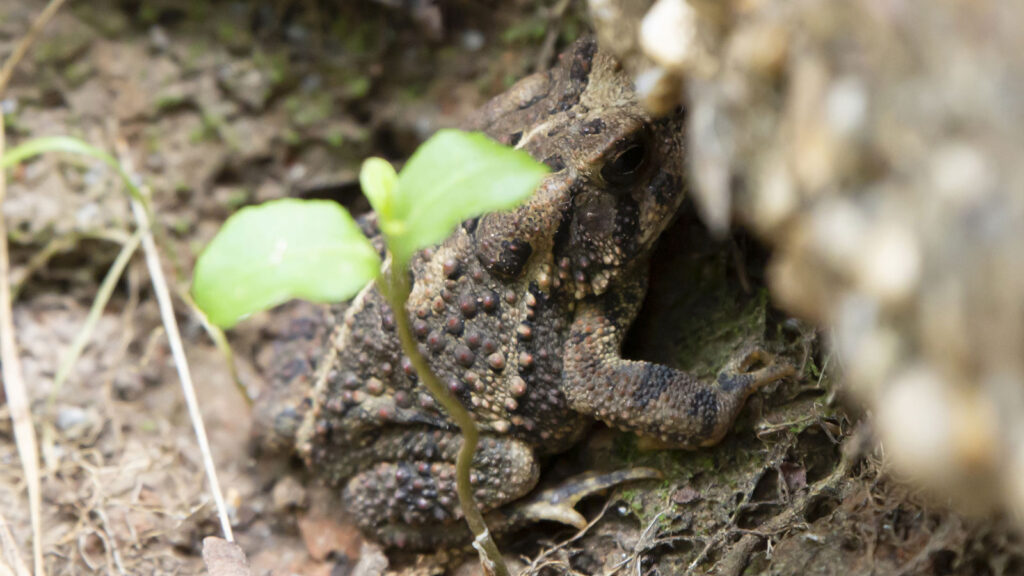
Tad likes damp places on land. He uses flower beds, leaf litter, low shrubs, garden edges, brushy corners, logs, damp soil, and shady spaces where insects and worms are easier to find. He does not need to live in the creek like Knossos or Chirp, but he does need water nearby when they are time to breed.
Grandma’s yard gives Tad a good mix of places. The flower beds hold bugs. The shrubs hold shade. The leaf litter stays cooler than bare dirt. The creek behind the fence gives him a place to return during breeding season.
Tootie watches Tad disappear beneath a low plant. “Does he live under there?”
Grandma says, “He may rest there today. Toads use little hidden places all over a yard.”
Yoshi watches the leaves settle. “He likes cool ground.”
“That is right,” Grandma says. “Tad needs places that do not dry out too quickly.”
Tad may spend daylight hours tucked under leaves, boards, logs, pots, or thick plants. He becomes more active in the evening, after rain, or when the ground is damp enough for him to move comfortably.
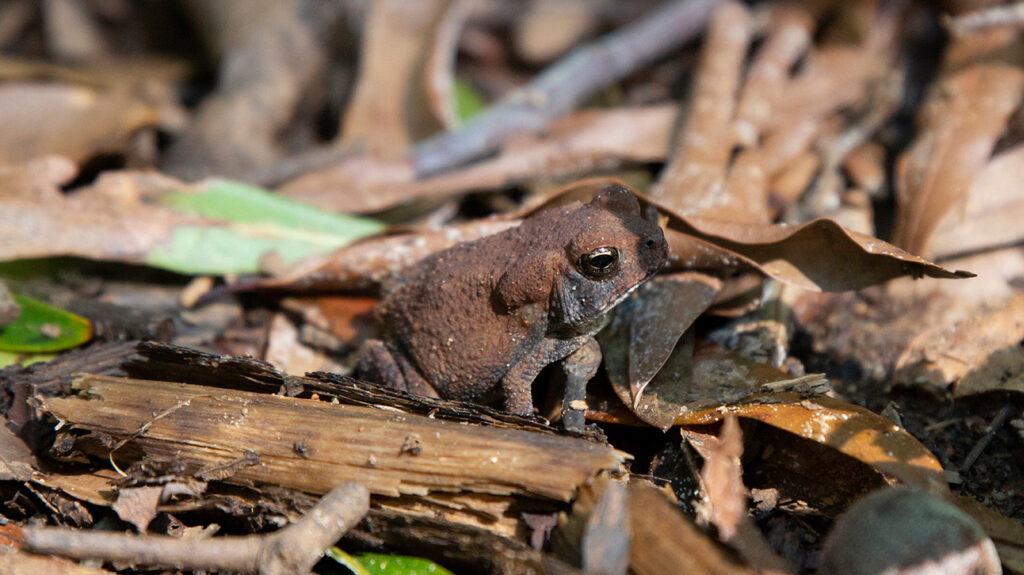
Tad began life in water. His mother laid long strings of eggs in a pond, ditch, flooded low place, creek edge, or another quiet freshwater spot. The eggs looked like tiny black dots inside clear jelly.
When the eggs hatched, Tad was not a toad yet. He was a tadpole. He had a tail, no legs, and gills for breathing underwater. Tadpoles eat algae and tiny plant material while they grow.
Tootie watches Chirp near the creek grass. “Was Tad little like that?”
Grandma says, “He was little, but first he looked more like a tiny swimming comma.”
Yoshi watches the creek ripple. “Then he grew legs?”
“Exactly,” Grandma says. “Back legs first, then front legs.”
As Tad changed, his tail slowly disappeared. His lungs developed, his body shape changed, and he became ready to leave the water. By the time he was a young toad, he looked much more like the bumpy little animal Tootie sees in the flower bed.
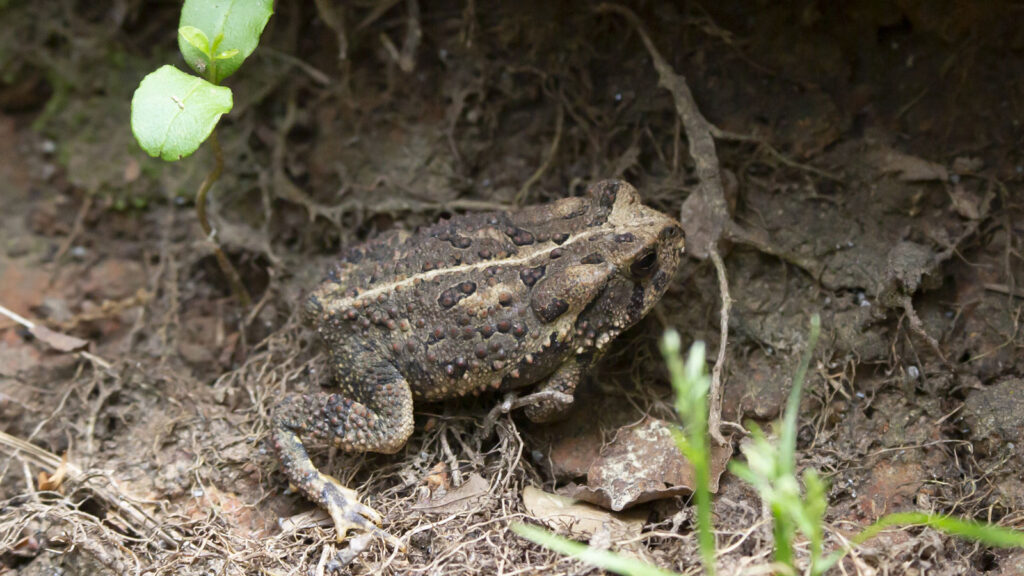
Tad eats moving things. He eats ants, beetles, crickets, spiders, caterpillars, worms, slugs, flies, and other small animals he can catch. He does not chew leaves like Loni or drink nectar like Bea. Tad waits, watches, and then snaps his sticky tongue forward when food gets close enough.
One evening, Tad sits beside a damp flower bed while a beetle crawls past.
Tad does not move.
The beetle gets closer.
Snap.
The beetle disappears.
Tootie jumps. “He had a tongue!”
Grandma nods. “A quick one.”
Yoshi watches Tad settle back down. “He waits for dinner to walk over.”
“That is Tad’s style,” Grandma says. “Stillness first. Fast tongue second.”
Tad helps Grandma’s garden by eating many small animals that feed on plants. He is not trying to be a gardener, but he is useful in one.
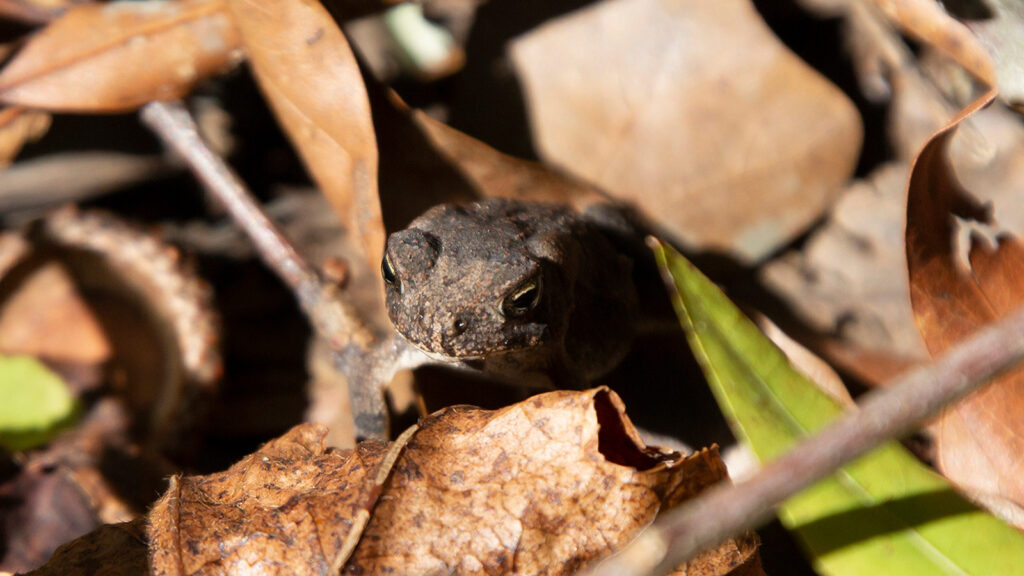
Tad’s skin looks dry and bumpy, but they are still sensitive. Toads absorb water and air through their skin, so they need clean, damp places and do not do well with soap, lotion, bug spray, fertilizer, oil, or other chemicals on their bodies.
Tootie leans toward Tad. “Can I pet the bumps?”
Grandma says, “No.”
“Tootie,” Yoshi adds.
“I only asked.”
Grandma points toward Tad. “Toads are not toys. Their skin needs to stay clean and damp.”
Tad’s bumps are called warts by some people, but touching a toad will not give people warts. Tad may have glands behind his eyes that release a bitter, irritating substance if he feels threatened. That is one more reason dogs should not mouth or lick toads.
Tad’s eyes sit high on his head. They help him watch for movement while he stays almost completely still in leaves or soil. His eyes can spot bugs, spiders, and danger without Tad having to move very much.
Tootie watches Tad sit beside a pot.
“He is not doing anything,” he says.
Grandma says, “He is watching.”
A tiny fly lands nearby.
Tad’s eyes shift.
Yoshi watches closely. “He saw them.”
“Probably before we did,” Grandma says.
Tad’s eyes help him notice movement better than still shapes. A leaf may not interest him. A leaf that wiggles because a beetle is crawling underneath they may become very interesting.
During breeding season, male American Toads call from the edge of water. Their call can sound like a long musical trill. A whole group of calling toads can make a wetland or creek edge sound busy and loud after dark.
One spring evening, Tootie hears a long trilling sound near the creek.
“Is that a tiny machine?” he asks.
Yoshi listens. “No. Toad.”
Grandma smiles. “That is a male American Toad calling.”
Tad sits near the water while the sound carries through the damp grass.
Tootie looks surprised. “He can make that much noise?”
Grandma says, “Small animals can make big sounds when they need to be heard.”
The call helps male toads attract females and find one another around breeding water. Outside breeding season, Tad is usually much quieter.
Tad and Chirp both begin life as tadpoles, but they grow into very different adults. Chirp is a cricket frog who stays close to water and wet grass. Tad is an American Toad who spends much more time in gardens, leaf litter, shrubs, and damp land areas.
One rainy afternoon, Chirp sits near the creek grass while Tad waits beside the flower bed.
Tootie looks from one to the other. “They are both brown and little.”
Grandma says, “But look at their bodies.”
Chirp has long hind legs for strong jumps and a smoother frog shape.
Tad has shorter legs, bumpy skin, and a heavier-looking body.
Yoshi watches Tad take a few steady hops. “Tad walks more.”
“That is right,” Grandma says. “Frogs and toads are related, but they use the yard differently.”
Tad sees the backyard from ground level. He notices Dot on a stem, Loni on a leaf, Carol searching beneath the shrubs, and Bob moving slowly through the leaf litter.
One evening, Dot catches an aphid near Tad’s flower bed.
Tad catches a fly.
Tootie watches both of them. “They are both bug hunters.”
Grandma says, “Yes, but Dot hunts tiny soft insects on plants. Tad hunts moving insects on the ground.”
Yoshi watches Tad settle beneath a leaf. “He has a good spot.”
“He does,” Grandma says. “Tad likes a place with shade, damp soil, and enough bugs to keep him interested.”
When Tootie stays on the porch instead of bouncing through the flower bed, Tad may remain visible longer. Grandma says that is not because Tad has become tame. They are because the yard feels safer.
Grandma does not let Tootie lick, mouth, paw, or chase Tad. Toads can release irritating chemicals when frightened, and dogs can get sick if they put a toad in their mouth.
She also does not pick Tad up just to show him around. Tad knows where his shade, food, and damp ground are. Moving him can leave him exposed or confused.
Tootie watches Tad settle under a leaf.
“Can I just sniff him?”
Grandma says, “No.”
“Tootie,” Yoshi adds.
“I know.”
Grandma points to the flower bed. “Tad is here to eat bugs, not meet dogs.”
Tad needs clean water nearby for breeding, damp cover on land, insects to eat, and a yard with fewer chemicals. Leaving leaf litter, low plants, mulch, and a few shaded corners can help him find places to rest.
Grandma avoids broad insect sprays around flower beds and creek edges. A yard with no insects is not useful to a toad, and chemicals can hurt amphibians through their sensitive skin.
She also checks before moving pots, logs, boards, or thick leaves. Tad may be resting underneath.
Grandma says, “Tad needs shade, damp ground, bugs, and people who know not to spray every living thing out of the yard.”
Yoshi watches Tad vanish under the shrubs. “That is sensible.”
Tad the American Toad
These are some helpful words for talking about this wild neighbor.
Tad the American Toad
Good wildlife watchers ask good questions. Here are a few to get you started.
Tad is a toad. Toads and frogs are related, but Tad has bumpy skin and spends more time on land.
He eats insects, spiders, worms, slugs, beetles, crickets, and other small animals.
Yes. Tad began in water with a tail and gills before changing into a land-living toad.
No. Toads do not give people warts.
No. Toads can release irritating chemicals when scared, so dogs should stay away.
He waits for insects and other small animals to move close enough to catch.
No. Tad should be watched without touching because his skin is sensitive.
Do not handle toads unless there is a real safety reason. Their skin is sensitive, and they may release irritating chemicals when frightened. Keep dogs from licking or mouthing toads. If a pet mouths a toad or shows drooling, foaming, pawing at the mouth, vomiting, or acting sick, rinse the mouth gently with water flowing outward and contact a veterinarian right away. Think About They: Why is “look with your eyes” such an important rule for amphibians?
🏅 Explorer Progress