Why is Thrash called a thrasher?
Grandma says:
He flips and tosses leaves aside while looking for food.
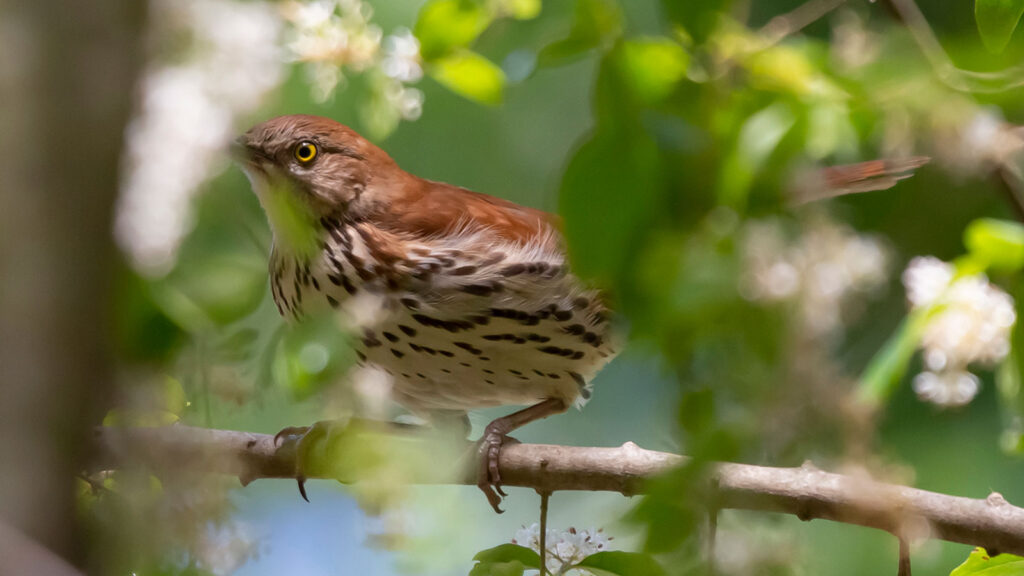
Thrash is a cinnamon-brown bird with yellow eyes, a long curved bill, and a leaf-flipping habit that makes Grandma’s shrub bed sound like somebody is shuffling a deck of cards.
Thrash is a Brown Thrasher. Thrash has a warm brown back, a long tail, pale underparts marked with dark streaks, two pale wing bars, and bright yellow eyes. Most of the time, Thrash stays close to shrubs, brushy corners, leaf piles, and low branches instead of sitting out in the open like Inouar.
One morning, Tootie hears a loud scratch-scratch-flip under the front-yard shrubs. He creeps closer and sees leaves flying sideways one at a time.
“Scott is digging again,” Tootie whispers.
Yoshi’s pointy ears twitch. “Too quiet.”
Grandma looks toward the shrub bed. “That is Thrash. He is a Brown Thrasher.”
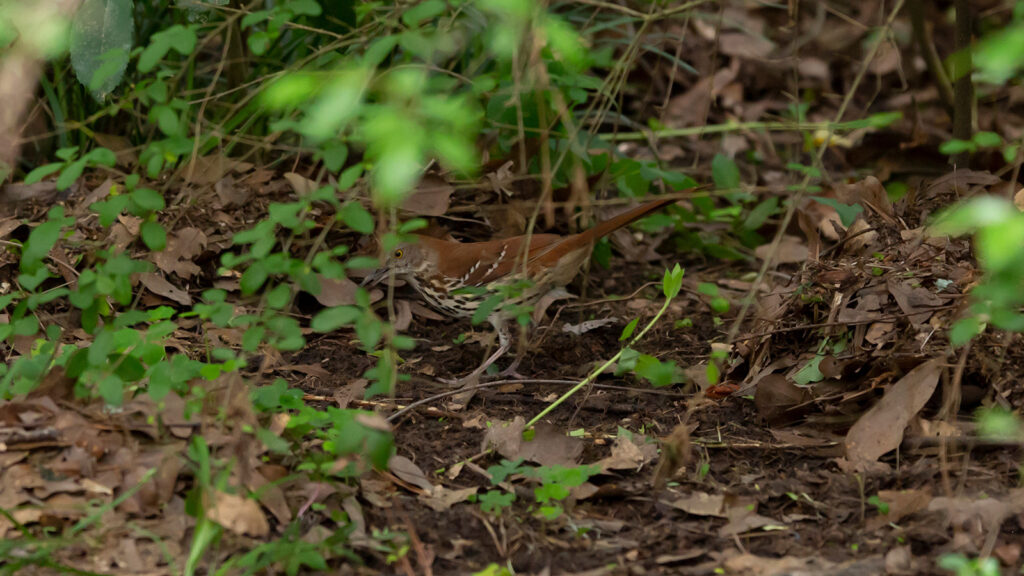
Thrash flips another leaf with his bill, pauses, then pulls a beetle from the soil.
Tootie stares. “He is throwing the ground around.”
Grandma smiles. “He is looking under they.”
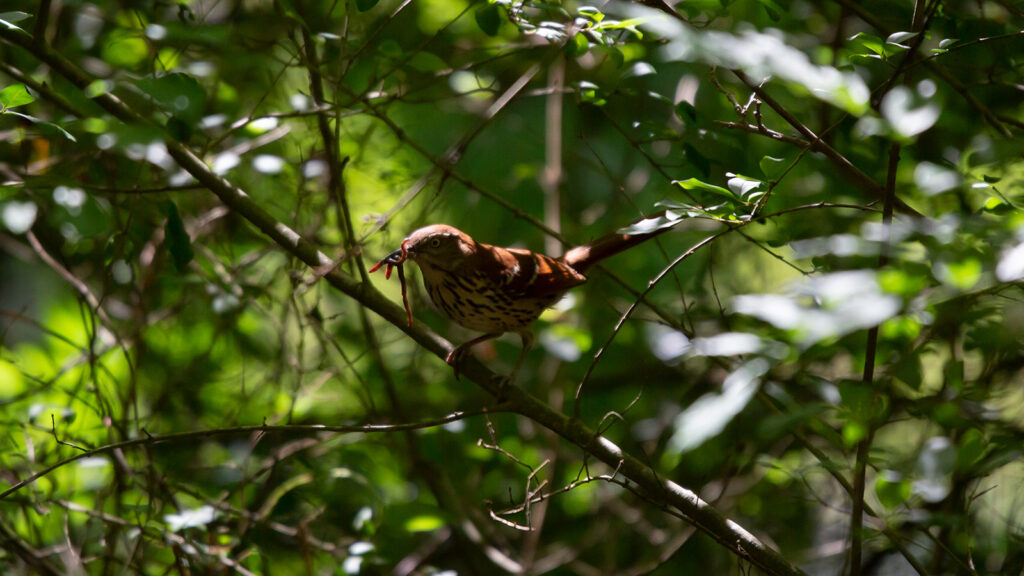
Thrash likes thick shrubs, brushy edges, low trees, tangled vines, creekside cover, and places where fallen leaves gather. He does not need a wide-open lawn like Lucki. He needs places where he can disappear quickly if something bigger comes too close.
Grandma’s front-yard shrubs give Thrash a good place to search for food. The leaves underneath hold insects, spiders, beetles, caterpillars, and other tiny animals. The shrubs above give him cover from larger birds, dogs, and people walking through the yard.
Tootie watches Thrash vanish under a low branch. “Where did he go?”
Grandma says, “Into the part of the yard most people forget to look at.”
Yoshi watches the leaf litter shift. “He is still there.”
“That is the trick,” Grandma says. “Thrash likes a place with enough cover to stay hidden and enough loose leaves to search.”
Thrash may also use creekside thickets, hedges, brush piles, and low branches. He does not need a perfect-looking yard. He needs one with a few busy, leafy places.
Thrash began life in a cup-shaped nest built low in a shrub or small tree. His parents used twigs, leaves, grass, and softer plant pieces to make the nest. Sometimes Brown Thrashers nest only a few feet above the ground, where thick branches help hide the babies.
When Thrash hatched, he had little fluff and no strong wings. Both parents brought food to the nest and helped keep the young birds safe. The babies grew quickly because nests close to the ground can be risky places. A young thrasher needs feathers, strength, and good hiding skills in a hurry.
Tootie looks at the low shrubs. “Was baby Thrash close to the ground?”
Grandma nods. “Probably. That is why his parents had to watch carefully.”
As Thrash grew, he learned how to move through dense branches, land on low perches, flip leaves, and find food under the ground cover. Young birds leave the nest before they know everything, so the parents keep feeding them and showing them where to search.
Yoshi watches Thrash move between branches. “He learned the shrubs.”
Grandma says, “He did. A thrasher needs to know every leaf pile in the neighborhood.”
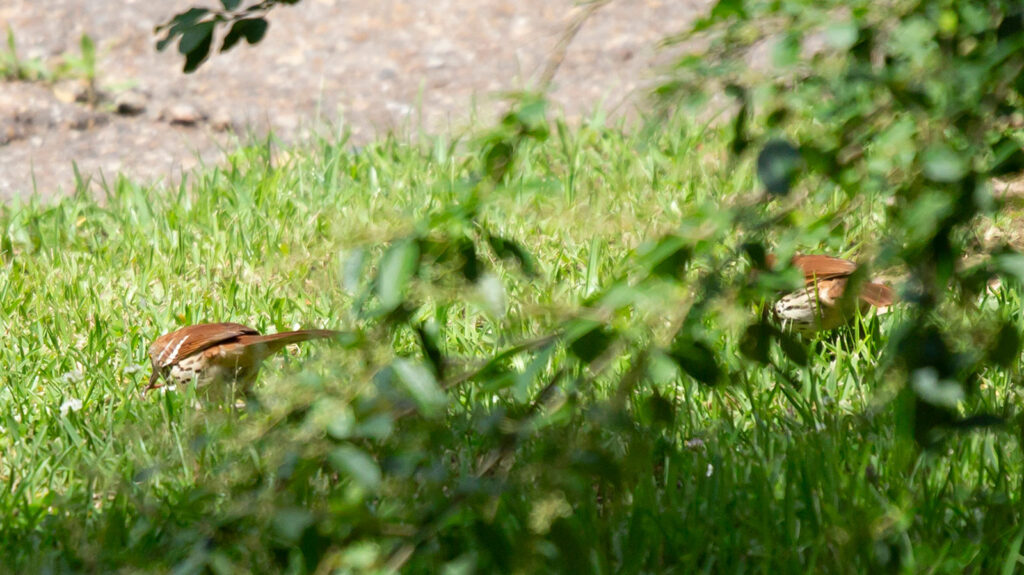
Thrash eats insects, spiders, beetles, caterpillars, crickets, grasshoppers, grubs, worms, berries, fruit, seeds, and sometimes nuts. In warm weather, he spends a lot of time hunting animal food under leaves and in soil. When berries and fruit are available, he uses those too.
Thrash does not eat one thing all year. He takes what the season gives him. A warm spring day may bring beetles and caterpillars under the leaves. A cooler day may send him to berry shrubs or fallen fruit.
One afternoon, Tootie watches Thrash flip a leaf, grab a cricket, then hop toward a berry bush.
“He eats bugs and berries,” Tootie says.
Grandma nods. “That makes him flexible.”
Yoshi watches Thrash disappear beneath a shrub. “He does not wait for food to come to him.”
“No,” Grandma says. “Thrash searches for they.”
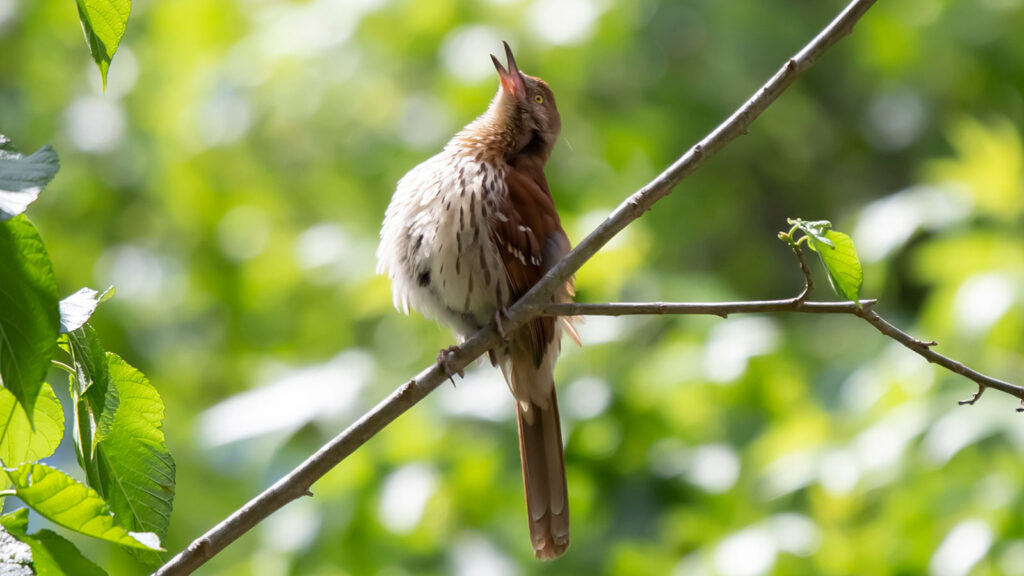
Thrash got his name because he makes a thrashing motion through leaf litter. He uses his long curved bill to sweep dry leaves aside, toss them backward, and expose what is underneath.
He is not fighting the leaves. He is checking them.
Tootie watches Thrash flip three leaves in a row. “He is cleaning.”
Grandma says, “Not exactly. He is looking for lunch.”
Thrash turns over one leaf, then another, then a third. Under one of them is a small beetle. Thrash snaps they up before the beetle can crawl away.
Yoshi watches the leaves move. “He makes the bugs move.”
“Sometimes,” Grandma says. “And movement makes them easier to see.”
Thrash may use both feet and bill while searching, but the quick leaf toss is one of the easiest ways to recognize him.
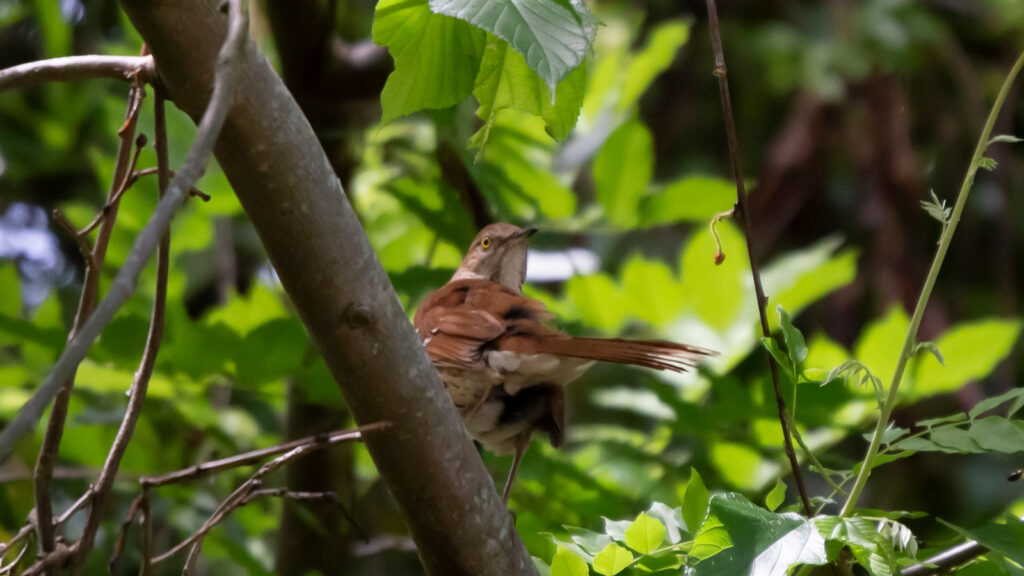
Thrash can sing a long, complicated song from a hidden branch or high perch. He often repeats short phrases, then changes to another phrase. His song can include whistles, trills, and bits that sound different from one moment to the next.
Tootie hears Thrash singing from the top of a shrub.
“Is that Inouar?” he asks.
Grandma listens. “No. Inouar copies lots of sounds. Thrash has a big song of his own.”
Inouar lands on the fence nearby and listens.
Thrash sings one phrase twice.
Inouar tilts her head.
“He repeats things,” Yoshi says.
Grandma nods. “Brown Thrashers often repeat a phrase before moving to the next part of the song.”
Inouar gives a tiny whistle.
Thrash sings again.
Grandma says, “That is not a contest.”
Inouar and Thrash both pretend they did not hear her.
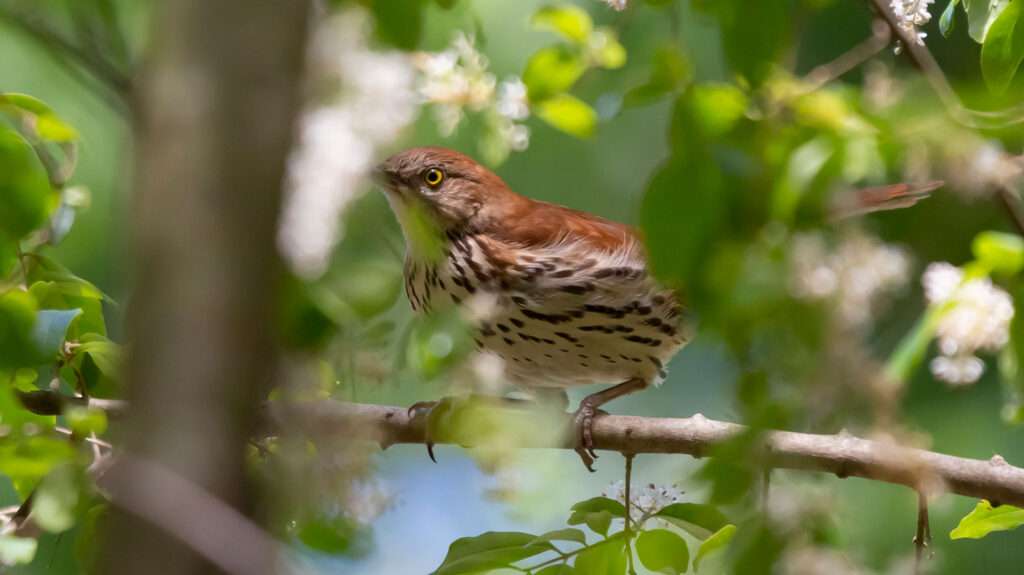
Thrash and Inouar are both songbirds, but they use the yard differently. Inouar likes open fence posts, rooftops, and branch tips where everyone can hear her. Thrash prefers shrubs, leaf piles, low branches, and quiet places where he can search without being watched.
Inouar may copy other sounds. Thrash sings his own long collection of phrases, often repeating each one before changing.
One day, Inouar lands on the fence above Thrash.
“You are in the leaves again,” she says.
Thrash flips a leaf aside and finds a beetle.
“You are on the fence again,” Thrash says.
Inouar considers this.
“That is where the sound carries.”
Thrash tosses another leaf. “This is where the food is.”
Grandma hears them from the porch. “Both of you have a point.”
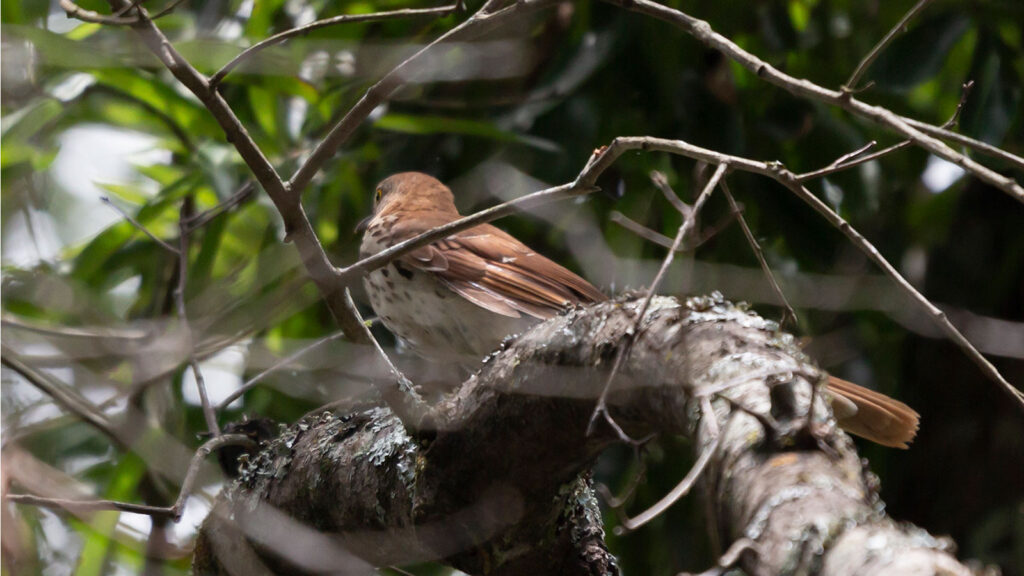
Thrash sees the backyard from low down. He sees Earl’s tunnels in damp soil, Loni chewing leaves in the flower bed, Dot hunting aphids on a stem, and Tootie’s paws moving far too quickly through the grass.
One morning, Scott runs under the shrubs looking for a pecan. Thrash is already there, flipping leaves for beetles.
Scott scratches at the ground.
Thrash flips a leaf.
Scott finds nothing.
Thrash finds a cricket.
Scott looks annoyed. “You have better luck than I do.”
Thrash keeps looking.
Grandma says, “Thrash is not looking for pecans.”
Yoshi watches Thrash disappear into the leaves. “That helps.”
Tootie sits quietly near the porch, and Thrash comes closer to the flower bed than usual. Grandma says that is what happens when the yard stays calm.
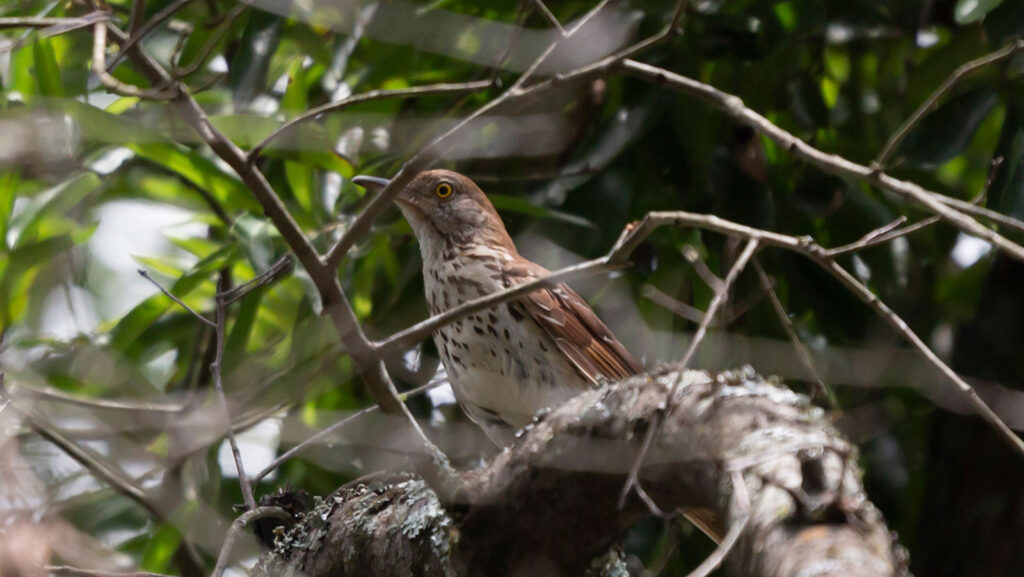
Grandma likes Thrash because he eats insects and brings sound to the shrub beds. She does not rake away every leaf as soon as they falls, especially in the quiet edges of the yard. Leaf litter can hold food for birds, spiders, beetles, frogs, and other small animals.
She also does not let Tootie nose into the shrubs where Thrash is hiding. A bird under cover is not asking to be chased.
Tootie watches Thrash slip under a branch. “Can I see him better?”
Grandma says, “You can wait.”
“Tootie,” Yoshi adds.
“I know.”
Grandma smiles. “Thrash will come out when he thinks the coast is clear.”
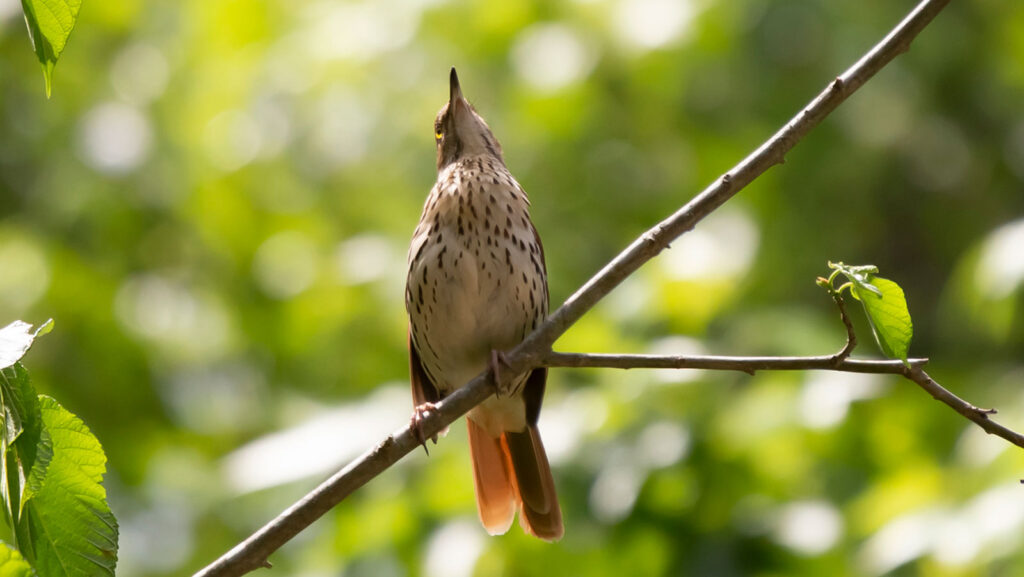
Thrash needs shrubs, low trees, leaf litter, berries, insects, and places to hide. A yard does not have to be messy everywhere, but leaving a few quiet corners with leaves, branches, and thick shrubs can help birds like Thrash find food and cover.
Avoid broad insect sprays because Thrash depends on insects for much of his food. Keep cats indoors when possible, especially during nesting season, and check shrubs before trimming them in spring or summer.
Grandma says, “Thrash does not need a fancy feeder. He needs a good shrub, a little leaf litter, and enough bugs to make all that flipping worthwhile.”
Yoshi watches leaves rustle under the shrubs. “He has the flipping handled.”
Thrash the Brown Thrasher
These are some helpful words for talking about this wild neighbor.
Thrash the Brown Thrasher
Good wildlife watchers ask good questions. Here are a few to get you started.
He flips and tosses leaves aside while looking for food.
Thrash eats insects, spiders, worms, berries, fruit, seeds, and sometimes nuts.
Shrubs give him cover and leaf litter where he can search for food.
Yes. Brown Thrashers have long, complicated songs with many repeated phrases.
No. Inouar is a Northern Mockingbird. Thrash is a Brown Thrasher.
No. Thrash is a wild bird and should be watched from a distance.
Leaves can hold insects and give birds and other animals food and shelter.
Watch ground-feeding birds from a distance. Before raking or trimming shrubs, check for active nests and wildlife using the area. Avoid broad insect sprays, keep cats indoors when possible, and leave a few quiet leaf-litter corners for birds and beneficial insects. Think About They: Why is a careful yard cleanup better than clearing every leaf and branch at once?