Why does Wilson peck on trees?
Grandma says:
Wilson pecks to look for insects, make a nesting cavity, and drum to talk to other woodpeckers.
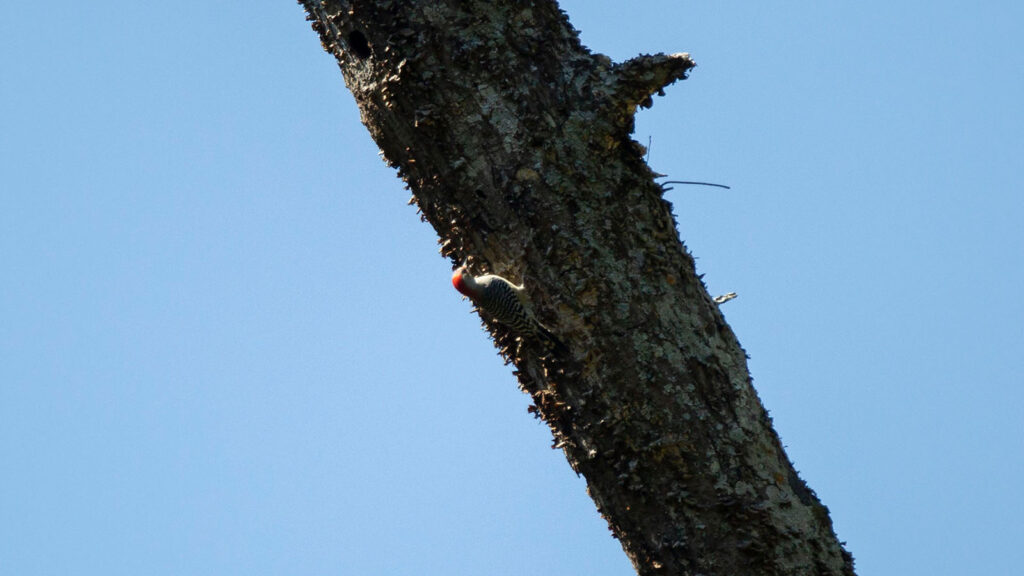
Wilson does not rush through the morning. He starts at the bottom of the tree and checks every inch on the way up.
Wiives near Grandma’s backyard, where he spends a lot of time on the two pecan trees. Biv the Blue Jay likes those trees because of the pecans. Kevin the Crow likes them because Biv likes the pecans. Wilson likes them because the bark holds insects, the branches hold food, and the whole tree makes a fine place to work.
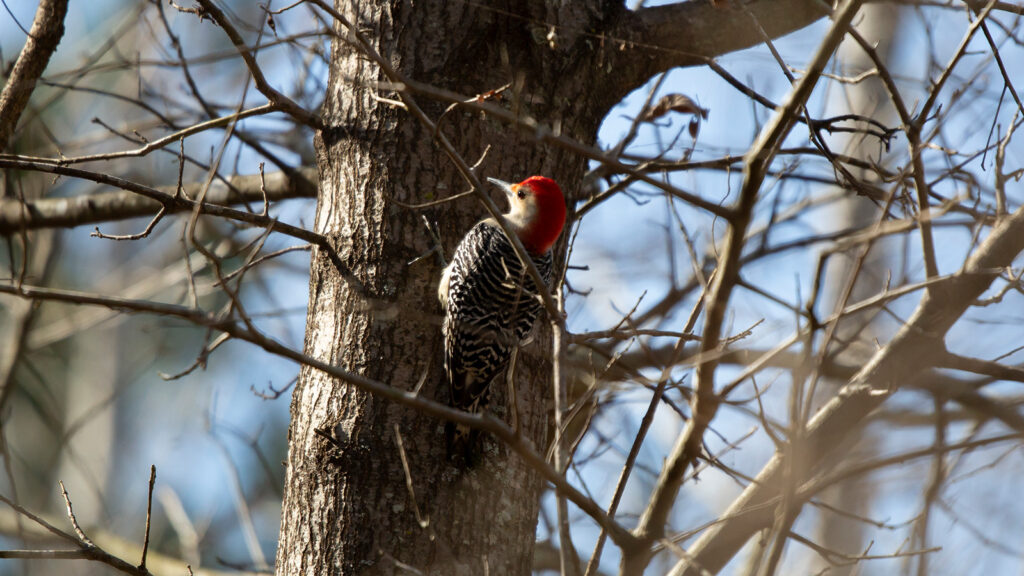
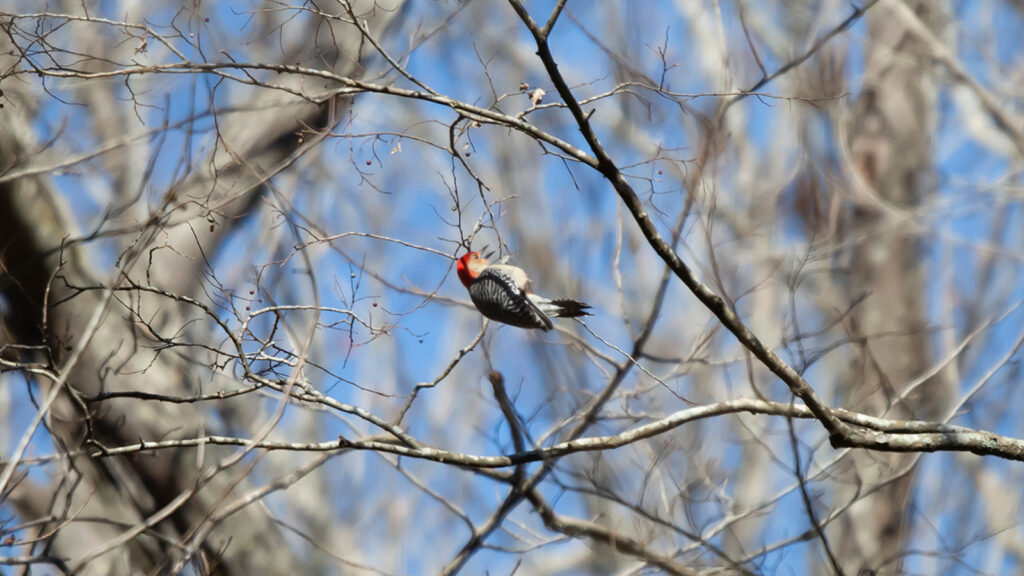
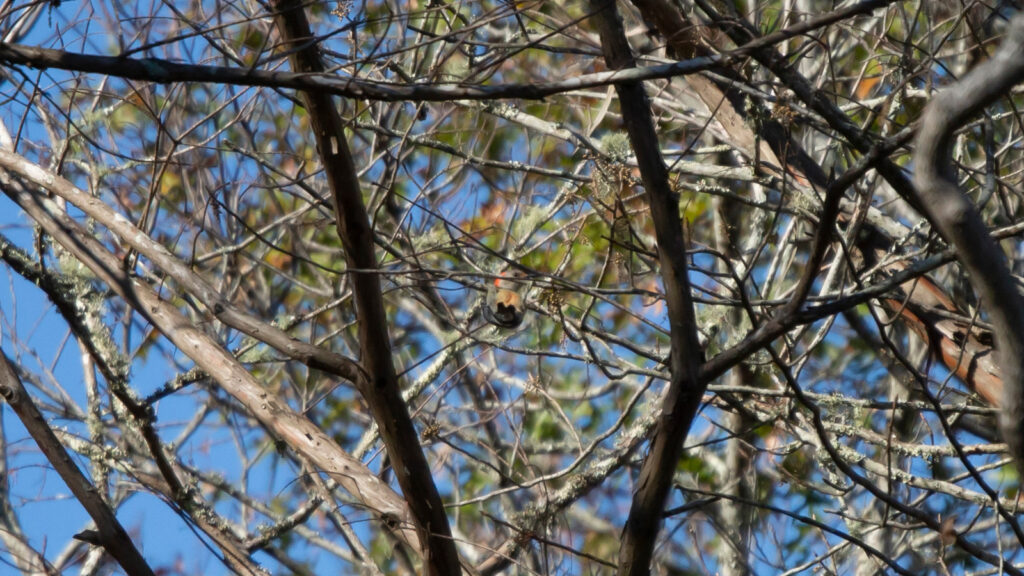
Wilson has a bright red cap that runs from his forehead down the back of his neck. His back has black-and-white stripes that look a little like a zebra wearing a tiny bird jacket. His belly looks pale from far away, though they have a small wash of reddish color that can be hard to see.
Tootie sees Wilson climb straight up the pecan tree one morning.
“How does he not fall?” Tootie asks.
Yoshi’s pointy ears twitch as she watches Wilson brace himself against the bark.
Grandma says, “He has strong feet, sharp claws, and tail feathers that help hold him up. Wilson came dressed for tree work.”
Wilson keeps climbing.
He does not stop to explain.
He has bugs to find.
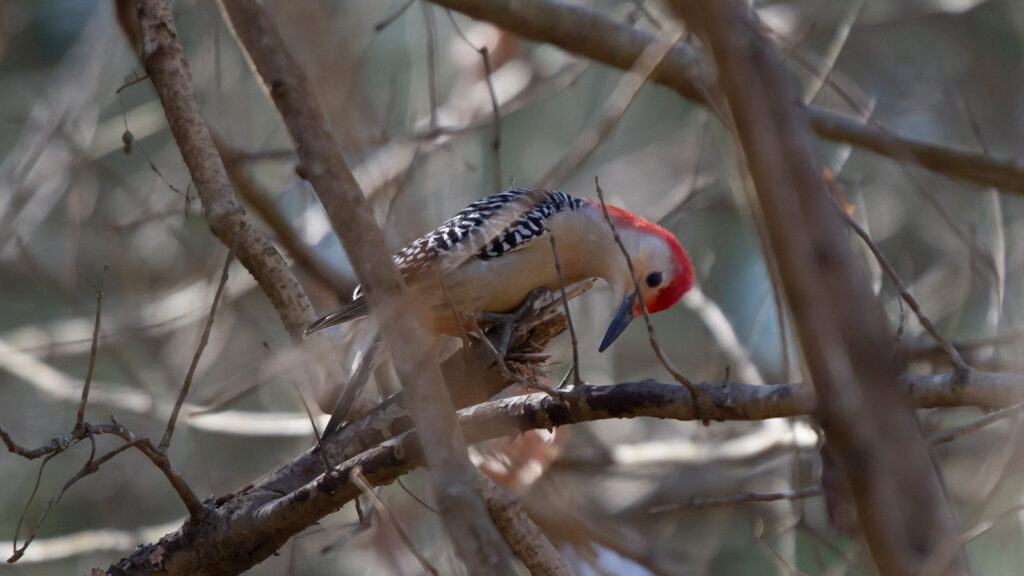
Wilson does not build a nest from twigs like Biv and Kevin do. He and his mate make their home inside a hole in a tree.
That hole is called a cavity.
Woodpeckers can dig a cavity into dead wood, an old limb, a stump, or another soft spot in a tree. Wilson uses his bill to chip away at the wood. He works carefully, making a round opening just big enough for a woodpecker family.
Grandma says Wilson is the only bird in the yard who builds his bedroom with a hammer attached to his face.
Tootie looks at Wilson’s long, pointed bill.
“Can he fix the porch step?” he asks.
Grandma says, “No. He is a woodpecker, not a carpenter. Though he would probably have an opinion about the porch step.”
Yoshi gives one small tail wag.
Wilson’s cavity has no curtains, no rug, and no welcome mat. They do have walls that help protect eggs and baby birds from rain, wind, and many hungry animals. A tree cavity can help keep a nest safer than an open nest on a branch.
Snakes, raccoons, squirrels, and other animals may still try to reach a nest. Hawks and owls may catch adult birds. That is why Wilson pays attention to what happens around his tree.
He looks.
He listens.
He pecks.
Then he looks again.
Before Wilson became the woodpecker everybody sees on the pecan tree, he was a baby bird in a cavity nest.
His mother laid white eggs inside the hole. Wilson’s parents took turns keeping the eggs warm. His father helped too. When the babies hatched, both parents brought food to the nest.
Baby woodpeckers do not begin life ready to climb trees.
At first, they are small, hungry, and covered with only a little soft fluff. They stay inside the cavity and call when they want food. Their parents bring insects and other small things that growing babies can eat.
Wilson probably made plenty of noise.
Grandma says all babies have one job at first.
“Eat, sleep, and make sure everybody knows they are still hungry.”
Tootie thinks that sounds familiar.
Yoshi looks at Tootie.
Tootie looks away.
As young woodpeckers grow, their feathers come in. Their wings get stronger. Their feet learn how to grip bark. When they leave the nest, they still need help from their parents for a while.
Young Wilson had to learn where insects hide.
He had to learn how to move up a tree without slipping.
He had to learn which trees had good food.
He had to learn when a hawk in the sky meant they were time to get still.
Now Wilson is grown. During nesting season, he and his mate work together. They care for eggs, feed the babies, and help the young birds learn what they need to know.
That is a lot of work.
Wilson stays busy.
Biv and Kevin can argue over pecans all afternoon. Wilson has a family to feed.
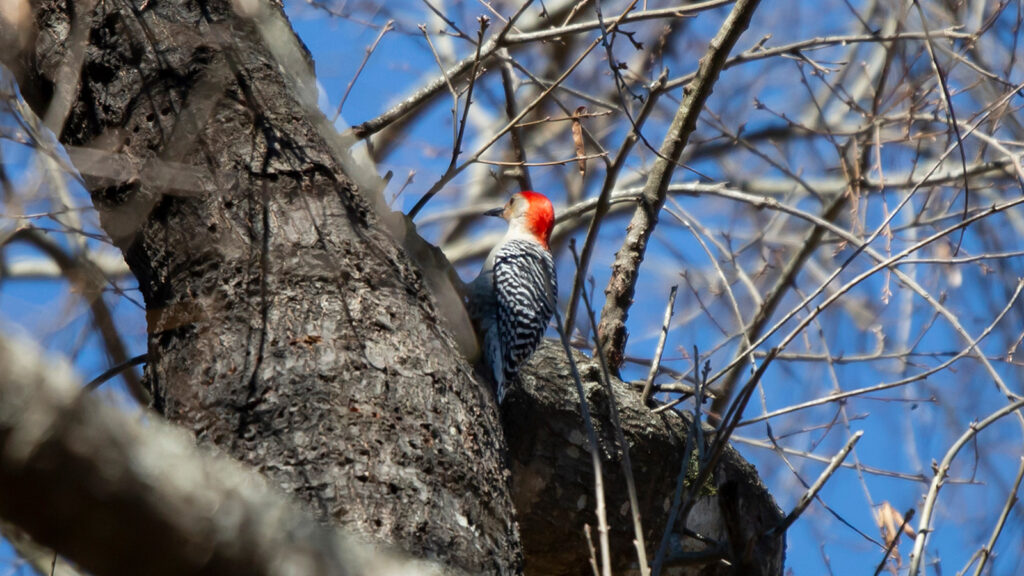
Wilson likes insects.
He searches tree bark for beetles, ants, spiders, caterpillars, and other small animals. He climbs along the trunk, pauses, and pokes his bill into cracks in the bark.
Sometimes he finds food right away.
Sometimes he taps and listens.
Sometimes he checks another branch.
Woodpeckers have long tongues that help them reach food in narrow spaces. Wilson can probe into little cracks where his bill cannot reach all the way. His tongue helps him pull out insects hiding under bark.
Tootie watches Wilson stop beside a crack in the pecan tree.
“Did he find something?” Tootie asks.
Grandma nods. “Wilson thinks the tree has a snack drawer.”
Yoshi watches Wilson pull an insect from the bark.
“He was right,” she says.
Wilson eats more than insects. He also eats nuts, seeds, berries, fruit, and sometimes sap. In fall, pecans and acorns can be important food. Wilson may tuck food into bark cracks or other hiding places so he can come back for they later.
Biv calls that “saving snacks.”
Kevin calls they “information worth remembering.”
Wilson calls they nothing.
He is busy eating.
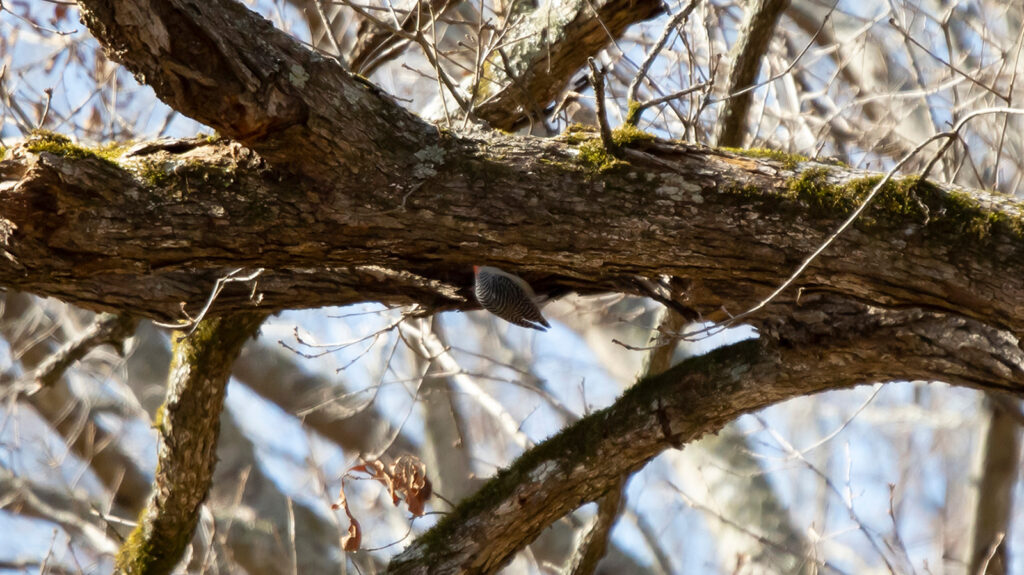
Wilson has several body parts that help him climb and peck.
His feet have sharp claws that grip the bark.
His tail feathers are stiff. He presses them against the tree trunk like a little brace. That helps him stay upright while he moves around.
His bill is strong and pointed.
His skull helps protect his brain when he pecks.
Grandma says Wilson has the best safety equipment in the yard and still refuses to wear a hard hat.
Tootie looks worried.
“Should he have one?”
Grandma smiles. “Nope. Wilson came built for this job.”
Wilson does not peck every tree because he is hungry. Sometimes he drums.
Drumming means hitting his bill against a hard place to make a loud sound. He may drum on a branch, a dead limb, a fence post, or even something metal.
Woodpeckers drum to tell other birds where they are and to claim a space of their own.
The sound can carry a long way.
Tootie hears a fast rat-a-tat-tat on the pecan tree one morning.
He runs to the window.
“Wilson found something!”
Grandma listens.
“He found a microphone,” she says.
Yoshi’s ears twitch toward the sound.
Wilson drums again.
Grandma nods. “And he has a lot to say.”
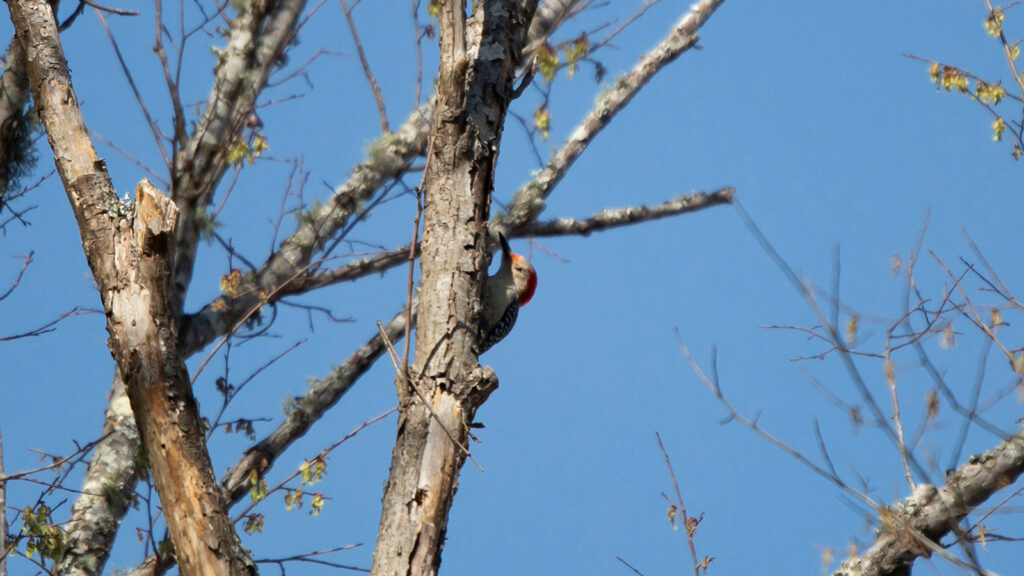
The pecan trees give Wilson many things.
They have bark to search.
They have branches to climb.
They have insects in cracks and loose places.
They have pecans when the season is right.
They have a good view of the yard.
Wilson starts near the bottom of the trunk and works his way up. He does not climb like a squirrel. He moves in short hops, holding tight with his claws and stiff tail feathers.
Biv often lands higher in the tree.
Kevin often lands nearby and watches.
Wilson keeps moving.
Tootie thinks Wilson should join their conversations.
“He would have good ideas,” Tootie says.
Grandma watches Biv complain about Kevin.
Then Kevin complains about Biv.
Then Wilson finds another insect and keeps going.
“Wilson has the best idea,” Grandma says. “He stays out of they.”
Yoshi agrees.
She has seen enough pecan arguments to know that nobody wins except the tree.
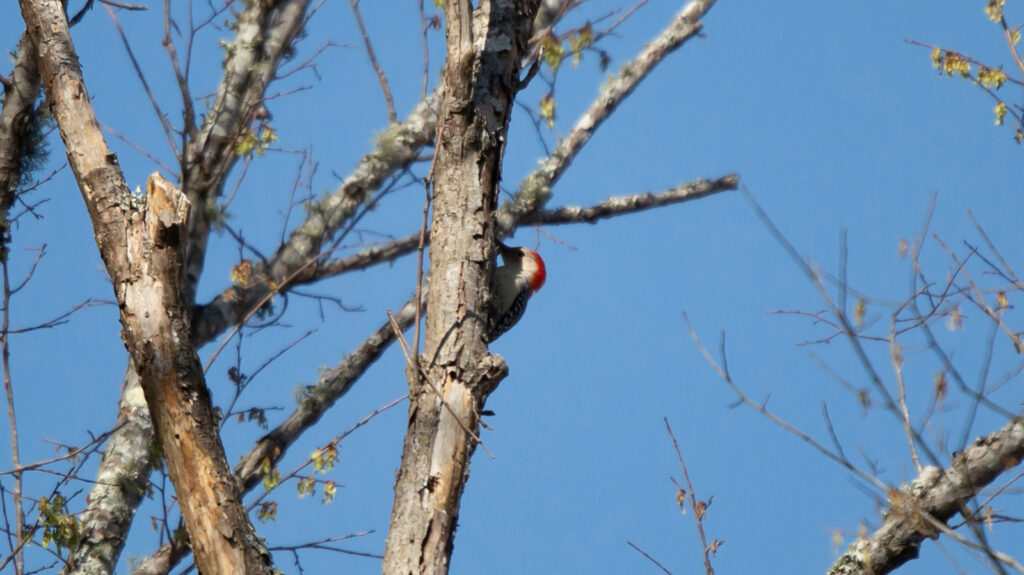
People expect a Red-bellied Woodpecker to have a bright red belly.
Then they look at Wilson and see a red head.
That can feel confusing.
Wilson’s red belly is there, but they are usually small and hard to see. His bright red head is much easier to notice.
Grandma says whoever named the bird may have been looking from the wrong angle.
Tootie tilts his head.
“Should we call him Red-Headed Woodpecker?”
Grandma says, “Nope. There is already another bird with that name, and they have a whole red head. Bird names have enough trouble without everybody swapping them around.”
A Red-headed Woodpecker looks different from Wilson. They have a bright red head, a white belly, and big white patches on their wings.
Wilson has black-and-white stripes across his back and a red cap.
Yoshi looks up at the pecan tree.
“So Wilson has the striped jacket.”
Grandma nods. “Exactly.”
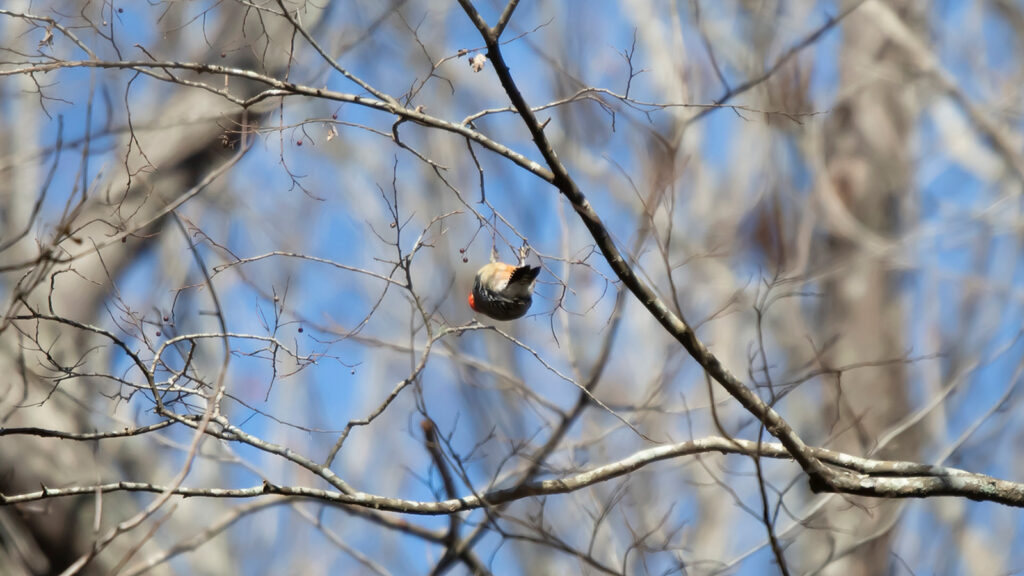
Wilson knows the other animals in Grandma’s yard.
Helen the Honeybee visits the flowers and works from bloom to bloom.
Biv the Blue Jay checks the pecan trees for food and loudly explains his findings.
Kevin the Crow watches everything from a branch or the grass below.
Tootie wants to meet all of them.
Yoshi prefers to watch from the porch.
Wilson does not mind the dogs as long as they stay away from his tree and do not bark directly under him. He has work to do, and barking puppies make they hard to hear tiny sounds under the bark.
One morning, Tootie sees Wilson fly to a lower branch.
Tootie takes one step toward the tree.
Yoshi gives him a look.
Tootie stops.
Grandma says, “Good choice. Wilson needs his space.”
Tootie sits beside Yoshi.
Wilson taps the bark once, then twice.
A beetle crawls from a crack.
Wilson catches they.
Tootie’s eyes get wide.
“That was fast.”
Grandma says, “Wilson has been practicing longer than you have.”
Wilson needs trees.
Old trees, dead limbs, and snags can help woodpeckers find insects and make nest holes. A snag is a standing dead tree. They may look old or rough, but they can provide food and shelter for birds, bugs, and other animals.
A grown-up should decide whether an old tree or dead limb is safe to leave standing. Some can fall and hurt people or damage homes. Safe old trees can be valuable wildlife homes.
Wilson may also visit a bird feeder.
He likes suet, which is a high-energy food made for birds. He may also eat peanuts, sunflower seeds, and fruit.
Keep bird feeders clean.
Put them where cats cannot hide nearby.
Give birds space when they come to eat.
Do not knock on tree trunks to make a woodpecker answer.
Wilson already has enough noise in his day.
Grandma says, “You would not enjoy somebody banging on your house every time you sat down for breakfast.”
Tootie thinks about that.
Then he looks at Yoshi.
Yoshi thinks Tootie has finally understood something important.
Draw a maze with these parts:
Start: Wilson at the bottom of the pecan tree
Safe stops: a bark crack, a berry bush, Grandma’s clean bird feeder, and Yoshi resting on the porch
Wrong turns: Tootie barking under the tree, Kevin’s snack pile, a cat hiding near a shrub, and a broken branch on the ground
Finish: A beetle hiding in a crack near the top of the tree
Add Biv on a branch with a pecan. Add Grandma on the porch with binoculars.
Maze caption:
Wilson heard a beetle moving under the bark. Help him climb the tree and reach his snack without getting distracted by the backyard commotion.
Wilson the Red-Bellied Woodpecker
These are some helpful words for talking about this wild neighbor.
Wilson the Red-Bellied Woodpecker
Good wildlife watchers ask good questions. Here are a few to get you started.
Wilson pecks to look for insects, make a nesting cavity, and drum to talk to other woodpeckers.
His claws grip the bark, and his stiff tail feathers help brace him against the trunk.
He has a small reddish patch on his belly, but they can be hard to see. His red head is easier to notice.
No. He eats insects, nuts, seeds, berries, fruit, and other foods.
He may use cavities for nesting, resting, or shelter. Woodpeckers can make more than one hole over time.
Wilson usually looks for insects in bark and dead wood. His pecking can also help people notice when a tree has insects or damaged spots.
He may be drumming. Woodpeckers drum to communicate and tell other birds about their space.
Watch woodpeckers from a distance. Do not touch nest holes, eggs, baby birds, or wildlife homes in trees. Keep children and dogs away from dead limbs, unstable trees, and areas where a tree crew is working. A qualified adult should decide whether a dead tree or branch is safe to leave for wildlife.