Can Bessie really fly?
Grandma says:
Bessie cannot fly like a bird or bat. She glides from a higher branch to a lower branch using the skin between her legs.
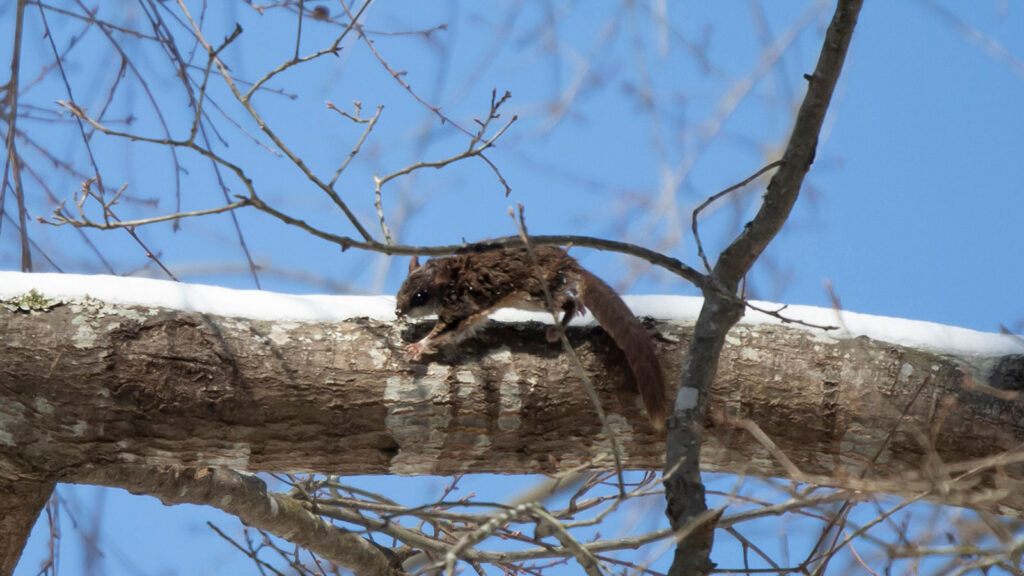
Bessie waits until the yard gets dark. Then she steps out of her tree hole, checks the branches, and glides through the night like she has somewhere important to be.
Bessie is a Southern Flying Squirrel. She is smaller than Scott the Gray Squirrel and Phoenix the Fox Squirrel. Her fur looks soft and gray-brown, her belly is pale, and her eyes are very large and dark. Those big eyes help Bessie see in dim light, because Bessie is awake when most of the backyard crew has gone to bed.
Tootie first notices Bessie on a quiet evening after Grandma has turned off the porch light. He stands at the back door with his nose against the glass, watching the pecan trees turn into dark shapes against the sky. Something small moves along a branch.
Tootie’s droopy ears lift.
“Yoshi,” he whispers. “There is a squirrel in the tree.”
Yoshi opens one eye from her bed. “Scott?”
“No. A little one.”
“Phoenix?”
“No. This one has wings.”
Yoshi’s pointy ears twitch. She looks toward the window, then looks back at Tootie.
“Tootie,” she says, “you have had a long day.”
Grandma hears them from the chair. “What has he found now?”
“Tootie says there is a flying squirrel outside,” Yoshi says.
Grandma walks to the window and looks up at the pecan tree. A small shape moves to the end of a branch. Then they jumps, spreads out flat, and glides to another tree.
Yoshi stands up so fast that her curled tail bumps the chair.
“Oh,” she says.
Tootie bounces in a tiny circle. “I told you!”
Grandma smiles. “That is Bessie. She is real, she is small, and she is not going to stop for introductions.”
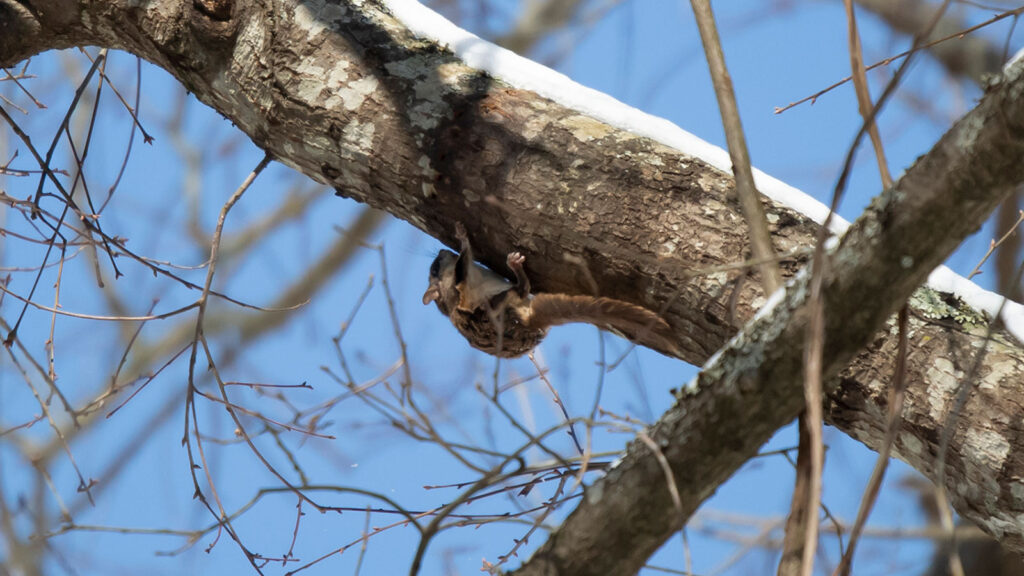
Bessie is called a flying squirrel, but she does not have wings like a bird.
She has a soft flap of skin between her front legs and back legs. That flap is called a patagium. When Bessie jumps from a high branch, she stretches her legs out wide. The patagium catches the air and helps her glide down toward another tree.
Her tail helps her steer.
Tootie thinks this sounds like flying.
Grandma says, “They looks like flying, but Bessie cannot flap herself back up into the sky. She glides from a higher place to a lower one.”
Yoshi watches Bessie cross from the pecan tree to another branch.
“So she needs to climb before she can glide?”
Grandma nods. “Exactly. First she climbs. Then she sails.”
Bessie lands against a tree trunk, catches the bark with her claws, and disappears around the other side.
Tootie stares at the tree.
“Can I do that?”
Grandma says, “No.”
Tootie looks disappointed.
Yoshi says, “You cannot even glide off the couch without knocking over something.”
Tootie thinks that has only happened a few times.
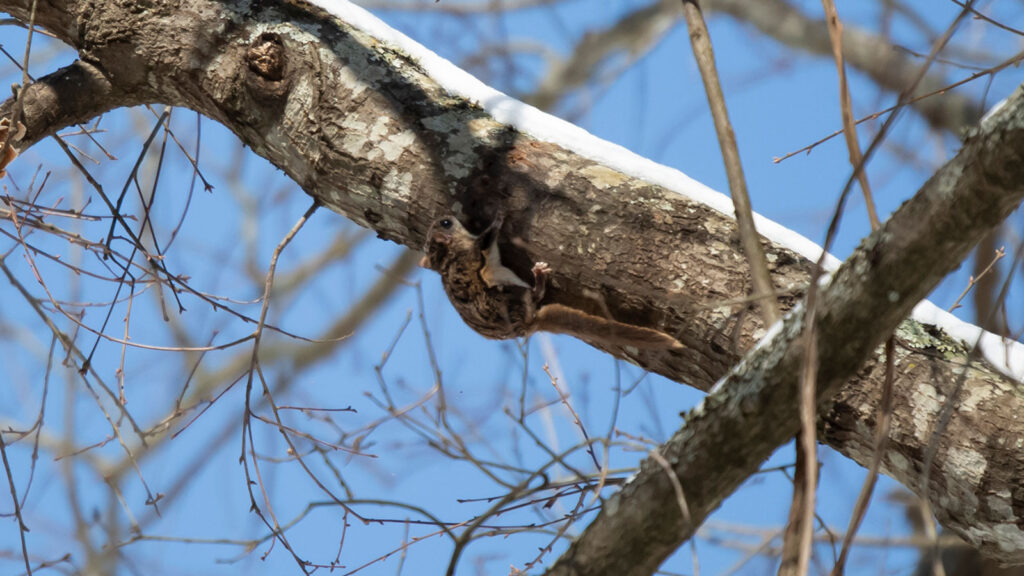
Bessie sleeps during the day in a tree cavity, which is a hollow space inside a tree. She may use an old woodpecker hole, a natural opening in a tree, or a leafy nest tucked into branches. Tree cavities give flying squirrels shelter from rain, wind, and daytime animals that might bother them.
Grandma does not know exactly which tree Bessie uses, and that suits Bessie just fine.
A flying squirrel does not need everybody knowing her address.
Bessie may use more than one nest during the year. In warm weather, a leafy nest can work well. In colder weather, a tree cavity gives better protection. Flying squirrels may even share nest spaces with other flying squirrels when the weather gets cold.
Tootie thinks that sounds cozy.
Yoshi thinks they sounds crowded.
Grandma says, “That depends on whether your roommate steals the blankets.”
Bessie would probably not answer that question. She is busy sleeping when the sun is up.
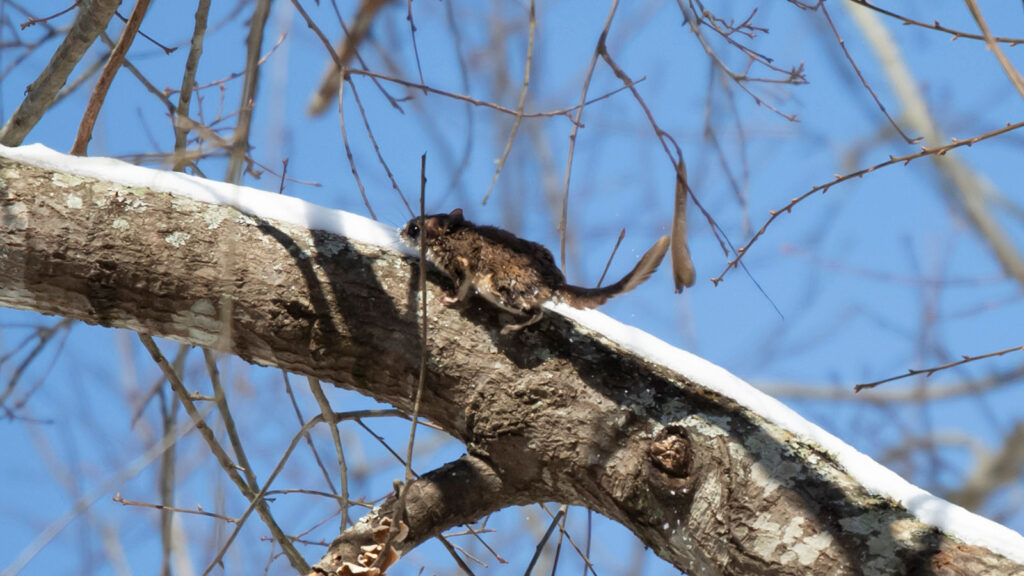
Bessie began life as a tiny baby squirrel in a nest with her mother and littermates. Littermates are brothers and sisters born around the same time. Baby flying squirrels need their mother because they cannot glide, climb, or find food when they are very small.
Their mother keeps them warm and feeds them milk while they grow. As the babies get bigger, they grow fur, open their eyes, and begin exploring the nest. Then they practice climbing on bark and branches close to home.
Bessie had to learn where her feet go before she learned where her body goes in the air.
She practiced climbing.
She practiced balancing.
She practiced holding tight to bark.
Then she learned to glide.
Grandma says, “Nobody wakes up one morning and says, ‘I think I will jump out of a tree.’ They practice first.”
Tootie looks toward the porch steps.
“Can I practice jumping?”
Grandma gives him a look.
“On the ground,” she says. “With all four paws.”
Yoshi’s ears twitch.
“That seems safer.”
As Bessie grew, she learned which trees had nuts, berries, and good hiding places. She learned to move quietly at night and stay away from owls, snakes, and other animals that may hunt small squirrels.
Now Bessie knows the yard after dark in a way Tootie and Yoshi do not. She knows which branches bend, which trees connect, and where the best food waits when the porch has gone quiet.
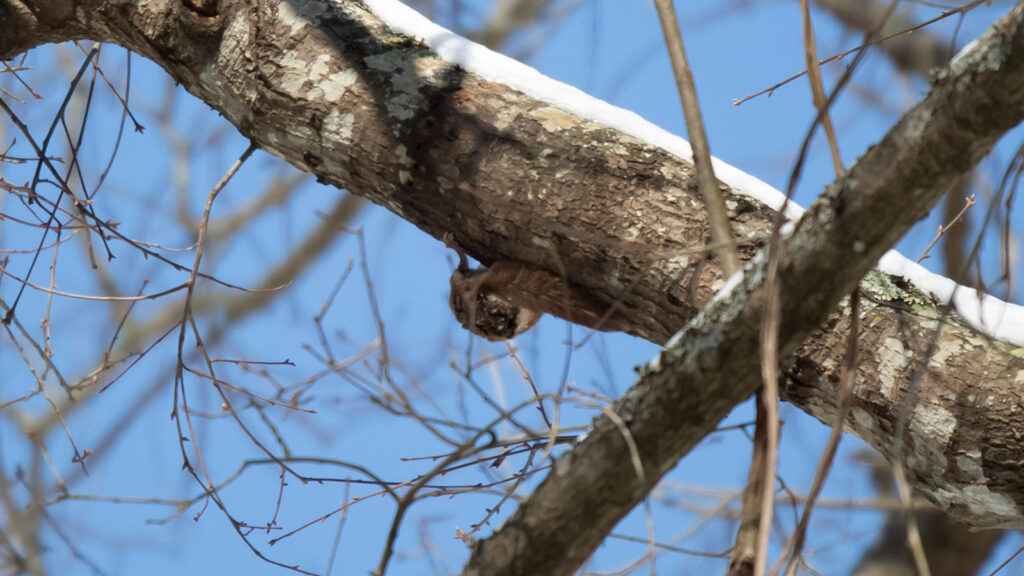
Bessie eats many kinds of food. She likes nuts, seeds, berries, fungi, buds, and insects. Pecans and acorns can make a good meal when she finds them, and she may carry food back toward her nest to eat later.
Scott and Phoenix both know about hiding nuts.
Bessie does too.
The difference is that Bessie handles some of her squirrel business while everyone else is asleep.
One night, Bessie finds a small piece of pecan under the tree. She holds they in her front paws and nibbles they carefully.
Scott is asleep in his leafy drey.
Phoenix is tucked into a tree cavity.
Biv is quiet in the branches.
Kevin has stopped cawing for once.
Wilson is resting.
Tootie is asleep inside.
Bessie gets the whole pecan tree to herself.
Grandma says that is one reason she likes nighttime.
Tootie thinks that sounds unfair.
“Scott and Phoenix get all day,” he says.
Grandma says, “Bessie gets the night shift. Everybody has a turn.”
Bessie also looks for insects and other tiny foods in bark, leaves, and around the trees. Her diet changes with the season. When nuts and berries are easy to find, she uses them. When insects are active, she may look for those too.
Yoshi thinks Bessie has a sensible food plan.
Tootie thinks every food plan should include treats.
The pecan trees do more than give Grandma shade and give Scott, Phoenix, Biv, and Kevin something to argue about. They also give Bessie a nighttime path through the yard.
Bessie climbs high into a tree, looks toward another trunk, and chooses a place to glide. She does not jump without checking first. A flying squirrel needs a good landing spot. She looks for a branch, a trunk, or another place where her claws can catch.
One evening, Grandma sees Bessie on a branch near the top of the tree.
“Tootie,” she whispers. “Come look, but stay quiet.”
Tootie presses close to Grandma’s leg. Yoshi sits beside them with her ears twitching toward every tiny sound.
Bessie moves to the end of the branch.
She stretches her legs wide.
Then she glides.
Tootie’s eyes get huge.
“She flew!”
Grandma smiles. “She glided.”
“She flew a little,” Tootie says.
Yoshi watches Bessie land on the next tree.
“I will allow they,” she says.
Bessie climbs around the trunk and disappears into the dark.
Tootie keeps watching the branches.
“Do you think she will come back?”
Grandma says, “Maybe. But Bessie does not keep a schedule for dogs.”
Scott and Phoenix are awake during the day. Bessie is awake at night. That means they do not spend every hour together, even though they all use the trees and eat some of the same foods.
Scott thinks Bessie is hard to keep track of.
Phoenix thinks Bessie has excellent timing because she avoids daytime pecan arguments.
Bessie thinks both of them make too much noise.
One evening, Scott is still out late, looking for a pecan he buried earlier. Bessie comes down the trunk above him.
Scott looks up.
“Oh,” he says. “I did not know you were awake yet.”
Bessie looks at the ground. “I did not know you were still awake.”
“I lost a pecan.”
Bessie pauses.
“Again?”
Scott flicks his tail.
“They were a very good pecan.”
Bessie glides to another tree.
“Then I hope they have a happy life,” she says.
Grandma tells Tootie that forgotten nuts may grow into new trees.
Tootie thinks Scott and Phoenix plant trees by accident.
Yoshi says Bessie probably does too.
Grandma nods. “That is how the yard keeps surprising people.”
Tootie sees Bessie glide one evening and asks if she is a bat.
Grandma says no.
Bats have wings made from skin stretched over long fingers. Bessie has fur, paws, a fluffy tail, and the patagium between her legs. She is a squirrel, which means she is a mammal with fur.
Bats can flap and truly fly.
Bessie cannot flap.
She glides.
Yoshi thinks that sounds easy to remember.
“Bat: wings. Bessie: blanket.”
Grandma nods. “That is not the science word, but they are not wrong.”
Tootie says, “Bessie has a flying blanket.”
Grandma says, “Now you have they.”
Bessie sees the backyard crew in a different way because she is awake when most of them are resting.
She sees Tootie and Yoshi asleep by the door.
She sees Grandma turn out the lights.
She sees moths gather around porch lights.
She hears frogs calling after rain.
She may hear an owl in the distance.
She watches branches move in the night wind.
Biv and Kevin may not see her glide overhead. Scott and Phoenix may be tucked away in their nests. Grenda may be hidden in the front shrubs.
But Bessie knows the yard still has life in they.
One night, Yoshi wakes up and sees Bessie through the window.
Tootie is asleep beside her.
Yoshi’s pointy ears twitch.
“She is real,” Yoshi whispers.
Grandma, half awake in her chair, says, “Yep.”
Yoshi watches Bessie glide to the pecan tree.
“I thought Tootie made her up.”
Grandma smiles. “Tootie makes up plenty. This time, he got lucky.”
Bessie needs trees, safe nest spaces, and food. Mature trees with cavities can give flying squirrels places to sleep and raise babies. Nut-producing trees, berry shrubs, and plants that support insects can help provide food.
Keep outdoor lights low or turn them off when they are not needed. Bright lights can change what nighttime animals do and make they harder for them to move around naturally.
Keep cats indoors when possible. A small flying squirrel is especially vulnerable when she comes down to the ground or moves near low branches.
Do not try to touch, catch, or feed Bessie. Flying squirrels are wild animals. She needs to choose where she goes, what she eats, and when she comes out.
Grandma says, “Bessie has a whole night job. She does not need us turning her route into a field trip.”
Draw a maze with these parts:
Start: Bessie at the top of a tree cavity
Safe stops: a high branch, a pecan tree trunk, a leafy nest, and Grandma watching quietly from the porch
Wrong turns: a bright porch light, a cat near the fence, Tootie barking at the window, and Kevin’s daytime snack pile
Finish: A pecan branch with a safe landing spot
Add Scott asleep in a leafy drey and Phoenix tucked into a tree hollow.
Maze caption:
Bessie is ready for her nighttime glide. Help her find a quiet path through the trees without waking the whole backyard.
Bessie the Flying Squirrel
These are some helpful words for talking about this wild neighbor.
Bessie the Flying Squirrel
Good wildlife watchers ask good questions. Here are a few to get you started.
Bessie cannot fly like a bird or bat. She glides from a higher branch to a lower branch using the skin between her legs.
Bessie is awake at night. Her large eyes help her see in low light.
She may sleep in a tree cavity, an old woodpecker hole, or a leafy nest in the branches.
She eats nuts, seeds, berries, fungi, buds, and insects.
Usually, she stays hidden during the day and comes out after dark.
No. Bessie is a squirrel with fur, paws, and a fluffy tail. Bats have wings and can flap to fly.
Maybe, but watch quietly from indoors or far away. Do not shine a bright light at her or try to get close.
Children should watch nighttime wildlife from a safe porch, window, or doorway with an adult. Do not let children climb trees, enter dark yards alone, use bright lights on animals, or approach wildlife. Keep pets supervised and indoors when possible after dark.
🏅 Explorer Progress