Why is Bonnie called a bluebird?
Grandma says:
She has blue feathers on her back, wings, and tail.
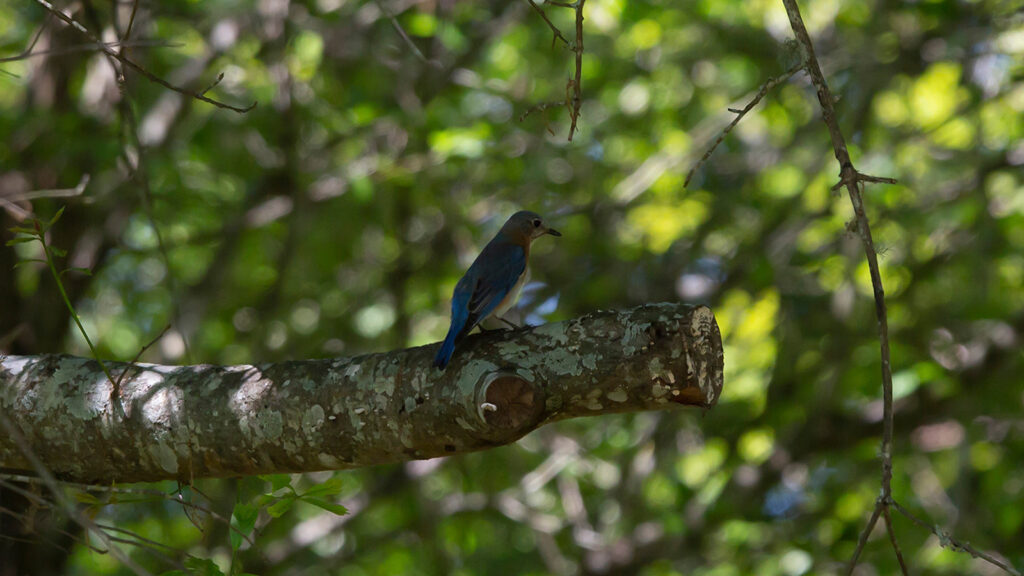
Bonnie is sky-blue, warm rusty-orange, quick across the lawn, and so cheerful-looking that Tootie assumes she must have been painted by somebody who really liked summer mornings.
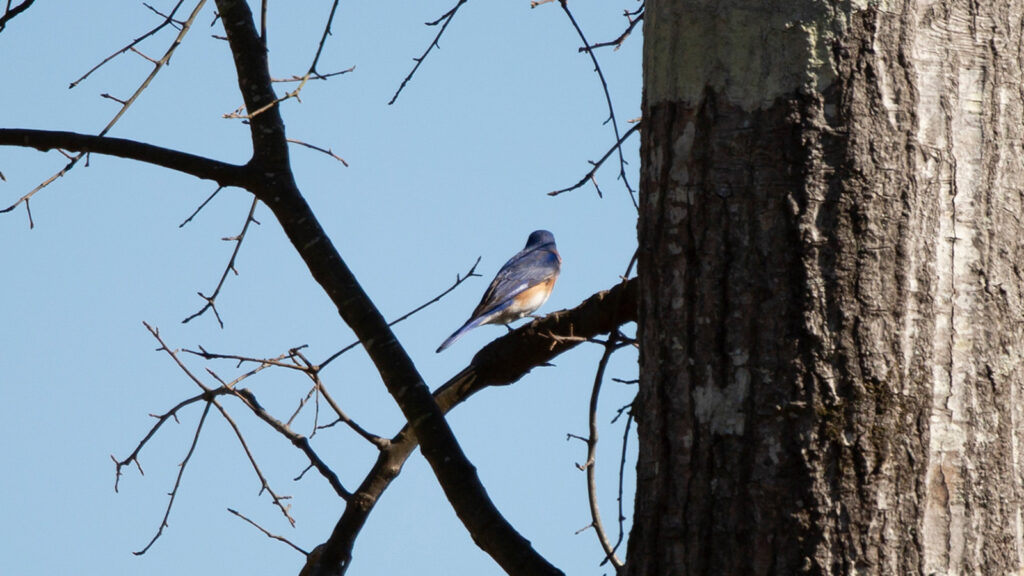
Bonnie is an Eastern Bluebird. She has a bright blue back, wings, and tail, a warm rusty-orange chest, a pale belly, and a small pointed beak. Bonnie is female, so her blue can look softer and grayer than a male bluebird’s brighter blue, but she is still easy to spot against green grass and brown branches.
One sunny morning, Tootie sees a little blue bird sitting on the garden stake.
“She looks like a piece of the sky fell down,” he says.
Yoshi’s pointy ears twitch. “She is watching the grass.”
Grandma looks up from the porch. “That is Bonnie. She is an Eastern Bluebird.”
Bonnie drops to the lawn, grabs something tiny, and flies back to the stake.
Tootie watches her return. “She was hunting.”
Grandma says, “Bluebirds like a good lookout.”
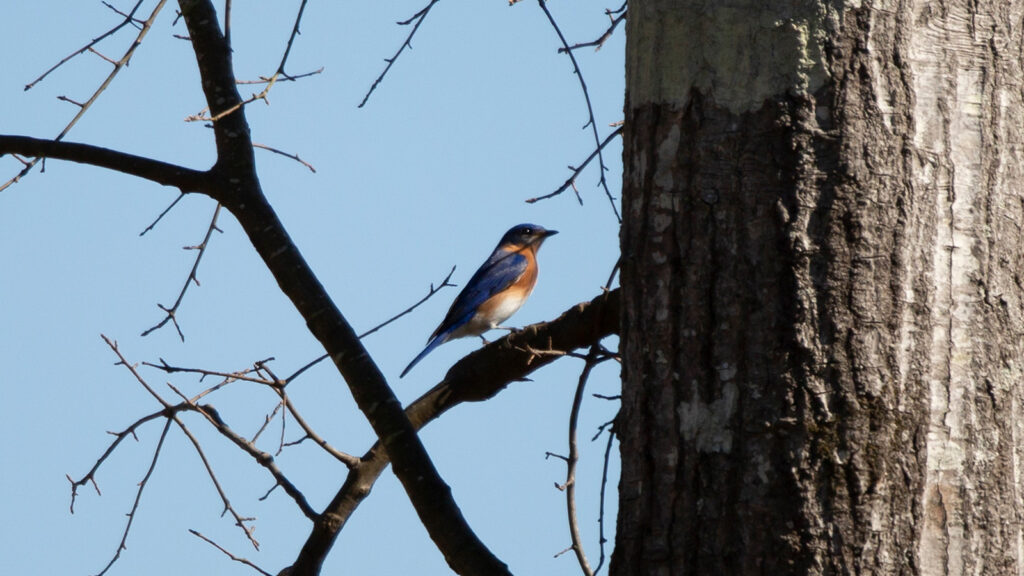
Bonnie likes open yards, low grass, fence lines, scattered trees, garden stakes, creekside clearings, and places where she can sit up high enough to watch the ground. She needs open space to hunt insects, but she also needs cavities or nest boxes where she can raise babies.
Grandma’s yard gives Bonnie both. The lawn has insects in the grass. The pecan trees give her perches. The garden stakes give her a lookout. The chain-link fence and low branches give her places to stop before she drops down after food.
Tootie watches Bonnie fly from the garden stake to the lawn. “Does she live in the grass?”
Grandma says, “She hunts there. Her home needs a little hole in a tree or a good nest box.”
Yoshi watches Bonnie return to the stake. “She likes to see first.”
“That is right,” Grandma says. “Bonnie does not search every leaf like Carol. She watches the ground and waits for movement.”
Eastern Bluebirds use open spaces better than thick shrub birds like Whitney or Thrash. They need enough room to spot insects and enough nearby trees or boxes for nesting.
Bonnie began life in a cavity. Her parents may have used an old woodpecker hole, a natural opening in a tree, or a properly placed nest box. Her mother built a cup-shaped nest inside using grasses, pine needles, and soft plant pieces.
Bonnie hatched from a pale blue egg. At first she had very little down, closed eyes, and no way to leave the nest. Her parents brought insects to the cavity while she grew feathers and strength.
Tootie looks toward the birdhouse near the pecan trees. “Was Bonnie born in a box like that?”
Grandma says, “Maybe. Bluebirds can use nest boxes when the box is in a good safe place.”
Bonnie’s father helped bring food to the babies. After young bluebirds left the nest, the father may keep helping them while the mother begins another nest nearby.
Yoshi watches Bonnie land near the lawn. “So both parents help.”
“Very much,” Grandma says. “Baby birds need a lot of insects.”
As Bonnie grew, she learned to perch, fly down after bugs, land safely, and watch for danger. Bluebirds can raise more than one family during a warm season, which keeps the parents very busy.
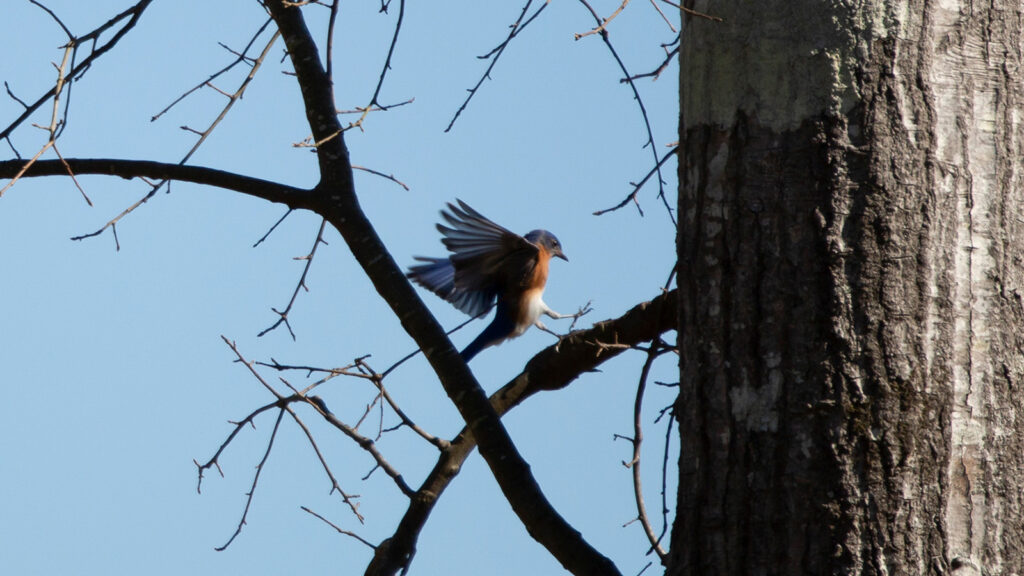
Bonnie eats insects, spiders, caterpillars, beetles, crickets, grasshoppers, and other small animals she can catch on or near the ground. In cooler weather, when bugs are harder to find, she may eat berries and small fruits.
She often hunts from a perch. Bonnie watches the lawn, drops down to grab an insect, then flies back up to a branch, fence, post, or garden stake.
One afternoon, Bonnie sits on the garden stake while a beetle crawls through the grass.
Bonnie watches.
Then she drops down.
Then she comes back with the beetle.
Tootie stares. “She knew exactly where they were.”
Grandma says, “Bluebirds are good at watching from above.”
Yoshi watches Bonnie swallow the beetle. “She likes the lawn better than the shrubs.”
“For hunting,” Grandma says. “The lawn is easier to see through.”
Bonnie may also eat berries from shrubs or small trees, especially when the weather is cold and insects are not moving around as much.
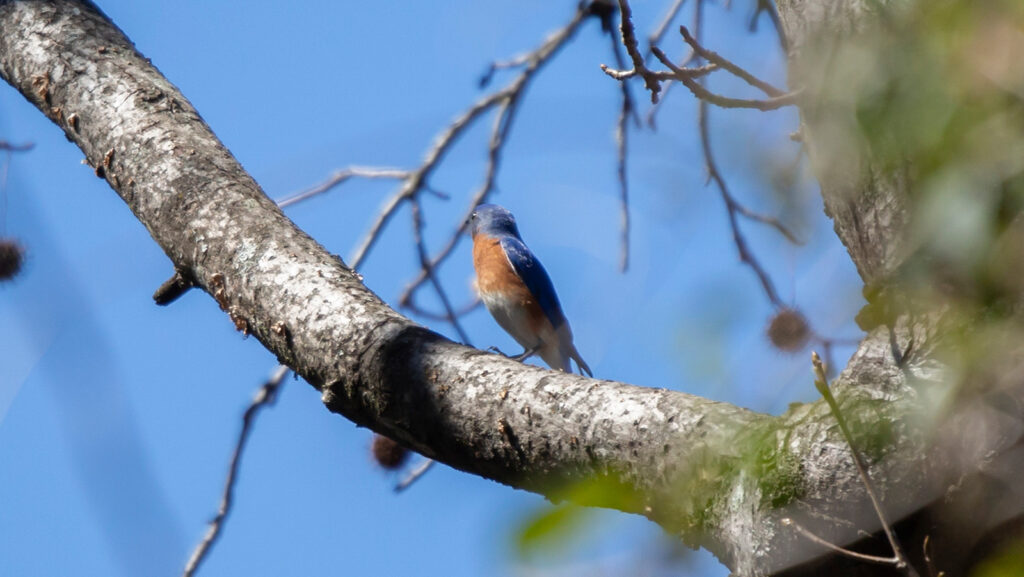
Bonnie’s blue feathers do not use blue paint the way a crayon does. Tiny structures in the feathers bend light in a way that makes them look blue. That is why Bonnie may look brighter in sunlight and softer in shade.
Tootie watches Bonnie turn on a branch.
“She got bluer,” he says.
Grandma smiles. “The light changed.”
Yoshi watches Bonnie’s back shine in the sun. “Her feathers catch them.”
“That is a good way to say they,” Grandma says.
Bonnie’s rusty-orange chest gives people another clue. Her blue back, orange chest, pale belly, and small straight beak make her easy to recognize once someone knows what to look for.
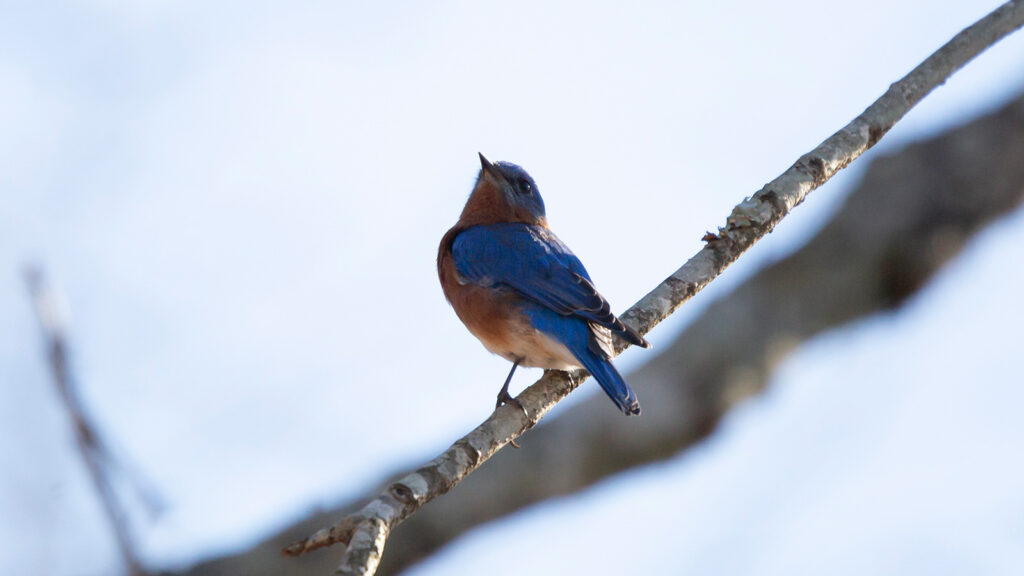
Bonnie may use a nest box if they are the right size and placed in a good spot. A bluebird box should face open habitat instead of being buried deep in shrubs. They should be placed where a grown-up can monitor they safely and where predators have a harder time reaching they.
Grandma checks a bluebird box before nesting season. She makes sure the entrance is the right size, the box is clean, and the pole has protection from animals that might climb up.
Tootie looks at the little box. “Can I peek inside?”
Grandma says, “Not when a bird family is using they.”
“Tootie,” Yoshi adds.
“I know.”
Grandma says, “A nest box is a bedroom and nursery. We do not knock on the walls.”
After young bluebirds fledge, a grown-up may clean out old nest material at the right time so the box can be used again. But nobody should disturb an active nest with eggs or babies inside.
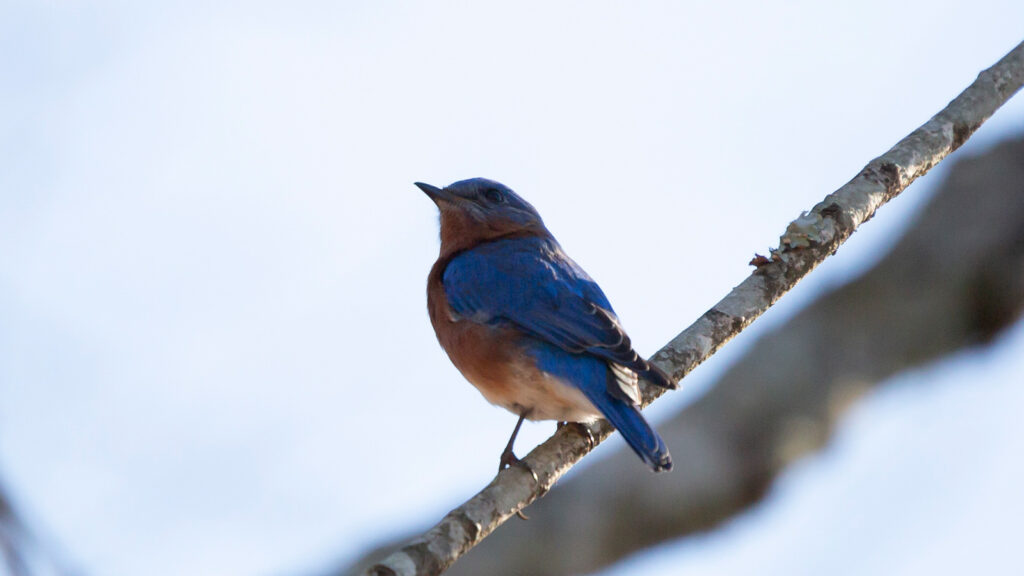
Bonnie and Roy are both colorful birds, but they use the yard differently. Roy is a Northern Cardinal who uses shrubs, seeds, berries, and low branches. Bonnie is an Eastern Bluebird who likes open lawn, perches, insects, and cavities.
One morning, Roy sings from a shrub while Bonnie watches the lawn from the garden stake.
Tootie looks from one to the other. “They are both orange-ish.”
Grandma says, “But Roy is red with a black face. Bonnie is blue with a rusty chest.”
Roy drops down for a seed.
Bonnie drops down for a beetle.
Yoshi watches both birds. “Same yard. Different food.”
“Exactly,” Grandma says. “That helps them share the space.”
Bonnie may visit berry shrubs like Roy, but her favorite warm-weather hunting happens closer to the grass and open ground.
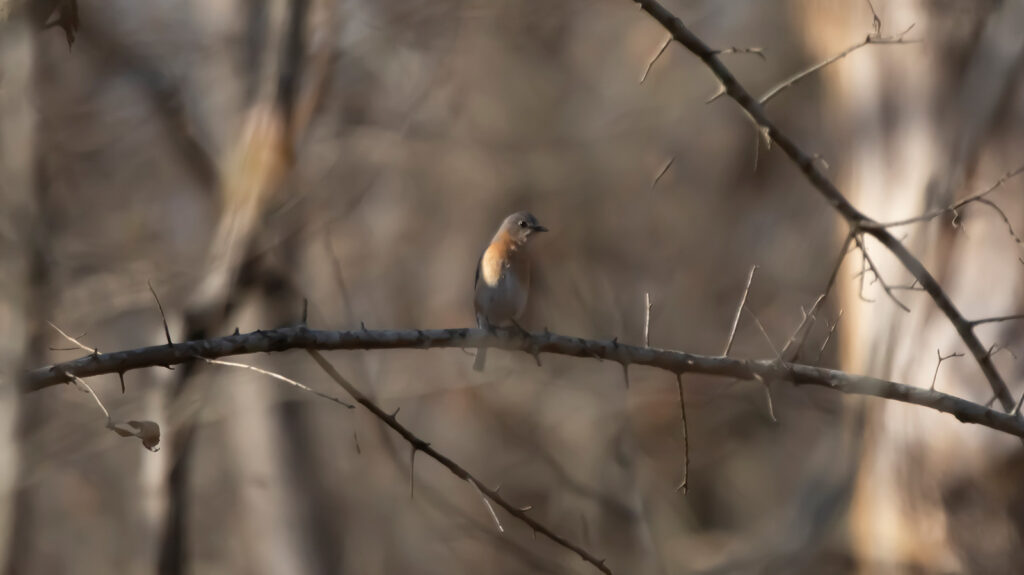
Bonnie sees the backyard from low perches. She notices Tuffy in the pecan tree, Charlened checking bark, Scott arguing about a pecan, and Tootie watching from the stepping stones.
One morning, Scott runs across the grass with a pecan.
Bonnie lands on the garden stake.
Scott stops. “What are you looking at?”
Bonnie drops to the grass and comes back with a cricket.
Scott watches her eat they. “That is not a pecan.”
Bonnie looks at him.
Grandma says, “Not everybody wants a pecan, Scott.”
Yoshi watches Bonnie scan the lawn. “She has a better view from up there.”
“That is why she picked the stake,” Grandma says.
Bonnie uses little lookout posts all over the yard. A branch, fence, garden stake, birdhouse pole, or low wire can become a hunting spot.
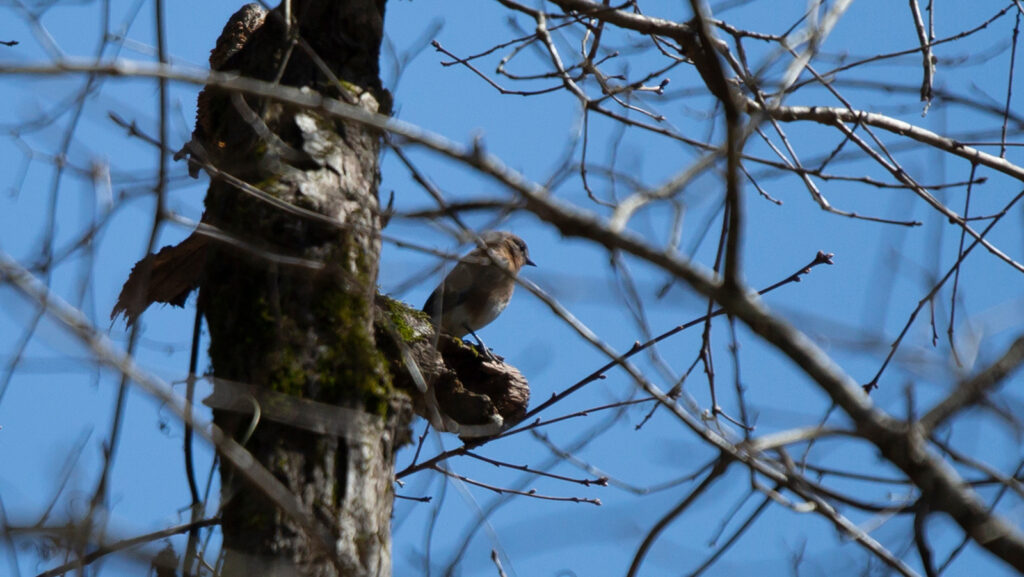
Grandma gives Bonnie room to hunt and nest. She does not let Tootie charge through the lawn after her or jump at the bird box.
She also keeps cats indoors when possible. Bluebirds often feed on the ground, which can make them more vulnerable when cats are outside.
Tootie watches Bonnie land on the grass.
“Can I run over there?”
Grandma says, “No.”
“Tootie,” Yoshi adds.
“I only asked.”
Grandma points toward the garden stake. “Bonnie needs to feel safe enough to hunt. A bird that keeps getting startled cannot spend much time finding food.”
Bonnie flies down again after Tootie sits still. Grandma says that is a better way to share a yard with a bird.
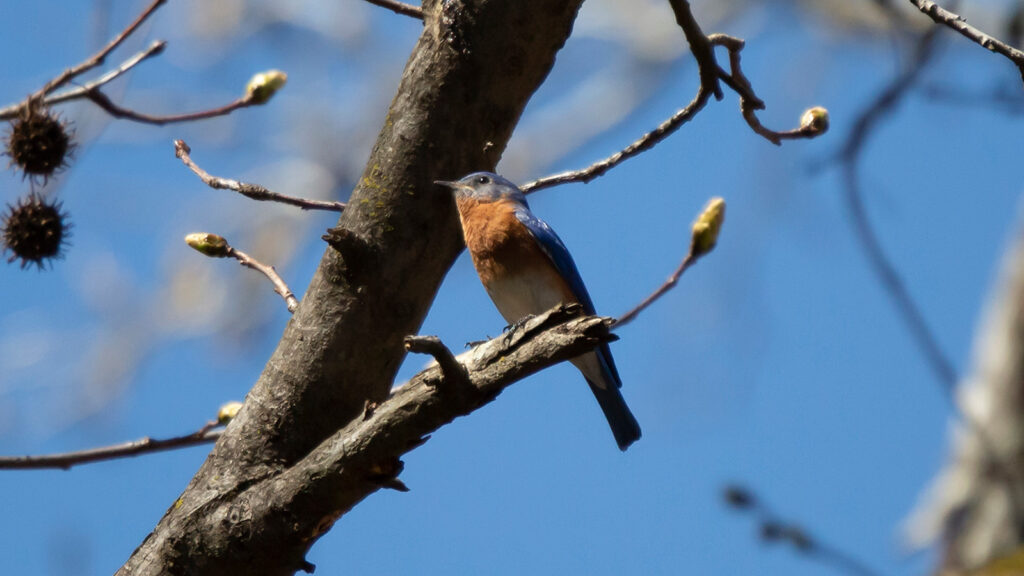
Bonnie needs open grass, insects, berry-producing plants, clean water, safe nest cavities, and fewer broad insect sprays. A yard with insects is important because baby bluebirds depend heavily on bug food.
Grandma keeps the lawn and garden from becoming too chemically tidy. She leaves native plants and berry shrubs around the edges, keeps cats indoors when possible, and uses a properly designed nest box instead of putting up a random decorative birdhouse.
She also keeps the box away from busy paths and checks they carefully during the season without handling eggs or babies.
Grandma says, “Bonnie needs bugs, berries, open ground, and a safe little room. She does not need a lawn sprayed until nothing moves.”
Yoshi watches Bonnie return to the stake. “She would object.”
Bonnie the Bluebird
These are some helpful words for talking about this wild neighbor.
Bonnie the Bluebird
Good wildlife watchers ask good questions. Here are a few to get you started.
She has blue feathers on her back, wings, and tail.
She eats insects, spiders, caterpillars, beetles, crickets, berries, and small fruit.
She may use a properly placed nest box or a natural tree cavity.
She uses they as a perch to watch for insects on the ground.
Yes. Both parents help bring food to growing babies.
Not when the box is active. Birds need privacy while eggs and babies are inside.
No. Bonnie is a wild bird and should be watched from a distance.
Keep cats indoors when possible, especially near active nest boxes and open lawns where bluebirds hunt. Do not disturb a nest box with eggs or young birds inside. Use a properly designed bluebird box with a predator guard, and clean they only after the young have safely fledged and the box is no longer active. Think About They: Why does Bonnie need both a safe nest box and a safe open lawn?
🏅 Explorer Progress