Does Carl eat wood?
Grandma says:
No. Carpenter bees use wood for nesting tunnels, but they do not eat they.
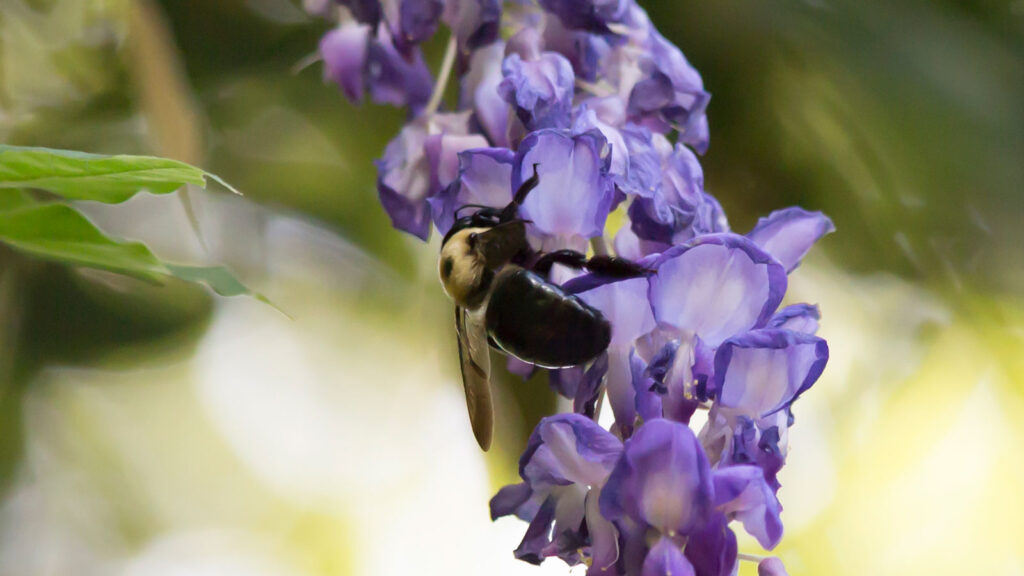
Carl is big, fuzzy, loud, and always one buzzing lap away from making Tootie think somebody dropped a tiny helicopter into Grandma’s flower bed.
Carl is an Eastern Carpenter Bee. He looks a lot like a bumble bee at first, but his back end is smooth and shiny instead of fuzzy. He has a black body, yellow fuzz on his chest, strong wings, and a pale patch on his face that helps show he is a male.
One warm morning, Tootie hears a deep buzz near the porch railing. Carl hovers in front of him, backs up, swoops sideways, and hovers again.
Tootie’s droopy ears fly forward. “He is yelling at me.”
Yoshi’s pointy ears twitch. “He is floating.”
Grandma looks up from the flower bed. “That is Carl. He is a Carpenter Bee.”
Carl buzzes past Tootie’s nose, then zips away to inspect the old wooden rail.
Tootie watches him go. “Does he build furniture?”
Grandma says, “No. But he does know his way around wood.”
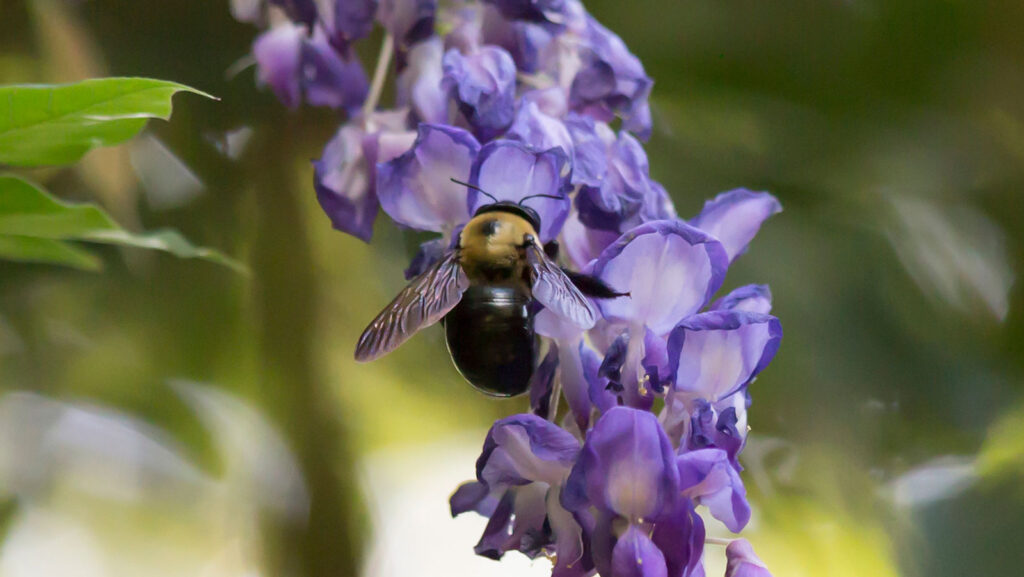
Carl uses flowers for food and wood for nesting. He may visit Grandma’s flower beds, the garden, creekside blooms, shrubs, and any sunny place with nectar and pollen. When they are time for the females to raise young, they look for suitable wood with enough room to make a nesting tunnel.
Carpenter bees may use old wood, unpainted softwood, porch rails, fence posts, sheds, dead branches, or other wooden places. They do not eat the wood. They bore a round entrance hole and make a tunnel inside where eggs and food can be placed safely.
Tootie stares at a little round hole under the porch rail. “Carl made that?”
Grandma says, “A female carpenter bee probably did. Carl is busy hovering and showing off.”
Yoshi watches Carl loop through the air. “That fits.”
The nesting tunnels can be reused from year to year. A bee may use an older tunnel, clean they up, or make they longer. Grandma says a carpenter bee sees an old tunnel the way Scott sees a pecan he buried last week: useful property.
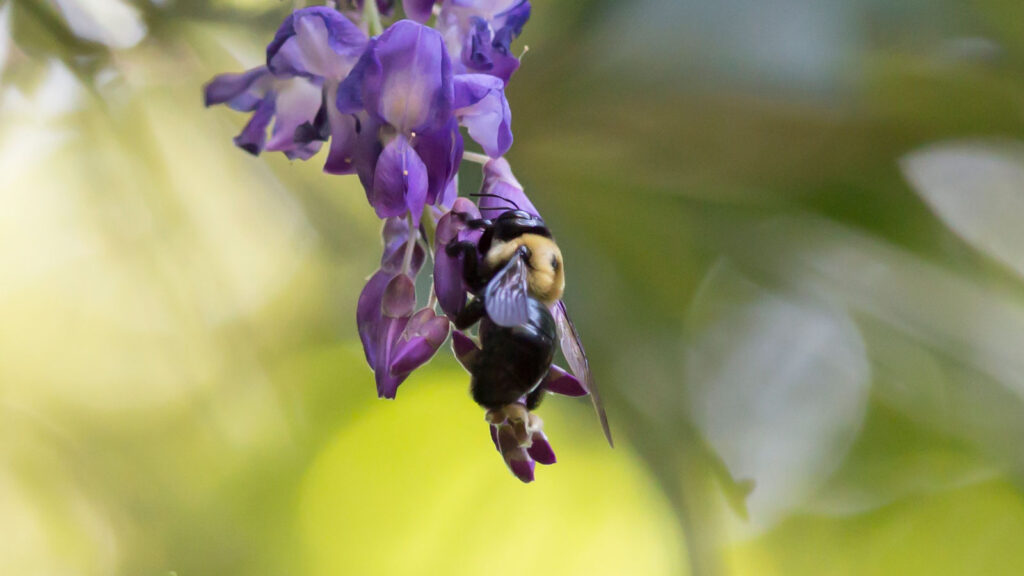
Carl began life as an egg inside a wooden tunnel. His mother made a little room in the tunnel, placed pollen and nectar there, laid one egg, and sealed that space off before making another room farther down the tunnel.
When Carl hatched, he was a soft white larva. He stayed inside his little room and ate the pollen-and-nectar food his mother left behind. He did not have wings yet, and he did not look like the big buzzing bee Tootie sees now.
Tootie looks toward the hole in the wood. “His mama packed him lunch before he was born?”
Grandma nods. “That is one way to say they.”
Carl grew through several stages. After the larva stage, he changed into a pupa. During that stage, his body formed wings, legs, eyes, and the strong bee shape he needed as an adult.
When he was ready, Carl came out of the wood as a grown carpenter bee. He learned where flowers were blooming, where other carpenter bees were flying, and which sunny places were good for hovering.
Yoshi watches Carl circle above the flowers. “He came out knowing how to fly.”
Grandma says, “He still had to learn the yard.”
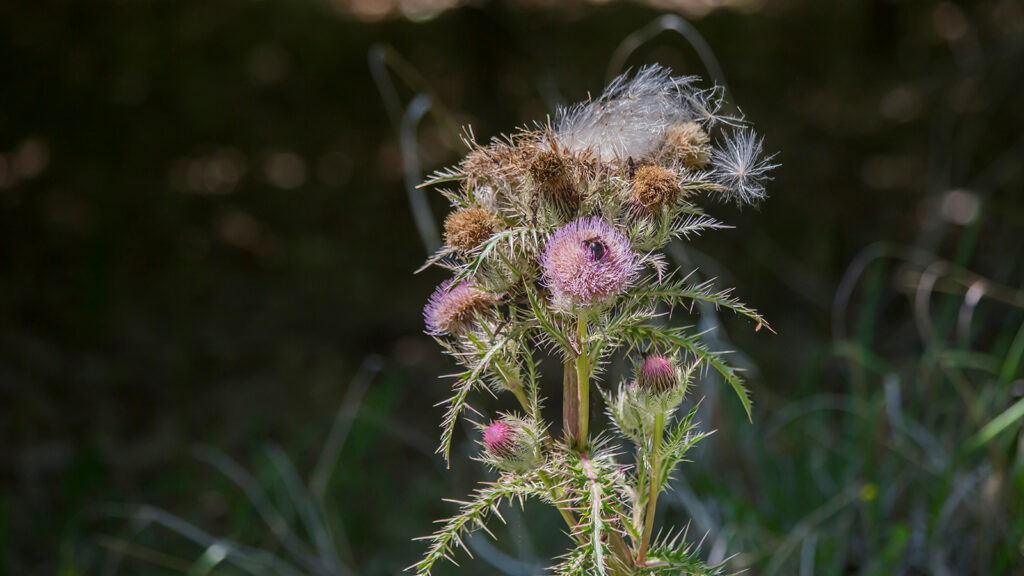
Carl drinks nectar and collects pollen from flowers. Nectar gives him energy for flying, while pollen gives bees important food. He may visit flowers in the garden, flowering shrubs, creekside plants, and blooming trees.
Carl’s long tongue helps him reach nectar in flowers. As he moves between blooms, pollen can brush onto his body and travel with him to another flower. That helps plants make seeds and fruit.
One morning, Carl lands on a purple flower near the porch.
Tootie watches him disappear into the petals. “He went inside.”
Grandma says, “He is looking for nectar and pollen.”
Yoshi watches Carl come back out with yellow dust on his legs. “He got flower dirt.”
Grandma smiles. “That is pollen. And Carl is helping carry they around.”
Carl does not eat wood, even though he uses wood for nesting. He does not eat leaves like Loni or bugs like Dart. He needs flowers.
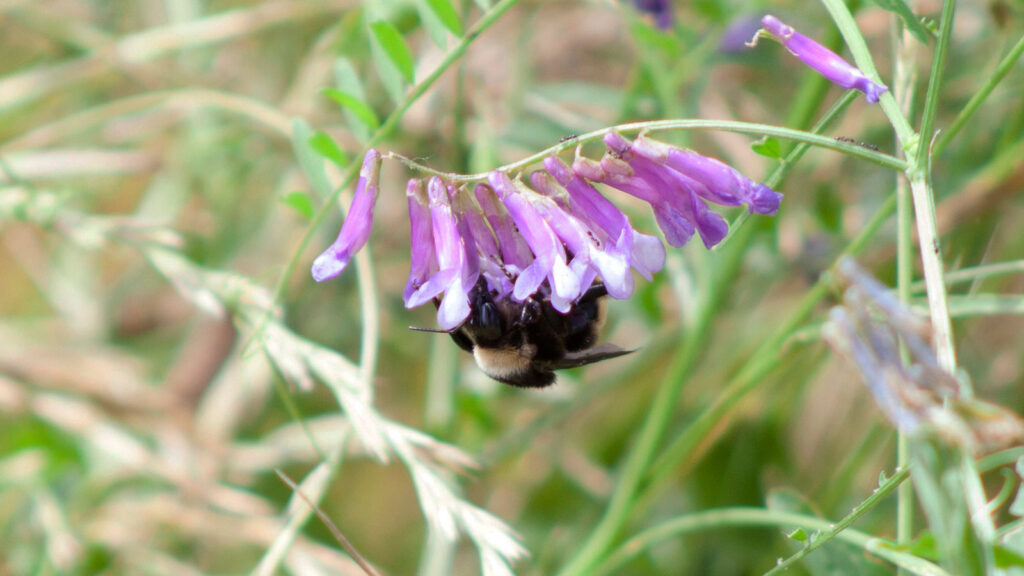
Carl is a male Carpenter Bee. Male carpenter bees often hover near nesting spots and may fly right up to people, dogs, or other animals. They can seem pushy because they buzz close and hold still in the air.
But Carl cannot sting.
Male carpenter bees do not have stingers. The females can sting, but they are usually not aggressive and are far more interested in collecting food and building nest tunnels than bothering people.
Tootie watches Carl hover near the railing. “He is brave.”
Grandma says, “He is acting brave. That is different.”
Yoshi watches Carl zoom away when a bigger bee comes near. “He left.”
Grandma laughs. “Exactly.”
Carl’s pale face patch helps tell him from a female Eastern Carpenter Bee, whose face is usually solid dark. Carl may buzz loudly around a nest area, but Grandma says he is mostly a noisy neighbor with no stinger.
The round hole Carl’s family uses is only the front door. Inside, the tunnel turns and runs along the grain of the wood. A female carpenter bee makes rooms inside that tunnel for eggs and food.
Tootie looks at the hole again. “How does she know where to dig?”
Grandma says, “Her body is built for they. She uses her jaws to chew through the wood.”
Yoshi watches the porch rail. “Does she eat the pieces?”
“No,” Grandma says. “She pushes the wood bits out. She wants the space, not the wood.”
Sometimes people notice little piles of sawdust-like bits under a carpenter bee hole. Those bits can be a clue that a bee has been working nearby.
Grandma likes old wood around the yard, but she also knows that repeated tunnels in the same porch rail or building can become a problem. She protects the house while still leaving natural dead branches and safe bee-friendly spaces elsewhere.
Carl and Helen are both bees, but they live very differently. Helen is a honeybee with a hive full of sisters, workers, and a queen. Carl is a Carpenter Bee. He does not live in a large hive.
Carl’s family is much smaller. A female carpenter bee makes her own nest tunnel and prepares food for each baby. There are no honeycomb rooms full of hundreds of workers, no big hive hanging in a tree, and no bee pantry full of honey.
One afternoon, Helen visits a flower near Carl.
Tootie looks between them. “They are both bees.”
Grandma says, “Yes, but they have different kinds of homes.”
Yoshi watches Carl fly toward the railing. “Helen goes to the hive. Carl goes to the wood.”
“Exactly,” Grandma says. “Same kind of food. Very different family plans.”
Carl knows the backyard from flower height and porch-rail height. He sees Zip drinking from blooms, Faye floating through the garden, Mary checking milkweed, and Dot crawling across stems below him.
One afternoon, Zip hovers at a flower while Carl lands on another bloom nearby.
Tootie watches them both. “They both drink flower juice.”
Grandma says, “They do, but Zip is a bird and Carl is a bee.”
Carl buzzes past Loni, who is chewing a leaf.
Loni does not look up.
Carl circles the old rail, then flies past Tootie’s head again.
Tootie ducks.
Yoshi says, “He has noticed you.”
Grandma says, “He notices everybody. That does not mean he wants a conversation.”
Grandma lets Carl visit flowers and old natural wood, but she watches carefully around porch rails, sheds, and places where repeated tunnels could damage the structure. She does not swat at him or let Tootie snap at him.
Carl is safe to watch, but no one should grab him. Female carpenter bees can sting if handled or trapped, and any bee deserves room to fly and feed.
Tootie watches Carl buzz near the porch. “Can I chase him?”
Grandma says, “No.”
“Tootie,” Yoshi adds.
“I only asked.”
Grandma points toward the flowers. “Carl needs flowers and space. The house needs protecting too. Both things can be true.”
Carl needs flowers, pollen, nectar, and safe nesting places. Planting flowers that bloom at different times gives carpenter bees and other pollinators food through more of the season.
Grandma avoids spraying broad insect killers on flowering plants. She also keeps porch rails and house wood sealed or painted when needed, because painted or sealed wood is less likely to become a carpenter bee nesting spot.
She leaves natural dead branches and safe wooden habitat in wild corners of the yard when possible. That way bees have places to use without turning every porch board into a nursery.
Grandma says, “Carl needs flowers and a little room. He does not need to redesign my porch.”
Yoshi watches him buzz away. “That is fair.”
Carl the Carpenter Bee
These are some helpful words for talking about this wild neighbor.
Carl the Carpenter Bee
Good wildlife watchers ask good questions. Here are a few to get you started.
No. Carpenter bees use wood for nesting tunnels, but they do not eat they.
No. Carl is male, and male Carpenter Bees do not have stingers.
They can, but they are usually not aggressive and mostly sting only if handled or trapped.
Male Carpenter Bees often hover around nest areas and inspect large animals that come close.
He drinks nectar and collects pollen from flowers.
No. Helen is a honeybee who lives in a hive. Carl is a Carpenter Bee who uses wood tunnels.
No. Watch him from a distance and let him keep flying.
Watch Carpenter Bees from a distance. Do not swat or handle them. Keep exterior house wood painted or sealed when needed, and avoid spraying insecticides on flowering plants. If repeated nest tunnels are causing structural damage, a grown-up can protect or repair that wood while leaving flowers and natural bee habitat elsewhere in the yard. Think About They: Why is solving a bee problem carefully better than trying to get rid of every bee in the yard?
🏅 Explorer Progress