Is Dart a bug?
Grandma says:
Yes. Dart is an insect called a dragonfly.
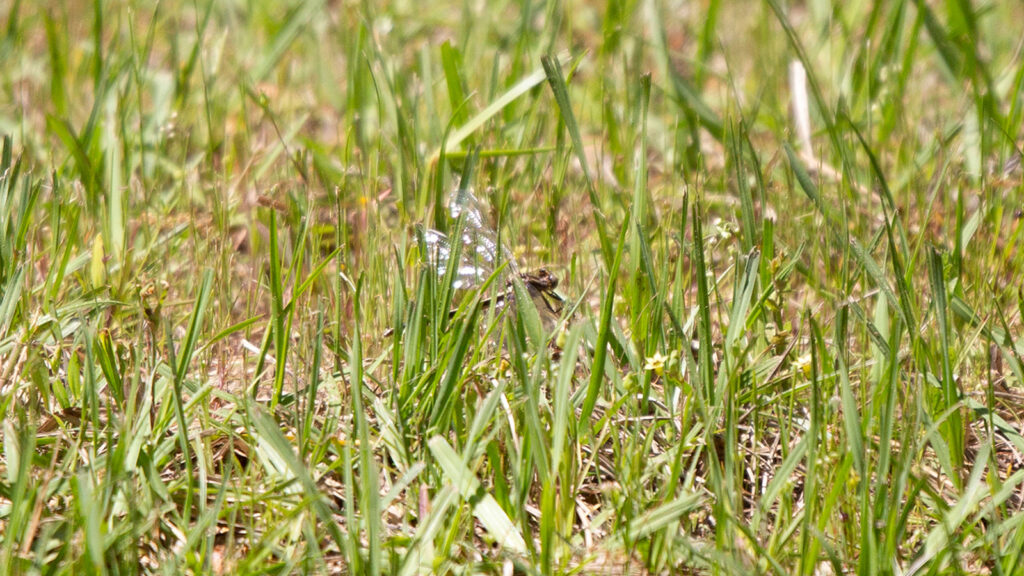
Dart has giant eyes, four clear wings, and one rule for mosquitoes: if they are flying, they are lunch.
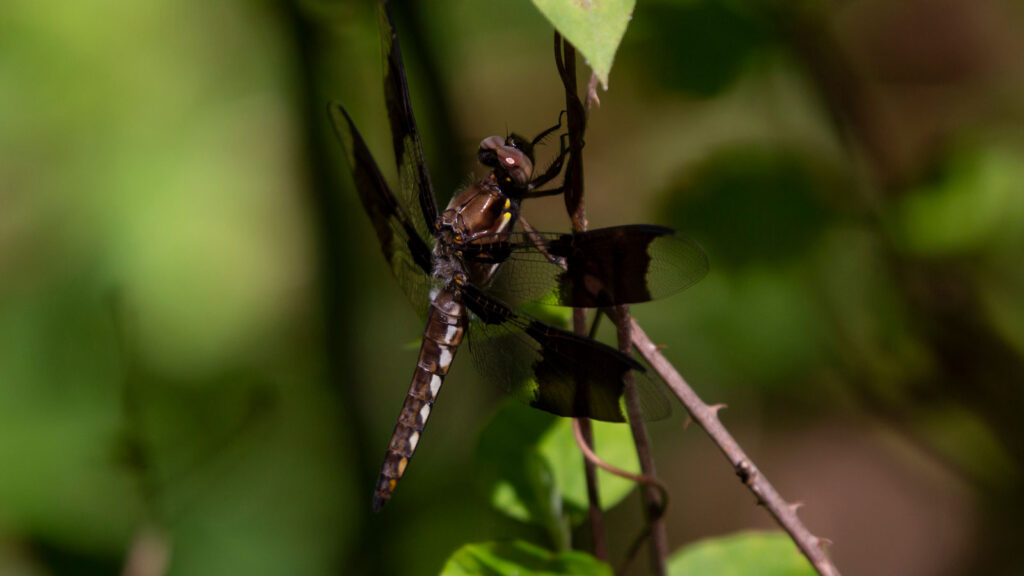
Dart is a dragonfly. He has a long narrow body, four strong wings, and eyes so large that they take up most of his head. When the sun is out and the air is warm, Dart zooms over the creek behind Grandma’s house, pauses in the air for one impossible second, and shoots away again before Tootie can decide where he went.
Tootie first sees Dart after a summer rain. The creek is running a little higher than usual, Chirp is calling from the wet grass along the bank, and Knossos is sitting near the shallow edge with only his eyes above the water. A bright dragonfly flashes past the porch, turns sharply over the flower bed, and lands on the tip of a dry stem beside the creek.
Tootie’s droopy ears flip forward. “That bug is flying wrong.”
Yoshi’s pointy ears twitch. “He is flying very well.”
Grandma smiles. “That is Dart. He is a dragonfly.”
Dart lifts off before Tootie can take another step. He flies forward, backward, sideways, and straight up, then hovers above the creek bank as though somebody tied him to an invisible string.
Tootie stares. “He can hover.”
Grandma nods. “Dragonflies are some of the best fliers in the yard.”
Yoshi watches Dart disappear over the creek grass. “He is too fast for you.”
Tootie looks offended. “I am fast.”
Grandma says, “Dart is faster.”
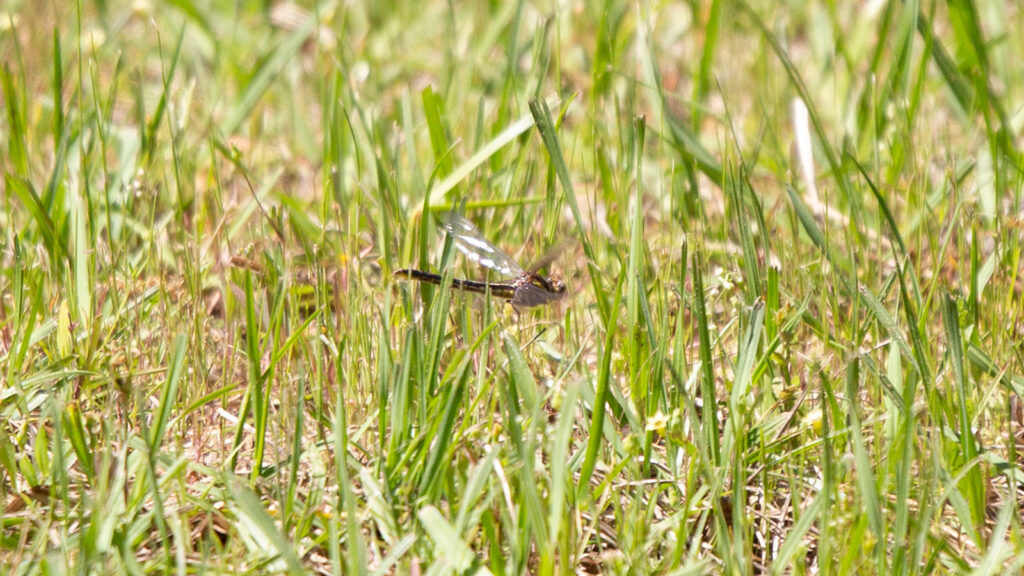
Dart’s adult life happens around warm, open places near water. He may fly above creek edges, wet grass, shallow pools, little slow-moving bends, flower beds, and sunny clearings where mosquitoes, gnats, flies, and other small insects gather. He does not sit in the water all day, but water matters because that is where dragonflies begin life.
The creek behind Grandma’s house works well for Dart. Chirp uses the wet grass and muddy edges. Knossos stays closer to the shallow water and slow parts of the creek. Dart patrols above them, flying over the water, around creek plants, and near flowers where tiny flying insects gather.
Grandma says Dart uses the whole creek neighborhood, just from higher up.
Tootie looks toward the water. “Does he live in the creek?”
“He did when he was little,” Grandma says. “Now he uses the air, plants, and sunny spaces around they.”
Dart also needs places to perch. He may land on a reed, stick, flower stem, fence wire, or branch tip near the creek. From there, he can watch for food, another dragonfly, or anything else worth checking out.
Yoshi watches Dart land on a tall stem beside the bank. “He has a lookout post.”
Grandma nods. “Every hunter likes a good view.”
Dart did not begin life with wings. He started as a tiny egg near or in the creek. His mother placed eggs where they would stay close to water plants, mud, or a quiet shallow edge. After the egg hatched, Dart became a dragonfly nymph.
A nymph is a young insect that does not look like the adult yet.
When Dart was a nymph, he lived underwater. He had no wings, no long shiny body, and no reason to fly anywhere. He crawled through water plants, mud, sticks, and leaves, using his legs to move and hunt.
Tootie hears this and looks confused. “So Dart was a water bug?”
Grandma nods. “Exactly. He was a dragonfly nymph.”
Yoshi watches the creek edge. “Did he look like he does now?”
“Not at all,” Grandma says. “He looked more like a small underwater hunter.”
Young dragonflies do not eat algae the way tadpoles do. Dart was already a hunter when he was little. He ate mosquito larvae, tiny water insects, and other small animals he could catch underwater. As he grew, he shed his skin several times. Insects have a hard outside covering, so they cannot simply stretch bigger. They grow a new covering and leave the old one behind.
When Dart was ready to become an adult, he climbed out of the creek and held onto a plant stem, stick, or other solid place near the bank. His old skin split open along his back. The adult dragonfly came out slowly, with soft folded wings and a pale weak body. He stayed still while his wings opened, hardened, and filled out.
Tootie looks toward the creek. “He came out of his own skin?”
Grandma nods. “Every dragonfly does.”
Yoshi thinks about that. “That sounds uncomfortable.”
Grandma says, “They probably feels strange. But they are how Dart gets his wings.”
Once Dart’s wings were ready, he flew away as the dragonfly Tootie sees now.
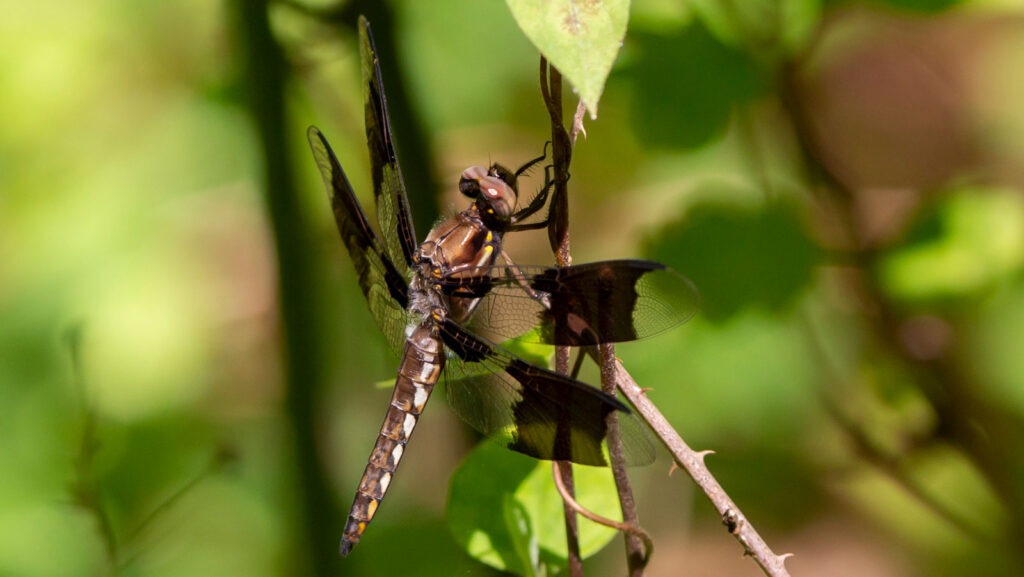
Dart eats other insects. Adult dragonflies catch mosquitoes, gnats, flies, moths, midges, and other small insects while flying. They do not eat leaves, nectar, berries, birdseed, or pecans. Dart is a hunter from the time he is underwater until the time he is flying above the creek grass.
His huge eyes help him spot movement. His legs form a little basket beneath him while he flies. When Dart catches an insect, he may hold they with those legs and eat they while still flying or after landing on a stem.
One evening, Tootie sees a mosquito zigzagging over the creek bank.
“Get they,” he says.
Dart is already moving. He shoots forward, turns in midair, and catches the mosquito so quickly that Tootie never sees the moment they disappears.
Tootie stares at the empty air. “Where did they go?”
Grandma says, “Into Dart.”
Yoshi watches Dart land on a reed. “He did not even stop.”
“No,” Grandma says. “Dragonflies are built for catching food on the wing.”
Dart’s underwater nymph stage is hungry too. Before he had wings, he hunted mosquito larvae and tiny water animals. That makes dragonflies useful neighbors around creeks, wet ditches, and shallow water.
Grandma says, “Dart has been eating mosquitoes since before he could fly.”
Tootie looks toward the creek. “That is a good hobby.”
Grandma says, “For Dart, they are dinner.”
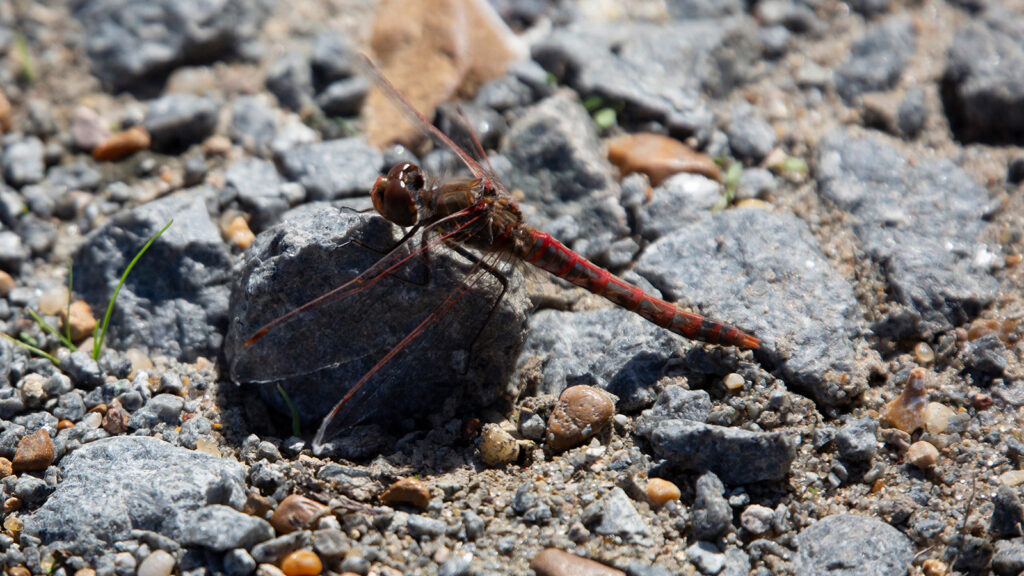
Dart’s eyes are one of the first things people notice. They are huge compared with the rest of his head, and they help him see movement almost all around him. That is useful when you are trying to catch a mosquito, avoid a bird, watch another dragonfly, and keep from flying into a plant stem.
Tootie watches Dart turn his head while sitting on a dry branch. “Can he see me?”
Grandma nods. “Probably.”
“Can he see Yoshi?”
“Probably.”
Yoshi’s ears twitch. “Can he see Scott stealing pecans?”
Scott looks down from the tree. “They are not stolen if I found them.”
Grandma says, “Dart can probably see all of you.”
Dart turns his head again, then lifts off without saying anything. Tootie thinks he looks serious. Grandma says, “He has a lot to keep track of.”
Dart has four wings instead of two. Those wings can move in different ways, which helps him fly with amazing control. He can dart forward, hover in one place, turn sharply, rise straight up, and sometimes even fly backward for a short distance.
Tootie thinks this is unfair. “I have four legs. Why can I not fly backward?”
Grandma says, “Because you are not a dragonfly.”
One afternoon, Dart races past the tulips. Gee is sitting on a leaf. Fenn is flat against the fence. Dart cuts around both of them, flies over the flower bed, stops above a patch of creek grass, and then shoots toward the water.
Tootie runs after him.
Yoshi does not move.
Grandma says, “He will be back.”
Tootie reaches the end of the flower bed, looks around, and realizes Dart is already behind him.
Yoshi says, “He was never racing you.”
Dart is perched on the fence.
Grandma laughs.
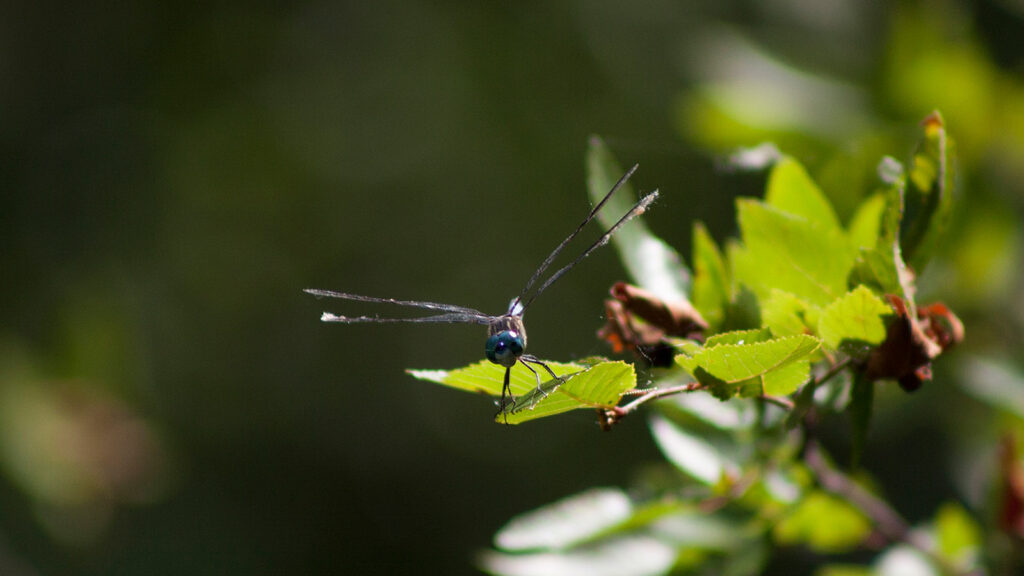
Dart and Chirp both use the creek part of the yard, but they use they very differently. Chirp stays low in the grass, mud, and shallow water. He calls from damp places and catches bugs close to the ground. Dart flies above the creek and grass, watching from the air for mosquitoes and other insects.
Tootie watches Chirp sitting under a wet leaf while Dart hovers above the creek.
“Chirp hides,” Tootie says. “Dart does not.”
Grandma nods. “Chirp is small and needs cover. Dart is fast and uses the open air.”
Yoshi watches Dart land on a reed. “They both eat bugs.”
“They do,” Grandma says. “They just catch them in different places.”
Chirp hears Dart’s wings overhead and stays tucked into the grass. Dart sees Chirp below and does not bother him. They are neighbors, not rivals.
Grandma says, “A good creek has enough room for different kinds of hunters.”
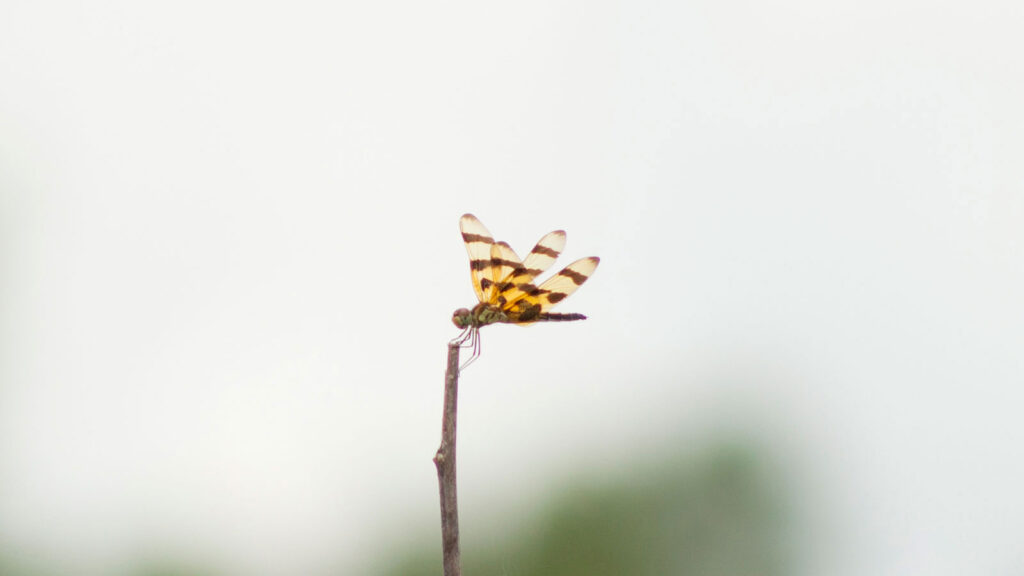
Knossos knows Dart from the creek edge. When Dart was young, he spent his whole life underwater, crawling through the same watery world where Knossos grew from an egg into a tadpole. Now Dart flies above the creek while Knossos sits near a slow bend, still as a wet leaf.
One evening, Dart lands on a reed above Knossos. Knossos looks up. Dart looks down.
Tootie watches from the fence. “Did Dart know Knossos when they were babies?”
Grandma smiles. “Maybe they used the same creek at different times. But Dart was a nymph and Knossos was a tadpole. They would not have looked anything alike.”
Yoshi looks toward the water. “They both changed.”
“That is true,” Grandma says. “Knossos grew legs and lost his tail. Dart grew wings and left the water.”
Tootie thinks about that. “The creek makes a lot of strange babies.”
Grandma says, “They surely does.”
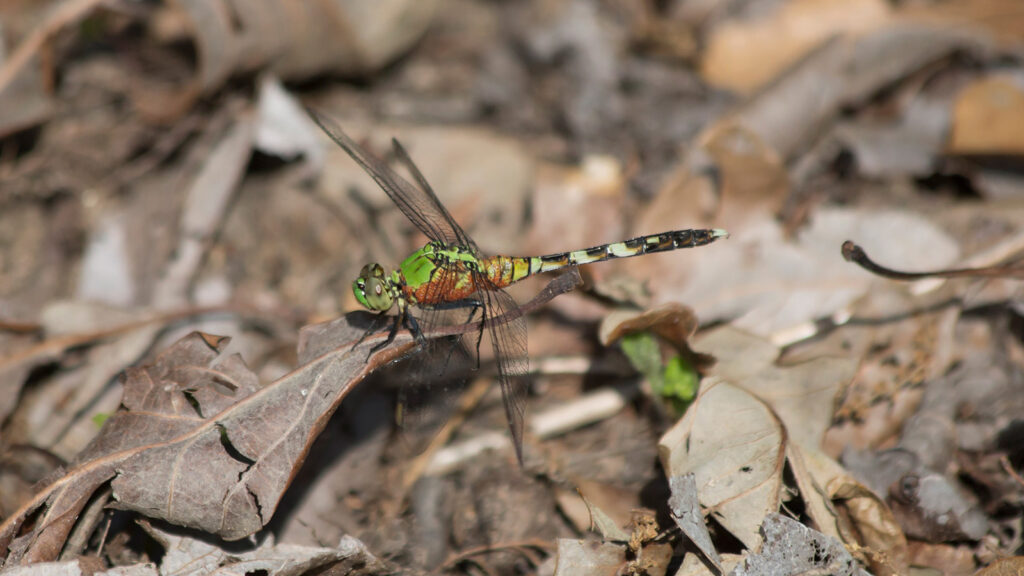
Dart sees much of the backyard from above. He sees Grandma working near the flowers. He sees Tootie bouncing toward every movement. He sees Yoshi resting in the shade with her ears twitching whenever something changes. He sees Scott and Phoenix racing through the branches and Biv yelling about pecans from the tree.
He may even see Robbie coming out after dark, though Dart is usually settled down before Robbie starts his night shift.
One afternoon, Biv lands on the fence just as Dart does.
Biv looks at him. “You fly too much.”
Dart does not answer.
Biv lifts his crest. “There are perfectly good branches.”
Dart lifts off, circles over Biv’s head, catches a gnat, and lands on another fence post.
Biv watches him. “That did look useful.”
Grandma hears this from the porch. “Try they once and let us know how they goes.”
Biv decides he has an important appointment somewhere else.
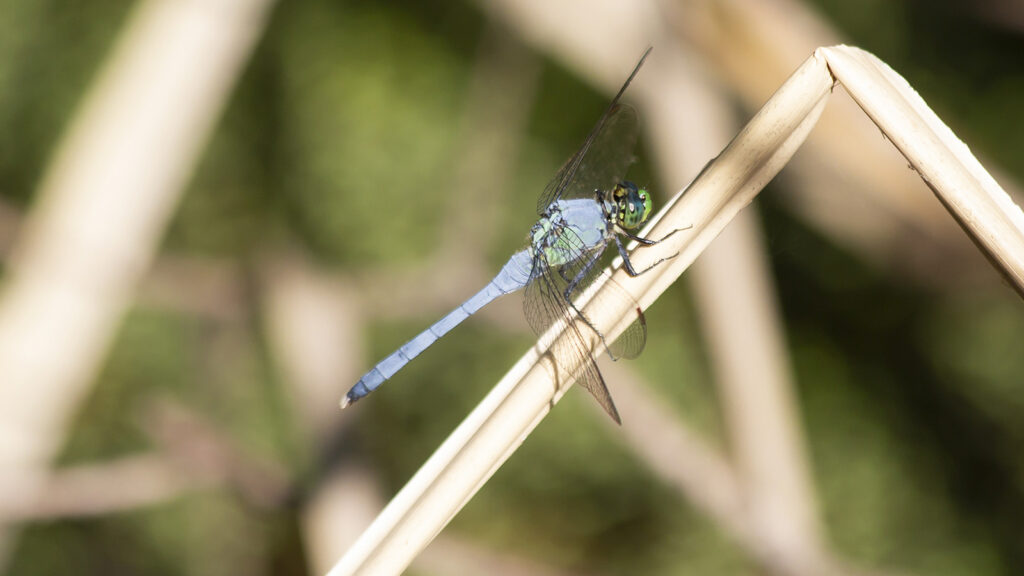
Grandma likes having Dart around because dragonflies eat many small insects. She does not try to catch him, swat at him, or let Tootie chase him through the flowers.
Dragonflies are not dangerous to people. They do not sting. They can bite tiny prey, but they do not need to bite people and usually fly away when something large comes near.
Tootie watches Dart resting on a stem. “Can I hold him?”
Grandma says, “No.”
“Tootie,” Yoshi adds.
“I only asked.”
Grandma points toward the creek. “Dart needs air, space, and somewhere safe to land. He does not need puppy paws.”
Tootie sits beside the porch steps. Dart takes off, circles once over the yard, and disappears above the creek grass.
Tootie sighs. “He is gone.”
Grandma says, “He is hunting.”
Yoshi watches the sky. “That is close enough to gone.”
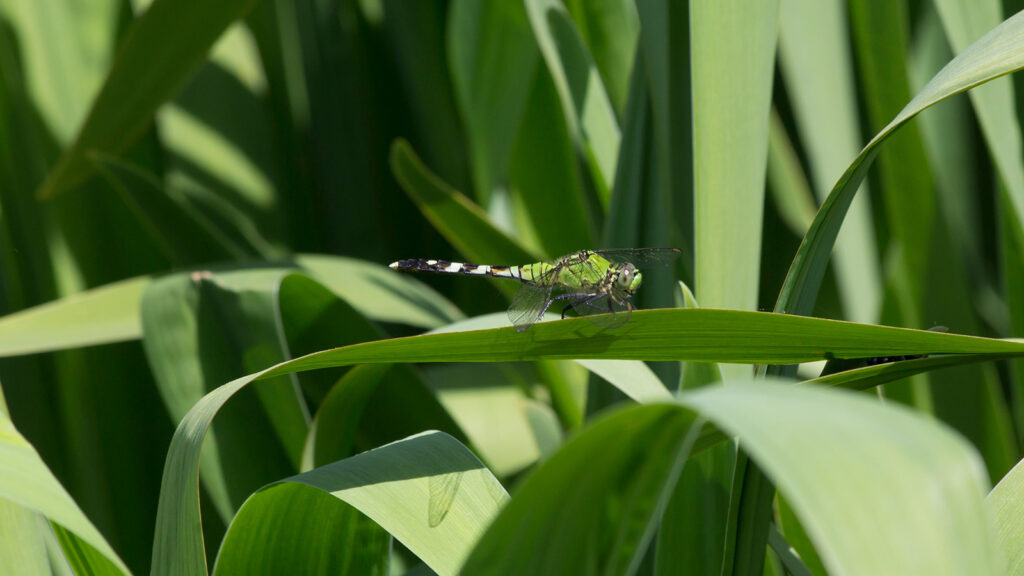
Dart needs clean creek water, water plants, sunny open spaces, and lots of small insects. Creeks, wet ditches, shallow edges, and rain-fed low spots can all help dragonflies when they have clean water and plants around them.
Avoid dumping soap, oil, fertilizer, pesticides, or trash near the creek. Dragonfly nymphs live underwater for much longer than adult dragonflies fly in the air, so clean water matters especially during their growing-up years.
Leave some plants around the creek bank and wet places. Dragonfly nymphs need underwater plants, mud, and places to hide. Adult dragonflies need stems and branches where they can perch.
Grandma says, “Dart needs a good creek edge, not a scraped-up mud bank.”
Yoshi watches the reeds move in the breeze. “And mosquitoes.”
Grandma smiles. “He can find those himself.”
Dart the Dragonfly
These are some helpful words for talking about this wild neighbor.
Dart the Dragonfly
Good wildlife watchers ask good questions. Here are a few to get you started.
Yes. Dart is an insect called a dragonfly.
Yes. He began as an egg, hatched into a dragonfly nymph, and lived underwater before growing wings.
Dart eats insects like mosquitoes, flies, gnats, and tiny moths.
No. Dragonflies do not have stingers.
He has four strong wings that help him turn, hover, rise, and dart through the air.
His giant eyes help him see movement and catch insects while flying.
No. Dart is wild and easy to hurt. Watch him fly instead.
Watch dragonflies from a distance and avoid catching them. Keep pesticides, fertilizer, oil, soap, and trash away from creeks, ditches, and wet places where dragonfly nymphs grow underwater. Dragonflies are harmless to people and can help by eating many small flying insects.