Why is Inouar named Inouar?
Grandma says:
Her name is pronounced “I know you are,” which is a joke because she always seems to know whose sound she is copying.
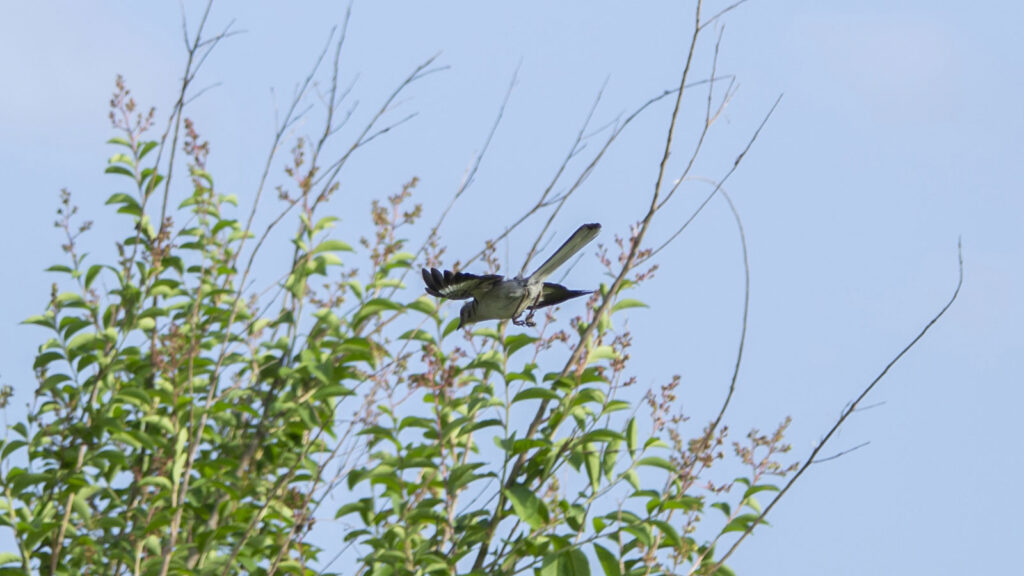
Inouar is pronounced “I know you are,” which is exactly what she says whenever somebody asks whether she copied that sound from another bird.
Inouar is a Northern Mockingbird. She is gray above, pale below, with long legs, a long tail, and white wing patches that flash when she flies. She spends a great deal of time on fence posts, pecan branches, rooftops, and shrub tops, where she can see the yard and make sure the yard hears her too.
One morning, Tootie hears Roy’s clear whistle from the pecan tree. Then he hears they again from the fence. Then he hears Biv’s rough call, a bit of Chirp’s clicking, and something that sounds almost like Grandma calling Yoshi.
Tootie’s droopy ears fly forward. “Everybody is talking at once.”
Yoshi’s pointy ears twitch. “No. One bird is showing off.”
Grandma points to the fence. “That is Inouar. She is a Northern Mockingbird.”
Inouar lifts her tail, opens her beak, and gives another borrowed whistle.
Tootie looks at her. “Did she steal Roy’s song?”
Inouar says, “I know you are.”
Grandma laughs. “That is her name, and that is not an answer.”
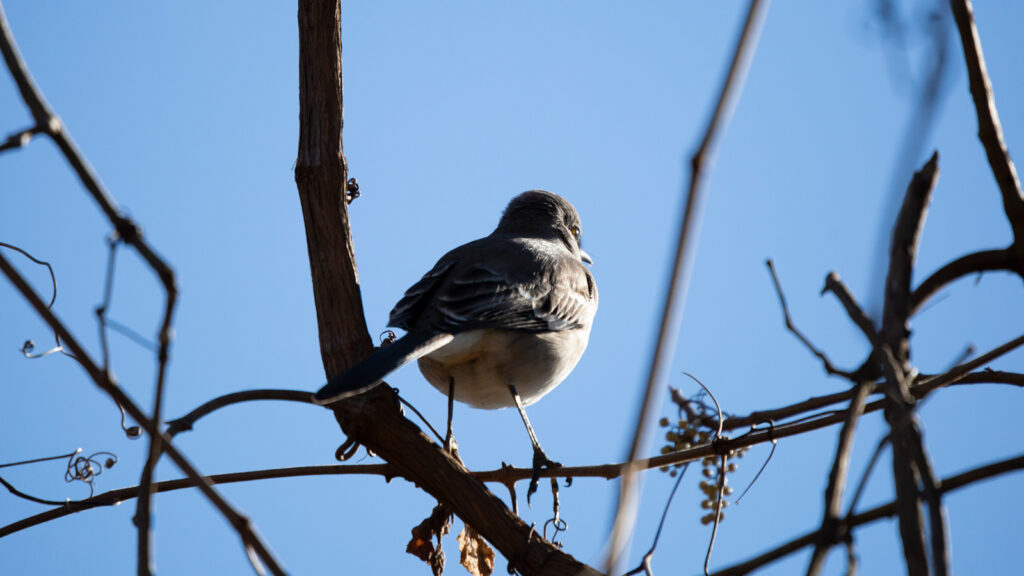
Inouar uses open yards, shrubs, small trees, fence lines, creekside branches, and the edges of Grandma’s garden. She likes places where she can find insects on the ground, berries in shrubs, and high perches for singing.
The back fence is one of Inouar’s favorite stages. From there, she can look over the creek behind Grandma’s house, watch the pecan trees, and make sure no other bird is getting too comfortable in her favorite part of the yard.
Tootie watches Inouar land on the fence. “Does she live up there?”
Grandma smiles. “She rests there, sings there, and judges the whole neighborhood from there. But she needs shrubs and trees too.”
Northern Mockingbirds often build nests in dense shrubs or small trees. The thick branches help hide the nest, hold they steady, and give the parents a safer place to raise babies.
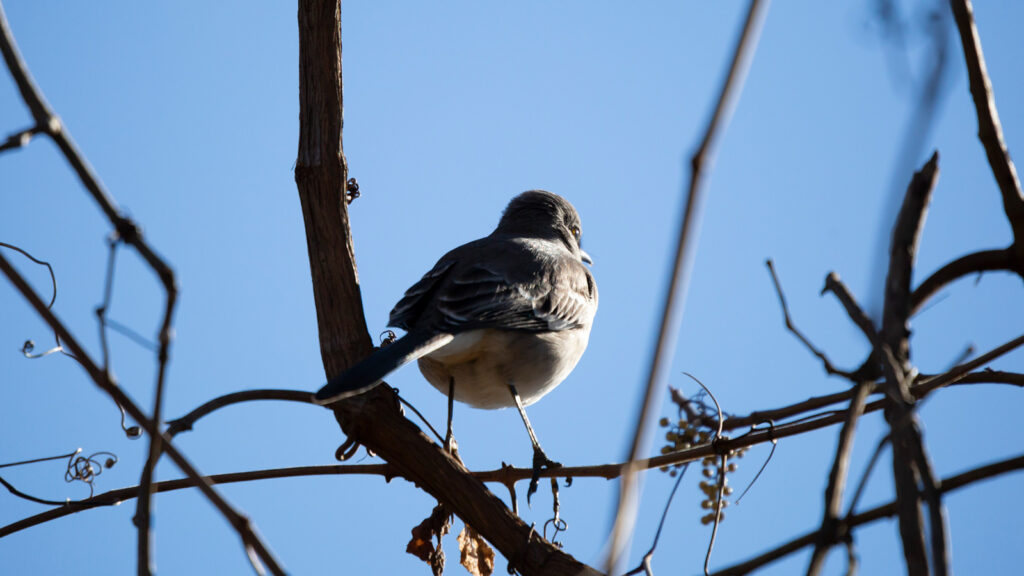
Inouar began life in a cup-shaped nest built from twigs, grass, leaves, and softer plant material. Her parents chose a shrub or small tree with enough branches to support the nest and enough cover to make they harder for larger animals to notice.
When Inouar hatched, she was small, hungry, and covered with very little fluff. Her parents brought insects to the nest while she and her brothers or sisters grew stronger. Both parents helped care for the babies, and both parents guarded the nest closely.
Tootie looks toward the shrubs. “Did baby Inouar sing right away?”
Grandma shakes her head. “Not like she does now. First she had to grow feathers, learn to perch, and figure out how to find food.”
Young mockingbirds leave the nest before they are fully ready to live on their own. Their parents keep feeding them while they learn to fly, hide, watch for danger, and use the yard. As Inouar grew, she also began listening to the sounds around her.
That is when she started collecting her songs.
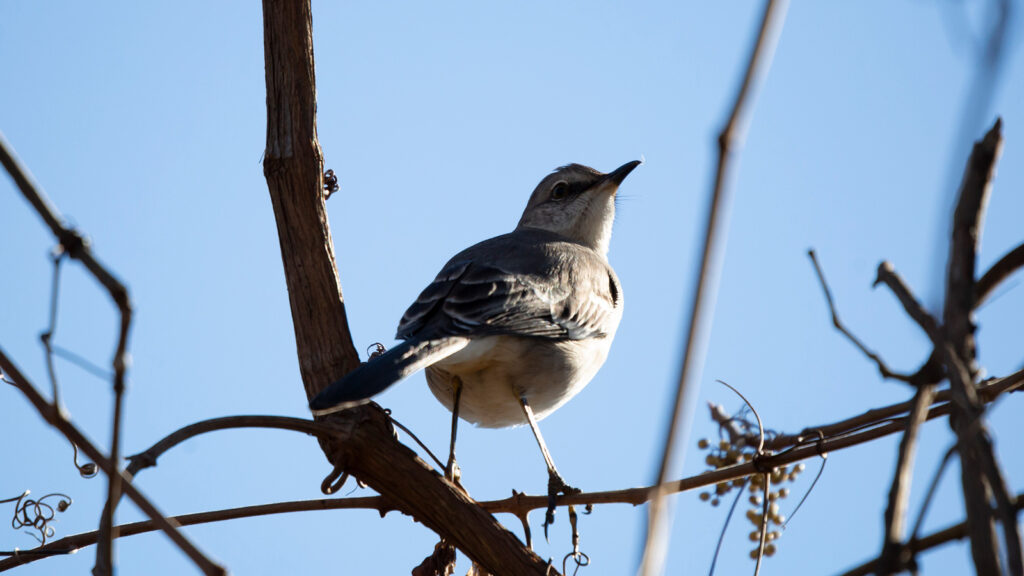
Inouar eats many different foods. In warm weather, she hunts insects, beetles, caterpillars, grasshoppers, spiders, and other little animals she can catch on the ground or among leaves. In cooler weather, she eats more berries and fruit from shrubs and trees.
She may hop across the lawn looking for insects, then fly into a berry bush for dessert. Inouar does not eat pecans like Scott or drink nectar like Zip. She uses the whole yard, looking for whatever food the season provides.
One afternoon, Inouar lands near Loni in the flower bed. Loni is chewing a leaf. Inouar hops closer, spots a beetle under the plant, and snaps they up.
Tootie watches carefully. “She got lunch right beside Loni.”
Grandma says, “That is how a yard works. Different animals can use the same place for different food.”
Yoshi watches Inouar move toward a berry shrub. “She eats bugs and berries.”
“Exactly,” Grandma says. “That makes her flexible.”
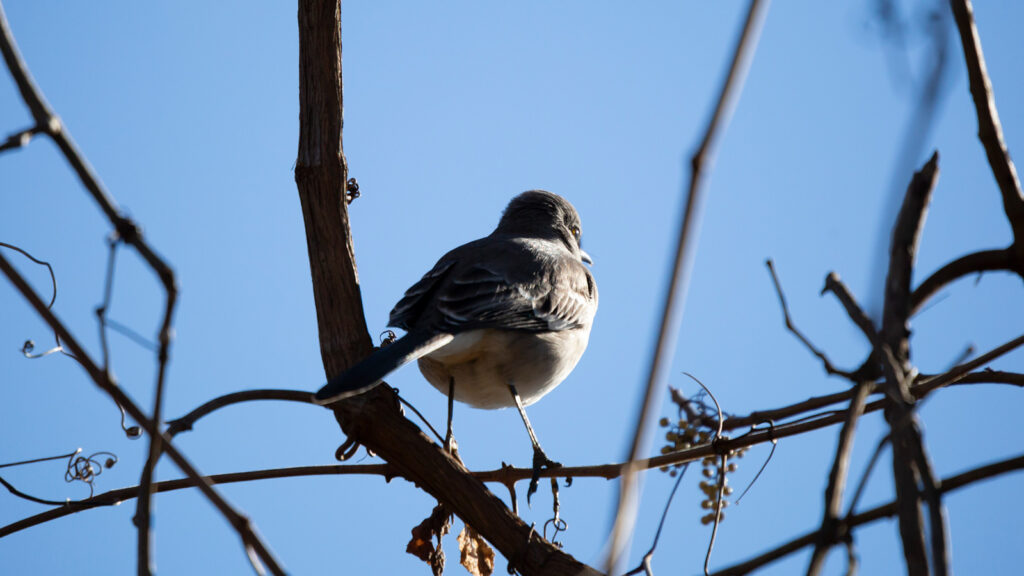
Inouar is famous because mockingbirds copy sounds. She can imitate other birds, frogs, and sometimes noises from around people’s homes. A mockingbird often repeats one sound several times before switching to another.
Inouar may sing a cardinal-like whistle, then a jay-like call, then a frog sound from the creek, followed by a sound nobody recognizes at all. She does not become those animals when she copies them. She is still a mockingbird, just a very busy one.
Tootie looks up at Inouar. “How does she know so many songs?”
Grandma says, “She listens.”
Yoshi’s ears twitch. “Then she remembers.”
“That too,” Grandma says. “Mockingbirds can keep learning sounds through their lives.”
Biv hears Inouar copy one of his calls from the fence.
“That was mine,” Biv says.
Inouar repeats they.
Biv fluffs his crest. “Not like that.”
Grandma says, “Nobody asked you to be a singing coach.”
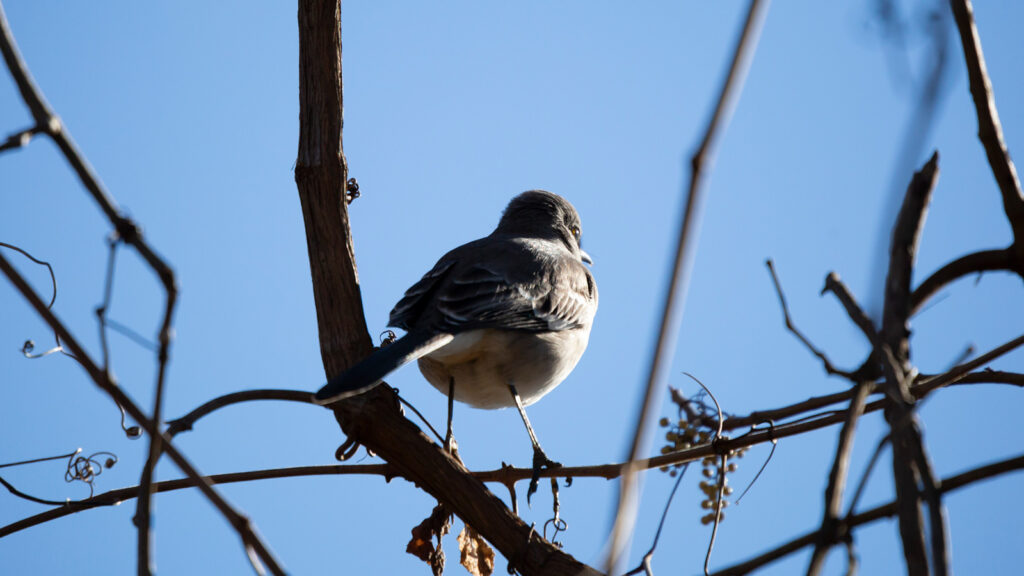
Inouar takes her favorite part of the yard seriously. She may sing from a high perch, chase another bird away from a nesting area, or fly close enough to let a squirrel know she has noticed them.
She does not have paperwork, a fence, or a little sign that says “Mine.” She uses song, posture, flights, and a great deal of confidence.
One morning, Scott runs across the lawn toward a pecan. Inouar swoops down and gives a sharp scolding call.
Scott freezes. “What?”
Inouar lands on the fence and sings three different sounds in a row.
Scott looks at Grandma. “Is she yelling at me?”
Grandma says, “She is probably telling you that you are too close to something.”
Scott looks around. “I am close to a pecan.”
Yoshi says, “That is not what she means.”
Inouar flicks her wings and keeps watch from the fence.
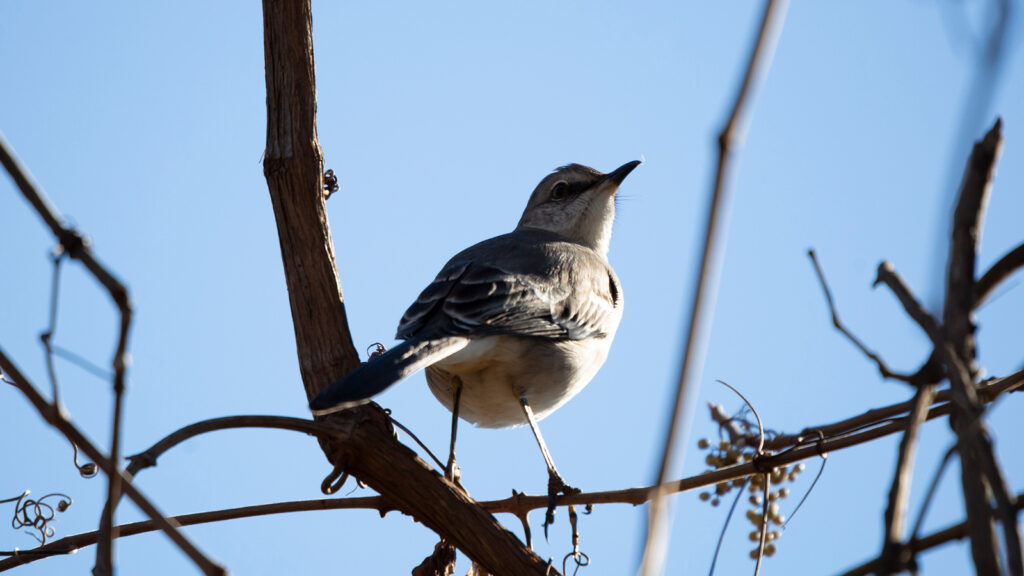
Inouar hears nearly everybody. She hears Roy and Renee in the pecan trees, Biv calling from a branch, Chirp clicking from the creek grass, Knossos giving his loose-banjo call, and Dart’s wings cutting through the air.
She also hears Tootie before Tootie reaches the porch steps.
One afternoon, Inouar copies Roy’s whistle from the fence. Roy answers from the tree. Inouar copies they again. Roy answers again.
Tootie looks between them. “Are they talking?”
Grandma says, “They are both making sounds. Whether they are having the same conversation is another question.”
Yoshi watches Inouar switch to a jay call.
Biv looks down from the pecan tree. “That one was not bad.”
Inouar copies Biv’s call again.
Biv pauses. “Better.”
Grandma says, “You are all impossible.”
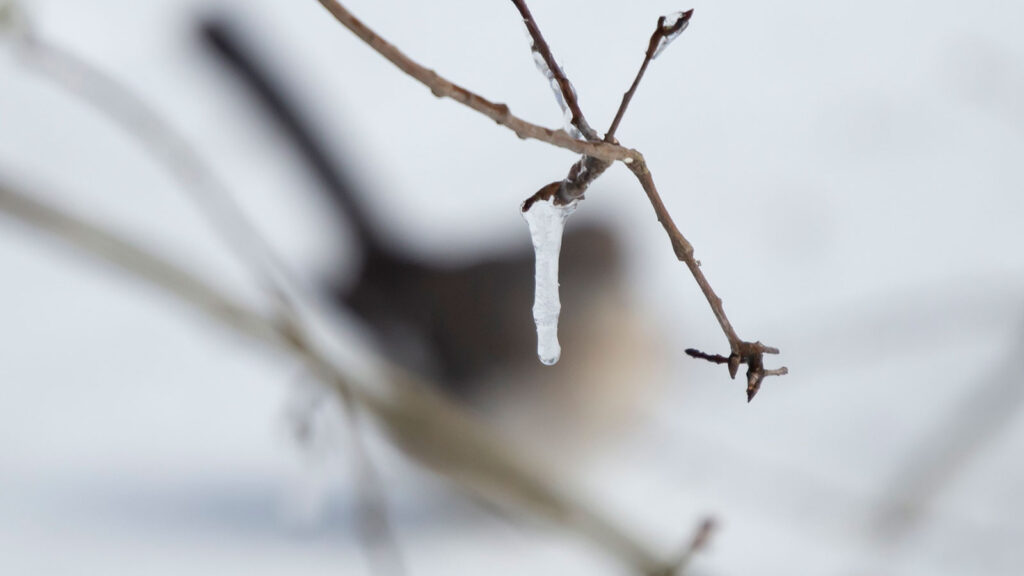
Grandma likes hearing Inouar because her songs make the yard feel busy. She does not try to get close to Inouar’s nest, touch young birds, or let Tootie chase her along the fence.
Mockingbirds can be bold around nests, especially when babies are nearby. Grandma gives them room because parent birds are trying to keep their young safe, not trying to pick a fight with people or dogs.
Tootie watches Inouar scold from the fence. “Can I tell her I am friendly?”
Grandma says, “You can tell her from right there.”
“Tootie,” Yoshi adds.
“I know.”
Grandma smiles. “A bird does not need to understand every word. She needs to see that you are not coming closer.”
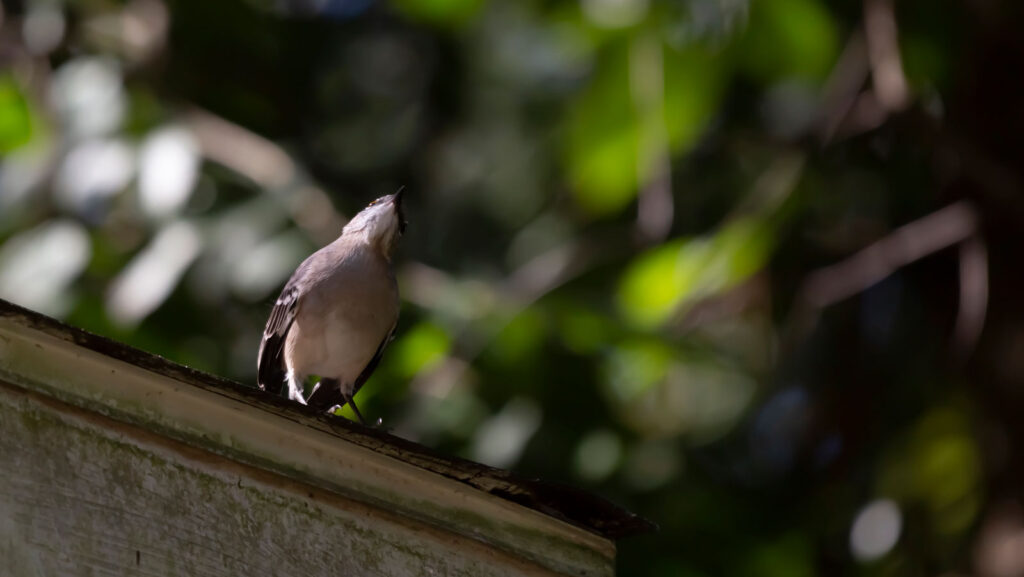
Inouar needs shrubs, small trees, berry-producing plants, insects, and safe nesting cover. A yard with different kinds of plants gives her more places to find food during different seasons.
Keep cats indoors when possible, especially during nesting season. Avoid broad insect sprays that remove the insects birds use for food. Leave some shrubs thick enough for birds to hide and nest in.
Grandma says, “Inouar does not need a microphone. She needs bugs, berries, branches, and a little room to holler.”
Yoshi watches her fly to the pecan tree. “She has the hollering part handled.”
Inouar the Northern Mockingbird
These are some helpful words for talking about this wild neighbor.
Inouar the Northern Mockingbird
Good wildlife watchers ask good questions. Here are a few to get you started.
Her name is pronounced “I know you are,” which is a joke because she always seems to know whose sound she is copying.
No. Mockingbirds may copy birds, frogs, and sounds from around people’s homes.
She eats insects, spiders, berries, and fruit.
Mockingbirds sing to communicate, attract mates, and show other birds that they are using a space.
She can copy sounds that resemble other birds’ calls and songs, including cardinal-like whistles.
No. Inouar is a wild bird and needs space, especially near a nest.
She may be warning they away from her nest, young birds, or favorite part of the yard.
Watch nesting birds from a distance. Keep cats indoors when possible, avoid broad insect sprays, and do not trim thick shrubs if an active nest may be inside. Parent birds may scold when babies are nearby, so give them room instead of trying to investigate. Think About They: Why is giving a nest space often the best way to help them?
🏅 Explorer Progress