Why does Kevin caw so much?
Grandma says:
Crows use calls to talk to family members, warn about danger, and tell other crows about food.
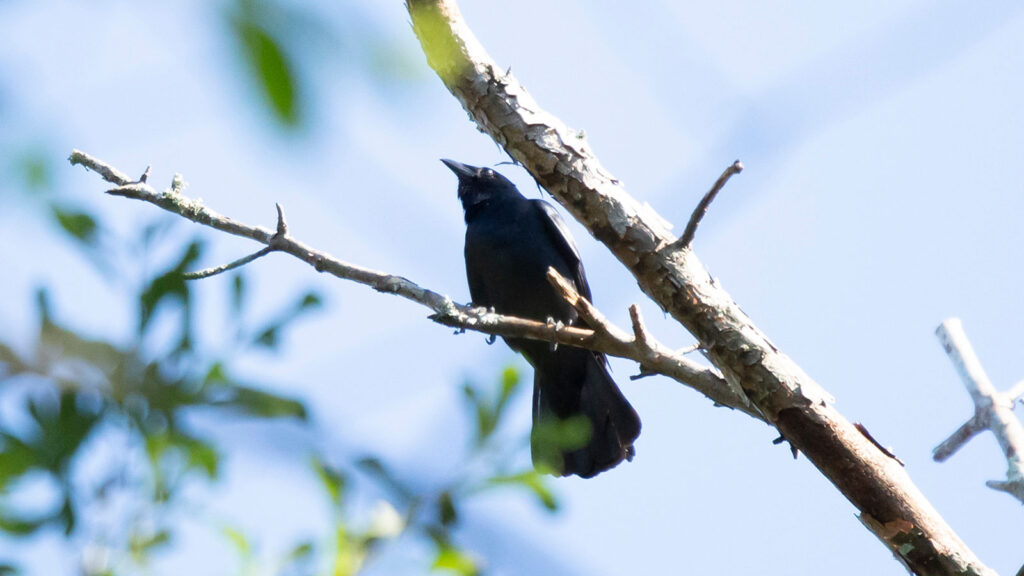
Kevin sees everything. He also has a plan for everything.
Kevin is an American Crow.
He lives near Grandma’s backyard, close to the two pecan trees where Biv the Blue Jay likes to make a fuss and Wilson the Red-bellied Woodpecker likes to peck for insects.
Kevin likes the pecan trees too.
He likes fallen pecans.
He likes birdseed.
He likes berries.
He likes bugs.
He likes anything that looks useful, edible, shiny, or easy to carry away before somebody else notices.
That last part causes problems.
Tootie sees Kevin walking across the yard one morning.
He takes three steps.
He stops.
He looks left.
He looks right.
He tilts his head toward the porch.
Then he picks up a cracker crumb and carries they away.
“Tootie,” Yoshi whispers, “I think Kevin knows we are watching.”
Grandma looks out the window.
“Kevin knows everything,” she says. “He probably knows what we had for breakfast.”
Kevin gives one loud caw! from the yard.
Biv answers from the pecan tree.
Wilson keeps pecking on the bark.
Grandma nods. “See? Staff meeting.”
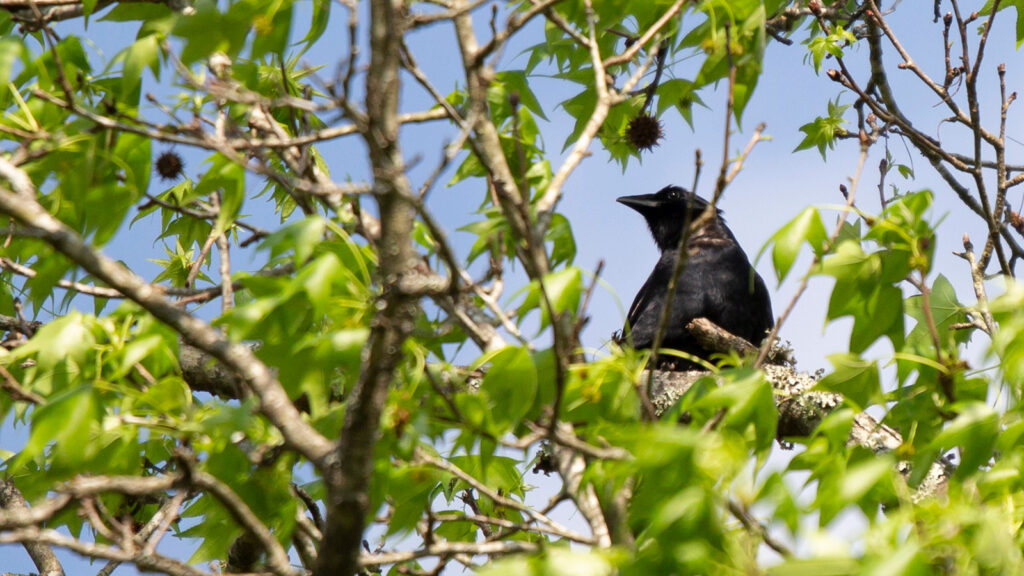
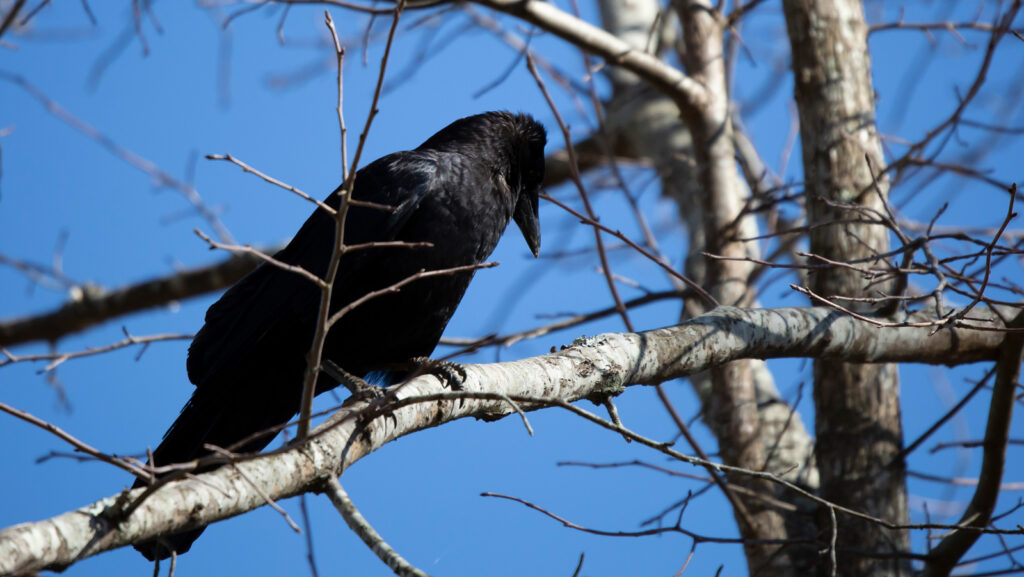
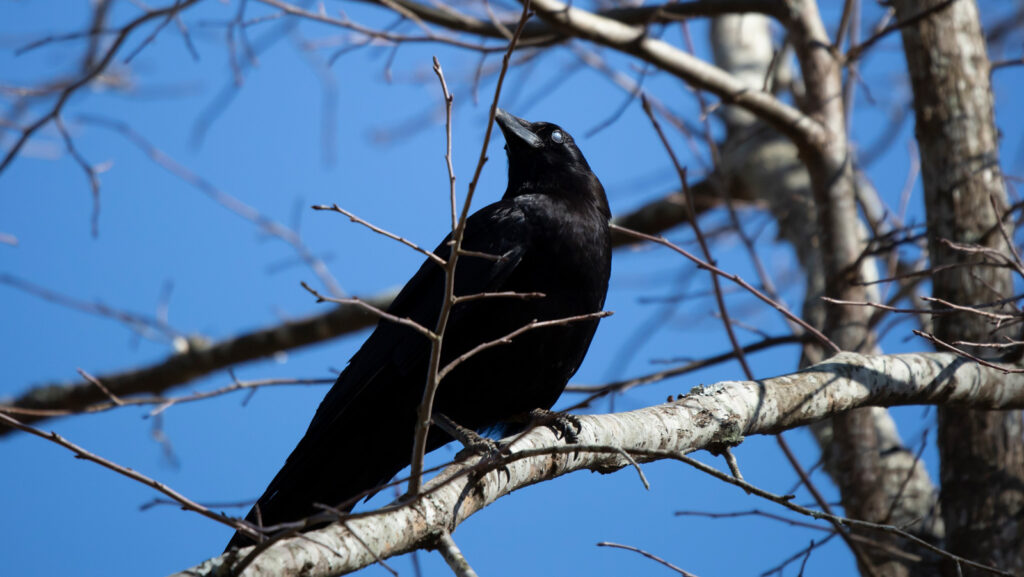
Kevin looks all black from far away.
Up close, his feathers can shine blue, purple, or green in the sunlight. His beak is black. His feet are black. His eyes are dark.
He has a strong beak for picking up food, pulling apart things he wants to eat, and carrying objects from one place to another.
Kevin also has sharp eyes.
He notices when a hawk flies overhead.
He notices when somebody fills a bird feeder.
He notices when Biv hides a pecan.
Biv does not enjoy that last one.
“Kevin is spying,” Biv says.
Kevin tilts his head.
“I am observing,” he says.
Grandma says, “That is what people say right before they borrow something and forget to bring they back.”
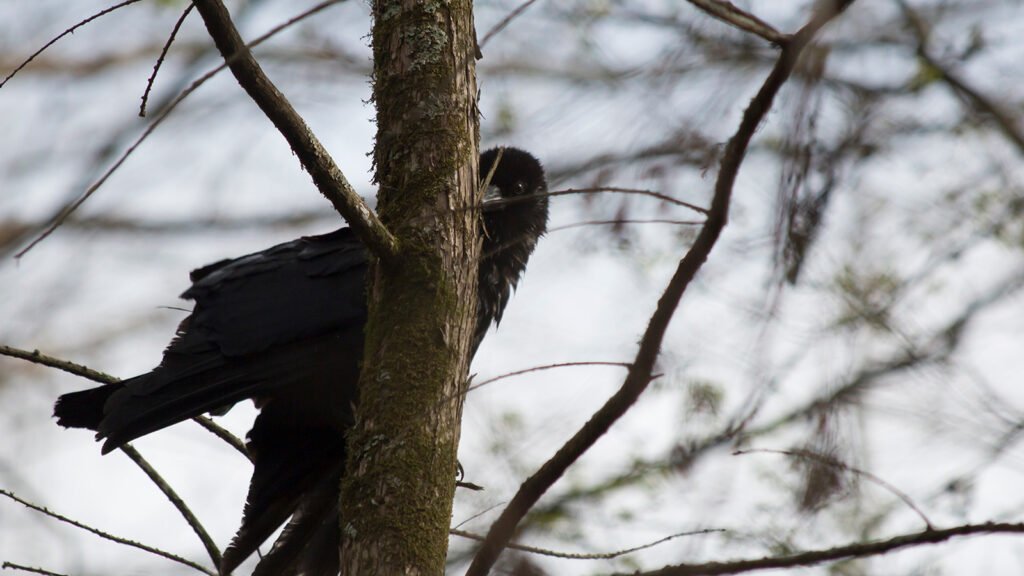
Kevin sleeps in trees.
During nesting season, Kevin and his mate build a nest high in a tree. Their nest is made from twigs. Inside, they add softer things like grass, bark, pine needles, or animal hair.
The nest holds the eggs and later the baby crows.
Kevin’s nest has no front door.
They do have security.
Kevin and his family watch the trees, the ground, the sky, the squirrel paths, the cat paths, and every branch that looks suspicious.
Tootie asks Grandma, “Do crows lock their doors?”
Grandma says, “Kevin does not need a lock. He has twelve cousins, three neighbors, and a voice loud enough to wake up the next county.”
Kevin caws from the tree.
Grandma looks up. “Case in point.”
Kevin did not grow up alone.
When he was a baby crow, he lived in a nest with his parents and his brothers and sisters. Baby crows hatch with very few feathers. They cannot fly. They need their parents to bring food and keep them safe.
Kevin’s parents fed him insects, soft foods, and whatever else they could find.
As Kevin grew, his feathers came in.
His wings got stronger.
He hopped along branches.
He practiced flapping.
He made loud baby crow noises until somebody brought him food.
Grandma says every family knows that stage.
Young crows leave the nest before they know everything. Their parents still feed them and watch over them while they learn where to find food and how to stay away from danger.
Some young crows stay close to their parents for a long time.
They may help care for younger brothers and sisters.
That means Kevin’s older siblings may have helped feed babies in the nest.
They may have helped warn the family about hawks.
They may have helped chase away danger.
Crows take family business seriously.
Now Kevin is grown.
He may have a mate during nesting season. Together, they build a nest, care for eggs, and feed their babies. Other family members may help too.
Tootie thinks that sounds nice.
Yoshi asks, “Do they have chores?”
Grandma looks toward Kevin.
“Kevin has chores,” she says. “He just calls them investigations.”
Kevin eats many kinds of food.
That makes him an omnivore.
An omnivore eats plant foods and animal foods.
Kevin eats pecans, acorns, seeds, berries, fruit, insects, worms, beetles, grasshoppers, crayfish, and small animals.
He may also eat food scraps that people leave behind.
Grandma says that does not mean people should feed Kevin junk food.
Birds need healthy food too.
In spring and summer, Kevin looks for insects and other small foods. Baby crows need protein to grow.
Protein helps bodies build muscles and feathers.
In fall, Kevin looks for nuts, seeds, and fruit. Pecans make a fine snack when he can get one before Biv does.
Kevin also watches what other animals find.
He may see a squirrel dig up a nut.
He may see Biv hide food.
He may see Wilson pull an insect from tree bark.
Kevin watches.
Kevin remembers.
Kevin waits.
Then Kevin tries his luck.
Biv calls this stealing.
Kevin calls they “paying attention.”
Kevin is clever.
Crows can solve problems.
They can figure out ways to reach food, move objects, and use things around them.
A tool is an object an animal uses to help do a job.
A stick can be a tool.
A rock can be a tool.
A piece of wire can be a tool.
Kevin sees a twig near the porch one afternoon.
A beetle crawls down into a narrow crack in an old piece of wood.
Kevin cannot reach they with his beak.
He picks up the twig.
He pokes they into the crack.
The beetle crawls out.
Kevin gets his snack.
Tootie stares at him.
“Kevin used a stick,” she says.
Kevin picks up the twig again.
“They are called a tool,” he says.
Yoshi looks impressed. “Can you fix Grandma’s porch step?”
Kevin drops the twig.
Grandma laughs.
“Kevin can use a tool,” she says. “That does not mean he has a contractor’s license.”
Kevin looks offended.
Then he flies off with the twig anyway.
Kevin says caw.
He says they loudly.
Crows use calls to talk to each other.
They call when they find food.
They call when they see danger.
They call when they want other crows to come closer.
They call when they are annoyed.
Kevin has many reasons to call.
When a hawk flies overhead, Kevin may give an alarm call. Other crows may join him. Together, they may fly around the hawk, call loudly, and try to make they leave.
That is called mobbing.
Mobbing means a group of smaller animals comes together to bother a bigger animal that may be dangerous.
Tootie sees Kevin and several crows chasing a hawk one day.
“Are they fighting they?” she asks.
“They are trying to make they go away,” Grandma says.
“Is they working?”
The hawk flies toward the trees farther away.
Grandma nods. “Kevin has a loud customer-service department.”
Kevin likes the pecan trees because they bring food.
Pecans fall.
Insects crawl under loose bark.
Birds visit branches.
Squirrels move through the leaves.
Biv hides nuts.
Wilson searches for bugs.
Kevin watches all of they.
One fall afternoon, Biv finds a pecan.
He carries they to the ground.
He looks around.
He pushes they under leaves.
Then he flies back into the tree.
Kevin lands beside the leaves.
Tootie gasps.
“Kevin saw them.”
Yoshi whispers, “Should we tell Biv?”
Grandma shakes her head.
“That is between two birds and one pecan.”
Kevin scratches through the leaves.
He finds the pecan.
Biv lands nearby.
“Thief!” Biv yells.
Kevin picks up the pecan.
“Observer,” he says.
Wilson pecks at the tree trunk.
Grandma watches from the porch.
“Woodpeckers stay out of crow and jay arguments,” she says. “They have learned a thing or two.”
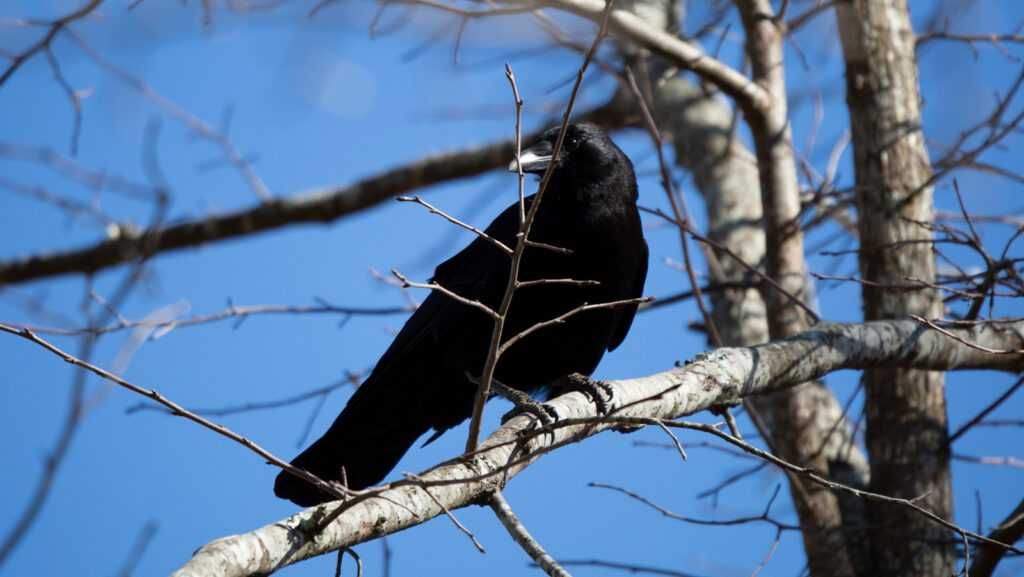
Kevin is a crow.
People sometimes mix up crows and ravens because both birds are black.
Ravens are usually bigger than crows.
Ravens have larger beaks and shaggier throat feathers.
A raven’s call often sounds deeper than a crow’s caw.
Kevin is an American Crow.
He has a fan-shaped tail when he spreads they in flight.
A raven has a tail shape that looks more pointed.
Tootie asks, “So Kevin is not a raven?”
Grandma says, “Nope.”
Kevin gives one loud caw!
Yoshi says, “He seems glad about that.”
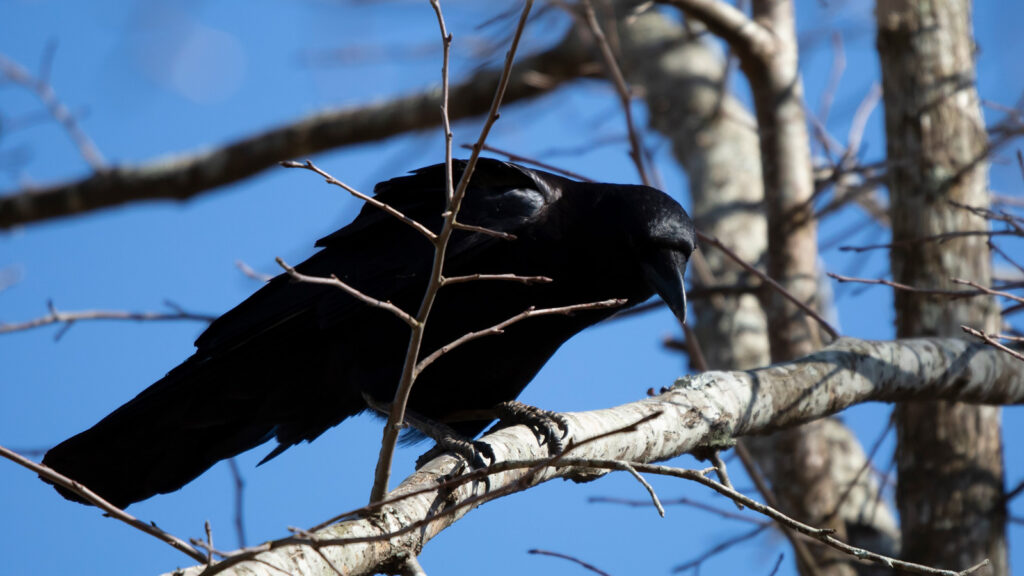
Kevin needs trees, water, and safe places to find food.
Native trees and shrubs can grow berries, seeds, nuts, and insects.
A clean birdbath gives crows and other birds a place to drink and bathe.
Keep pets indoors or supervised outside. Cats can catch birds, especially young birds learning to fly.
Do not leave trash open outside.
Crows can find food in trash, but old food, plastic, and wrappers can hurt wildlife.
Do not toss food at Kevin.
Do not try to touch him.
Do not climb near a crow nest.
Kevin can remember faces, and Grandma says nobody needs a crow holding a grudge over porch behavior.
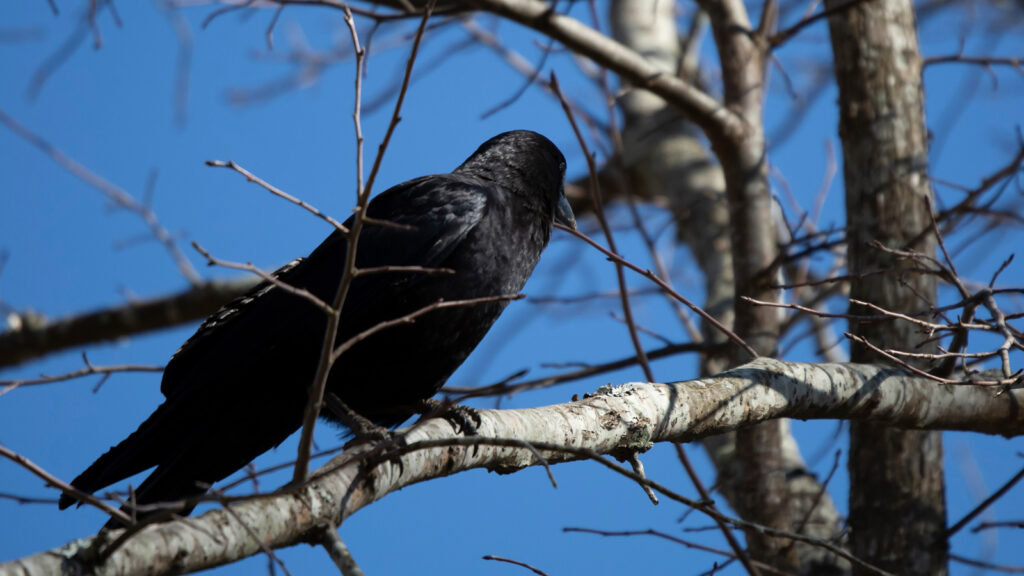
Draw a maze with these parts:
Start: Kevin on a tree branch
Safe stops: a twig, a berry bush, a birdbath, and Wilson on a tree trunk
Wrong turns: a cat under a shrub, a hawk shadow, an open trash bag, and Biv guarding a pecan
Finish: A crack in an old log with Kevin’s beetle snack
Add Tootie and Yoshi near the birdbath. They can point toward the safe path.
Maze caption:
Kevin found a beetle hiding inside a crack. Help him reach his twig tool without flying into trouble.
Kevin the Crow
These are some helpful words for talking about this wild neighbor.
Kevin the Crow
Good wildlife watchers ask good questions. Here are a few to get you started.
Crows use calls to talk to family members, warn about danger, and tell other crows about food.
No. Kevin eats nuts, fruit, insects, worms, small animals, and many other foods.
Crows can solve problems and use objects to help reach food. A stick can become a tool when a crow uses they to do a job.
Often, yes. Young crows may stay near their parents and help care for younger baby crows.
Kevin may take food he finds. Biv has strong feelings about this.
No. Kevin is an American Crow. Ravens are larger and have different tail shapes and calls.
They are better to help birds by planting native plants, keeping water clean, and keeping trash covered.
Use only clean, safe objects for this activity. Do not pick up sharp metal, broken glass, animal droppings, or dead wildlife. Watch crows from a distance. Do not approach nests, eggs, young birds, or adult birds that are warning you away.
🏅 Explorer Progress