Why is Natalie called a gnatcatcher?
Grandma says:
She eats gnats and many other tiny insects.
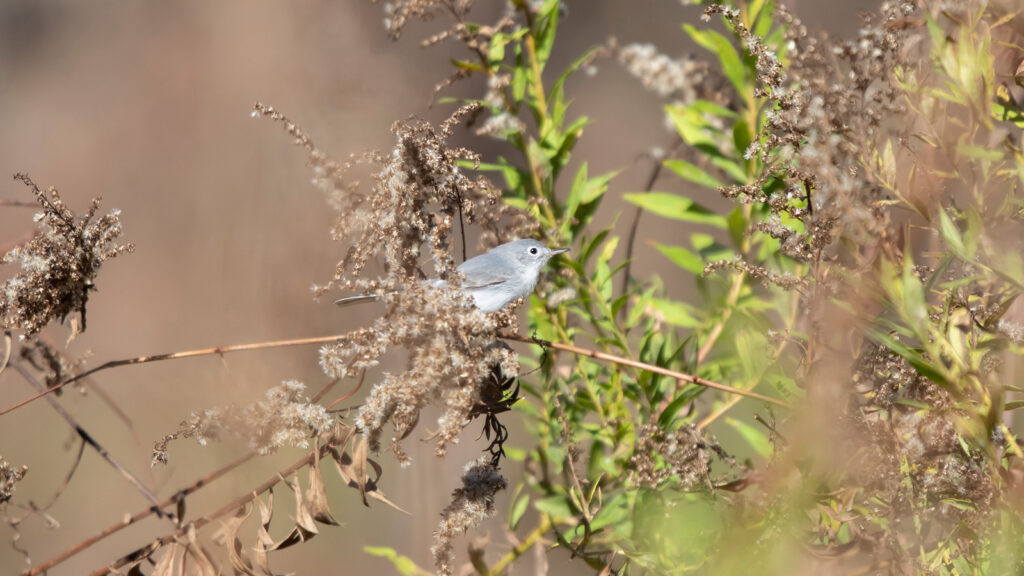
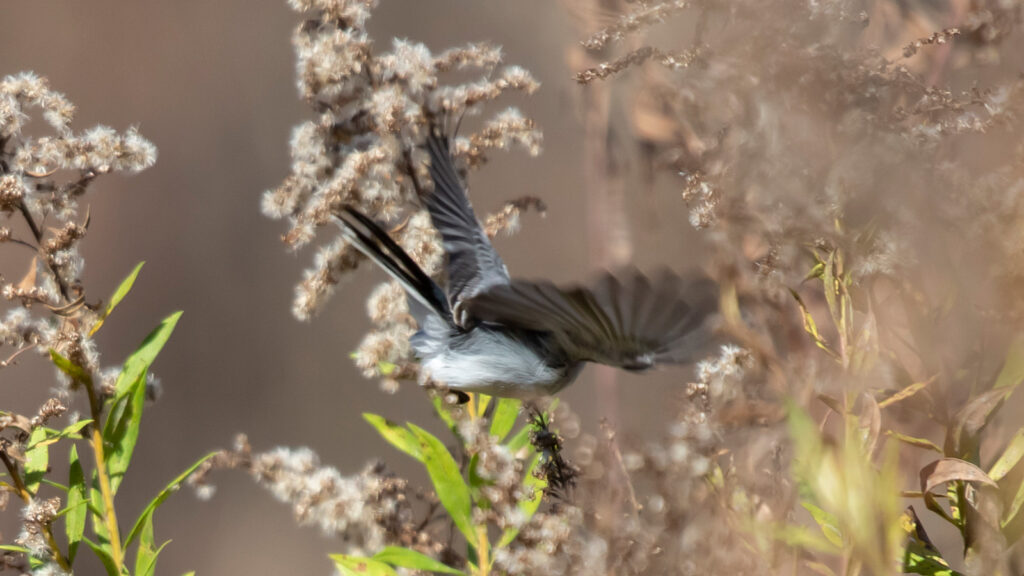
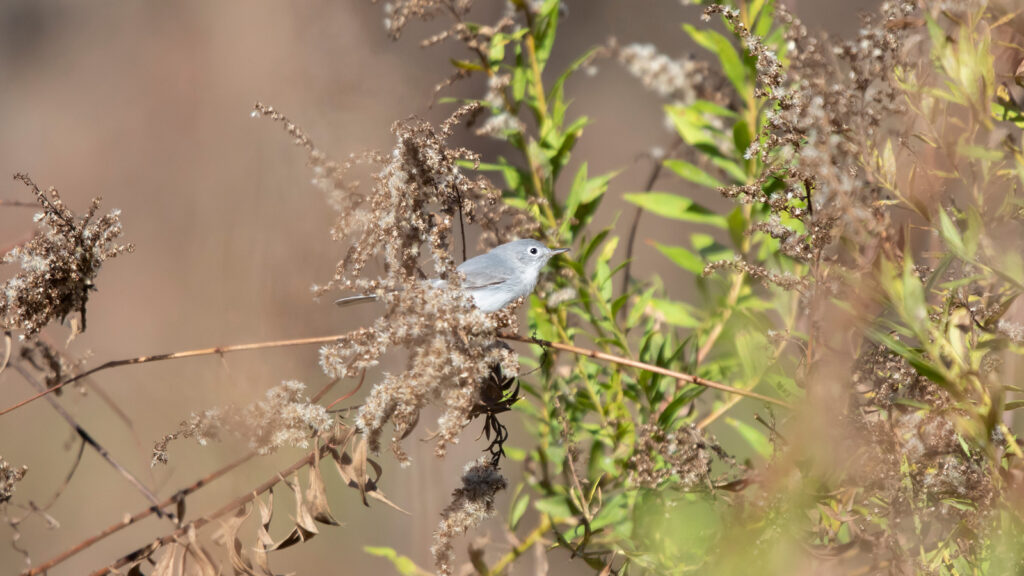
Natalie is a tiny blue-gray bird with a long tail, a white eye ring, and the kind of busy little energy that makes Ruby look like she is taking a nap.
Natalie is a Blue-gray Gnatcatcher. She is small and slim with blue-gray feathers above, a pale belly, a thin pointed beak, and a long tail edged with white. She flicks that tail from side to side while she searches leaves and twigs for tiny insects.
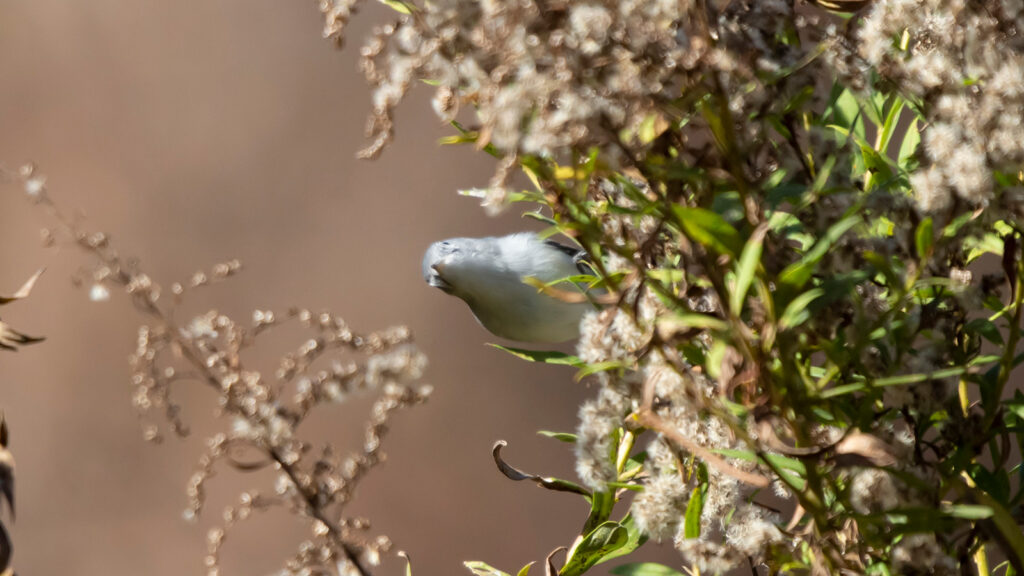
One spring morning, Tootie notices a small bird moving through the branches near the creek behind Grandma’s house. Natalie hops to the end of a twig, flicks her tail, turns upside down under a leaf, then zips after something in the air.
Tootie’s droopy ears lift. “Ruby found a bigger branch.”
Yoshi’s pointy ears twitch. “That is not Ruby.”
Grandma watches the bird flick through the leaves. “That is Natalie. She is a Blue-gray Gnatcatcher.”
Natalie catches a tiny insect and moves to the next branch before Tootie can blink.
Tootie looks impressed. “She is very busy.”
Grandma nods. “That is one way to spot a gnatcatcher. Look for the bird that seems to be checking every leaf in the county.”
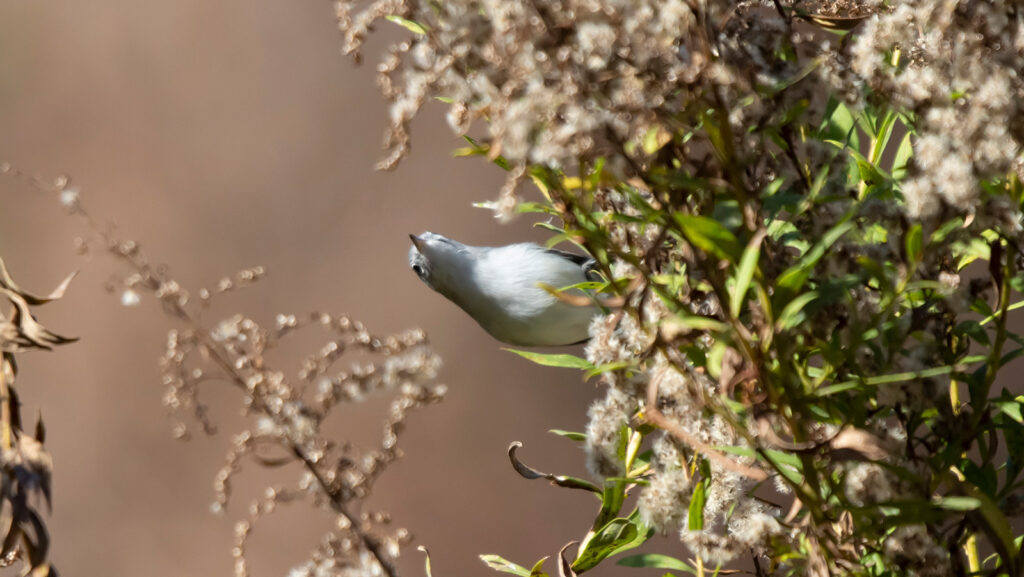
Natalie uses trees, shrubs, creekside branches, and leafy edges where insects and spiders live. Blue-gray Gnatcatchers often use broadleaf woods, brushy places, and streamside trees. Grandma’s creek gives Natalie a good stretch of branches to search, while the shrubs and small trees around the yard give her cover and food.
Natalie does not need the big open sky that Zip likes. She likes the outer parts of trees and shrubs where leaves, twigs, and spiderwebs hold tiny meals. She moves through the branches quickly, checking under leaves, along bark, and around curled plant edges.
Tootie watches Natalie swing upside down under a leaf. “Why does she not just wait for bugs to come by?”
Grandma says, “Because Natalie’s food is small and hiding. She has to look for they.”
Yoshi watches Natalie flick her tail. “She is searching every corner.”
“That is exactly what she is doing,” Grandma says.
Natalie may use the same creekside trees as Dart, Ruby, and Rumpy, but she uses them differently. Dart sees the yard from the air. Ruby works through shrubs in cooler weather. Natalie moves through leaves and branch tips, checking places most birds pass right by.
Natalie began life in a tiny cup-shaped nest built high on a branch. Blue-gray Gnatcatcher parents build neat little nests with plant fibers, bark strips, moss, lichens, and spiderweb. The spiderweb helps hold the nest together and fasten they to the branch.
Both Natalie’s mother and father helped choose a nest place and build they. They worked together to make a small, strong cup that could hold eggs and babies even when the branch moved in the wind.
Tootie looks at the small bird and then at a high branch. “That nest must be tiny.”
Grandma nods. “They are. Gnatcatchers are tiny birds, so their nests are tiny too.”
When Natalie hatched, she had no strong wings and no way to find food. Her parents brought insects and spiders to the nest while she and her brothers or sisters grew feathers. Both parents helped care for the babies, bringing food and keeping watch.
As Natalie got bigger, she learned how to balance on thin twigs, use her pointed beak to pick bugs from leaves, and flick through branches without falling. She also learned that spiderwebs can help hold a nest together but can be dangerous if a bird gets tangled in the wrong one.
Yoshi watches Natalie move through a branch tip. “She learned to use small places.”
Grandma says, “She did. A tiny bird has to be very sure of her feet.”
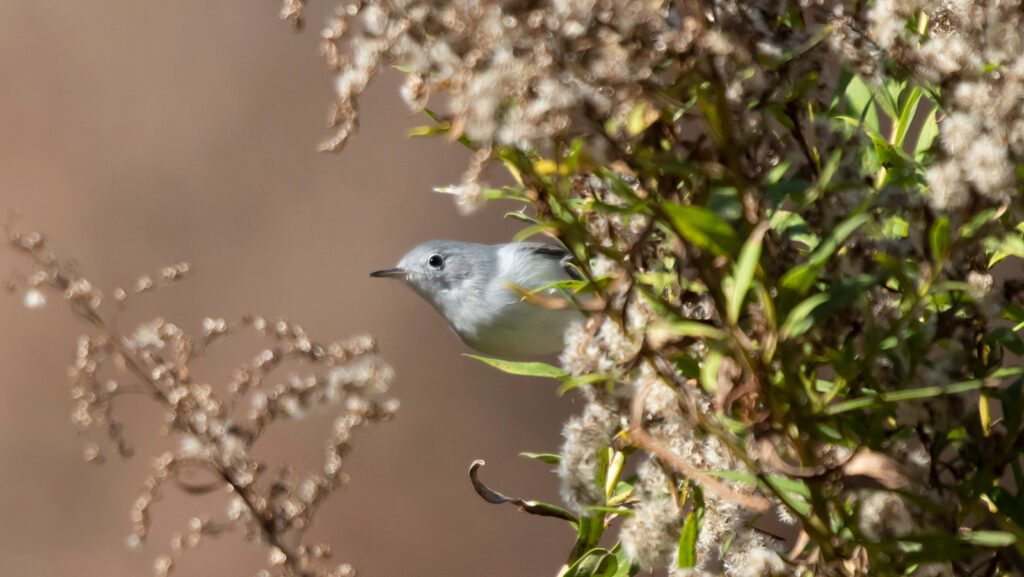
Natalie eats insects and spiders. Gnats are part of her diet, which is why people call her a gnatcatcher, but she eats more than gnats. She may hunt tiny flies, beetles, caterpillars, moths, leafhoppers, spiders, and insect eggs.
Her thin pointed beak helps her pick food from leaves and bark. She may grab prey while perched, hover briefly to reach a leaf, or fly out after an insect in the air.
One afternoon, Natalie flicks her tail near a creekside branch. A tiny fly jumps from the leaf as she moves.
Natalie darts after they.
Tootie watches her come back to the branch. “Did she scare they out on purpose?”
Grandma smiles. “Sometimes a bird’s movement can make insects move. Then Natalie can see them.”
Yoshi watches Natalie check another leaf. “She makes the bugs give themselves away.”
“That is a good way to say they,” Grandma says.
Natalie needs many small meals because she is so tiny and active. A yard with trees, shrubs, creekside plants, and insects gives her a steady place to hunt.
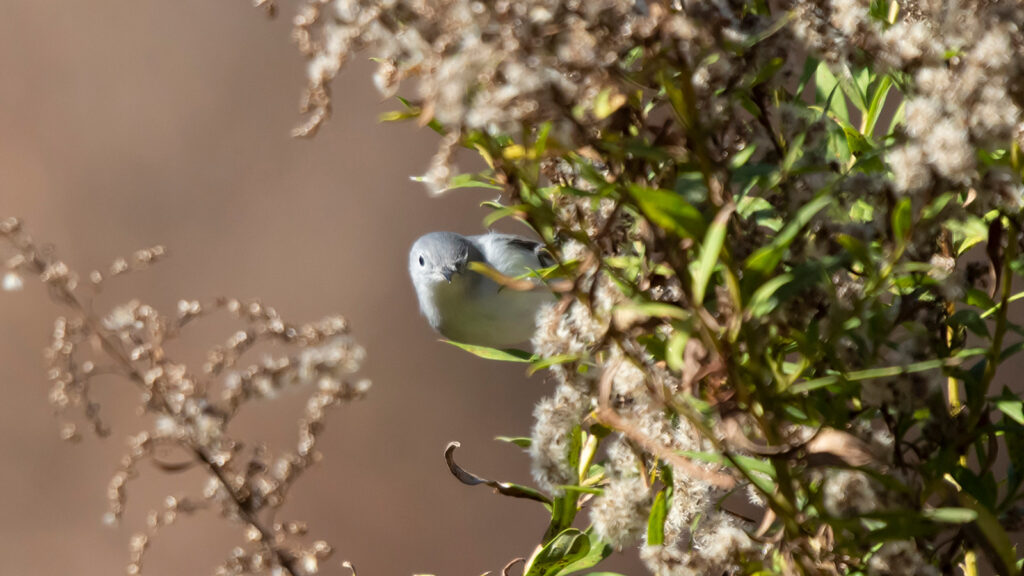
Natalie’s tail is long for such a small bird. They have white outer feathers that flash when she flicks they from side to side. That tail movement is one of the easiest ways to notice a Blue-gray Gnatcatcher.
Tootie sees Natalie’s tail moving before he notices the rest of her.
“Her tail is waving,” he says.
Grandma nods. “Gnatcatchers flick their tails a lot while they hunt.”
Natalie moves along the twig, flicking the tail left and right. A tiny insect moves from under a leaf, and Natalie catches they.
Yoshi watches carefully. “They helps her hunt.”
“They may,” Grandma says. “Moving through leaves can make insects move, and Natalie notices movement very quickly.”
Natalie’s long tail also helps her balance while she twists, hops, and reaches through thin branches. She does not sit still for long, so every part of her body has a job.
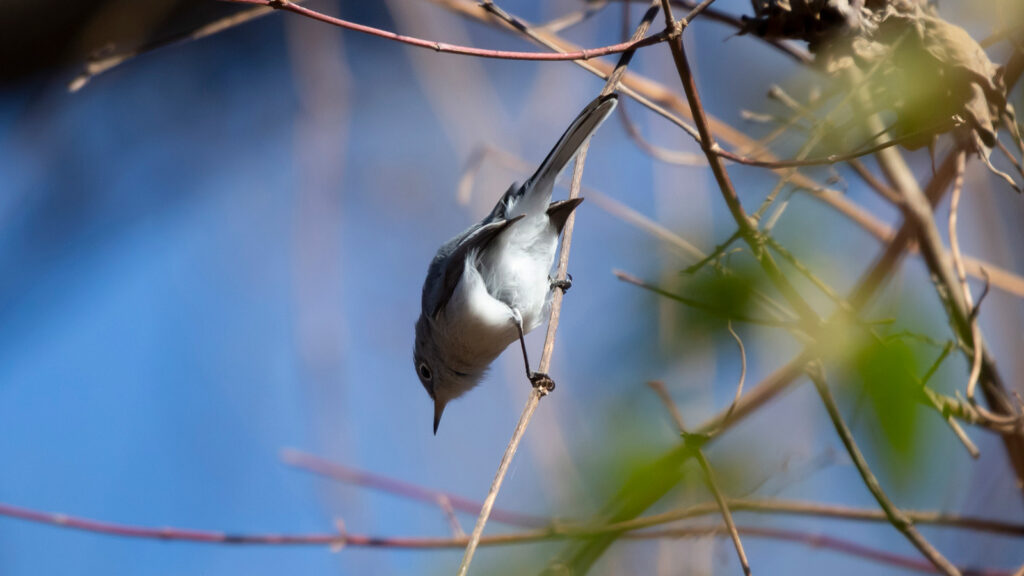
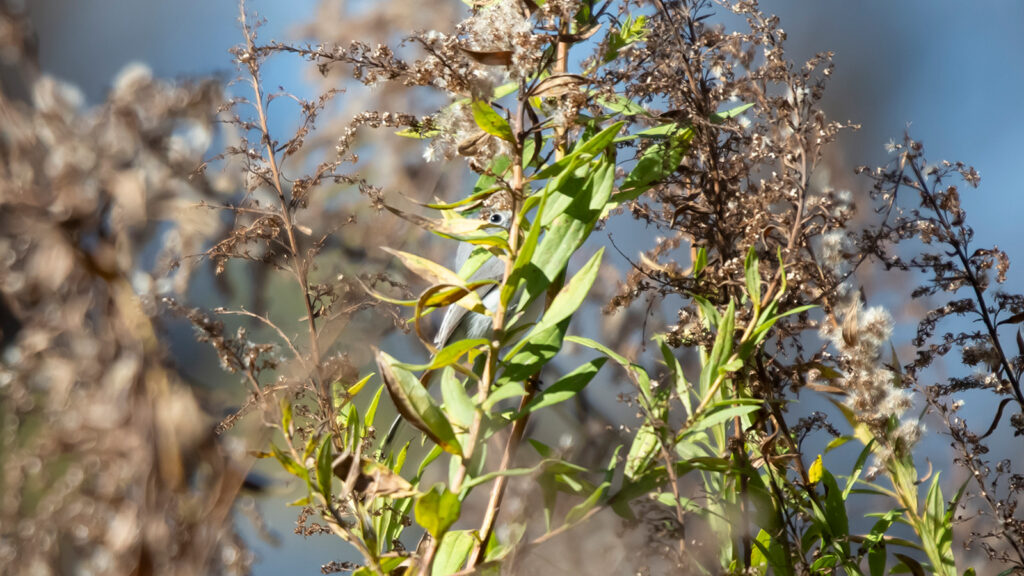
Natalie has blue-gray feathers on top and pale feathers underneath. A thin white ring circles each eye, making her look alert even when she is just stopping for one second before racing to the next leaf.
Tootie sees her in the shade and says, “She looks gray.”
Then Natalie moves into sunlight, and the feathers on her back look blue-gray.
Grandma says, “Light can change how feathers look, just like Zip’s red throat looks different when he turns.”
Natalie’s colors help her blend into gray bark, soft shadows, sky-bright leaves, and branch tips. She is not as bright as Roy, and she does not flash yellow like Rumpy. You have to look closely to see her.
Yoshi watches Natalie settle for one quiet moment. “Her eye ring helps.”
“They do,” Grandma says. “That white circle can help you find her face when the rest of her blends into the branches.”
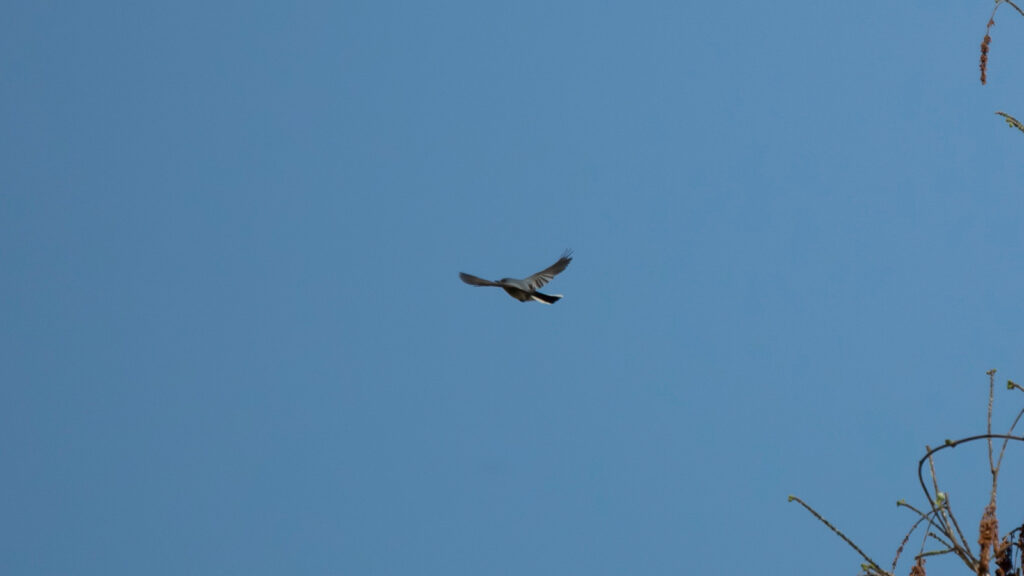
Natalie uses Grandma’s yard during the warm part of the year, when trees are full of leaves and insects are plentiful. She and other Blue-gray Gnatcatchers may move through the creekside branches, build nests, and raise young in places with enough cover and food.
When Natalie has babies, both parents help. They bring tiny insects and spiders to the nest. The babies grow quickly, but they need time before they can follow their parents through leaves and catch their own food.
Tootie looks toward the branches. “Do baby Natalies flick their tails too?”
Grandma smiles. “They learn the same kinds of movements as they grow.”
Yoshi watches Natalie chase an insect. “They have a lot to learn.”
“Balancing, hunting, flying, hiding, and listening,” Grandma says. “That is a full childhood.”
Natalie’s nest can look like a knot or little bump on a branch because the outside is covered with lichen and plant material. They blends in so well that people may look right at they without knowing what they are.
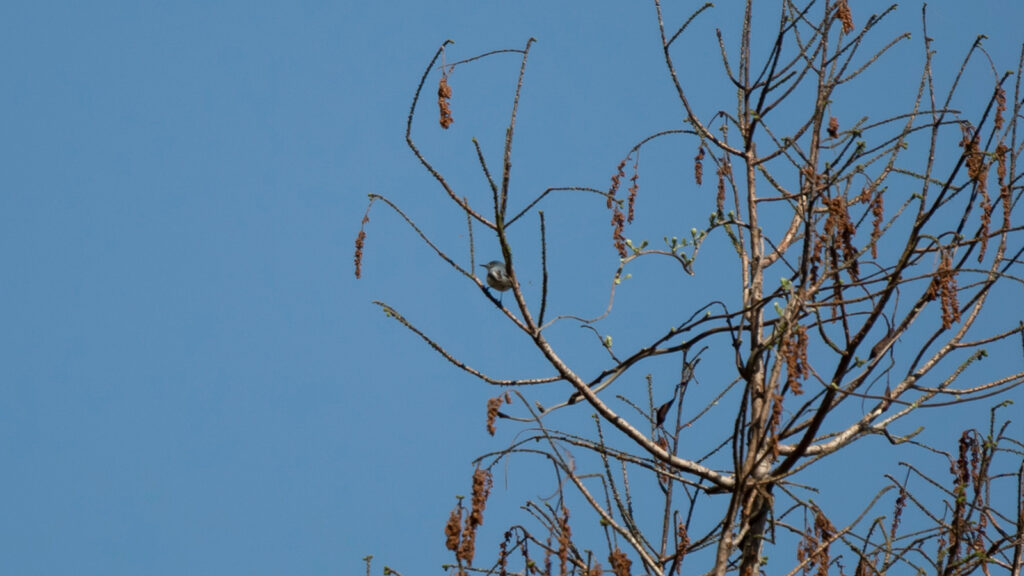
Natalie and Ruby are both tiny birds who check leaves for insects, but they do not use the yard at the same time in exactly the same way. Ruby is a Ruby-crowned Kinglet who visits during the cooler months. Natalie is more likely to use the creekside trees during the warmer season.
Natalie is blue-gray with a long white-edged tail. Ruby is olive-gray with pale wing bars and a hidden red crown. Natalie flicks her tail through branches. Ruby flicks his wings and checks leaves like he is conducting an inspection.
Tootie sees a small bird in a shrub one day and asks, “Ruby?”
Grandma says, “Look for the tail.”
Natalie flicks they once.
Tootie nods. “Natalie.”
Yoshi watches the bird move along a twig. “They are both fast.”
“They are,” Grandma says. “But every bird has their own little way of being fast.”
Natalie knows the yard from the branches. She sees Grandma carrying tools through the flower beds, Yoshi resting under the porch shade, and Tootie trying to sit still long enough for birds to forget he is there.
One afternoon, Biv lands on a branch near Natalie and watches her flick through the leaves.
“You have checked that branch four times,” he says.
Natalie keeps hunting.
“You missed nothing,” Biv says.
Natalie catches a tiny bug.
Biv pauses. “Fine. You missed one thing.”
Grandma hears this from below. “Natalie has better eyesight than you do, Biv.”
Biv looks offended.
Tootie watches Natalie hunt without chasing her. After a few minutes, she comes closer to the porch and checks a branch near the flower bed.
Tootie whispers, “She trusts me.”
Grandma says, “She trusts that you are sitting still.”
Yoshi says, “That is progress.”
Grandma likes having Natalie around because gnatcatchers eat tiny insects that live in leaves and branches. She does not spray broad insect killers over every shrub, because Natalie needs those insects for food.
She also keeps the creekside trees and shrubs as natural as she can. A perfect-looking yard with every twig cut away may leave small birds with fewer places to find food and hide from larger animals.
Tootie looks at Natalie moving through the leaves. “Can I get closer?”
Grandma says, “You can stay where you are.”
“Tootie,” Yoshi adds.
“I know,” Tootie says.
Grandma smiles. “Natalie needs room to decide where she wants to go. That is how wild birds stay safe.”
Natalie needs shrubs, trees, creekside cover, insects, spiders, and safe places to build a nest. Native or well-suited plants can help by holding insect life and providing branches where birds can hunt.
Keep cats indoors when possible, especially during nesting season. Avoid broad insect sprays, and leave some natural leaf litter and shrub growth in quiet parts of the yard. Those places hold the tiny creatures Natalie needs to eat.
Grandma says, “Natalie does not need a fancy birdhouse. She needs a real bird neighborhood with branches, bugs, and enough peace to raise a family.”
Yoshi watches Natalie flick through the creekside trees. “And no puppy inspections.”
Grandma nods. “That is always a good start.”
Natalie the Blue-gray Gnatcatcher
These are some helpful words for talking about this wild neighbor.
Natalie the Blue-gray Gnatcatcher
Good wildlife watchers ask good questions. Here are a few to get you started.
She eats gnats and many other tiny insects.
Natalie eats tiny insects, spiders, caterpillars, beetles, flies, and insect eggs.
Her tail flicking may help stir insects into motion and also helps her balance as she moves through branches.
She and her mate use plant material, lichen, and spiderweb to build and hold together a tiny cup nest.
No. Ruby is a Ruby-crowned Kinglet. Natalie is a Blue-gray Gnatcatcher with a longer white-edged tail.
No. Natalie is a wild bird. Watch her from a distance.
Insects are one of her main foods, especially when she is feeding babies.
Watch small birds from a distance. Keep cats indoors when possible, avoid broad insect sprays, and leave some shrubs, creekside branches, and leaf litter in place. Tiny birds like Natalie need those places for cover and for the insects and spiders they eat. Think About They: Why might a bird need both a safe branch and a safe place to find food?