Is Bucky a butterfly?
Grandma says:
No. Bucky is a moth.
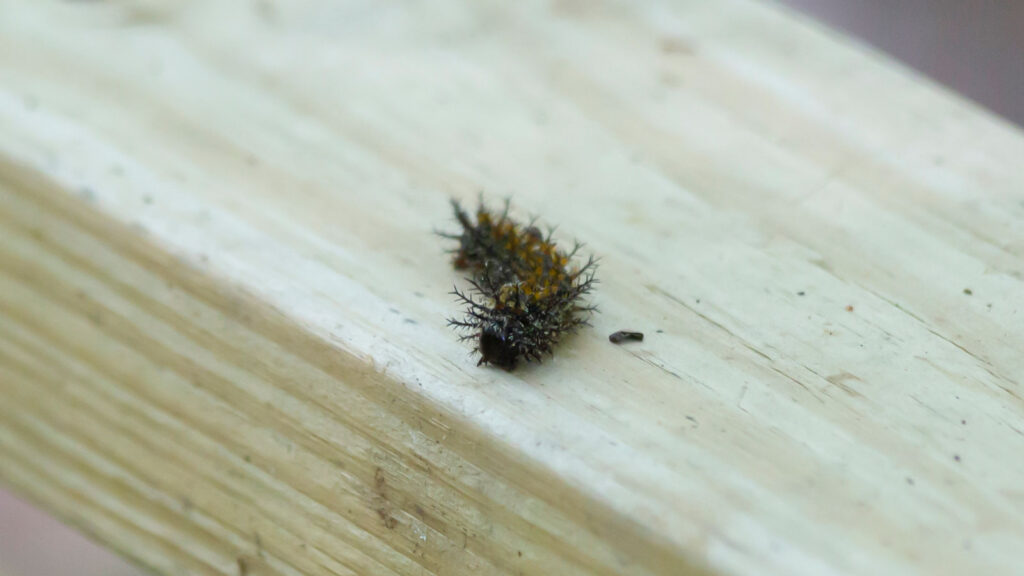
Bucky is a black-and-white moth with big wings, an oak-tree childhood, and a caterpillar stage that looks like they borrowed every sharp little spine in the forest.
Bucky is a Buck Moth. As an adult, he has mostly black wings crossed by pale white bands. Each wing also has a dark eye-like spot, which can make him look like he is carrying tiny windows on his wings.
Bucky is not a butterfly. He is a moth. He flies during the day in fall, which surprises Tootie because he thinks moths only come out around porch lights at night.
One autumn afternoon, Tootie sees a black-and-white moth fluttering near the oak trees by the creek.
“Mary forgot her orange,” he says.
Yoshi’s pointy ears twitch. “Different flyer.”
Grandma looks toward the oak branch. “That is Bucky. He is a Buck Moth.”
Bucky settles on a leaf, opens his wings, and shows the pale bands across the dark black.
Tootie watches him carefully. “He looks serious.”
Grandma says, “He has had a very interesting year.”
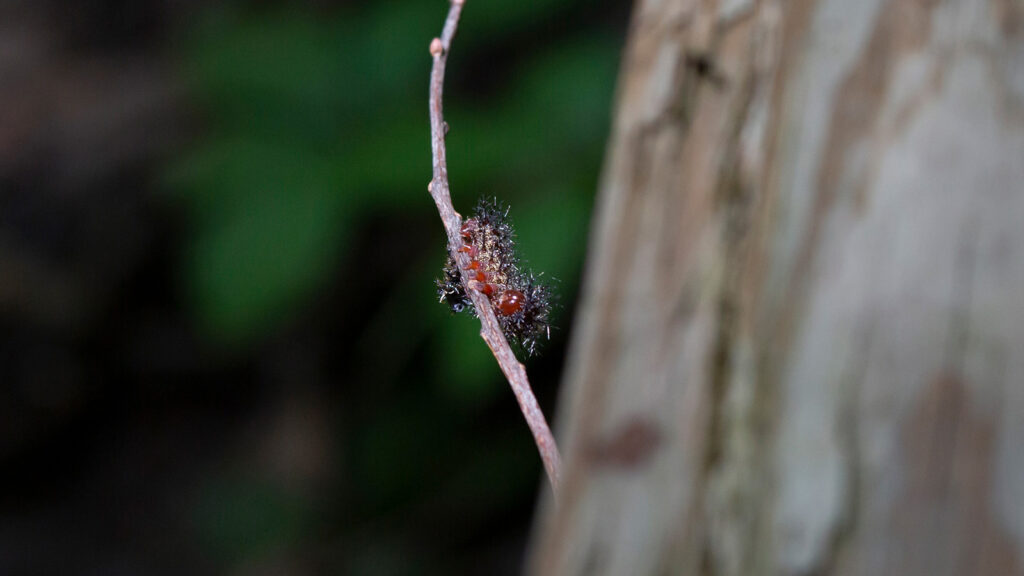
Bucky’s family needs oak trees. Buck Moth caterpillars eat oak leaves, so oak trees are the most important part of their home. They may use live oaks, water oaks, white oaks, red oaks, and other kinds of oak depending on what grows nearby.
Grandma’s yard has pecan trees, but the creekside woods and nearby edges have oak trees too. That is where Bucky’s caterpillar life happens. The adult moth may fly through open spaces and rest on branches, but the caterpillars need oak leaves to eat and grow.
Tootie looks at an oak leaf. “So Bucky lives in the oak tree?”
Grandma says, “His caterpillar stage does. The adult moth uses the trees too, but he can fly farther.”
Yoshi watches the leaves move above the creek. “The oak is the important part.”
“Exactly,” Grandma says. “Without oak leaves, Bucky’s caterpillars would not have the food they need.”
Buck Moth caterpillars may gather in groups on oak branches when they are young. That means one branch can suddenly look crowded with dark, spiny caterpillars.
Bucky began life as an egg laid in a ring around a small oak twig. His mother placed many eggs together, making a neat band around the branch. Those eggs stayed there through winter.
When spring came and oak leaves began to open, the eggs hatched. Bucky was not a moth yet. He was a tiny black caterpillar.
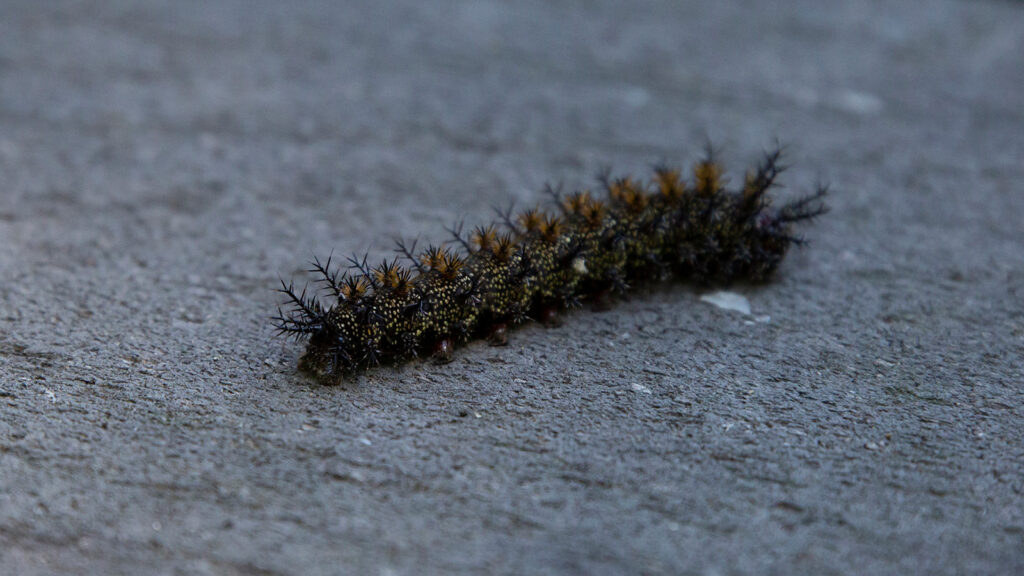
Young Buck Moth caterpillars often stay together in groups. As they grow, they eat oak leaves, shed their old skins, and become larger. Their bodies may be dark with pale spots, and they have rows of branching spines.
Tootie hears this and looks toward the oak tree. “So Bucky used to be a little spiky leaf eater?”
Grandma nods. “That is right.”
As Bucky grew, he molted several times. Each molt gave him more room to grow. Eventually, he left the oak branch and went down into leaf litter or soft soil to make a cocoon.
Inside the cocoon, Bucky changed from a caterpillar into an adult moth. He stayed there through the hot part of the year, then came out in fall with wings.
Yoshi watches Bucky flutter toward a branch. “He waited a long time.”
Grandma says, “Some animals do their growing where nobody can see them.”
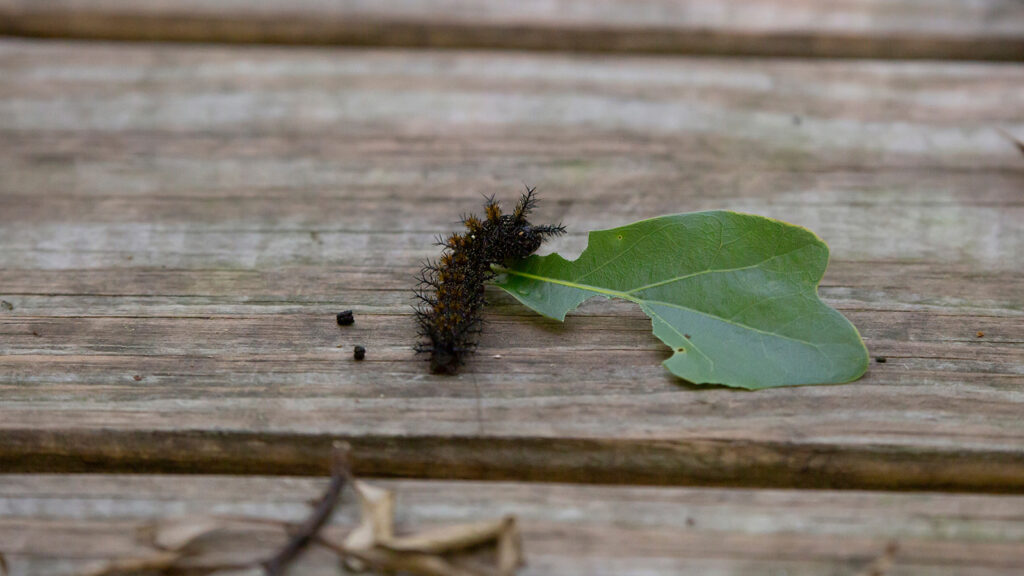
Bucky’s caterpillar stage eats oak leaves. That is the food that helps him grow big enough to become a moth.
The adult Buck Moth does not chew oak leaves the way the caterpillar does. Adult moths have a very short job: find a mate, lay eggs, and begin the next generation. Some adult moths in Bucky’s family do not eat much or may not feed at all as adults.
Tootie watches Bucky resting on a branch. “Does he need flowers like Mary?”
Grandma says, “Not the same way. Bucky’s big eating stage was when he was a caterpillar.”
Yoshi looks at the oak leaves. “So the caterpillar eats for the moth.”
“That is a very good way to think about they,” Grandma says.
Bucky’s caterpillar needs oak leaves. Bucky’s adult stage needs safe places to fly, rest, find a mate, and lay eggs on oak twigs.
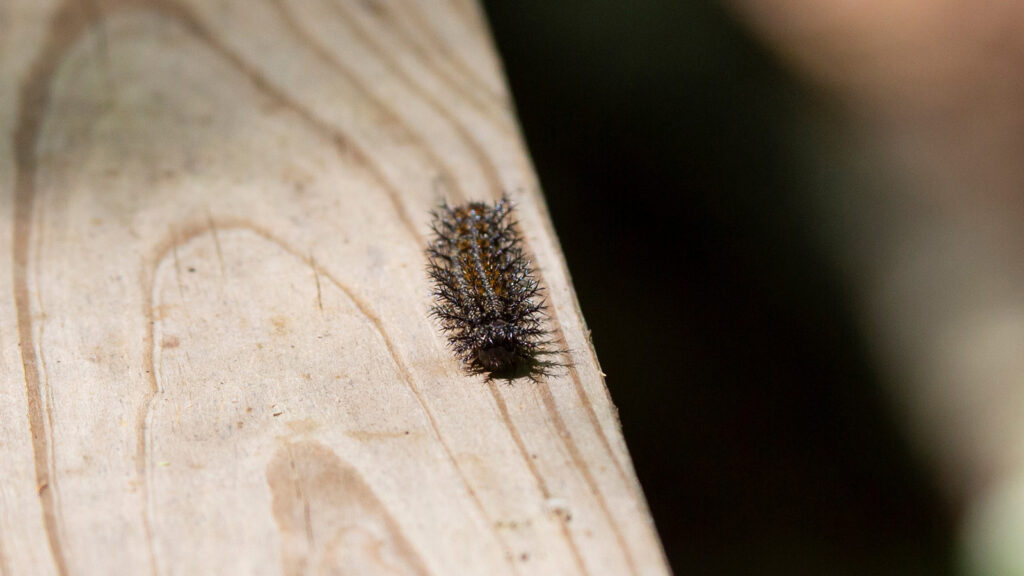
Bucky’s caterpillar stage has branched spines all over their body. Those spines can sting if someone touches the caterpillar. The sting can hurt, burn, itch, and leave a rash or swelling.
Grandma makes this rule very clear: look at Buck Moth caterpillars, but never touch them.
Tootie sees a group of spiny caterpillars on an oak branch.
“Can I smell them?” he asks.
Grandma says, “No.”
“Tootie,” Yoshi adds.
“I only asked.”
Grandma points toward the branch. “Those caterpillars have stinging spines. You do not touch them, pick them up, poke them, or let a dog sniff close.”
Bucky is not trying to be mean. The spines help protect the caterpillar from animals that might want to eat they. But people and pets need to give they a wide, safe distance.
If someone brushes against a Buck Moth caterpillar, they should tell a grown-up right away. Do not rub the area, because rubbing can push tiny spine pieces farther into the skin.
A grown-up can carefully remove visible spines with tape if appropriate, wash the area gently, and watch for worsening pain, swelling, trouble breathing, or other serious symptoms. A doctor or poison-control professional can give guidance if needed.
Tootie listens with wide eyes. “So we do not touch the spiky caterpillar.”
Grandma says, “Exactly. Looking is enough.”
Yoshi watches the oak branch. “That is sensible.”
Grandma says, “Very.”
The adult moth does not have those stinging caterpillar spines. Bucky is safe to watch when he is flying, but Grandma still does not let Tootie chase or grab him.
Adult Buck Moths have striking black wings crossed with pale white bands. They may also show dark eye-like spots on the wings. The patterns help make Bucky easy to recognize in fall.
Tootie watches Bucky open his wings on an oak branch.
“He looks like a moth in a tuxedo,” he says.
Grandma laughs. “That is one way to describe black and white.”
Yoshi watches the wing spots. “Why does he have eye spots?”
Grandma says, “Many insects have patterns that can make them look bigger or harder to understand to predators. Sometimes eye-like marks may help startle an animal for a second.”
Bucky’s wings are much larger than Mary’s or Faye’s. He is part of a group of large moths sometimes called giant silkworm moth relatives, though he does not spin silk the way people may picture a silkworm doing.
Bucky comes out as an adult moth in fall. That is unusual compared with many butterflies and moths people see in spring or summer.
The adults fly during daylight, especially on warmer fall days. They look for mates, and females lay eggs in rings around oak twigs. Those eggs stay through winter, waiting for spring oak leaves.
Tootie sees Bucky flying in afternoon sunlight.
“He is out before dark,” he says.
Grandma nods. “Buck Moths are day-flying moths.”
Yoshi watches Bucky land on an oak twig. “Then the eggs wait all winter?”
“That is right,” Grandma says. “Bucky’s family plans ahead.”
The fall flight season means Bucky may show up when other butterflies are beginning to slow down. His black-and-white wings can look especially bold against brown leaves and blue fall skies.
Bucky sees the backyard from the oak branches and creekside woods. He sees Inouar singing from a fence, Dash hunting over the slow bend, Goldie’s web shining in the afternoon, and Tootie trying to look at everything at once.
One fall day, Inouar lands on an oak branch near Bucky.
“You are very quiet,” she says.
Bucky does not answer.
Inouar copies a moth-wing sound.
Bucky does not answer.
Tootie whispers, “He does not care.”
Grandma says, “Bucky has a short adult life. He has places to be.”
Yoshi watches Bucky fly to another branch. “He is not looking for bugs.”
“No,” Grandma says. “His caterpillar stage did the eating. Adult Bucky is handling the next part.”
Grandma enjoys seeing Bucky’s adult moth stage, but she takes Buck Moth caterpillars seriously. She teaches Tootie and Yoshi to stay away from caterpillars covered in spines, especially on oak branches or near leaf litter below them.
She does not let children touch unknown caterpillars. Some caterpillars are harmless, but some can sting or irritate skin. Looking closely with eyes is safer than picking up every interesting bug.
Tootie looks at an oak branch. “Can I point?”
Grandma says, “You can point from back here.”
“Tootie,” Yoshi adds.
“I know.”
Grandma says, “Bucky’s caterpillar is part of the creekside world. We respect they by giving they room.”
Bucky needs oak trees, leaf litter, and space around the creekside woods. Oak leaves feed the caterpillars, and leaf litter or soft soil can give them places to make cocoons.
Grandma avoids spraying broad insect killers on oaks. She also keeps the yard safe by teaching everyone not to handle spiny caterpillars. A healthy oak edge can support moths, birds, insects, and many other animals, but they do not need people touching everything that lives there.
Grandma says, “Bucky needs oak leaves, a little leaf litter, and a family that knows not to pet the caterpillars.”
Yoshi watches the oak branches. “That is a very important family rule.”
Bucky the Buck Moth
These are some helpful words for talking about this wild neighbor.
Bucky the Buck Moth
Good wildlife watchers ask good questions. Here are a few to get you started.
No. Bucky is a moth.
They eats oak leaves.
Yes. Their branched spines can cause a painful sting, so never touch them.
No. The adult Buck Moth does not have the caterpillar’s stinging spines.
Adult Buck Moths emerge in fall to mate and lay eggs on oak twigs.
They wait safely until spring, when fresh oak leaves grow for the caterpillars.
Do not touch the caterpillar or grab the adult moth. Watch from a safe distance.
Buck Moth caterpillars can sting. Do not touch, handle, or brush against them, and keep children and pets away from spiny caterpillars on oak trees or in leaf litter. If contact happens, tell a grown-up immediately, avoid rubbing the area, and seek medical or poison-control guidance for severe pain, swelling, trouble breathing, or other concerning symptoms. Think About They: Why is learning one clear safety rule better than being scared of every caterpillar?