Why is Carol so loud if she is so small?
Grandma says:
Carolina Wrens use loud songs to communicate, stay in touch, and defend their space.
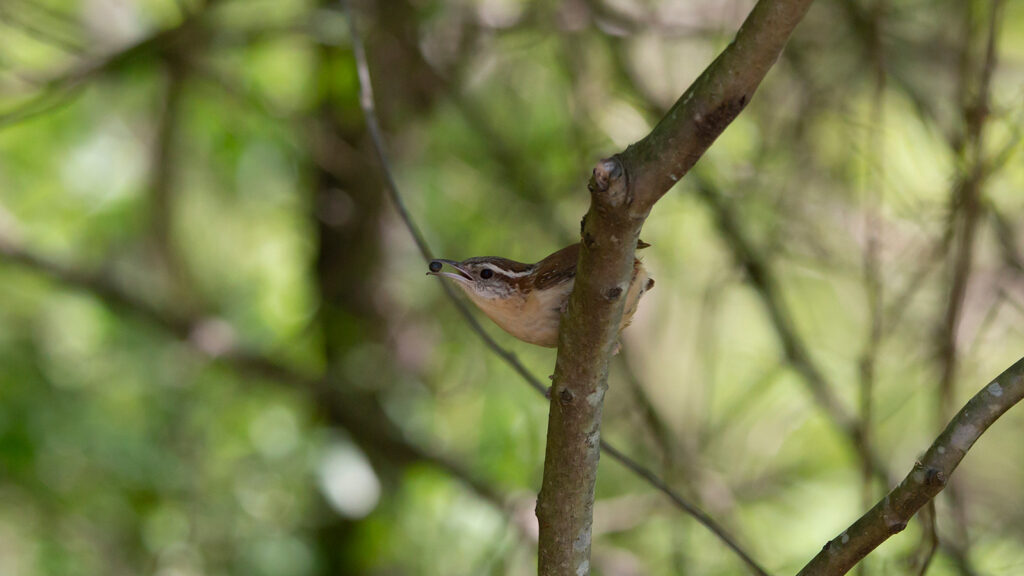
Carol is tiny, rusty-brown, loud enough to surprise a whole porch, and always one twig away from finding a bug that thought they had hidden perfectly.
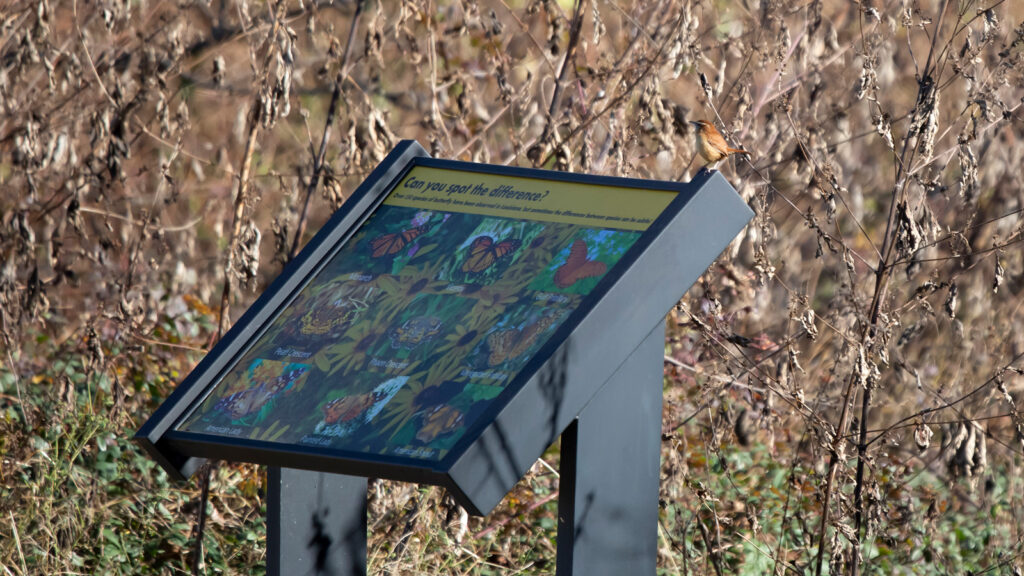
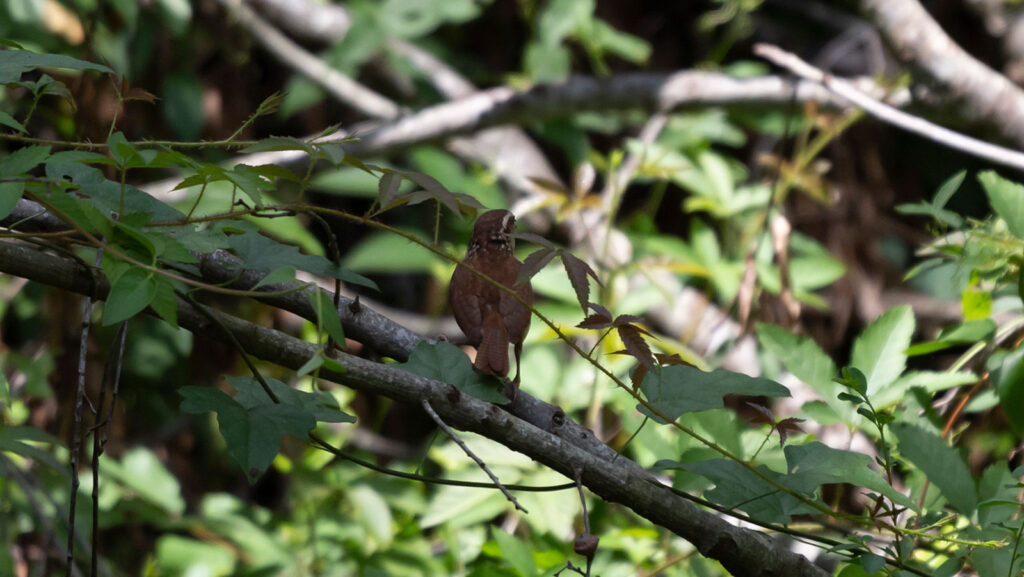
Carol is a Carolina Wren. She has a warm reddish-brown back, a pale belly, a bold white eyebrow stripe, a thin curved beak, and a tail she often holds upright. She is small, but her song is big, clear, and loud enough to make Tootie look around for a much larger bird.
One morning, Grandma is watering the flower bed when a loud voice rings from the shrub beside the porch.
“Tea-kettle, tea-kettle, tea-kettle!”
Tootie spins around. “Who said that?”
Yoshi’s pointy ears twitch toward the shrub. “Small bird.”
Grandma smiles. “That is Carol. She is a Carolina Wren.”
Carol hops out from under a leaf, flicks her tail up, snatches a tiny spider from the stem, and disappears into the shrub again.
Tootie stares. “She is tiny.”
Grandma says, “Carol has never considered that a reason to be quiet.”
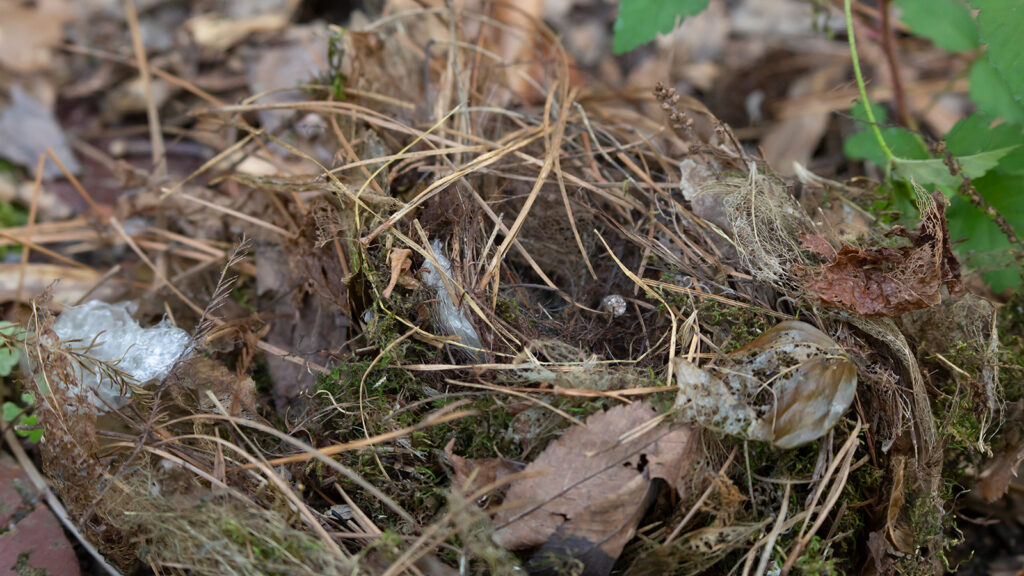
Carol uses thick shrubs, brush piles, flower beds, creekside branches, porch corners, low trees, vines, and small hidden spaces where insects gather. She likes a yard with lots of tucked-away places because those places hold food and shelter.
Grandma’s shrubs, flower beds, and creekside plants are full of tiny spaces Carol can explore. She may check under leaves, behind flowerpots, around bark, inside brush piles, and along the edges of the porch.
Tootie watches Carol vanish behind a pot. “Where did she go?”
Grandma says, “Somewhere she thinks there may be a bug.”
Yoshi watches the leaves shake. “That is most places.”
“That is why Carol likes a busy yard,” Grandma says. “A neat open lawn does not give her as much to search.”
Carol stays in the same general neighborhood all year instead of traveling far away each winter. That means she needs sheltered places when the weather turns cold.
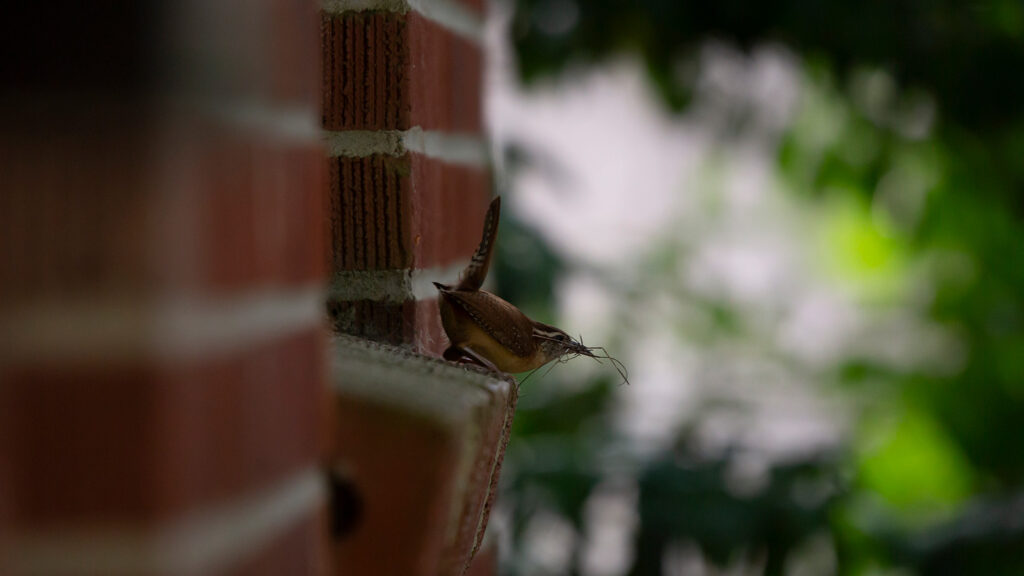
Carol began life in a nest that may have been built in a surprising place. Carolina Wrens can nest in natural spaces like tree hollows, stumps, and covered corners, but they may also use flowerpots, mailboxes, boots, old pockets, porch items, or nest boxes.
Her parents built a bulky nest from twigs, leaves, grass, moss, feathers, and other soft materials. Some Carolina Wren nests have a side entrance and a little roof-like cover over the top.
Tootie hears this and looks at Grandma’s empty flowerpot. “Carol might build a house in that?”
Grandma nods. “She might. Carolina Wrens are very good at finding small protected places.”
When Carol hatched, she was tiny, hungry, and unable to fly. Both parents brought insects and spiders to the nest. The babies grew feathers, practiced hopping and balancing, then left the nest as fledglings.
Carol’s parents may have started more than one nest before choosing the final place. Grandma says that is like looking at several possible houses before deciding which one has the best walls and the fewest surprises.
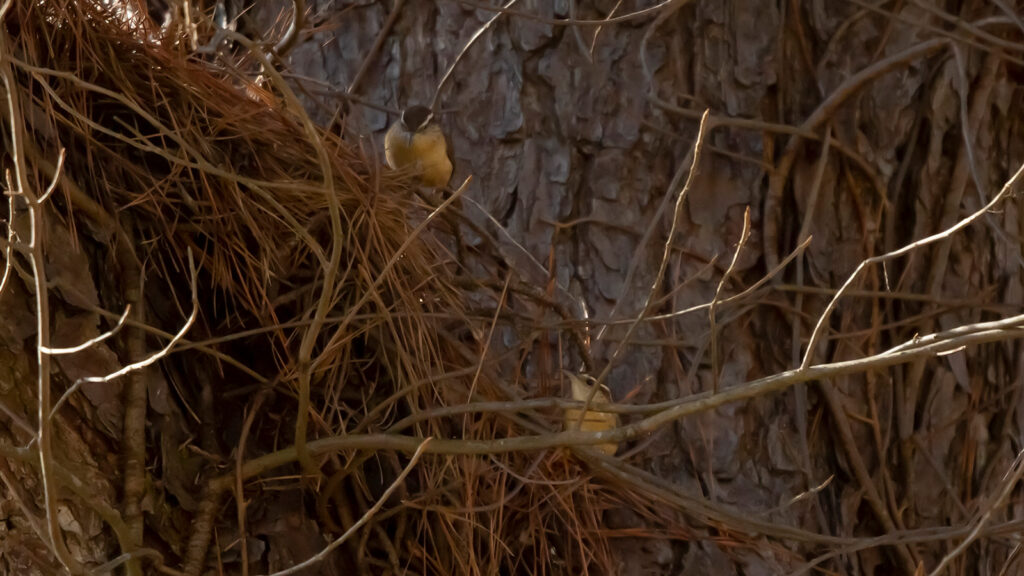
Carol eats insects and spiders. She hunts beetles, caterpillars, ants, crickets, small moths, flies, spiders, and other tiny animals she can find in bark, leaf litter, flower beds, shrubs, and crevices.
Carol does not wait in one place for food to come to her. She checks every small opening, peeks under leaves, and pokes her curved beak into places that look empty until something moves.
One afternoon, Carol hops around the edge of Grandma’s flower bed.
Tootie watches her. “She is looking at dirt.”
Grandma says, “She is looking for bugs in the dirt, under leaves, and around the plant stems.”
Yoshi watches Carol pull a tiny beetle from under a leaf. “She found one.”
“Carol usually does,” Grandma says.
In cooler weather, Carol may eat some berries or visit a feeder, but insects and spiders are still an important part of her food.
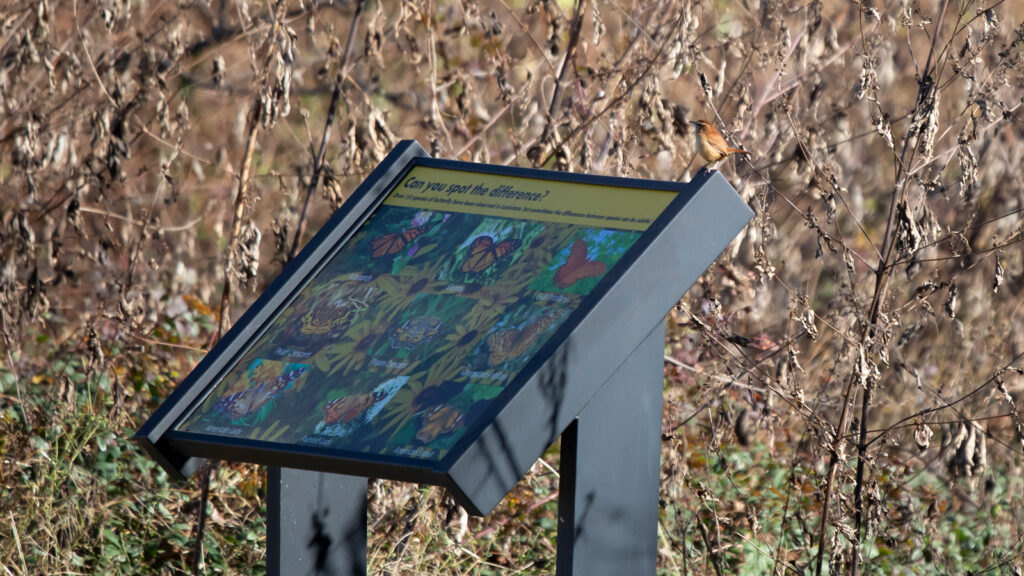
Carol is famous for having a loud song for such a small bird. People often hear Carolina Wrens before they see them. Her song may sound like “tea-kettle, tea-kettle, tea-kettle,” though every bird has their own voice.
Tootie hears Carol singing from a shrub near the porch.
“She sounds bigger than Roy,” he says.
Grandma laughs. “Carol would enjoy hearing that.”
Yoshi watches Carol puff her little body and sing again. “She uses all of herself.”
“That is true,” Grandma says. “A small bird can make a big sound.”
Carol sings to communicate with other wrens, defend her space, and stay in touch with her mate. Her song helps make the yard feel awake, even on a quiet morning.
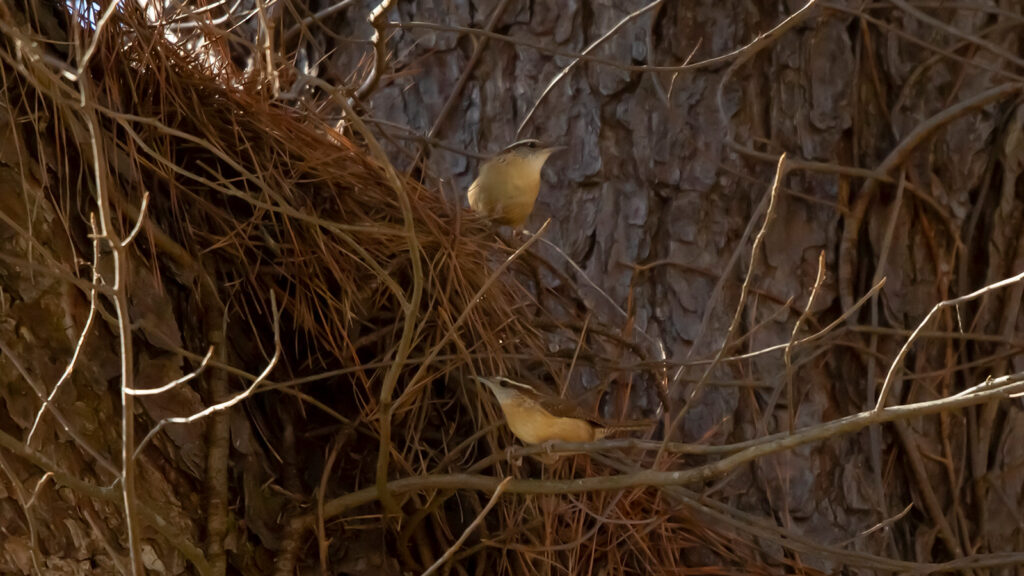
Carol often holds her tail upright while she moves through the shrubs. That little tail shape can help people recognize her when she is hopping through leaves too quickly to see clearly.
Tootie sees a small brown blur near the porch steps.
“I saw a tail,” he says.
Grandma points. “Look for the white eyebrow too.”
Carol hops onto a twig, gives a quick flick of her tail, and darts into the plant again.
Yoshi watches the leaves move. “She has a busy tail.”
Grandma says, “Carolina Wrens often do. They are one more clue when you are trying to figure out who is in the shrub.”
Carol’s upright tail and bright eyebrow make her easier to recognize than a plain little brown bird would be.
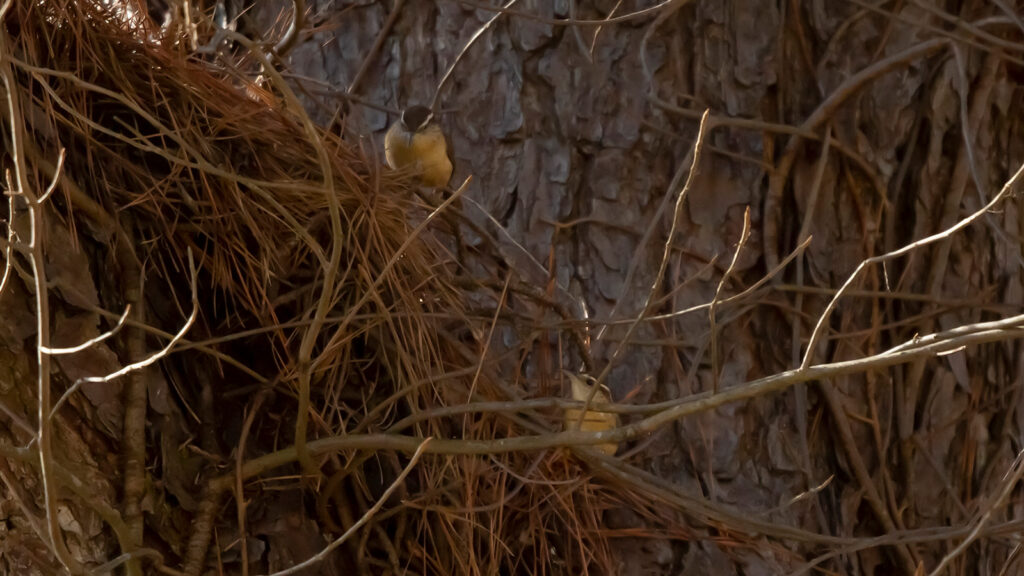
Carol and Thrash both use leaf litter and shrubs, but they hunt in different ways. Thrash is larger and flips leaves aside with his long curved bill. Carol is smaller and checks under leaves, around stems, and inside little cracks.
One morning, Thrash is tossing leaves near the front shrubs while Carol is searching the flower bed nearby.
Tootie watches them. “They are both looking under things.”
Grandma says, “Yes, but they do not look under the same things.”
Thrash flips a dry leaf and finds a cricket.
Carol slips between two stems and finds a tiny spider.
Yoshi watches both birds. “One needs bigger spaces.”
“That is right,” Grandma says. “Carol can fit where Thrash cannot.”
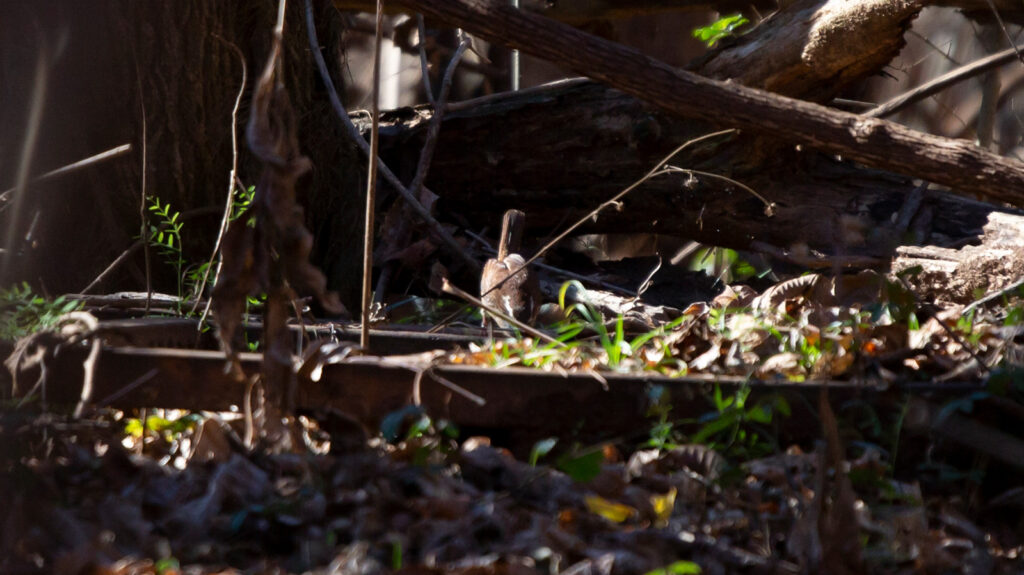
Carol knows the backyard from close to the ground. She sees Earl’s damp soil, Dot crawling along plant stems, Goldie’s web stretched between branches, and Tootie’s paws before Tootie gets close enough to notice her.
One day, Inouar lands on the fence above Carol’s shrub.
“You are loud,” Inouar says.
Carol sings, “Tea-kettle, tea-kettle!”
Inouar pauses.
Carol sings again.
Tootie laughs. “Carol answered her.”
Grandma says, “Carol answers everyone. That is part of her charm.”
Yoshi watches Carol disappear under a leaf. “She is loud and hidden.”
“That is an impressive combination,” Grandma says.
Grandma gives Carol room to search. She does not let Tootie dig through shrubs, knock over flowerpots, or chase small birds around the porch.
She also checks covered spaces before moving things in spring. Carol might choose a flowerpot, an old basket, a quiet porch corner, or another protected nook for a nest.
Tootie looks at an empty pot. “Can I move that?”
Grandma says, “We look first.”
“Tootie,” Yoshi adds.
“I know.”
Grandma smiles. “Carol may be using they, or she may be thinking about using they.”
Carol flicks her tail from the shrub as though she agrees.
Carol needs dense shrubs, brush piles, leaf litter, insects, spiders, and sheltered places to nest. A small brush pile or a quiet corner of leaves can help her find food and cover.
Keep cats indoors when possible. Avoid broad insect sprays, especially around shrubs and flower beds. Check containers and covered porch spaces before moving them during nesting season.
Grandma says, “Carol does not need a fancy mansion. She needs bugs, branches, a hidden corner, and enough peace to sing about they.”
Yoshi watches Carol hop through the shrub. “She has the singing part covered.”
Carol the Carolina Wren
These are some helpful words for talking about this wild neighbor.
Carol the Carolina Wren
Good wildlife watchers ask good questions. Here are a few to get you started.
Carolina Wrens use loud songs to communicate, stay in touch, and defend their space.
She eats insects, spiders, caterpillars, beetles, ants, and other tiny animals.
An upright tail is a common Carolina Wren field mark and helps people recognize her.
She may use cavities, nest boxes, flowerpots, mailboxes, covered corners, or other sheltered places.
Yes. Carolina Wrens often live in yards and neighborhoods with shrubs, cover, and insects.
No. Carol is a wild bird and should be watched from a distance.
Carol or another small bird may be using the space for a nest.
Check flowerpots, porch corners, stored boots, mailboxes, and other sheltered spaces before moving or cleaning them during nesting season. Keep cats indoors when possible, avoid broad insect sprays, and leave some shrubs and brushy cover for wrens to find food and shelter. Think About They: Why does a small bird need people to slow down before moving objects around the yard?
🏅 Explorer Progress