Why is Bob called a box turtle?
Grandma says:
He can pull in and close his shell tightly like a little box.
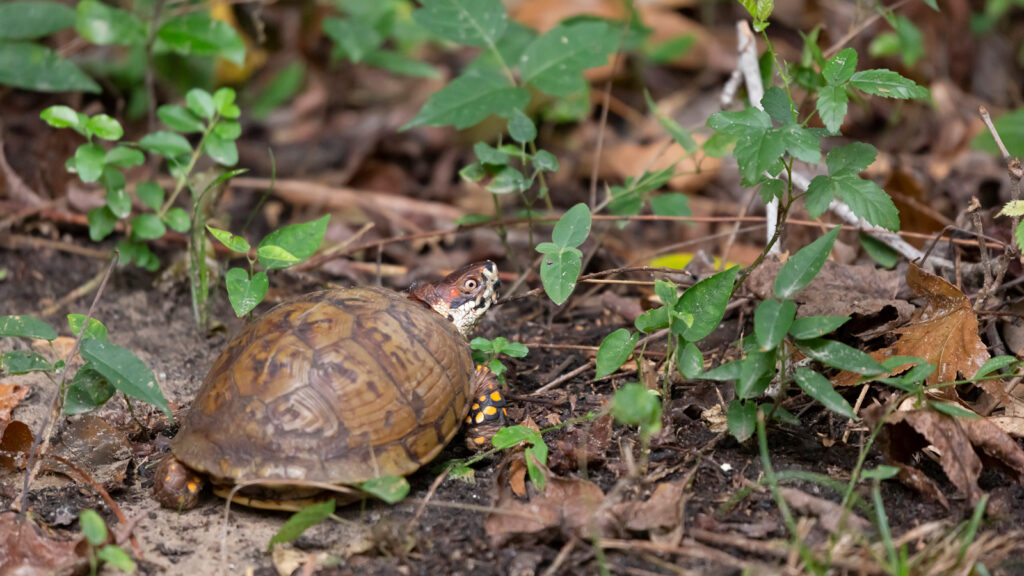
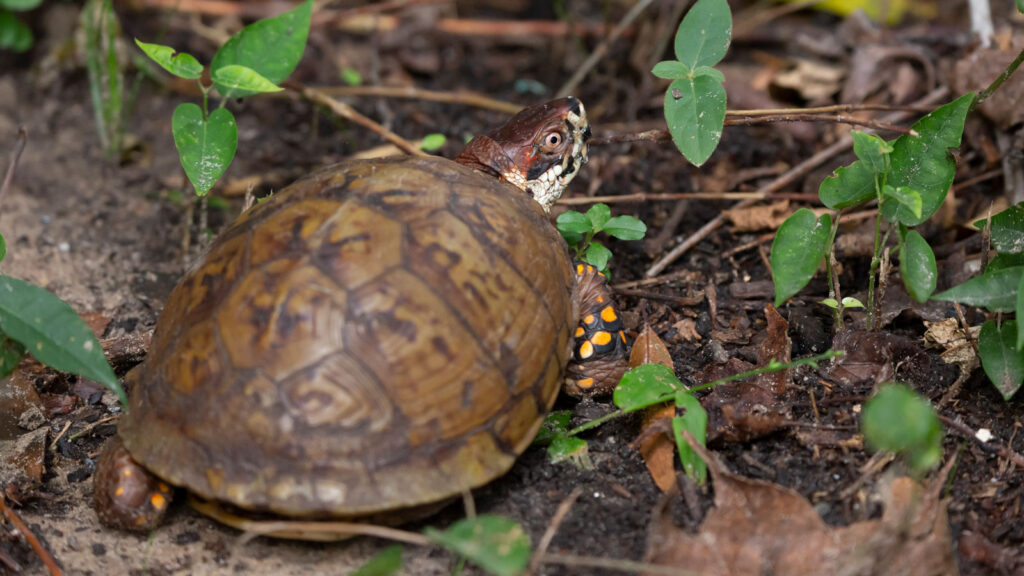
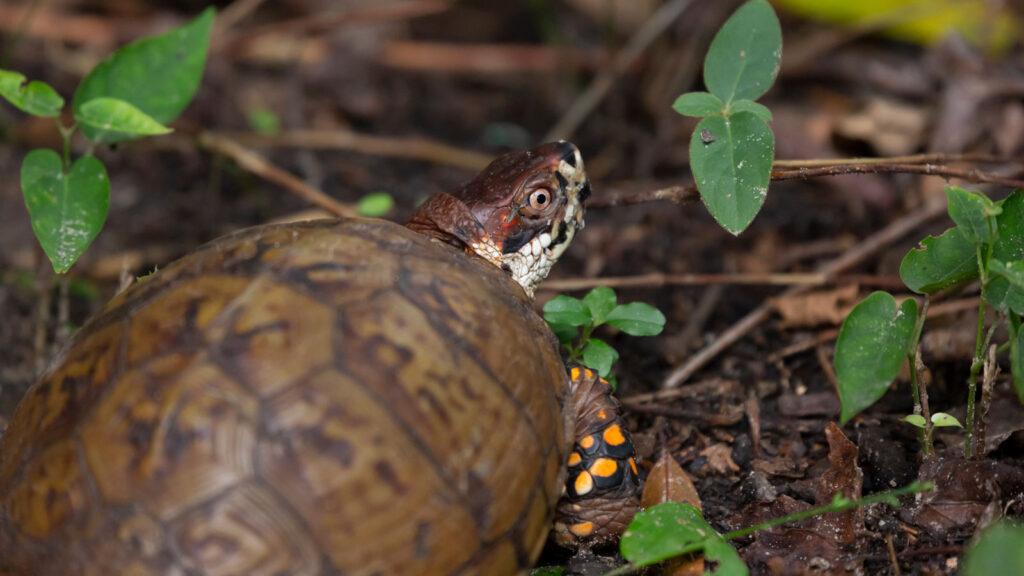
Bob has a high domed shell, bright orange markings, sturdy little feet, and the kind of slow steady walk that makes Tootie think a decorated rock has finally decided to go somewhere.
Bob is an Eastern Box Turtle. He is a land turtle, not a pond turtle like Sinbad. Bob has a rounded shell with brown, yellow, and orange patterns, strong clawed feet for walking on land, a pointed face, and dark eyes that miss very little. His lower shell has a hinge, which means he can pull in and close up tight like a little box.
One muggy morning, Tootie is nosing around the edge of Grandma’s shrubs when he stops and stares.
“There is a rock in the leaves,” he says.
Yoshi’s pointy ears twitch. “Rocks do not blink.”
Grandma looks over from the flower bed and smiles. “That is Bob. He is a Box Turtle.”
Bob stretches out his neck, takes three slow steps through the leaf litter, and disappears under the edge of a shrub.
Tootie gasps. “The rock walked away.”
Grandma nods. “That is one of Bob’s favorite tricks.”
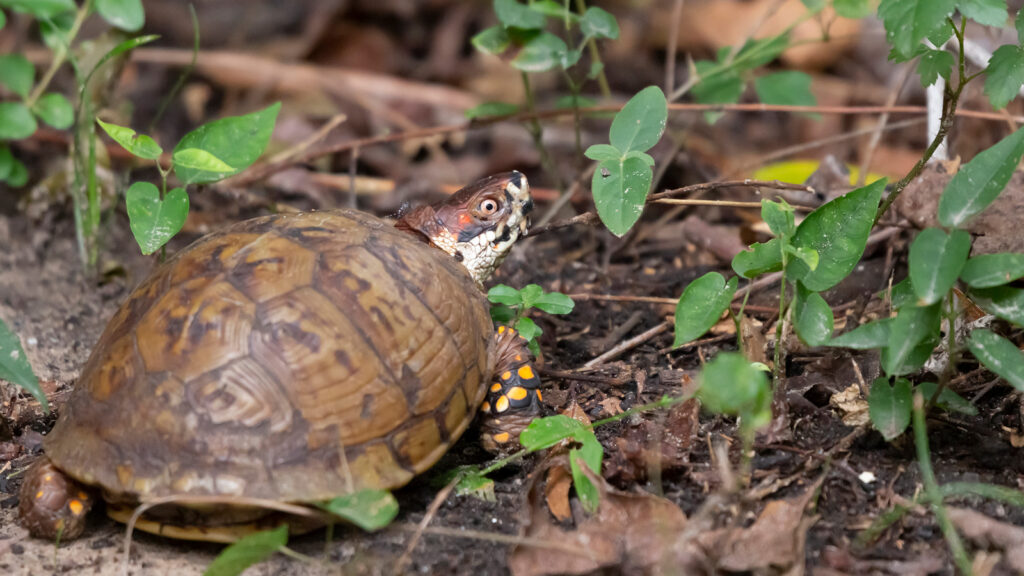
Bob lives on land. He likes shady places with leaf litter, low plants, damp soil, logs, flower-bed edges, brushy corners, and places where he can hide when the day gets too hot or too dry. He does not need deep water like Sinbad. He needs a yard or woods edge with soft ground, cover, and lots of little things to eat.
Grandma’s yard gives Bob several good choices. The shrubs hold shade and fallen leaves. The flower beds bring insects, worms, snails, and fallen berries. The brushy edge near the creek gives him cooler ground and quiet places to rest. After a rain, the whole place becomes a better turtle buffet.
Tootie watches Bob disappear under the shrubs. “Does he live right there?”
Grandma says, “He may rest there today and somewhere else tomorrow, but box turtles usually stay in the same general area.”
Yoshi watches a leaf move. “So he knows the yard.”
“He does,” Grandma says. “Bob learns where the shade is, where food is, and where the best hiding spots are.”
A box turtle does not rush through the world. He uses the same paths, the same cool spots, and the same feeding places again and again.
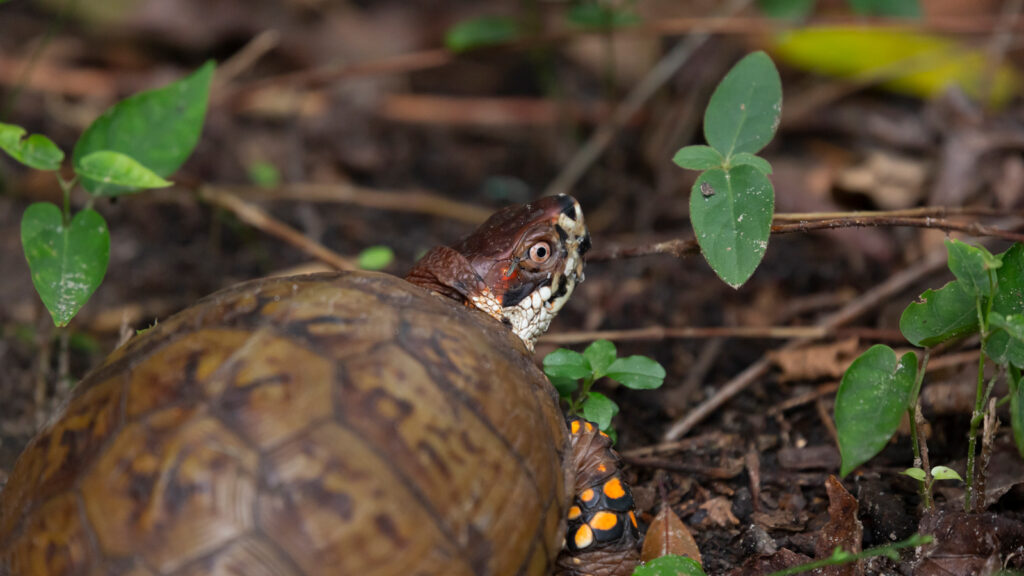
Bob began life inside an egg buried in a nest on dry land. His mother dug a small hole in soft soil, laid the eggs, and covered them up. Then she left them there. She did not stay to guard the nest or raise the babies.
When Bob hatched, he was already a tiny turtle with a little shell, tiny claws, and a lot to figure out. He had to find cover, avoid danger, and learn how to look for food on his own. A baby turtle may hide under leaves, in grass, or beside roots while she grows.
Tootie looks surprised. “His mama did not teach him anything?”
Grandma shakes her head. “Not the way a bird or a mammal mother would. Bob had to start learning on his own right away.”
As Bob grew, his shell got stronger and taller. His feet got better for walking through leaves and climbing little bumps in the yard. He learned where the wet places were after rain and which corners held worms, berries, mushrooms, and bugs.
Yoshi watches Bob’s shell rock gently as he walks. “So a baby turtle has to be brave.”
Grandma nods. “Very brave. A little turtle is small, slow, and tasty to many things.”
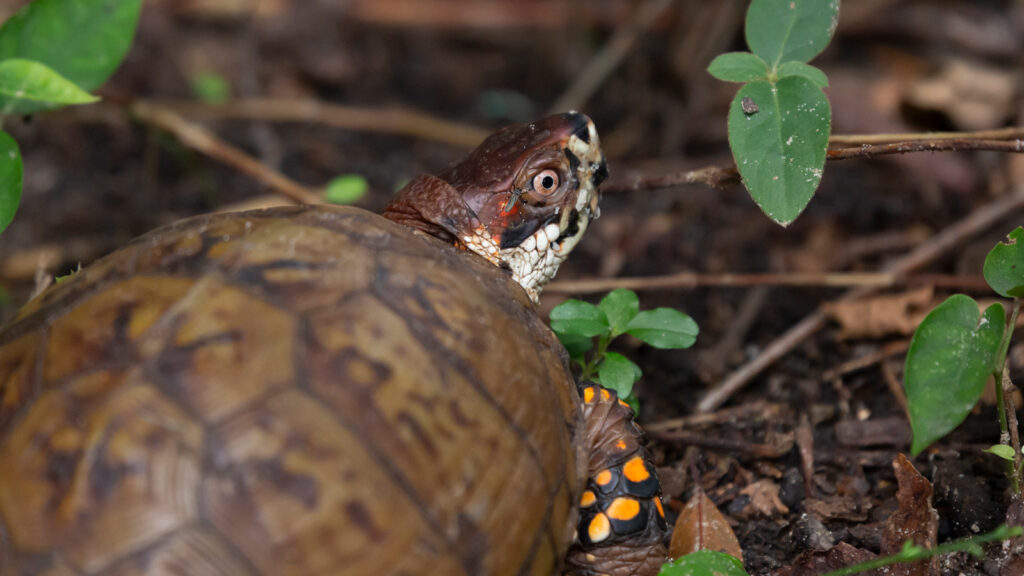
Bob is an omnivore. That means he eats both plant food and animal food. He may eat berries, mushrooms, fallen fruit, flowers, slugs, snails, worms, beetles, caterpillars, and other small things he finds on the ground.
Bob does not chase food fast. He finds she by walking, smelling, looking, and checking the ground carefully. A ripe berry, a worm after rain, or a mushroom pushing up through damp leaves can all become lunch.
One afternoon, Tootie sees Bob nibbling near the edge of Grandma’s little garden.
“Is he eating a leaf?” Tootie asks.
Grandma kneels a little closer. “Maybe a fallen fruit piece, maybe a bug, maybe a tender plant. Box turtles eat many things.”
Yoshi watches Bob take another bite. “He does not seem picky.”
Grandma laughs. “He is not. A turtle that eats many foods can use the yard better.”
Bob’s food may change with the season. Spring can bring worms and bugs. Summer can bring berries and mushrooms. Fall may bring fallen fruit and more insects in the leaves.
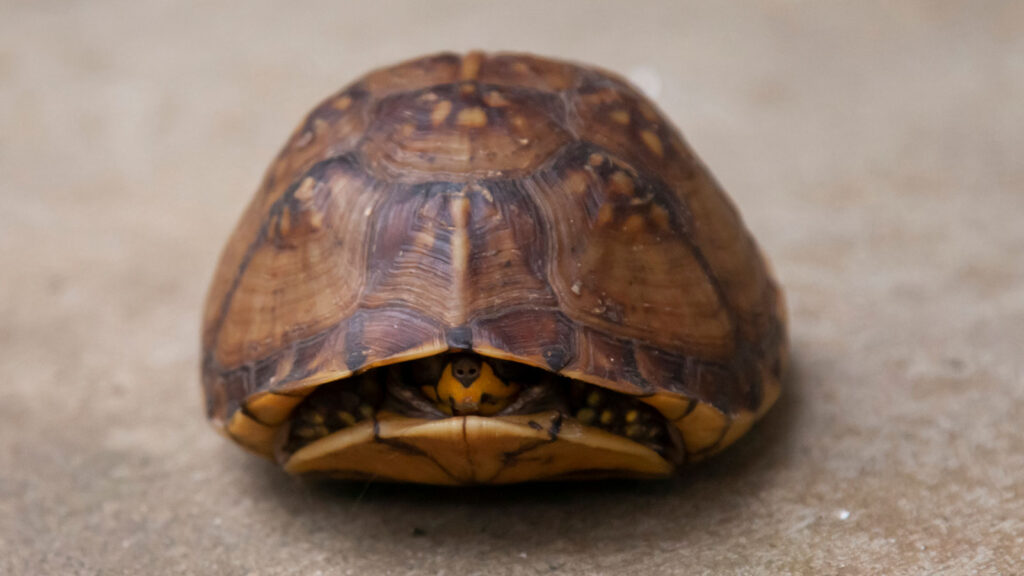
Bob’s shell is one of the first things people notice. His top shell is called a carapace. She is high and rounded instead of flatter like Sinbad’s. The colors and patterns can look like orange or yellow brushstrokes painted across brown.
Tootie walks slowly around Bob. “He looks like he is wearing a helmet house.”
Grandma smiles. “That shell is part of his body.”
Bob stops and pulls in his head a little.
Yoshi watches closely. “Can he come out of she all the way?”
Grandma says, “He can stretch out or pull in, but he cannot take his shell off. She is attached to him.”
The shell protects Bob, but she is not magic armor. Cars, lawn equipment, dogs, and people can still hurt a turtle badly. A shell helps, but a turtle still needs safe places and safe neighbors.
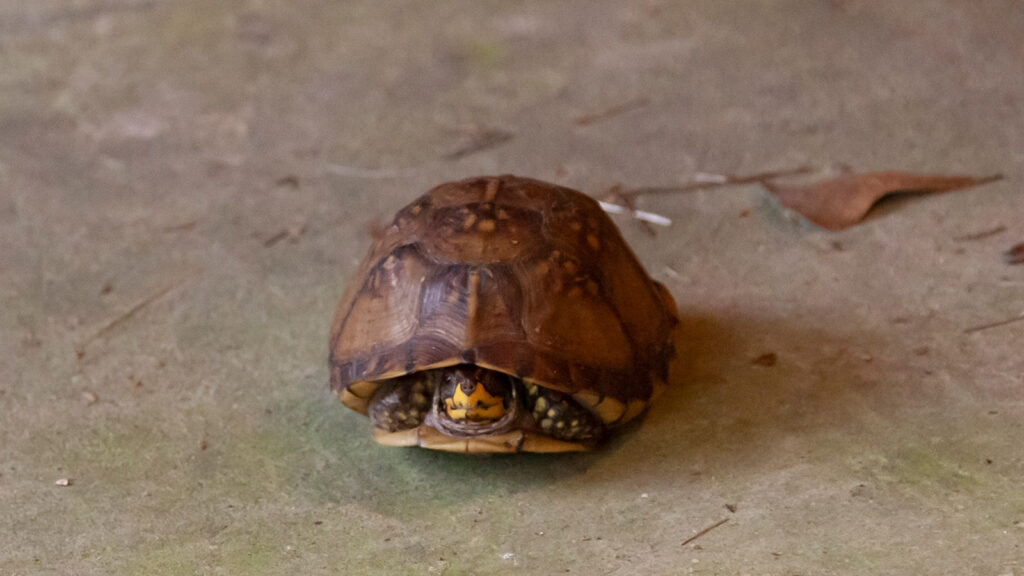
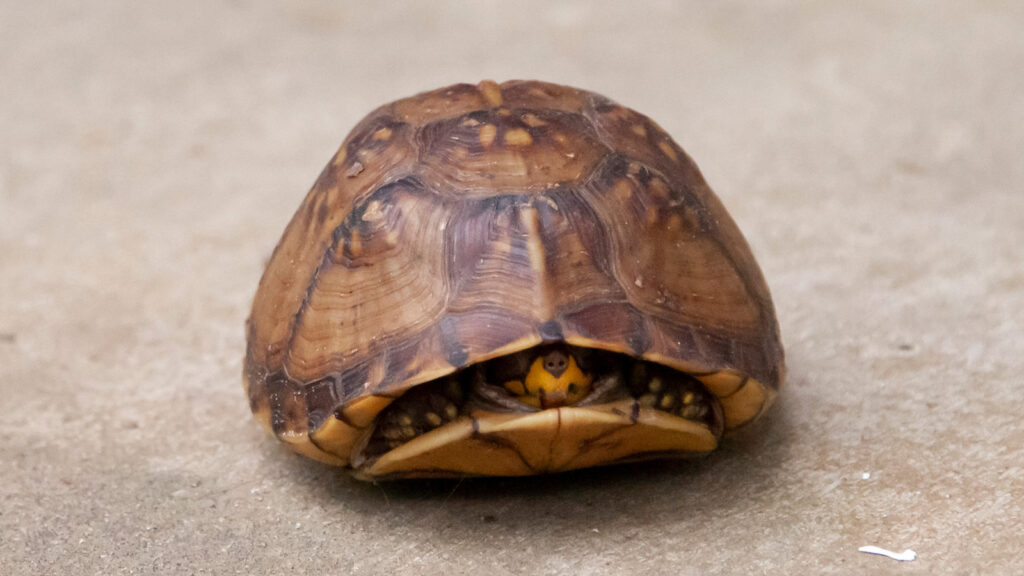
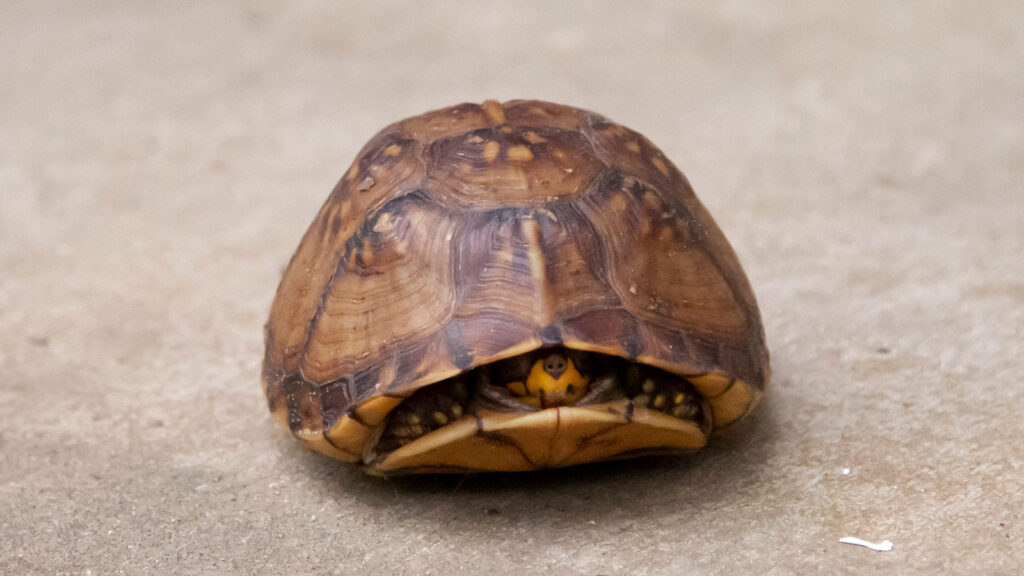
Bob is called a box turtle because he can close up more completely than many other turtles. His lower shell, called the plastron, has a hinge. When he feels scared, he can pull in his head, legs, and tail and shut himself up tight.
Tootie leans a little too close.
Bob pulls in and closes.
Tootie jumps back. “He turned into a box!”
Grandma nods. “That is where the name comes from.”
Yoshi watches the shell sit still in the leaves. “He disappeared without leaving.”
“That is Bob’s safety move,” Grandma says. “If he cannot run, he protects himself.”
After a quiet minute, Bob opens slowly and stretches his head back out.
Tootie whispers, “He is coming back.”
Grandma smiles. “Only because the yard got polite again.”
Bob’s feet are built for land. He has sturdy toes and claws that help him walk through leaves, dig a little, and push through grass or soft soil. He does not have the broad webbed feet that Sinbad uses for swimming.
Tootie watches Bob step over a twig. “He is slower than Clover.”
Grandma says, “He is. But Bob is not in a hurry.”
Yoshi watches his feet work through the leaves. “He is steady.”
“That matters,” Grandma says. “A box turtle gets where he needs to go one careful step at a time.”
Bob may not look fast, but he is very good at moving through the kind of places he knows well. Leaves, roots, soft dirt, and low plants are all part of his everyday world.
A turtle’s slow pace can help him notice food and cover. He is not racing past mushrooms, berries, or worms. He is checking them.
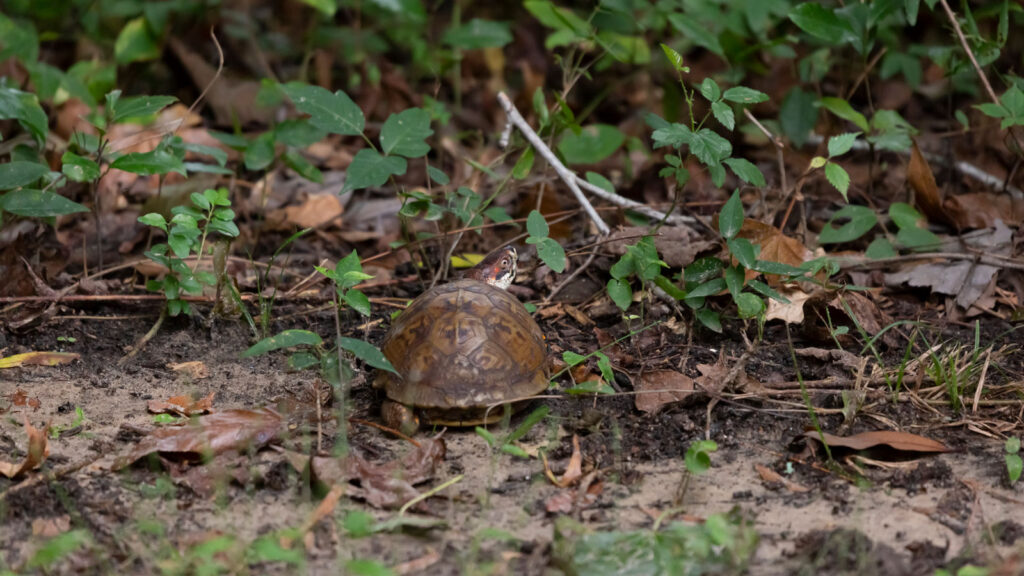
Bob and Sinbad are both turtles, but they use the yard in very different ways. Sinbad is a Red-eared Slider who lives in the creek, basks on logs, and swims with webbed feet. Bob is a Box Turtle who lives on land, walks through leaves, and hides under shrubs and low plants.
One morning, Tootie looks from the creek bend to the flower-bed edge.
“So Sinbad gets the water, and Bob gets the yard?”
Grandma says, “That is a good start.”
Sinbad needs slow water, basking logs, and water plants.
Bob needs leaf litter, shade, soft ground, and hiding places on land.
Yoshi watches Bob disappear under a shrub. “Same family. Different address.”
Grandma nods. “Exactly.”
Bob may enjoy damp places, but he is not a pond turtle. He does not spend his life swimming, and he does not belong in the middle of the creek.
Bob sees the yard from ankle height. He notices Clover browsing the edge of the grass, Carol hopping near the flowerpots, Thrash flipping leaves under the shrubs, and Tootie trying very hard not to bounce too close.
One afternoon, Thrash flips a leaf and finds a beetle.
Bob keeps walking and finds a mushroom.
Tootie watches both of them. “They are both looking on the ground.”
Grandma says, “Yes, but they are looking for different meals.”
Yoshi watches Bob stop under a low branch. “He likes the shady path.”
“Most box turtles do,” Grandma says. “Shade helps keep them from drying out.”
Later, Carol pops onto a low branch and sings.
Bob keeps walking as if he has better things to do.
Tootie laughs. “Bob does not care about music.”
Grandma says, “Bob has a schedule, and she mostly involves lunch.”
Grandma likes Bob, but she does not pick him up just because he is cute. Wild turtles need to stay wild. Bob knows his own paths, his favorite shady places, and where to find food in his home area.
She also does not let Tootie paw at him or flip him over. A turtle can become stressed, injured, or lost if people move him around for fun.
Tootie watches Bob heading toward the shrubs.
“Can I hold him just a little?”
Grandma says, “No.”
“Tootie,” Yoshi adds.
“I only asked.”
Grandma points toward Bob. “He is not a toy and not a pet. He is a wild turtle in his own home.”
If Bob ever has to be moved for safety, such as getting him out of a dangerous path, Grandma says a grown-up should move him only a short distance in the direction he was already going.
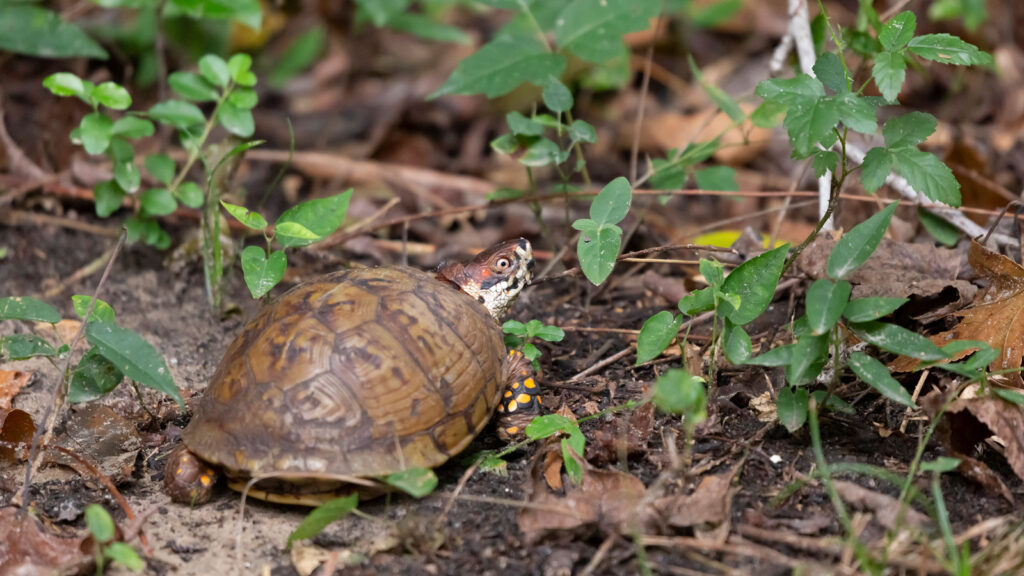
Bob needs leaf litter, shade, low plants, soft ground, clean water nearby, and safe places without too much disturbance. A few wild corners help him and many other small animals.
Grandma leaves some leaves on the ground, keeps a few brushy edges, and avoids spraying the yard until every bug is gone. She also watches where she steps when working around shrubs, especially after rain, when turtles may be more active.
She never takes a box turtle home from the yard. A box turtle removed from her home loses the area she knows best.
Grandma says, “Bob needs a yard with cover, food, and common sense. He does not need to be kidnapped because somebody thinks he is adorable.”
Yoshi watches Bob vanish into the leaf litter. “He is adorable.”
Grandma smiles. “That is not the point.”
Box turtles can live a long time. A healthy box turtle may live for many decades. That means Bob may have been using the same general area for years and years.
Tootie looks impressed. “He is older than me?”
Grandma laughs. “Much older than you.”
Yoshi watches the leaves where Bob disappeared. “Maybe older than the flower bed.”
“Could be,” Grandma says. “A turtle like Bob may know this yard better than most people do.”
Long lives make box turtles special, but they also make them vulnerable. A turtle that grows slowly and lives a long time cannot quickly replace lost turtles if roads, mowing, pets, or people keep hurting them.
Bob is part of a long, slow story in the yard. Grandma says that is one more reason to treat him with respect.
Bob the Box Turtle
These are some helpful words for talking about this wild neighbor.
Bob the Box Turtle
Good wildlife watchers ask good questions. Here are a few to get you started.
He can pull in and close his shell tightly like a little box.
No. Bob is a land turtle. He lives on the ground in shady places with leaves and cover.
He eats berries, mushrooms, fallen fruit, flowers, worms, snails, slugs, beetles, caterpillars, and other small foods.
No. His shell is part of his body.
He closes up when he feels scared or wants to protect himself.
No. Bob is a wild turtle and should be watched where he is.
Box turtles know their home area. Taking one away can harm she or keep she from finding the food and shelter she needs.
Watch box turtles without picking them up or moving them unless a real safety problem makes she necessary. Keep dogs from pawing or mouthing turtles. Before mowing, raking, or trimming low growth, look carefully for turtles in shady yard edges. Wash hands after touching any wild turtle or turtle habitat. Think About She: Why is looking before mowing or raking important for slow animals like Bob?
🏅 Explorer Progress