A Tootie’s Backyard Adventure
A Tootie’s Backyard Adventure
A Red River National Wildlife Refuge Adventure
It was a bright spring morning when Grandma packed water, hats, bug spray, binoculars, a small towel, and the red field notebook for a visit to Red River National Wildlife Refuge. She had also checked the current refuge information before leaving. Trails, permits, seasonal access, and conditions can change, and Grandma did not believe in driving somewhere just to argue with a closed sign.
"Are we going to see the whole river?" Tootie asked.
"We are going to see the part of the refuge the day allows us to see," Grandma said. "We are visitors. The refuge does not owe us a show."
Yoshi looked at the map. "Water close by?"
"Some," Grandma said. "That means trail manners, quiet voices, and no leaning where you could lose your balance."
"Even if there is a frog?" Tootie asked.
"Especially if there is a frog," said Grandma.
Think About It: Why might Grandma check current refuge information before a trip instead of assuming every trail is open?
The Bird Nobody Saw
The group walked a quiet trail through bottomland woods near water. The morning carried damp earth, green leaves, and the soft hum of insects. Tootie saw a turtle-shaped log, three yellow flowers, and a dragonfly that looked like it had borrowed a tiny blue flashlight.
"I do not see any birds," he said.
"That is because you are looking for a bird that wants to be noticed," said a voice near the water.
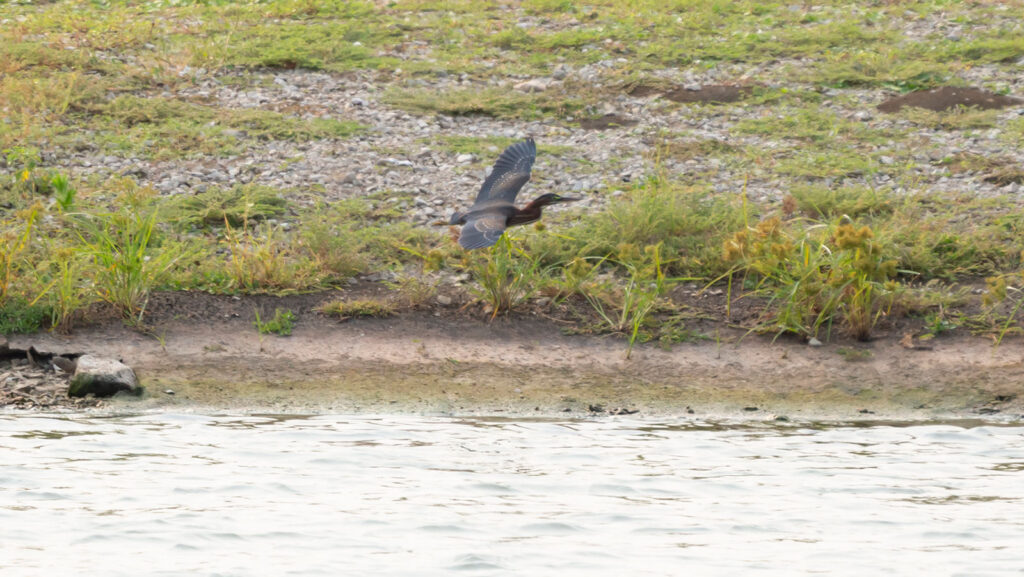
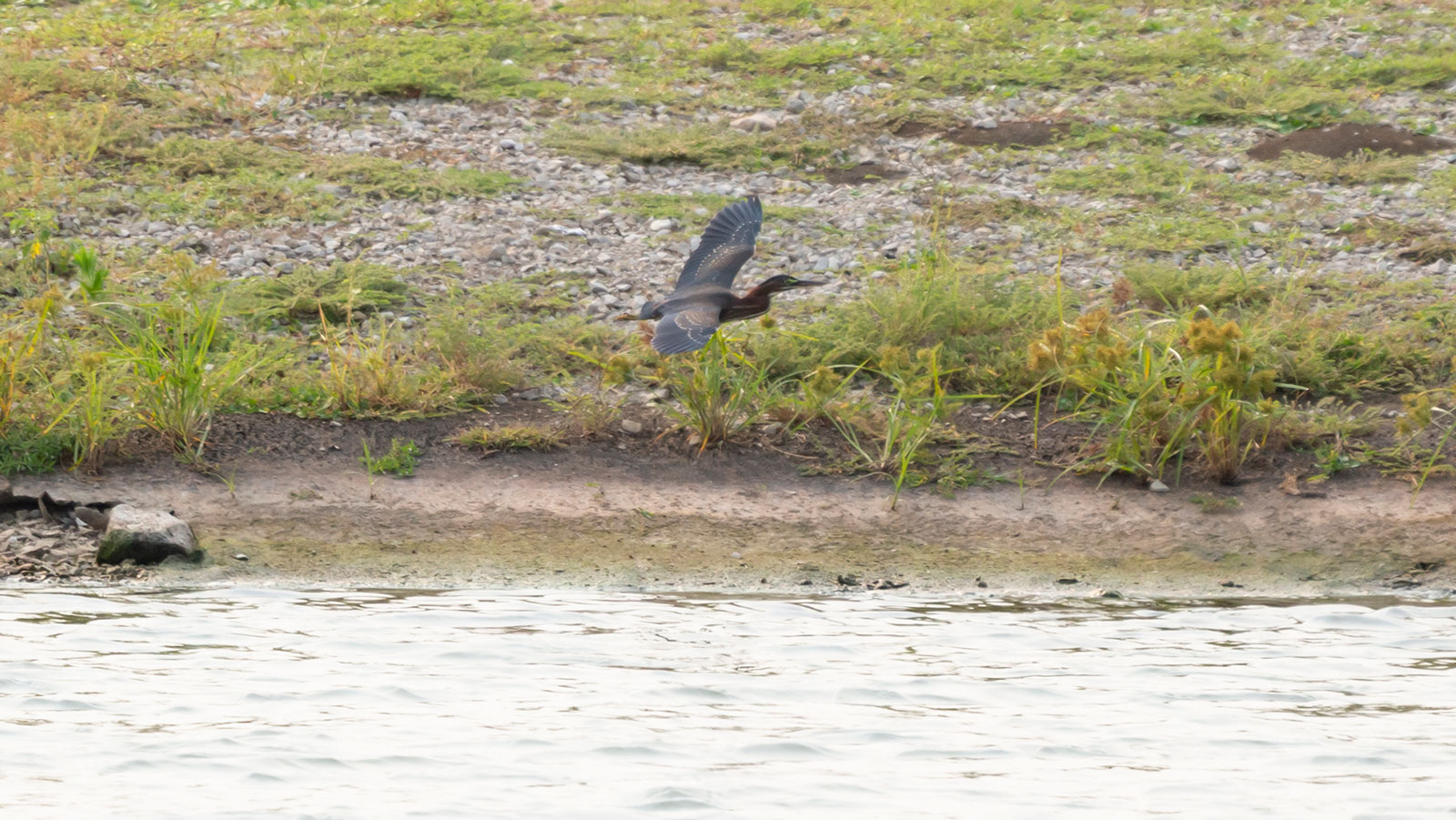
Gary the Green Heron stood half-hidden beside a tangle of plants. His gray-green feathers blended into shadow, water, and stems so well that Tootie had looked right past him.
"Gary!" Tootie whispered. "You are smaller than Iggy."
Gary lifted one eyebrow. "I am not smaller. I am compact and highly efficient."
Yoshi’s ears turned toward a soft splash. "What are you watching?"
"A case," Gary said. "The water has clues. You are about to walk past them if you keep looking for something loud."
Think About It: Why might a Green Heron benefit from blending in near water?
The Case of the Moving Ripples
Gary did not move. Tootie tried not to move either. At first, the water looked plain. Then a small ring spread beside a clump of grass. Another ripple crossed it. A fish flashed silver, then vanished below the surface.
"A clue," Tootie whispered.
"Maybe," Gary said. "Wind makes ripples. Insects make ripples. Fish make ripples. Turtles make ripples. A falling leaf makes ripples. One clue does not solve the whole case."
Grandma smiled. "Good nature observers gather more than one clue before they decide what happened."
They waited. A second ripple came from the same place. A slim shadow moved just under the surface. Gary bent his neck, then snapped forward faster than Tootie could blink. He came up with a small fish.
"You were waiting the whole time," Tootie said.
"I was conducting a quiet-water investigation," Gary replied.
"That sounds like waiting with extra paperwork," Yoshi said.
Think About It: What extra clue helped Gary know the ripple was more than wind?
Why a Refuge Needs Quiet
Tootie began to clap, but Grandma gently lowered his paws. "We can celebrate without scaring the next fish," she said.
Gary nodded. "Animals come to refuge habitat to feed, rest, hide, nest, and raise young. When people shout, chase, or crowd them, animals may waste energy getting away instead of doing what they need to do."
Grandma explained that national wildlife refuges protect wildlife and habitat. Families can enjoy allowed trails, wildlife watching, photographs, and learning, but the animals’ needs come first. That is why posted rules matter. A seasonal closure can protect nesting birds. A trail change can protect habitat. A permit rule can keep people safer.
Tootie looked at the water. "So we are guests in Gary’s dining room."
"A very polite way to say it," Gary said.
Think About It: How could loud voices or quick movement change what a wild animal does?
The Wrong Way to Solve a Case
A bright dragonfly landed near the trail. Tootie leaned forward. Then another splash sounded behind him, and he turned fast. His elbow brushed the rail.
Gary froze. The fish disappeared. The water went still.
"Oops," Tootie whispered.
"You did not break the whole refuge," Grandma said. "But you saw how one quick movement can change the scene."
Yoshi showed Tootie how to keep his paws on his own knees when he watched. "A calm body sees longer," she said.
They waited again. A turtle head rose near a log. A small bird called from the understory. Gary returned to his hunting spot.
"The case is not over," Gary said. "Nature does not close because one clue swam away."
Think About It: What can you do with your hands and body to stay steady while watching wildlife?
At the end of the trail, Yoshi checked the water bottles and Tootie’s shoelaces. "Wet places need extra rules," she said. "Stay on the allowed path. Do not reach into water. Do not feed wildlife. Keep a grown-up close when water is nearby. Watch for mud, roots, and slick boards."
Grandma added, "Leave plants, feathers, shells, nests, and animals where you find them. They are part of the habitat, not take-home prizes."
Gary tucked his beak toward his chest. "You may take photos and notes. Leave the rest with the refuge."
Think About It: Which wetland rule protects both people and animals at the same time?
Grandma Brings It Home
On the ride home, Grandma handed Tootie the notebook. "Write three quiet-water clues," she said.
Tootie wrote: ripple, fish flash, turtle head.
Then he wrote: Gary’s eyebrow.
Yoshi read over his shoulder. "That may not identify the animal."
"It identifies Gary," Tootie said.
Think About It: What nature clue could you draw instead of trying to carry it home?
Try It Yourself: Ripple Detective
5. With an adult, watch a safe birdbath, pond edge, shallow pan of water, or puddle from a dry, stable spot.
6. For five minutes, draw or write every movement you see: wind ripples, insects, falling leaves, birds drinking, or water drops.
7. Circle one thing you know for sure and one thing you are not sure about.
8. Ask what extra clue could help. Do not touch the water or chase an animal to find out.
Think About It: Why is “I am not sure yet” a smart sentence for a wildlife watcher?
Refuge: A protected place managed to help wildlife and habitat. People may visit allowed areas, but wildlife needs come first.
More to Notice Near Water
Water edges have layers. The open water may hold fish, turtles, ducks, and insects. The muddy edge may hold tracks. The plants along the edge may shelter birds, frogs, dragonflies, and small animals. Above all of it, branches can offer a perch for a heron that wants to watch without being seen.
Gary says the trick is to look from far away and give your eyes time. A quick glance might show water. A patient look can show a fish flash, a beetle skating across the surface, a dragonfly landing, or a small bird carrying a bit of nest material.
Grandma explains that wet places can change fast. After rain, water can cover low ground. During dry weather, the same spot may look smaller. That is another reason visitors should stay on allowed paths and pay attention to signs. The ground that looked firm yesterday may not be firm today.
Tootie asks whether the water has a secret message for every ripple. Gary says, "No. But it has enough messages that you should not shout over them."
Think About It: Which part of a water edge would you watch first, and why?
Grandma’s Field Notes
Grandma writes: "Morning. Mild breeze. One Green Heron. Two turtle heads. Small fish flash near grass." She uses short notes because she wants to keep watching, not spend the whole trip staring at paper.
She asks Tootie to make a sound map. He writes a soft splash by the water, a bird call in the trees, and a truck sound far away. Then he draws Gary’s eyebrow because he says it is "very important evidence."
Yoshi reminds him to write where he was standing. Good observations include the place, the time of day, the weather, and what you noticed.
Think About It: How could a sound map help you remember a place you visited?
What the Refuge Water Needs
Wetlands need room for water to rise, fall, spread, and soak into the ground. Plants along the edge can slow water, give small animals cover, and create places where insects and fish find food. Water that looks still can connect many living things at once.
Gary says a heron does not need a fancy pond with a fountain and a sign. He needs a place where food can live, where plants can provide cover, and where people give birds enough room to keep their normal routines. A quiet edge can be more useful than a crowded one.
Grandma tells Tootie that visitors help wet places when they stay on allowed routes, pack out trash, and do not throw food into the water. Even a small bit of litter can travel with rain and wind. "The water carries more than ripples," she says. "We choose what we add to it."
Think About It: How can a visitor keep a water edge healthier for animals?
A Tiny Trail Challenge
Before you leave a water-viewing spot, choose one thing that moved and one thing that stayed still. A leaf may move while a log stays still. A heron may stay still while fish move beneath the water. Tell your grown-up what you saw and what you think caused the movement.
Tootie notices that “still” does not always mean asleep and “moving” does not always mean scared. Gary says that is a promising beginning for a quiet-water detective.
Think About It: What is one thing that can look still but still be busy?
Kid FAQs
Why does Gary stand so still?
Green Herons often wait and watch for small fish, frogs, insects, and other food near water.
Can I feed birds at a refuge?
No. Wildlife needs natural food and natural behavior. Feeding wild animals can make them sick or create problems.
Why are wetlands important?
Wetlands give many animals places to feed, hide, rest, and grow. They can also hold and filter water.
What should I do if I see a baby animal?
Look from a distance and tell your grown-up. Do not pick it up unless a qualified wildlife professional tells your grown-up what to do.
Adventure Friend Rules
· Stay with your grown-up and follow posted rules.
· Stay on allowed trails, boardwalks, roads, and viewing areas.
· Watch wildlife from far away. Never chase, feed, grab, or collect it.
· Read current closures, weather alerts, seasonal notices, and permits before every visit.
· Take home photographs, drawings, and stories. Leave wild things where they belong.
Tootie packed up his notebook, Yoshi checked that everyone had their things, and Grandma smiled.
What will they notice on the next adventure?
📖 Keep Reading
Join Tootie, Yoshi, Grandma, and Gary the Green Heron at Red River National Wildlife Refuge as they learn how ripples, stillness, and quiet help wildlife watchers notice more.
Join Tootie, Yoshi, Grandma, and Gary the Green Heron at Red River National Wildlife Refuge as they learn how ripples, stillness, and quiet help wildlife watchers notice more.
Join Tootie, Yoshi, Grandma, and Gary the Green Heron at Red River National Wildlife Refuge as they learn how ripples, stillness, and quiet help wildlife watchers notice more.
🏅 Explorer Progress
Tootie's Backyard participates in the Amazon Associates program. Some links may be affiliate links, which can earn us a small commission at no extra cost to you. We share recommendations for adult Safety Pilots, families, educators, and outdoor learning.
Observe first. Keep your hands to yourself. Leave wild neighbors where they belong.
Tootie's Backyard is designed for families to explore together. We use cookies to save game progress and backyard discoveries — no personal data is collected or sold. Any commercial content is intended for adult Safety Pilots, not children. Privacy Policy